


In brief
As a first-year student at Vrije Universiteit Brussel (VUB), you’ll have more freedom to organise your studies, but you’ll also take more responsibility for your planning, administration and study progress.
- You’ll combine lectures, seminars and practical sessions with independent study, assignments and digital learning materials.
- The academic year consists of teaching weeks, revision periods, exam periods and teaching-free weeks.
- During your first bachelor’s year, specific rules apply to your study programme, study progress and the study progress threshold.
- You’ll keep track of your own progress and ask for help in good time when you need it.
- VUB helps you prepare with prior knowledge tests, preparatory activities, Welcome Days and digital tools.
From secondary school to university: what changes?
More freedom, more independence and a completely different rhythm. When you start university, it’s not just what you study that changes, but also how you study, plan and organise your days. Here are five differences you’ll quickly notice.
From school year to academic year
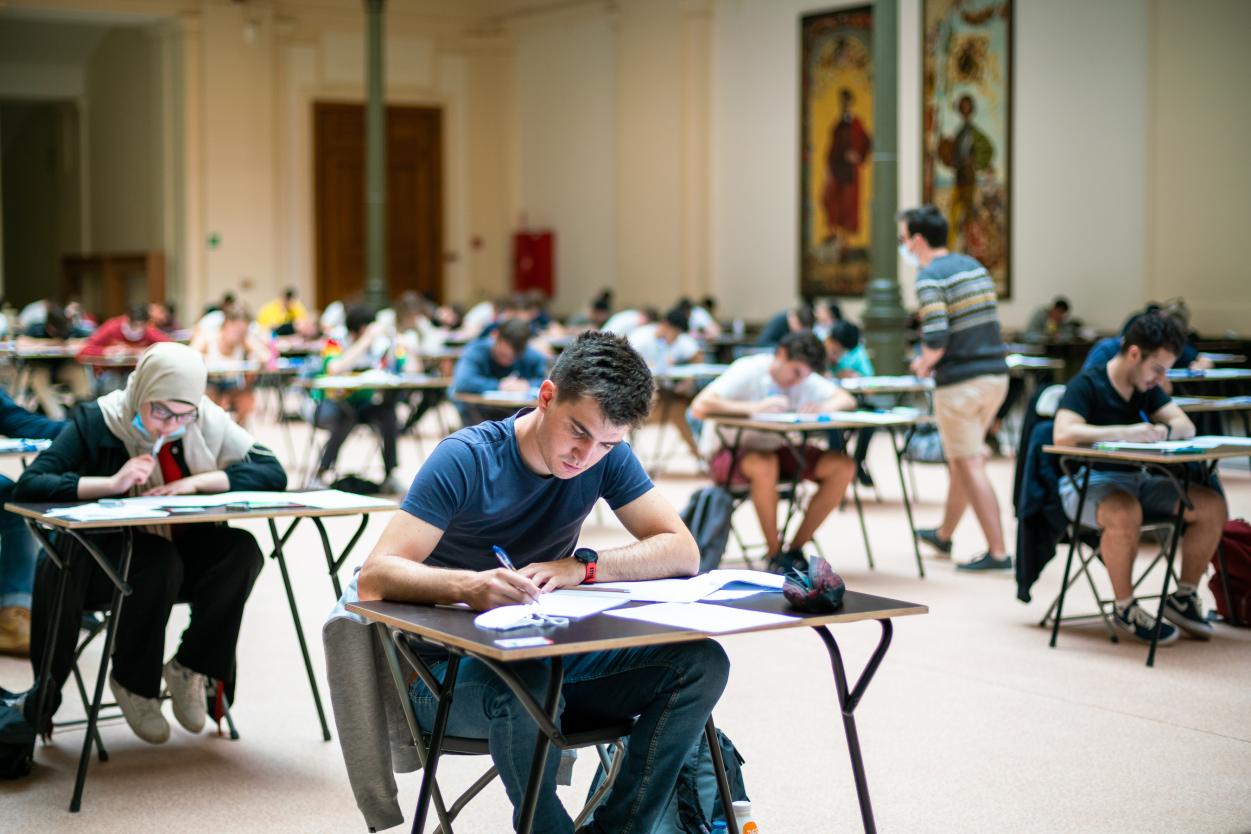
Your year will follow a different rhythm, with teaching weeks, teaching-free weeks, revision periods and exam periods. During the revision period, you’ll focus intensively on preparing for your exams.
Exams work differently too. An exam period lasts several weeks, and you won’t necessarily have an exam every day. The time between two exams might look like free time, but you’ll often need it to prepare for your next course.
No more fixed school days
Forget the fixed routine of having the same class hours every day. At university, your timetable will vary. You’ll attend lectures, where a professor explains the course material, as well as seminars, practical sessions or exercises, where you put what you’ve learned into practice. Some classes take place online, while others can be studied independently at a time that suits you.
And having no classes doesn’t automatically mean you have time off. Independent study is an important part of your degree programme.
You plan your own study time
No one will tell you every day what you need to have done by tomorrow. You’ll have to process a lot of course material and information in a short space of time, and it’s up to you to plan when you study, complete assignments and prepare for exams.
There may also be fewer assessments during the semester, and not every course will have them. Your course material won’t always be neatly bundled into a single textbook either: slides, notes, textbooks and other resources may all form part of what you need to study.
No form teacher keeping track of everything
From administration and deadlines to questions about your study programme, you’ll manage much more yourself. There is no single form teacher or central point of contact automatically keeping track of how you’re doing.
That doesn’t mean you’re on your own. At VUB, there are different people and services you can turn to for support. The difference? It’s usually up to you to take the first step and ask for help when you need it.
You shape your own student life
Studying is about more than attending classes. At university, you’ll find yourself in a new environment with lots of new people, activities and opportunities. You’ll meet fellow students in lectures and practical sessions, around campus, in student accommodation or through student life.
Here too, you have more freedom to make your own choices. You might commute or live in student accommodation. You might join a student association, play sports or meet up with fellow students after class. It’s up to you how you combine your studies with student life and gradually find your own place at VUB.
Your first year at VUB: what happens when?
September – Welcome to VUB!
Your academic year starts with the Welcome Days and Kick-off. You’ll get to know the campus, your degree programme, key VUB services and your fellow students. Then classes begin and your new student life really gets under way.
October and November – Finding your rhythm
Lectures, seminars, practical sessions, assignments, independent study: your weeks will start to fill up. At the same time, your student life will start to take shape: you’ll meet new people, discover activities and gradually find your place on and around campus. This is the time to find out which way of studying works best for you and how to combine your studies with everything student life has to offer.
December – Your first revision period
After the last classes, your first proper revision period starts at the end of December. You’ll work through and revise the material from the first semester and prepare for your exams. Good planning becomes essential: several courses, lots of material and just a few weeks to bring everything together.
January – Exams, results … and a short break
During the exam period, you’ll sit your first university exams. Your results follow afterwards. Don’t just look at your marks: use them to work out what went well and what you might want to approach differently in the second semester.
After the exams, you’ll have a teaching-free week. A chance to recharge before semester two begins.
February – The second semester begins
You’ll start a new set of courses and can build on what you learned during your first semester. During the two-week spring break, you’ll have another opportunity to catch up on course material and prepare for what’s ahead.
May – The final stretch
Classes gradually come to an end, assignment deadlines approach and the second revision period is just around the corner. May is the time to take stock: what still needs to be finished, and which course material needs extra attention before the exams?
June – Exams and results
During the second exam period, you’ll sit exams for your second-semester courses and any full-year courses. Afterwards, you’ll receive your results and see where you stand after your first academic year.
Your results will also determine your next steps. Passed everything? Great. Still have courses you haven’t passed? You can sit those exams again during the resit period.
August and September – Resits and looking ahead
If you have resits, you’ll use part of the summer to prepare for them. The resit period follows.
And with that, your first academic year really is over. You’ll take stock, look ahead to your next academic year and, before you know it … a new group of first-year students will be finding their way around campus for the very first time.

How higher education works
Does higher education still feel like unfamiliar territory? No problem! We’ll guide you through the different types of degree programmes and ways of learning, so you know what to expect.
What does a typical week as a student look like?
In each degree programme brochure, you’ll find an example of what a typical week might look like.

Learn the rules of your first year
How many credits do you take? How many do you need to pass? And what exactly is the study progress threshold? Your first year comes with a number of rules that are important for the rest of your studies. Knowing them from the start means you’ll understand what is expected of you and when you may need to adjust your approach.
Study programme
Starting your first bachelor’s year? You’ll be registered for the standard study programme, which includes all courses in the first year of the bachelor’s programme. Already have a bachelor’s or master’s degree? Do you have a special status or are you studying in exceptional circumstances? You can request an exception to the standard study programme and follow an individual study programme tailored to your situation.
Study progress
As soon as you enrol, VUB and the Flemish Government expect you to make sufficient study progress. Each academic year, you must pass at least 30% of the credits you have taken. Otherwise, you will not be allowed to re-enrol in the same degree programme at VUB. This is one of the study progress requirements you must meet.
Study progress threshold
As a new bachelor’s student, you must have passed all the courses you took when you first enrolled in that bachelor’s programme within two academic years.
Prepare for your first year
Your preparation doesn’t start with your first class. Get to know your degree programme and campus in advance, check your prior knowledge, and discover the tools and support available to you. That way, you’ll know what to expect and where to turn if you have questions during your first year.
Enrolled? Here’s what you still need to do
Have you completed your enrolment at VUB? There are still a few practical steps to take before you can really get started. Activate your VUB account, check whether you need to register for your courses, find out where to access your class timetable and prepare for your arrival on campus.
See what you need to arrange after enrolling
Do you need additional support or adjustments because of your personal circumstances?
Find out what support VUB offers.
Preparatory courses
Am I ready for this degree programme? It’s a question many prospective students worry about. Don’t worry: VUB offers a range of tools to help you assess where you stand and brush up on your knowledge where needed.

Orientation Days
As a new student at VUB, you’ll start your academic year with the Welcome Days. The programme includes plenty of useful information sessions as well as lots of fun activities. You’ll get the essential information you need to get off to a strong start, find out what to expect, and get to know your campus, fellow students and degree programme.Discover the Orientation DaysDiscover the Orientation DaysDiscover the Orientation DaysDiscover the Orientation Days
FAQ
Test your knowledge of higher education
Do you know just about everything about higher education or are you a bit of a dummy when it comes to study points, switching programmes and support measures? Take the test and discover if you need to brush up on your knowledge.
Frequently used terms in higher education
Bachelor’s, master’s, master-after-master, ECTS-credits, etc. Deciphering the vocabulary of higher education is not always straightforward. To help you along the way, we explain the main concepts. In everyday language.

Last updated: 18 september 2026, 10:18