

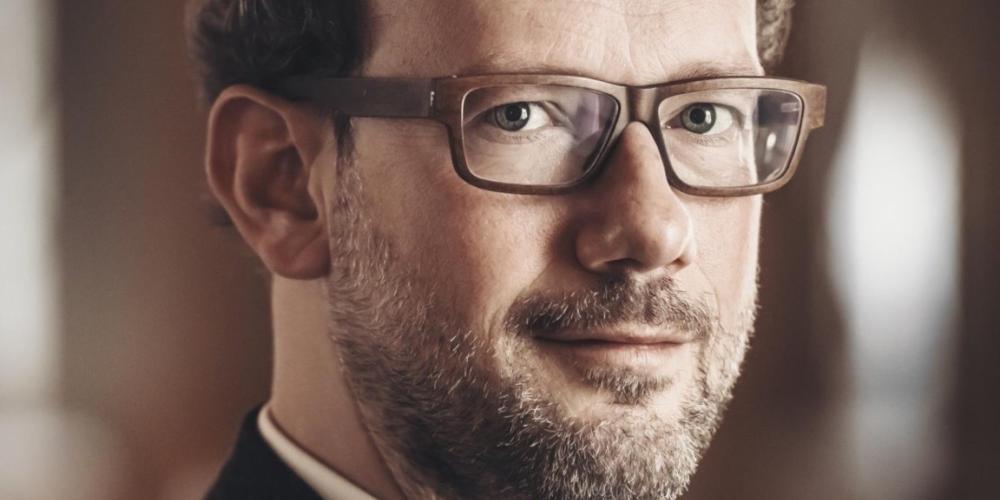


"We can take a ticket like at the butcher's and then take turns making ourselves look interesting, so that people think we're standing up for someone," said cd&v chairman Sammy Mahdi in his monthly appearance as a Sunday studio guest on VTM News.
Read the original article in De Morgen here (in Dutch)
He spoke with the authoritative voice of someone who has been holding firmly onto his little number for several days already. Everywhere, he displayed his sense of responsibility by reproaching fellow politician Conner Rousseau (Vooruit) for seeking the limelight at the expense of a budget agreement. And he does not seem to be finished with not profiling himself. Would you like a little more? As far as irony was concerned, Sammy certainly had not skimped by an ounce.
There you have the danger of political imagery: you look for an image that unmasks the others and turn out to be in it yourself. All the more so because Mahdi has only just switched sides. A month ago, in the same VTM studio, he was still waving proposals and vetoes around, including against interventions affecting company cars, while Rousseau was playing the statesman. But in that particular register there is only one grand master: the Prime Minister. Bart De Wever's bank of images is bottomless.
"No matter how large the hole in the budget becomes, the Prime Minister never economises on metaphors."
Last week, according to him, we were not only in injury time, we also risked amputation because of an ever more heavily infected wound, and were sitting on a powder keg on which matches were being played with.
The images change; the division of roles does not. He realises how little time remains; they dawdle. He disinfects; they evade. He warns of the explosion; they flirt with the fire.
Apparently, all of that was still not dramatic enough, because the Prime Minister also saw a 'wall of darkness' looming up. Undoubtedly the most original political metaphor in a long time, and the most mysterious. But admirers of the Möbius strip would recognise the image, the Prime Minister added.
Your servant, always willing to brush up both his own and your erudition, investigated and discovered that this reference too says more about De Wever's own policy than he himself probably realises.
The Wall of Darkness is a short story by Arthur C. Clarke from 1949: an impenetrable wall hides an unknown, frightening world. A man who dares to confront the threat has an immense staircase built, climbs upwards after years of work, and resolutely ventures into the darkness. Up to that point, it fits seamlessly into the narrative of the brave saviour in times of need who resides at Number Sixteen.
He may not reveal the ending to us straight away. In an attempt to reach the other side of the wall, our hero recognises the landscape: he is once again standing where he started. And that is where the Möbius strip comes in, a twisted band whose seemingly different sides form a single surface. Anyone who walks along that band without beginning or end feels as though they are travelling a long distance but endlessly repeats the same route.
You can see in it a metaphor for De Wever's method: a new memorandum, a new cry of urgency, a new deadline, in the hope that the seriousness of the situation will lift his partners over their objections. But with largely the same proposals, he runs into the same vetoes time and again.
Yet, like our hero, he will probably reach the top, in the form of a budget agreement, and take us beyond the immediate danger. Only, the landscape on the other side remains suspiciously familiar, because his government continues to leave a number of fundamental mechanisms intact that keep creating new holes in the budget.
Not that this government has reformed nothing that has a positive impact on our public finances, but the most important worksite remains largely untouched, even though all parties made it the priority during the campaign: a genuine reduction in the tax burden on labour.
High taxes on labour slow down the economy. So this government too compensates with fiscally pampered cars, vouchers and side jobs. These hollow out the tax base. That weighs on the budget, which means the money is lacking to reduce taxes. So they remain high, and the government drags itself from one round of fiscal consolidation to the next.
Welcome to the Belgian Möbius strip. We drive circles on it in a company car, leased by a management company, with a flexi-job worker behind the wheel and meal vouchers in the glove compartment. And in the meantime, party chairmen are taking little tickets at the butcher's.
BIO
Dave Sinardet is Professor of Political Science (VUB/UCLouvain) and a columnist for De Morgen.