



From 1 to 30 October, Vrije Universiteit Brussel (VUB) is taking part in the Academic Bicycle Challenge, or ABC for short, for the second time. The aim? To challenge all VUB students and staff to clock up as many kilometres by bike as possible. It makes perfect sense: cycling is the ideal driver of both health and sustainability. VUB exercise scientist Dirk Aerenhouts: “Every journey made by bike is a gain.”
What makes cycling such a smart choice?
“The benefits of cycling go far beyond your cycling allowance. It improves your health, makes you fitter and saves you time. If you cycle to work, you’ve already done your fitness training for the day. Cycling is unique because of the way your muscles work. They don’t have to constantly absorb impact, as they do when jogging, so you experience less muscle soreness. Your ankles and knees are also subjected to less shock. This makes cycling accessible to almost everyone, including people with knee problems or those who are less suited to running.
“Cycling is also a powerful choice for the climate. It helps reduce greenhouse gas emissions and congestion. Fewer cars on the road means fewer raw materials are needed, fewer parking spaces and lower healthcare costs. The resources this frees up can be invested in better cycle paths, more green space and – who knows – perhaps even lower taxes. So there are benefits all round, except for the car industry. As a university, we can encourage cycling even more by providing secure bicycle parking, offering bicycle leasing schemes and sharing our research findings on successful cycling interventions more widely with policymakers and the public. That’s how we can take further steps forward.”
What physical and mental benefits does cycling offer?
“Every form of active transport brings health benefits. Cycling helps you manage your weight and reduces the risk of lifestyle-related diseases, such as cardiovascular disease and diabetes. Regular physical activity reduces the risk of stress, anxiety and even depression, while also improving concentration. For older people, it can help counter cognitive decline. Studies even show positive effects in preventing Parkinson’s and Alzheimer’s disease. Physical activity also promotes better sleep, helping you feel fitter and more energetic during the day. That said, exercising just before bedtime puts your body in a heightened state of alertness, which can actually make it harder to fall asleep.”
“A short, vigorous effort triggers a stronger muscle stimulus and a greater training effect”
How intensively do I need to cycle to notice an effect?
“The greater the effort, the greater the training effect. A fitness test can map out your heart-rate zones, but your breathing is often a good indicator. If you can still talk comfortably, you are in the moderate-intensity activity zone and primarily burning fat. Once your breathing speeds up, you start sweating more and talking becomes difficult, you have moved into a high-intensity zone. At that point, your body mainly uses glycogen (stored muscle sugar) as fuel, although high-intensity exercise also produces an afterburn effect: your body continues to burn fat for some time afterwards.
“According to research, high-intensity exercise is therefore a better choice if your aim is to lose fat. But if weight loss is your only motivation, you may soon give up because the results don’t come quickly or dramatically. It’s better to focus on the enjoyment of cycling, the time you save and the health benefits.”
“You also notice improvements in your fitness quite quickly. The biggest gains come at the beginning. Going from zero to 15 minutes of exercise a day gives you more benefits than going from 100 to 115 minutes. Cycling mainly trains your leg muscles: your glutes, thighs, hamstrings and – if you pedal on the balls of your feet – your calves. Your core and arm muscles are barely engaged, so it’s best to train those separately.”
Is cycling in the city really healthy?
“Air quality in cities isn’t necessarily worse than in the countryside. There is also plenty of particulate matter in the air in rural areas, caused by traffic and agricultural activities. A lot depends on wind direction, temperature and wind speed. The situation in cities such as Brussels has improved significantly in recent years. Ghent, Amsterdam and Copenhagen are doing even better.
“My tip? Try not to cycle directly behind cars. If possible, cycle through green spaces or nature. But even if your route takes you along busy roads, the overall balance remains positive.”
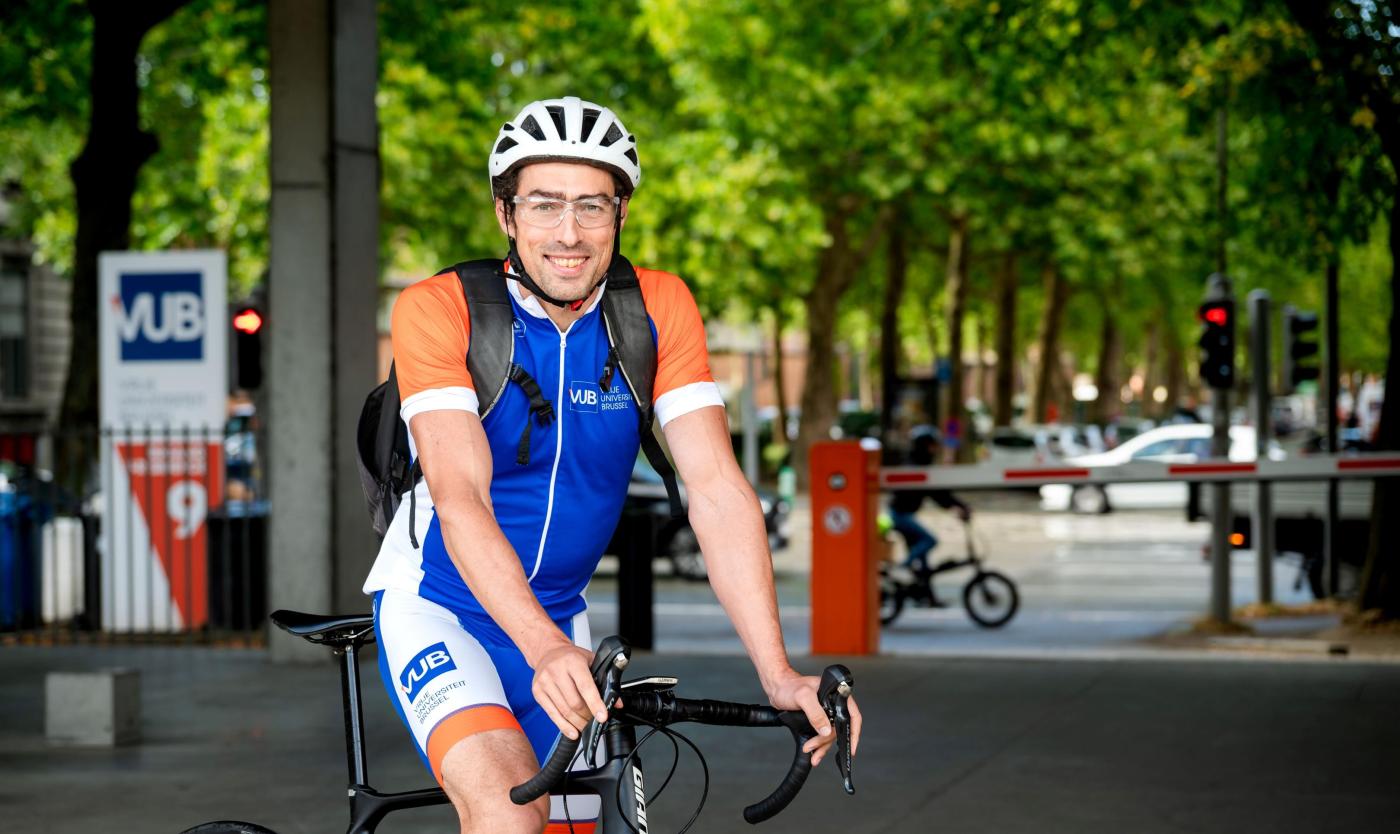
“An e-bike is still better than a car”
Dirk Aerenhouts, VUB exercise scientist
Does an e-bike offer the same benefits?
“An e-bike requires less effort and therefore offers fewer health benefits than a conventional bicycle. It also performs less well environmentally. But an e-bike is still better than a car. And if your e-bike means you cycle more often and further, it can actually improve your health. An e-bike can also remove barriers. You arrive at your destination less sweaty and more quickly, and it makes it easier to stay active, including for people with joint problems, a low level of fitness, older people or those taking medication such as beta-blockers, which prevent the heart rate from rising very high. The most important thing is to avoid sitting still.”
What is a good cycling position?
“Look for a balance between a sporty and an ergonomic position. A sporty, forward-leaning position is aerodynamic, but puts more strain on your neck, lower back and pelvis. A more upright position supports your natural back posture and is more comfortable.”
“The position of your handlebars and saddle also affects your posture. When sitting on your saddle with your heel on the lowest pedal, your leg should be fully extended. A saddle that is too low makes pedalling more difficult and causes muscle fatigue more quickly. If your saddle is too high, you will tend to slide forward and experience friction.”
What can help prevent saddle soreness?
“Unfortunately, there is no universal ‘perfect’ saddle. A softer saddle isn’t necessarily better either. Start by adjusting the saddle position to relieve pressure. If that doesn’t help enough, ask for advice at a bike shop. Above all, don’t simply put up with the discomfort for too long, as this can lead to persistent problems. Cycling shorts with a padded insert can also help prevent friction and pressure.”
What cycling mistakes do you often see?
“Besides poorly adjusted saddles or handlebars, I often see cyclists riding around with a worn chain. If your chain is creaking or squeaking, it urgently needs servicing. Have you been cycling in the rain? Bring your bike indoors so the chain can dry. Always clean a dirty chain and lubricate it again. Also check your tyre pressure regularly and choose a bike that fits you properly. If the frame is too large, you will have to reach too far forward and are almost guaranteed to develop discomfort. Get proper advice and always take a test ride, especially when buying a second-hand bike.”
Are sports drinks useful?
“Sports drinks and gels don’t fit into a healthy diet. They contain a lot of sugar which your body – if you don’t use it immediately – converts into fat. Sports drinks cause huge spikes in blood sugar, increasing the risk of type 2 diabetes, and can also damage your tooth enamel. They can only be useful during or shortly after intense exercise lasting more than an hour, when they can provide extra energy or replenish your sugar stores.
“Staying hydrated is important, especially in hot weather. Heavy sweating causes you to lose fluids and electrolytes. Drinking enough water and eating a healthy diet is sufficient to replenish them. Only during a cycling trip lasting several hours might an electrolyte drink be useful.”
What should I eat before getting on my bike?
“Don’t skip breakfast: experiencing a drop in blood sugar while cycling is no fun. Choose a healthy breakfast with fruit and wholegrain products. These release their sugars more slowly and help keep your blood sugar levels stable. It’s best to avoid refined carbohydrate sources such as white bread and cornflakes. Drink water, tea or coffee, but not fruit juice. It contains just as much sugar as soft drinks.
“The typical English breakfast, with sausages, bacon and eggs, isn’t a good idea either. Processed meats are not only unhealthy, they are also heavy on the stomach, which isn’t ideal when exercising.”
Dirk’s tips for cycling more often
- Build up gradually – Slowly increase your distance and intensity to prevent injuries.
- Don’t put yourself under pressure – Don’t be discouraged by social media feeds full of impressive performances. Focus on your own enjoyment and progress.
- Find the right balance – Alternate between easy and more intensive rides. This gives you varied training and helps you stay motivated.
- Don’t be too hard on yourself – Every kilometre counts, but nothing is compulsory.
- Cycle safely – Follow the rules of the road and preferably wear a helmet.


How to join the challenge
- Download the Naviki app and register
- Go to “Competitions” in the app and select ABC 2026
- Then choose “Vrije Universiteit Brussel” as your institution
- Optional: Create a team within VUB, for example, based on your department, association or group of friends.
- Register each ride separately: Select “Record route” in the app to record your ride. Remember to stop and save the recording correctly at the end of your ride!
Having trouble recording your rides? Check the settings of the Naviki app on your smartphone to make sure the correct permissions are enabled. Ensure that the app is allowed to access your location at all times and that no battery restrictions are interfering with the recording.