

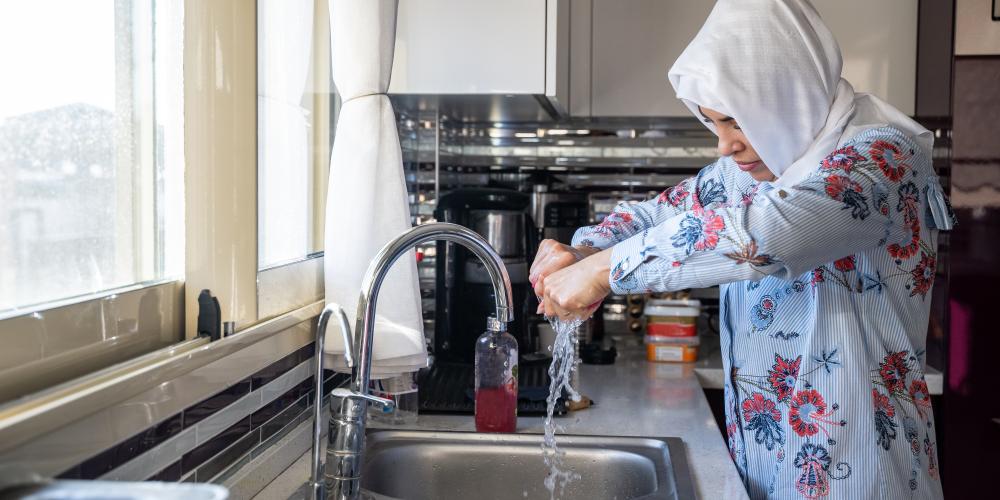


Thousands of Moroccan women clean homes, care for children and keep households running in the Spanish border cities of Ceuta and Melilla. Yet, without valid documentation, they live and work largely out of sight, deprived of basic labour rights. Through a new interactive web documentary, the VUB research project Reel Borders brings their stories to light, giving these women a platform to speak for themselves. An accompanying petition calls for action to improve their living and working conditions.
VUB Reel Borders, a research project funded by the European Research Council (ERC), aims to raise awareness of the experiences of undocumented migrant women working in EU border regions. In collaboration with the NGO Digmun and the Spanish research project No estamos todas ('We are not all here'), Reel Borders has launched a new web documentary and an online petition highlighting the precarious circumstances of thousands of Moroccan women who have worked without legal status for decades in the Spanish enclaves of Ceuta and Melilla, on the border with Morocco. Tighter border security measures introduced in the wake of the COVID-19 pandemic have left these women unable to travel to Morocco to visit their families or renew their expired passports.
Irene Gutiérrez, a filmmaker from Ceuta and PhD researcher on the VUB Reel Borders project, used participatory filmmaking – an approach that enables individuals and communities to take an active role in creating their own films – to produce 26 short films documenting the experiences of 13 undocumented domestic workers living in Ceuta, the Spanish enclave bordering Morocco. These films have been brought together in the interactive web documentary ABCeuta: The Alphabet of the Border, which was officially launched this week.
"For Reel Borders, visibility begins with recognising what is happening at the EU's borders through the eyes of the people who live there," says VUB Professor Kevin Smets, principal investigator of Reel Borders. "We want to amplify the voices of women who are seeking action and answers."
According to the European Commission, there are approximately 10 million domestic workers in Europe. At least 3.5 million work in the informal economy, leaving their contributions largely unrecognised and undervalued, with limited professional recognition and without basic labour rights. Around 90% are women, and a significant proportion are undocumented migrants.
These domestic workers face particularly vulnerable working conditions. They often work in isolation, in private homes, far from their countries of origin. Because private households are not always recognised or treated as formal workplaces, labour inspections are difficult, and health and safety protections may be absent. Many women also face racist, sexist and sexual violence, including trafficking for sexual exploitation. Their vulnerability is compounded by barriers to accessing social and public services, including healthcare.
Petition
To help improve the legal status and living conditions of undocumented domestic workers in Ceuta and Melilla, VUB Reel Borders, the NGO Digmun (Association for the Dignity of Women and Children) and the Spanish research project No estamos todas have launched an online petition.