

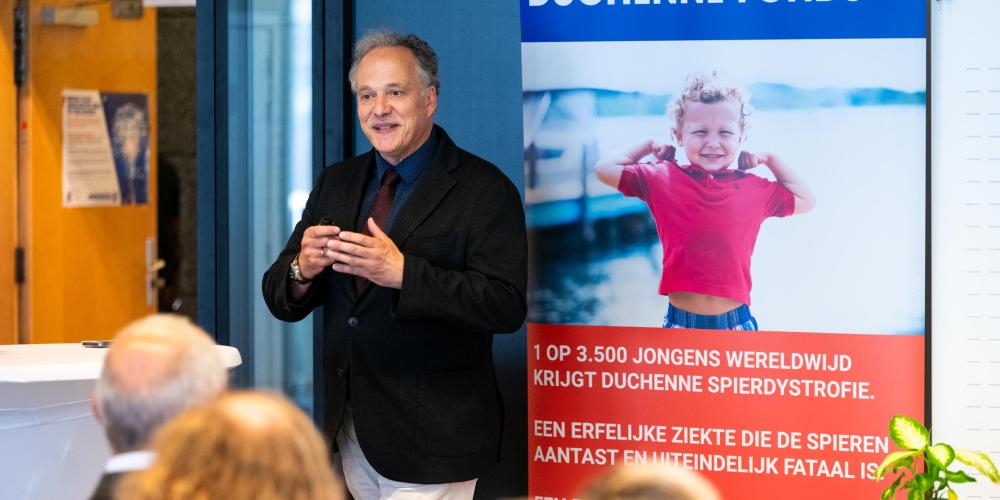


7 September is World Duchenne Awareness Day. For Luc Vandevyvere, the day has a special significance: for 100 days, he has been cycling 100 kilometres every day for his grandson Stan, who has Duchenne. Through his nearly 10,000-kilometre journey, he is raising awareness of the condition and funds for the VUB Duchenne Fund. The final amount that Luc raised was €7,545. Prof. Dr Thierry VandenDriessche, who conducts research into gene therapy for inherited muscle disorders at VUB together with Prof. Dr Marinee Chuah, explains where the research stands today.
Luc has now cycled almost 10,000 kilometres for the VUB Duchenne Fund. What is the research he is supporting all about?
Thierry: “Duchenne is an inherited muscle disorder caused by a fault in the genetic material. In people with Duchenne, the dystrophin gene does not function properly, which means that dystrophin, a protein essential for healthy muscles, is not produced correctly. As a result, the muscles gradually lose their ability to function. This affects not only the muscles used for walking and movement, but also the respiratory muscles and, ultimately, the heart.”
Because you know which genetic fault causes Duchenne, can you target it very precisely?
Thierry: “Exactly. We know where the underlying cause lies. If a gene does not function properly, we can try to introduce a correct copy of that gene into the muscle cells. To do this, we use modified viruses as delivery vehicles. We remove the viral genes and replace them with therapeutic genetic material, allowing us to deliver a functional version of the gene to the muscle cells.”
But getting the gene into the muscle cell is not enough?
Thierry: “No. Once the gene is there, it also needs to be sufficiently active. This is an important area of expertise at VUB. We have developed powerful molecular ‘engines’ that are specifically active in muscle cells and are designed to ensure that enough of the necessary protein is produced to restore the muscle cell’s function as effectively as possible.”
Luc said that what particularly stayed with him was that you are not simply trying to slow the disease down, but are looking beyond that. What steps are you taking?
Thierry: “It is extremely important to intervene as early as possible. In Duchenne, muscle cells gradually deteriorate and muscle tissue is replaced, among other things, by scar tissue. The further this process progresses, the more difficult it becomes to counteract the damage. In animal models of other forms of muscular dystrophy, we have seen that early treatment can significantly reduce scar formation. But we have to be cautious: we cannot simply assume that those results will translate to Duchenne.”
What is Duchenne research currently focusing on?
Thierry: “We are looking very specifically at what happens in the muscles in Duchenne. Can we block inflammatory processes, promote the regeneration of muscle tissue and limit scar formation? We are currently investigating this in mouse models of Duchenne. I am hopeful that we will see similar effects, but hope is not scientific evidence. We first have to demonstrate that.”
“We need to realise that we really can make a difference here in Belgium. Even with the resources available to us here, we can make progress. Belgium has a long tradition of biotechnology and biomedical research.”
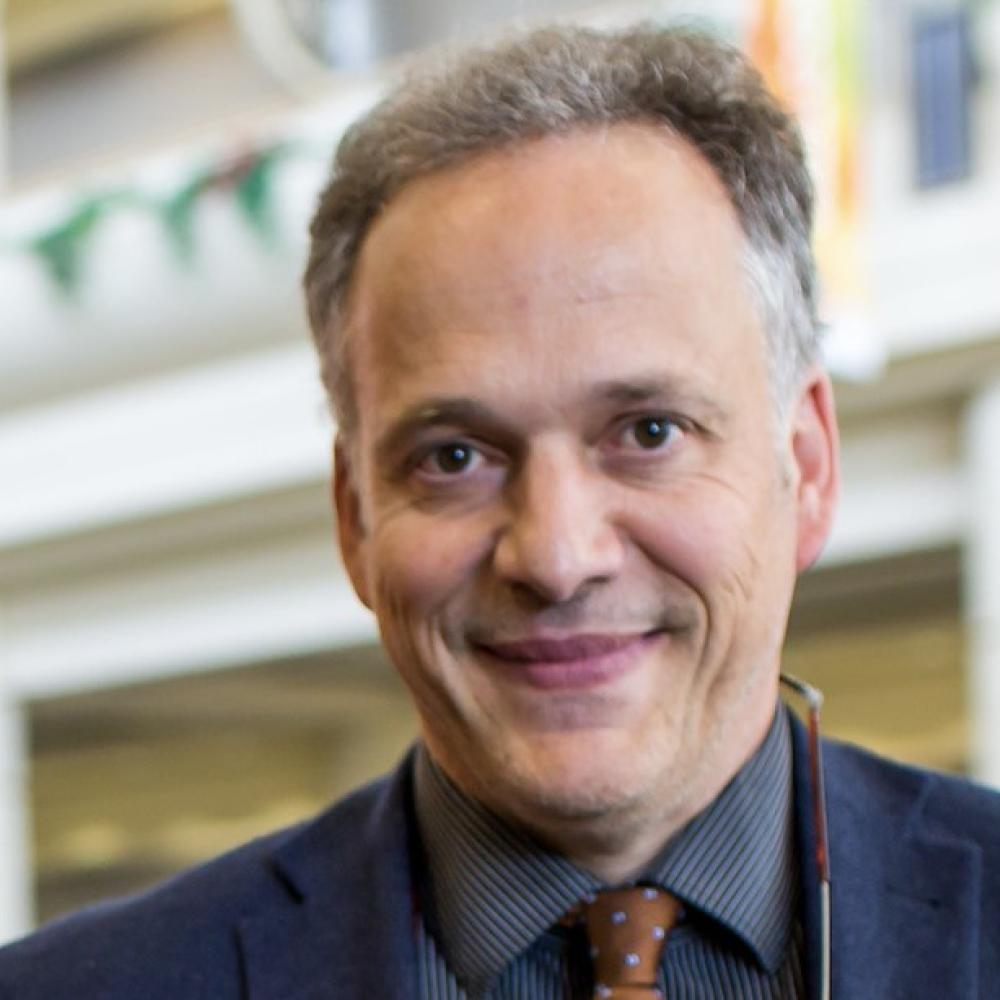
Luc, does hearing that research is making steady, incremental progress give you extra motivation while you are cycling?
Luc: “Yes, absolutely. If, after years of effort, you were told that no progress whatsoever had been made, it would be very discouraging. But hearing that small steps are being made gives you hope. Of course, there are setbacks too, for example when pharmaceutical companies withdraw because the financial burden becomes too great. I realise that if Duchenne can ever be cured, I may not live to see it as a result of these cycling challenges. That may be something for a future generation. But I do feel that I have done something.”
Does a fundraising initiative like Luc’s give you additional motivation to keep going?
Thierry: “Absolutely. I think Luc’s commitment is incredibly admirable, and I have enormous respect for what he is doing. For us, it is an important source of motivation to continue searching for solutions to inherited conditions such as Duchenne. Nobody chooses to be born with an error in their DNA, yet that error can often determine the course of the rest of their life. That is why it is wonderful that Luc, and everyone supporting this initiative, believes in our research and in our ability to make a difference.”
Luc: “That is wonderful to hear. If my cycling challenge means something to the researchers as well, that is fantastic.”
Luc is cycling not only to raise money, but also to raise awareness of Duchenne. How important is that visibility?
Thierry: “That awareness is essential. Rare diseases do not automatically receive the same level of attention as more common conditions, even though collectively they affect a great many patients and families. Initiatives like Luc’s put Duchenne in the spotlight, help people understand what the condition involves and can raise vital funds for research. Other countries have already shown that the involvement of patients, family members and friends can genuinely make a difference.”
Luc, have you noticed that awareness of the condition is growing?
Luc: “Certainly among the people around me, I can see that it is having an impact. Many people had never heard of Duchenne before, and now they have a much better understanding of what the condition involves. That is also reflected in the donations. When people donate to Duchenne, they are supporting a very specific cause. I would encourage everyone to take action too and join forces, following, for example, the model of Duchenne Heroes in the Netherlands. I would like to see a nationwide initiative.”
“When Duchenne affects your family, you realise just how profoundly this disease changes lives. That is why I want not only to raise money, but also to make sure that more people understand what Duchenne means. Many people around me had never heard of the condition before. Today, they have. If my journey can help change that while also helping to advance research, I feel that I have been able to make a difference.”
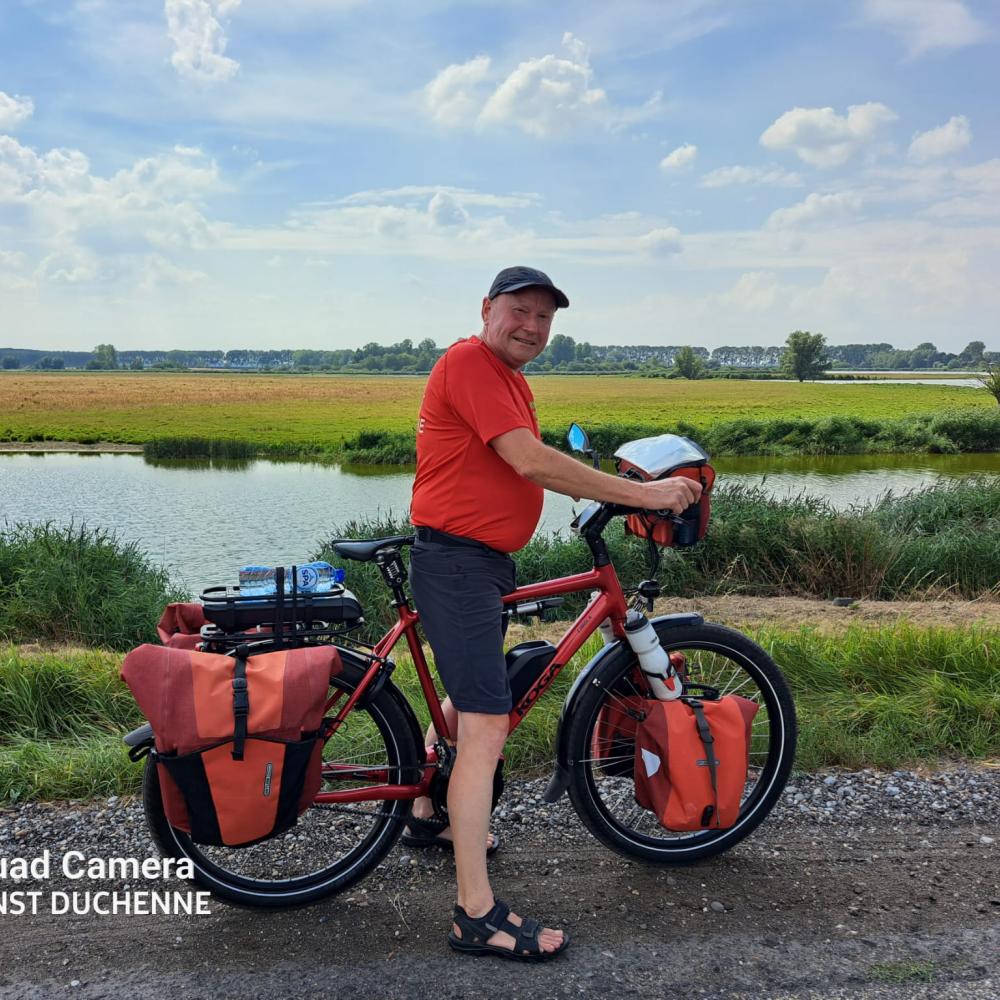
Luc finishes his journey on World Duchenne Awareness Day. What would you like to say to him?
Thierry: “I would like to congratulate Luc wholeheartedly on his extraordinary commitment and achievement. What he has accomplished deserves tremendous respect. His initiative is not only raising funds for research, but also bringing greater attention to Duchenne. So I say: chapeau, Luc. Thank you for your dedication, your perseverance and for the way you are raising awareness of this condition. I hope that, thanks to this support, we can move step by step towards better treatments.”
Luc, what would you, in turn, like to say to Thierry and his research team?
Luc: “Keep going. Keep doing the research, keep searching and do not lose heart. We share your hopes. Even though research takes a great deal of time and enormous effort may be needed to achieve just one small step forward, every step matters.”
What final message would you like to share with the people reading this?
Luc: “Keep hoping and keep supporting the cause. To the parents of boys with Duchenne, and to the boys themselves, I would say: do not lose heart. Where there is life, there is hope. Research takes time, and every step forward counts. That is why I hope parents and the people around them will continue to take initiatives, whether that is a cycling challenge, a barbecue or something else. Anything that helps raise funds also helps keep the research moving forward.”
Help advance the research
Luc crossing the finish line on 7 September does not mean the research stops. The VUB team continues its work on gene therapy and is investigating ways to reduce inflammation, scar formation and further muscle damage in Duchenne. This research requires time, expertise and continued financial support. If you would like to support the VUB Duchenne Fund, you can make a donation here.