



The VUB continues to make major strides. Its solar energy target for 2030 has already been achieved. Fewer and fewer staff members are commuting to campus by car, and the proportion of female professors is increasing. The Report to Society 2024-2025 brings good news, but also shows where further progress can be made. VUB General Manager Nic Van Craen is pleased with the report. “It shows that societal impact is not limited to our education and research. Together, we are also looking for ways to work more sustainably and to take better care of one another.”
Every two years, the VUB reports on its policies regarding sustainability, equality and wellbeing. The new report looks both at its own operations and at the societal impact of its education and research.
The clearest gains have been made in the areas of energy and mobility. In 2025, primary energy consumption fell by 2.8 per cent, even though the number of students and the total floor area increased. Heat consumption fell by as much as 8.2 per cent.
The production of solar energy also increased significantly. On the Main Campus, solar panels now account for 10.7 per cent of electricity consumption. This means that the target for 2030 has already been achieved. The VUB is also moving in the right direction when it comes to commuting. On the Main Campus, only around seven per cent of staff now travel to work by car. More than two thirds use public transport and about a quarter travel by bicycle or on foot. On the Health Campus in Jette, car use among staff fell from 63 per cent in 2011 to 32 per cent in 2024.
General Manager Nic Van Craen: “We see that targeted measures deliver results, but the report also honestly shows where we still need to make progress. That combination is important: showing what works while at the same time making visible where we need to improve.”
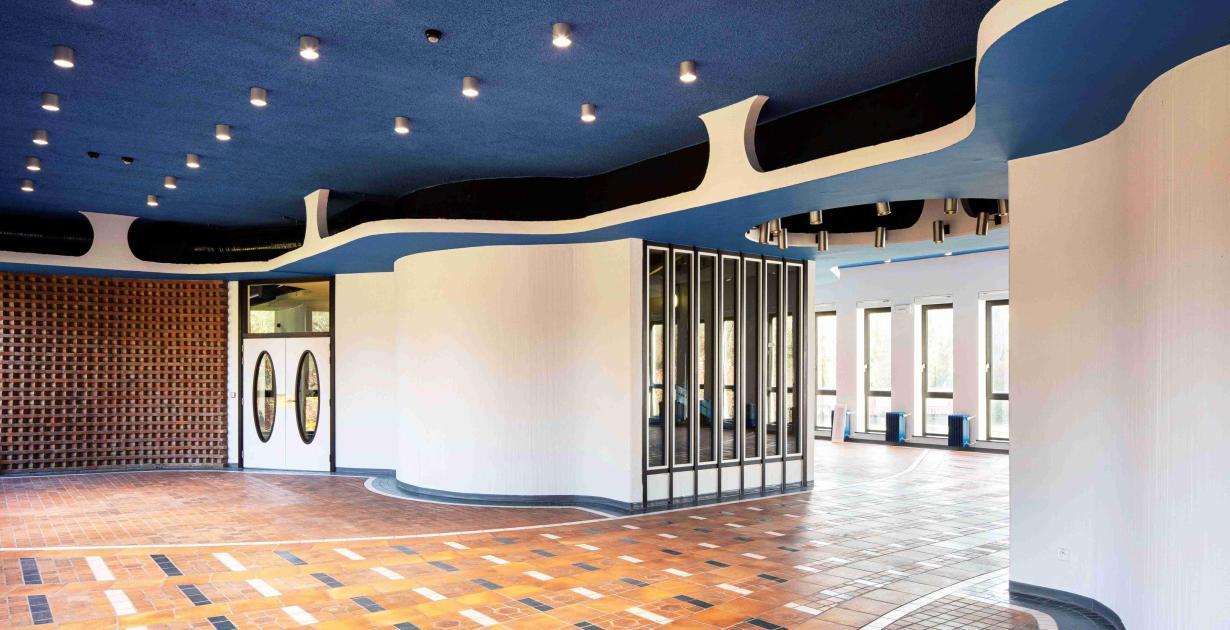
The renovation of the Braem Building contributes to lower energy consumption.
The greatest climate challenge lies in indirect emissions
However, this progress has not yet translated into a structural reduction in overall greenhouse gas emissions. The carbon footprint is slightly lower than in the baseline year 2019, but it increased again in the most recent measurement. Emissions per VUB member did fall, which means we are becoming more efficient. Nevertheless, total emissions must also continue to decrease. The greatest challenge lies in indirect emissions. These account for around ninety per cent of the carbon footprint and include purchases, laboratory materials, construction projects and international mobility. Emissions from business travel have also returned to their pre-pandemic levels.
The next version of the climate action plan will therefore require new measures concerning, for example, sustainable laboratories, international travel and reuse. This will only succeed if everyone comes on board. At the same time, we also need to gain insight into climate impacts that currently remain out of view due to a lack of data, such as the impact of our AI use and the actual emissions generated by our construction projects.
More equality and diversity
There is also measurable progress in the area of equality. In 2005, 20 per cent of Independent Academic Staff were women. That share has now risen to 35.5 per cent. The unadjusted gender pay gap gradually declined from 13.8 per cent in 2020 to 11.9 per cent in 2026. According to the report, this pay gap is linked to the stronger representation of men in older age groups and higher-paid positions.
That does not mean the differences have disappeared. At the beginning of the academic career, around half of all researchers are women, but among full professors this figure is still only 24 per cent. Stereotypical study choices also remain a point of attention. Increasing numbers of women are choosing psychology, law or medicine. Engineering programmes continue to attract fewer female students.
Students can use their preferred name on their student card
In addition, the VUB has introduced several inclusion measures in recent years. Since the 2024-2025 academic year, students have been able to use their preferred name, including on their student card, in Microsoft 365 and in Canvas. Inclusive examination measures apply across the entire university, and free menstrual products are available on both campuses. For staff, a wellbeing vision has been developed, and through the Employee Assistance Programme, employees have permanent access to confidential and independent support.
The next challenge is student success. The VUB is becoming more international and more diverse. This also brings a greater responsibility in terms of student success, guidance and community building. Through a new study performance policy, the university aims to better identify and reduce differences between student groups. The LiNA language test and SIMON Zegt are intended to contribute to this. LiNA tests academic language proficiency. SIMON Zegt is an online study progression tool that guides first-year bachelor's students with personalised actions and messages. In the coming years, the university also aims to continue working on equal opportunities, a safe and inclusive learning environment, and better measurement of the impact of its support measures.
Knowledge that can make a difference beyond the campus
Ultimately, the VUB’s greatest societal impact does not lie solely on its own campuses. The main priorities of a university are education and research. Through these, the VUB can contribute to ecological and social change in society. For that reason, sustainability is given a greater place in programmes and curriculum renewal. Interdisciplinary research networks receive support to work on societal challenges, and the campuses are being used as living labs for sustainable innovation.
Partnerships also create opportunities. The Helios-VUB Chair for Mental Wellbeing at Work, for example, links research to concrete interventions aimed at making work healthier to organise.
Nic Van Craen: “A report like this is not only intended to look back. We mainly want to see what works, where we need to make adjustments and what we can do with those lessons in the years ahead. Now that we are working on our new strategic plan, this is the right moment to take those lessons with us.”
Curious about the figures, projects and challenges behind this story? Discover the Report to Society 2024-2025 on our new Sustainability SharePoint page.