


Educational quality of the programme
At VUB the quality of the education takes centre stage. This isn't something we say lightly: we scrutinise our programmes regularly to align them with changing student needs in a rapidly changing society.
This public information is part of VUB’s quality assurance system and was ratified by the Academic Council on 09/12/2024. Below is a translation.
Strengths of the programme
- Flexible and personalised curriculum: The programme offers students the opportunity to tailor their study path to their interests through a wide range of elective courses. This makes the learning experience more engaging and personalised.
- Practice-oriented education and internships: The strong emphasis on practical training and internships enables students to apply a variety of research techniques early in their studies. This enhances their employability and prepares them well for the labour market.
- Quality management skills: Students develop essential quality management skills, which are highly sought after in the labour market. This training is integrated into the bachelor’s curriculum.
- Active student participation: The programme encourages student involvement, as demonstrated by their active participation in quality assurance discussions and review processes.
- Shortest supplementary pathway towards Medical Laboratory Technology (MLT) accreditation: Through the master’s specialisation in Clinical Biomedical Sciences, the programme offers students the opportunity to specialise for careers in hospital laboratories. To obtain this government accreditation, VUB has integrated the required MLT competencies as extensively as possible into the curriculum, meaning that students only need an additional 17 ECTS credits of supplementary training to obtain MLT accreditation.
Opportunities
- Strengthening the master’s profiles: There is scope to further distinguish the Dutch-taught master’s profiles “Clinical Biomedical Sciences” and “Management and Business”. This could be achieved by defining additional learning outcomes and appointing a coordinator to support these profiles.
- Career guidance: Communication about career opportunities could be further enhanced by integrating alumni and media examples into courses and by providing students with information about the master’s pathways at an earlier stage.
- Development of a soft skills learning pathway: The programme is exploring opportunities to further develop professional skills related to teamwork, communication, independent working, and intercultural competences within existing course components.
Current developments
- Strengthening the master’s profiles: The programme has appointed coordinators for the Dutch-taught master’s profiles and is further expanding internship opportunities in both clinical and management-oriented domains. This will provide students with broader practical experience.
- Improving communication: The programme is working on better information provision, including the use of video interviews with alumni and students to provide clearer insights into career opportunities.
- Workload and coordination: The workload of third-year bachelor’s students, particularly regarding presentations and group work, is being better aligned across courses. The programme is examining potential overlaps between assignments and exploring whether integrated assignments across different course components could offer a solution.
Where do we get this information from?
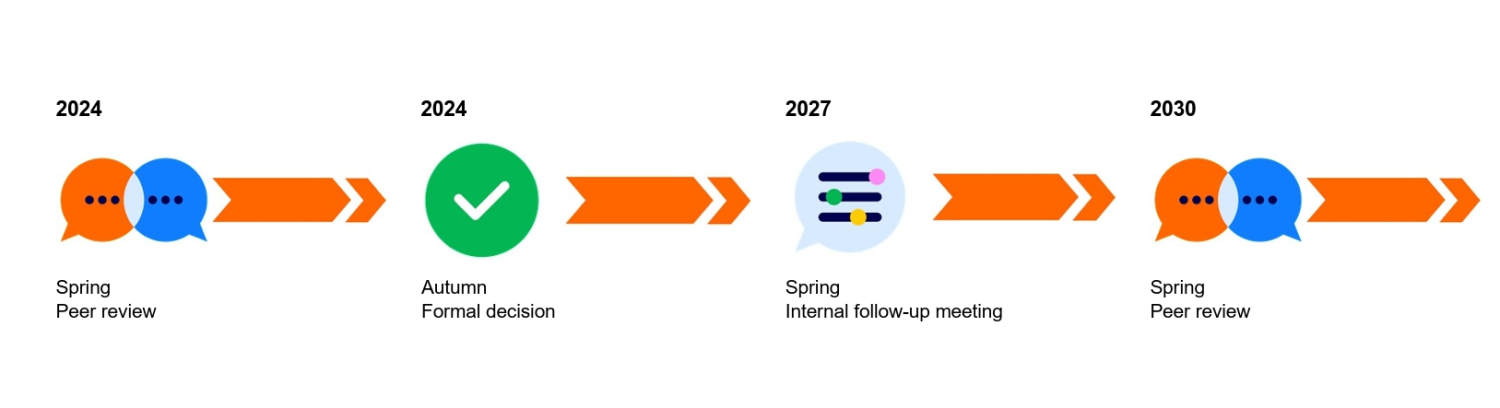
As institution we routinely ask our students to give their honest opinion about the study programme during their academic career. We also consult our professors and assistants and gauge the expectations in the future field of work. We receive structured feedback from our former students and compare our programmes with others at home and abroad. Through a Peer Review every six years an expert panel endorses the programme’s assets and can recommend some actions. Lastly, the Education Quality Council takes a formal decision about the quality and functioning of a programme.
Quality Cycle
Each programme follows a six-year quality cycle. The timeline below shows the schedule for this particular programme.