


Educational quality of the programme
At VUB the quality of the education takes centre stage. This isn't something we say lightly: we scrutinise our programmes regularly to align them with changing student needs in a rapidly changing society.
This public information is part of VUB’s quality assurance system and was approved by the Course Council on in 2020. It will be updated once the Formal Decision is ratified beginning of 2027.
Strengths of the programme
- Personal guidance: Small student groups, the accessibility of lecturers, and activities organised by Study Guidance ensure that students always have someone to turn to with their questions.
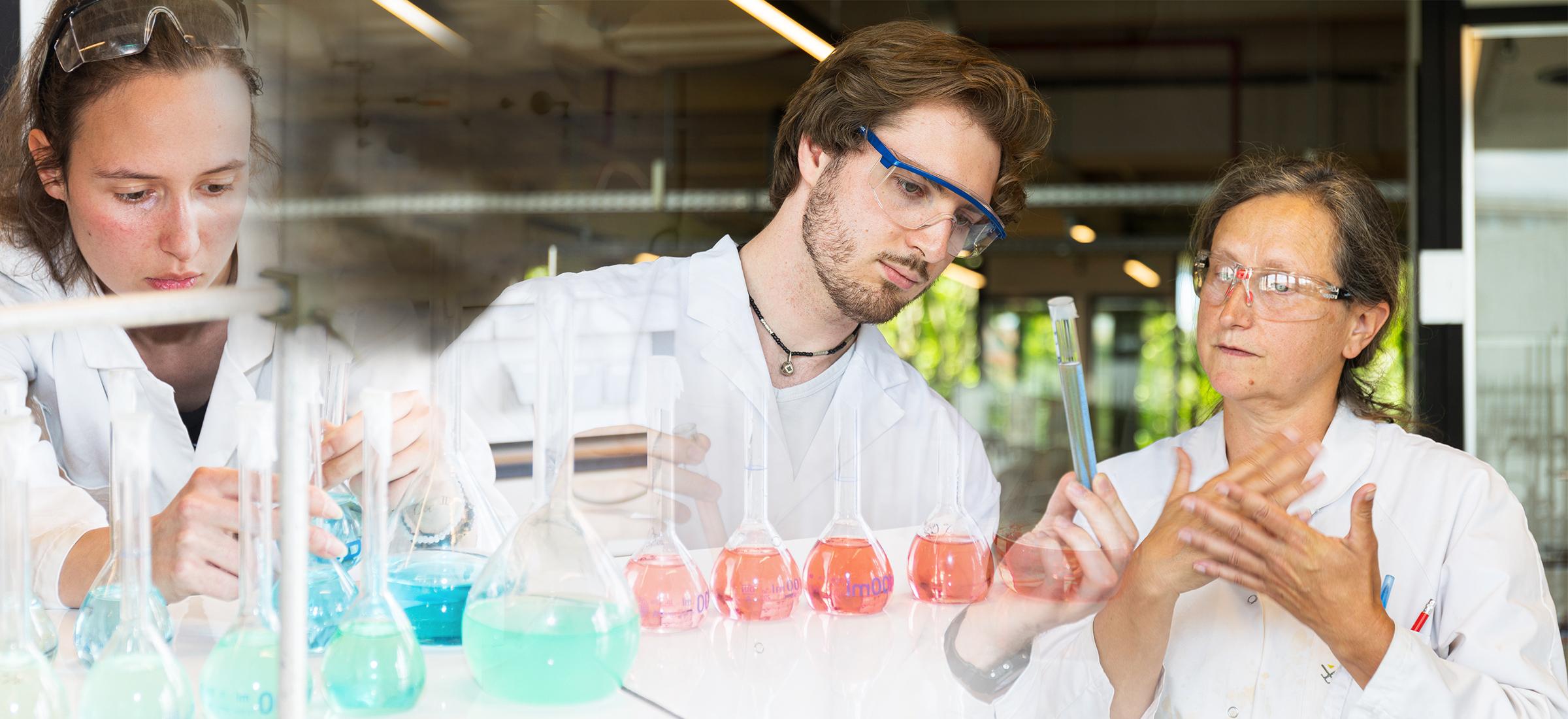
- Research-oriented: Through laboratory practicals, project work in different research areas, and bachelor’s and master’s theses, a significant part of the curriculum is dedicated to developing research skills. All master’s students become fully integrated members of a research group while completing their master’s thesis.
- Internationalisation: Partnerships with various international institutions contribute to an international student population in the English-taught master’s programme. Thanks to the mobility windows, students in both the bachelor’s and master’s programmes have the opportunity to study abroad for a semester.
- Practice-oriented: Students actively engage in numerous laboratory practicals throughout the programme. In addition, the renewed master’s programme, organised jointly with Ghent University, reserves a full semester for an internship. This internship can take place either in a research institution or within a company.
Opportunities
- The programme sees potential in collaboration with the Université Libre de Bruxelles (ULB), enabling the exchange of courses between the institutions.
- The programme may consider incorporating soft skills, such as effective teamwork, into the curriculum. Guest speakers from industry could support the organisation of these activities.
- While this topic is already addressed primarily in the bachelor’s programme, the international master’s programme could place even greater emphasis on plagiarism prevention.
Current developments
- The programme is actively engaged in the further implementation and promotion of the renewed master’s programme.
- The programme plans to map students’ workload in order to achieve a better distribution of study effort where necessary.
- Through benchmarking exercises, examining similar programmes both nationally and internationally, the programme aims to highlight its unique strengths more effectively and gain inspiration for future developments.
- The programme plans to conduct a survey among professional stakeholders to assess how well the curriculum aligns with expectations from the sector.
- The programme intends to make the programme’s learning pathways more explicit, providing greater clarity on how courses build upon one another to help students achieve specific competencies.
Where do we get this information from?
As institution we routinely ask our students to give their honest opinion about the study programme during their academic career. We also consult our professors and assistants and gauge the expectations in the future field of work. We receive structured feedback from our former students and compare our programmes with others at home and abroad. Through a Peer Review every six years an expert panel endorses the programme’s assets and can recommend some actions. Lastly, the Education Quality Council takes a formal decision about the quality and functioning of a programme.
Quality Cycle
Each programme follows a six-year quality cycle. The timeline below shows the schedule for this particular programme.
