

Practical
Tuesday, 17 November, 2026
- 17:30 until 18:30
VUB Main Campus Etterbeek
Pleinlaan 2
1050 Elsene
Venue: U-Residence (green room)
Pleinlaan 2
1050 Elsene
Venue: U-Residence (green room)
Free of charge
Registration until
Vrije Universiteit Brussel and professor Steven Goderis warmly invite you for the inaugural lecture on FLUX, with a festive reception afterwards. In 'Don't Look Up!' Steven Goderis guides us through the solar system, by digging out debris beneath our feet.
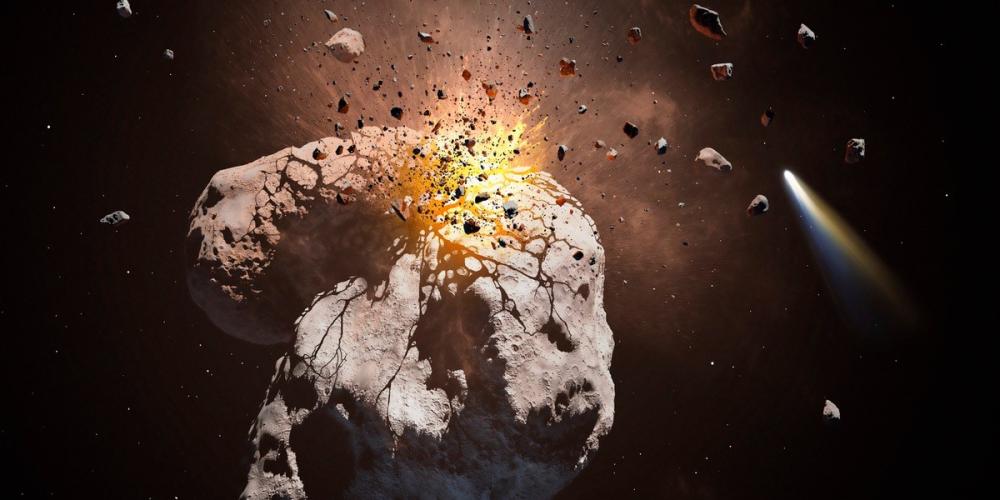
When we think of material arriving to Earth from space, spectacular meteorites and enormous impact craters often come to mind. Far more commonly, however, our planet is showered with an almost invisible rain of cosmic dust. This dust consists of micrometeorites: tiny fragments produced by collisions between asteroids and comets in our Solar System. For more than a decade, the AMGC research team at Vrije Universiteit Brussel has collected these particles in Antarctica, Greenland, the Atacama Desert and even on urban rooftops. Although often smaller than a grain of sand, micrometeorites are by far the most abundant extraterrestrial material reaching Earth.
Recent research shows that micrometeorites can remain preserved in sedimentary rocks for hundreds of millions of years. The ERC project FLUX studies these fossil dust particles as tiny time capsules, revealing how the influx of extraterrestrial material has changed through time and offering new insights into the evolving dynamics of the Solar System and the potential effects of cosmic debris on the Earth system. Because micrometeorites interact with the atmosphere during their descent, they also preserve valuable clues about the composition of Earth’s ancient atmosphere.
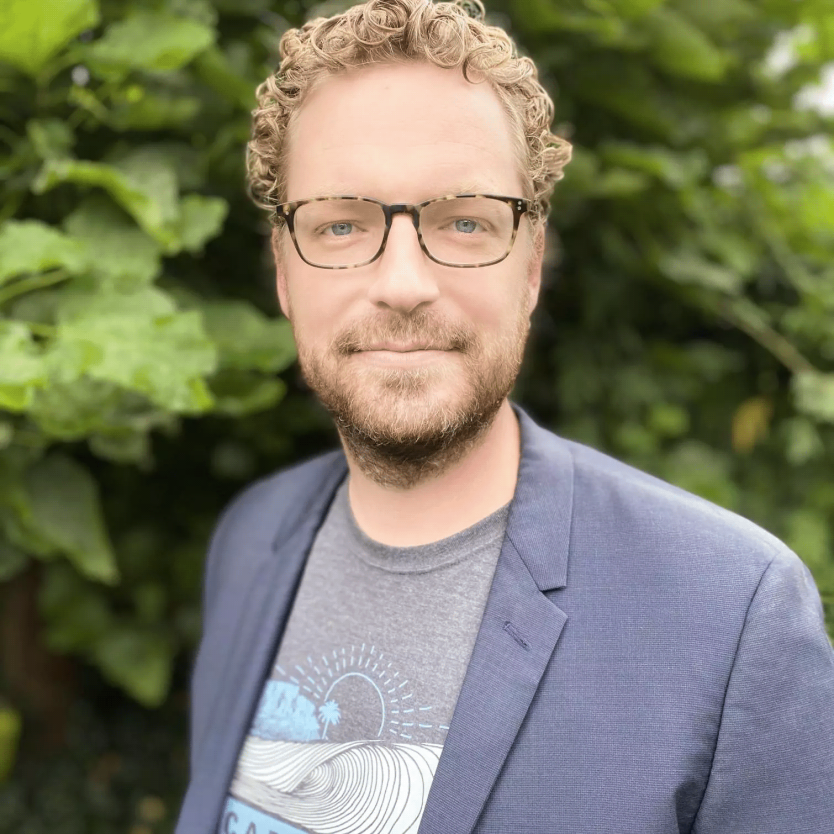
Steven Goderis
About Professor Steven Goderis and the FLUX team
Steven Goderis is a Research Professor at the Vrije Universiteit Brussel and Principal Investigator of the ERC Consolidator Grant FLUX: Tracing the FLUX of Cosmic Dust Arriving to Earth During the Phanerozoic. The FLUX team studies modern and fossil micrometeorites to reconstruct how the influx of extraterrestrial material has changed over the last 500 million years. Their research combines fossil particles extracted from sedimentary rocks with meteorites and micrometeorites collected around the world, from the Atacama Desert to Greenland and Antarctica.
About the European Research Council (ERC)
The European Research Council (ERC) provides funding for the implementation of ground-breaking research for a period of 5 (6) years. The ERC programme, provides a distinctive funding mechanism devoted to scientific excellence for all scientific fields.
Currently, Vrije Universiteit Brussel proudly hosts more than 20 ERC-projects and their Principal Investigators.

The world needs you
This initiative is part of VUB's public programme, a programme for everyone who believes that scientific knowledge, critical thinking and dialogue are an important first step to create impact in the world.
As an Urban Engaged University, VUB aims to be a driver of change in the world. With our academic edcuational programmes and innovative research, we contribute to the Sustainable Development Goals of the United Nations and to making a difference locally and globally.