



After the death of the controversial Cambridge professor, the debate shifted from a merciless witch-hunt to a tragic portrait. Florian Deroo dissects the hypocrisy and puts his finger on the sore spot of an everyday culture of bluffing.
Strange what a death does. In the days after Jason Arday was found dead at home, the discourse surrounding the written-off professor noticeably began to shift. Even the media outlets that had relentlessly continued to dig into the man's personal life, fact-check it and spread it across their front pages, now spoke of a tragedy. A certain solemnity crept into the reporting. This man needed care, was the message. From a boy from a council estate in Clapham to the youngest Black Cambridge professor ever; now it is above all the portrait of a troubled individual that is being constructed.
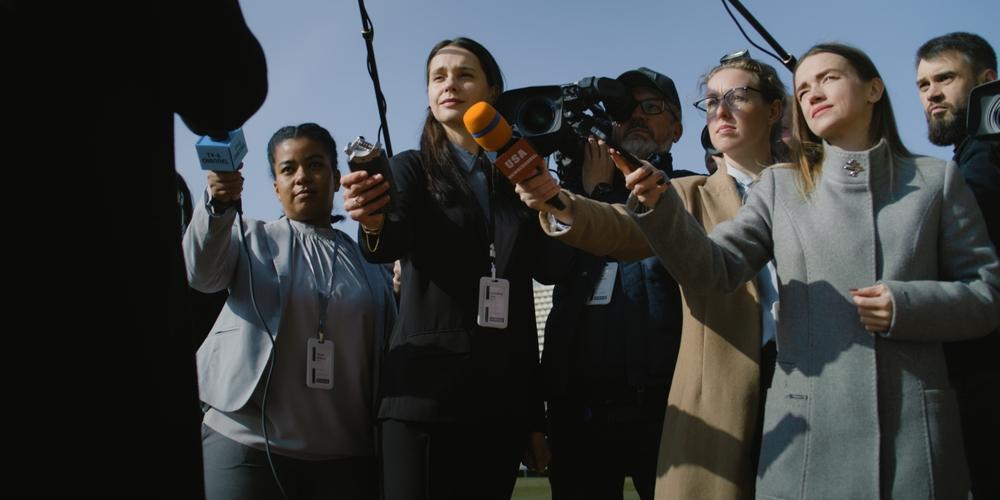
In the aftermath of the frenzy of the prosecution, the public is meanwhile trying to shake off an uncomfortable feeling. Because wasn't it wonderful to see a great fabulist at work once again? And then, whipped up by a sense of self-righteousness, to expose all the lies? It was like watching an episode of Inspector Morse, but now you could make your voice heard from a distance, fuelling the witch-hunt itself. The setting was exclusive and the lies were colourful. There was talk of a pig's head in a cardboard box. Thirty-five marathons in thirty days. A brain tumour operation, two weeks before a public defence. And soon you would be able to read everything in Great and unfortunate things, the memoirs for which the education sociologist was reportedly paid an advance of 1.4 million.
Images from 2023 circulated online in which a dean praised the work of the newly appointed Arday as “the best in the world”. When the Times Higher Education wanted to expose Arday's plagiarism last year, he hired a law firm. But anyone who now claims that the case was purely about academic integrity is acting in bad faith. It was a race scientist at Ghent University who led the attack. For a broader anti-woke coalition, spanning right and left, Arday had to become the symbol of everything that is wrong with diversity and inclusion policies. If Arday had not been a Black man, there of course would never have been so much media-fuelled persecution around this. The prosecutorial zeal was part of the structural distrust that racialised minorities face when they enter established institutions. See, something is wrong here. There are other plagiarising professors, including at Cambridge, who are still comfortably occupying their chairs.
Structurally rotten
At the same time, we do Arday a disservice by now pathologising him, or by portraying him as a passive victim, an innocent martyr. As the American essayist Sam Kriss still emphasised: the man was effectively a genius fraudster. Like a true folk hero, he worked, bluffed and charmed his way up the social ladder. A liberal-progressive white elite could be seduced by a good rags-to-riches story. It could use it as moral capital. And it genuinely wanted to believe it. Arday played the role virtuously, just a little too grandly — and was held accountable when the masquerade collapsed. He made use of the techniques and loopholes that were available, and it would be false to pretend now that the fortresses he penetrated were themselves spotless.
That is where the real scandal of the Arday case lies. Not in the lies themselves, but in the truth they expose. Like a soft spot in a damp wall, you only had to keep pressing on this story and the layers of structural rot became visible. Elite institutions that like to showcase exceptional figures symbolically, while institutional changes fail to materialise. An academic context in which so much has to be published that appointment committees do not have time to read everything thoroughly, let alone examine it critically. Media cycles looking for outrage and for heroes whom they can later recycle as sacrificial lambs. Publishers that capitalise on suffering. Sectors in which not the work itself, but self-presentation turns out to be decisive. A production logic based on converting minimal input into inflated value.
Florian Deroo © Ilias Teirlinck
Lightning rod
In such an environment, fraud begins to become tempting. And let's be honest, among ourselves. Aren't we encouraged to learn to do it ourselves, don't we get a demonstration of it every day? That the fastest route to success is fraud? Those who want to remain competitive, so the whisper goes, are best off cutting corners. Bluffing during a meeting. Pretending that those sentences from ChatGPT are their own words. Setting up a clever financial construction. Making oneself a few centimetres taller on Tinder. Exaggerating the social impact in the programme booklet. Submitting that not-so-well-founded advisory report anyway. Who is actually checking anymore, who can still invest the time and effort in doing so? To be punished severely, you already have to be under suspicion beforehand, have enemies, or set up a large-scale scheme. Arday met all three conditions.
Those who have committed a smaller sin are happy to cast the first stone, and a hard one at that. Besides being an outlet for highly educated resentment, a gift to a smear campaign and a weapon in a culture war, Arday's story was also a lightning rod. His blatant lie overshadowed the less conspicuous deception. It almost absolved it.