

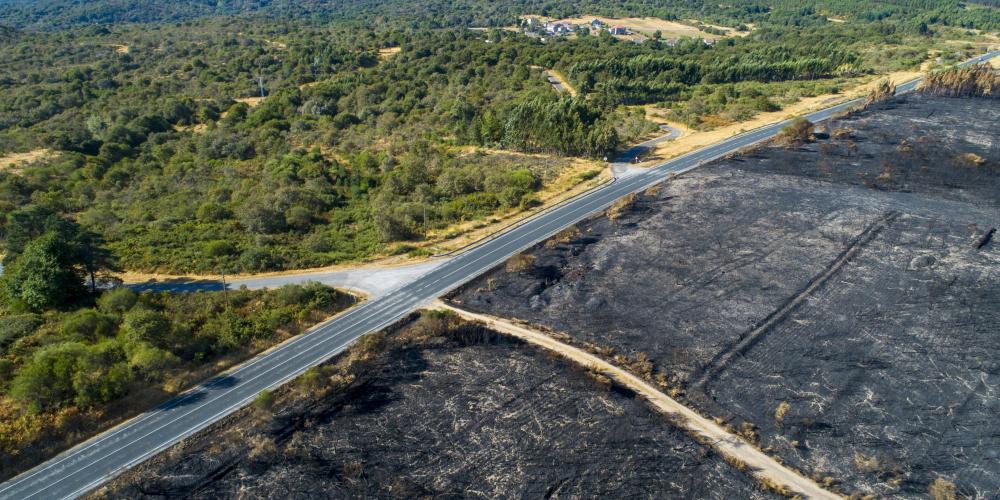


Heatwaves, droughts, wildfires and floods are no longer isolated events. New research led by Vrije Universiteit Brussel (VUB) shows that Europe's transport infrastructure is becoming increasingly vulnerable to these climate extremes. Without stronger climate action, exposure to these hazards is expected to rise sharply over the coming decades, with far-reaching consequences for mobility, the economy and public health.
Climate extremes, such as heatwaves, river floods, droughts and wildfires are becoming more frequent and severe with rising temperatures around the world. New research led by the Vrije Universiteit Brussel (VUB) shows that these climate extremes are already affecting all transport modes across large parts of Europe today. Roads, railways, ports, inland waterways and airports are all suffering from infrastructure damage, service disruptions, with detrimental impacts on travellers’ health.
Recent extreme events show billions of euros of economic damage, illustrating the scale of the challenge. The 2018 drought in the Rhine River severely disrupted inland waterway transport due to water levels at an all-time low, and resulted in an estimated €2.4 billion in economic losses in Germany alone. This past June, a record setting heatwave in terms of temperatures reached resulted in France, Belgium and UK train companies to cut services due to maladapted trains or sagging power lines, while in the UK, rail operators slowed train journeys for safety reasons in case of track buckling.
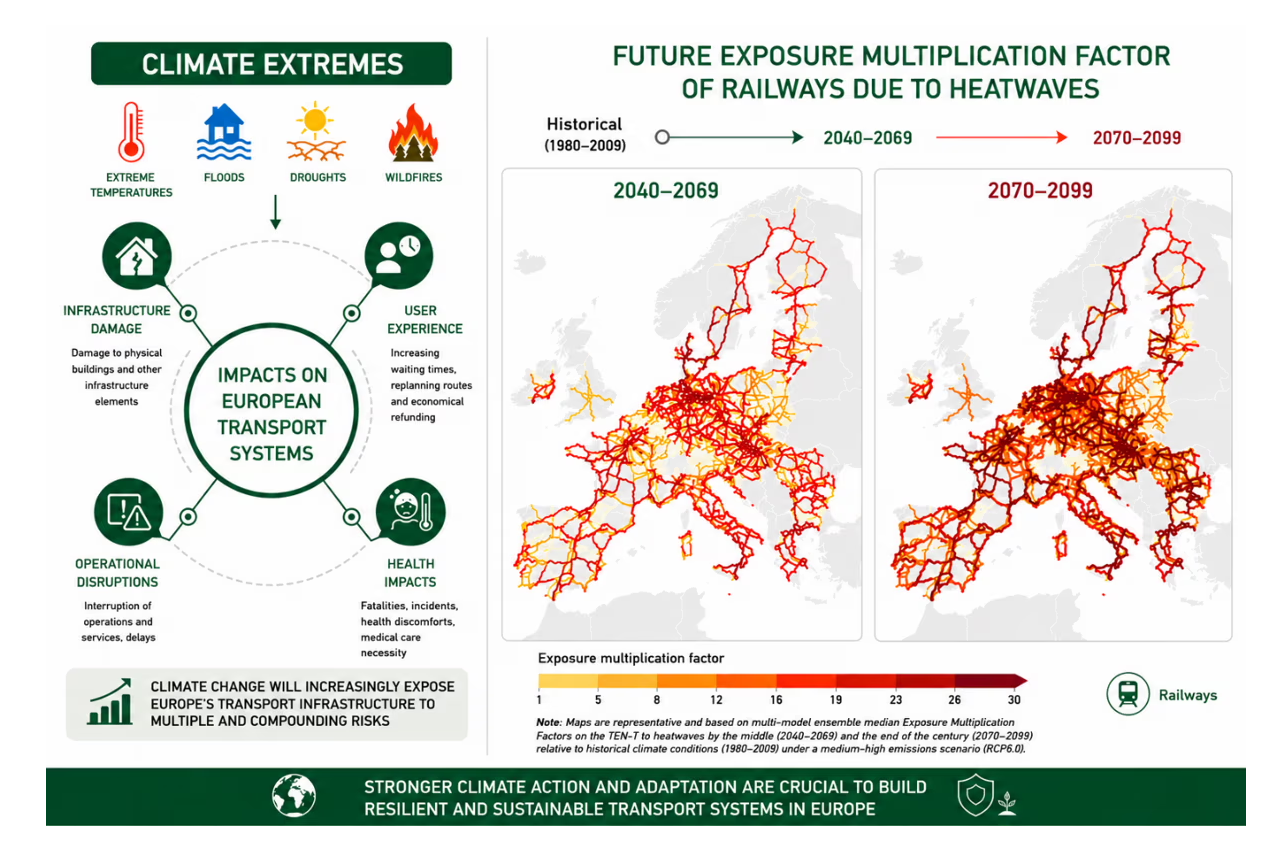
Figure 1. Exposure of European transport modes to climate change. Source: Cristina Deidda (VUB).
Exposure of European transport modes to climate change
The study highlights the benefits of climate mitigation by comparing exposure of transport under a low-emission pathway (compatible with reaching 2°C in 2100) vs a pathway following current policies (reaching 3°C in 2100), using 15 different climate impact models. Under all emission pathways, exposure of transport infrastructure to multiple climate hazards is projected to increase, particularly as climate extremes start occurring simultaneously or in close succession.
Under an emission pathway consistent with current climate policies (reaching 3°C of global warming by 2100)
Exposure of transport infrastructure to hazards is projected to increase substantially:
- Heatwaves: highest projected increase in occurrence across all transport modes. Compared with historical conditions (1980–2009), exposure of European transport infrastructure to extreme heat could increase by up to 30 times by mid-century (2040–2069).
- Droughts: By mid-century, droughts could affect more than half of Europe's inland waterways for the first time, threatening freight transport along major rivers.
- Wildfires: By the end of the century, roads and railways could experience up to 26 times more wildfires
- River floods: exposure to river floods could increase locally by as much as eight times.
Under a low-emission pathway (compatible with reaching 2 °C by 2100)
Transport modes show substantially lower exposure to all hazards, particularly droughts and heatwaves. By mid-century, average exposure increases could already be reduced by 22–30% compared with the current policies emission pathway.
Cristina Deidda, lead author of the study and Postdoctoral researcher at VUB says: “It is important to note that climate impacts are not limited to direct damage to infrastructure. Delays, route closures and interruptions to passenger and freight services can affect supply chains, economic activity and public health. In recent years, cases of passengers stranded on trains for hours during heatwaves have become increasingly common, sometimes leading to heat exhaustion and hospitalizations.”
“Urgent action is needed to prepare Europe's transport systems for a changing climate. This is extremely relevant as the European Commission prepares the European Climate Resilience and Risk Management Integrated Framework. A more prepared and resilient Europe needs transport networks that are adapted to climate extremes to thrive economically and societally. Developing and investing in resilient infrastructure, updating design standards and ensuring climate-informed planning is essential to ensure that Europe is prepared for current and future climate extremes.”
Wim Thiery, senior author of the study and Professor climate science at VUB says: "Our results show that adaptation alone is unlikely to be sufficient. Ending greenhouse gas emissions, particularly from the burning of fossil fuels, will substantially reduce the future exposure for European transport infrastructure to extreme events. Ambitious emission reductions combined with targeted adaptation measures will be essential to maintain the reliability and resilience of Europe's transport infrastructure."
Wolfgang Schade, scientific director at M-Five and leading the support study for the European Commission: "The scenarios we analysed until 2050 show that risks are substantial and strongly rise as we increase emissions. This means that reducing fossil fuel use and adaptation to climate change both need to be accelerated to limit adverse impacts on EU transport and economy."
Key findings
- Climate extremes already exert considerable pressure on transport systems across Europe. These events not only damage critical infrastructure but also disrupt operations, increase costs, and negatively affect user experiences, leading to longer waiting times and health risks. Italy, France, and Germany show the highest levels of exposure between 2010 and 2018, with floods alone causing damages exceeding EUR 6 billion to railways and roads.
- Recent events across Europe, including the 2018 hot and dry conditions in Central Europe, the 2021 Western European floods, the repeated flooding in Greece over the past four years, and the 2023 co-occurring heatwave and wildfire episodes all over Europe, demonstrate that climate extremes increasingly occur as compound events, i.e. climate extremes interact across space and time. As climate change increases the frequency and intensity of individual extremes, it also raises the probability that extreme events occur simultaneously, in close succession or over multiple areas. Overlapping climate extremes often produce impacts that are substantially greater than from individual hazards alone.
- The Mediterranean region is emerging as a hotspot for multiple hazards. This region could face the strongest increase in the number of heatwaves and wildfires across Europe. For wildfires, models project a high local increase, with 19% of all transport networks impacted by mid-century, with an exposure factor of up to 26 times that of historical conditions (1980-2009) by 2100 under current policies.
- Under current policies emission pathways, climate model projections indicate that exposure to climate extremes will increase substantially by mid- and end-of-century. Heatwaves show the largest increase, with more than 90% of the transport network expected to face an increase in exposure by mid-century, followed by droughts, wildfires, and floods.
- Heatwaves and droughts are projected to have the largest spatial expansion. By mid-century, up to 45% of railways and roads and 40% of inland waterways are projected to face drought conditions, increasing to over 70% of the inland waterways network by the end of the century under current policies. This implies that even low-risk regions today will be impacted in the coming decades.
- The comparison between emission pathways highlights the benefits of mitigation. Under a low-emission scenario (reaching 2 °C by 2100), projected exposure increases are smaller than under current policies. Exposure of the transport network is already reduced by mid-century, with the largest avoided exposure for heatwaves, droughts, and wildfires.
More information
Full paper
Deidda, C., Khanna, A., Schade, W., Smith, C., & Thiery, W. (2026). Europe's transport infrastructure is not ready to face climate change. EGUsphere.
Contact
- Cristina Deidda – Postdoctoral Researcher, Department of Water and Climate, Vrije Universiteit Brussel (VUB)
cristina.deidda@vub.be - Professor Wim Thiery – Department of Water and Climate, Vrije Universiteit Brussel (VUB)
wim.thiery@vub.be