



How do we see children? How do they experience the world? And when do you actually stop being a child? These are not new questions. VUB researcher Beau Serrus and KU Leuven researcher Imola Nagy-Seres delve into the literature of 100 years ago, revealing how modernist writers were already challenging traditional ideas about children and growing up. And how relevant their ideas remain today. “They often used child characters to criticise imperialist and nationalist ways of thinking.”
You study how writers a hundred years ago viewed children. Why is that relevant today?
Imola Nagy-Seres: “For a long time, childhood was seen as a series of developmental stages designed to prepare children for their roles as adults. Many scientific theories of the time were based on evolutionary thinking, with the white, educated upper-class man presented as the ultimate ideal of development. In my research, I examine how female modernist writers resisted this view. Through unconventional representations of children, they challenged traditional ideas about gender and identity. The child thus became a symbol of feminist resistance as well. During the same period, there was growing attention to the child as an individual with their own needs, physical, intellectual and emotional. A clear example is the physician and educationalist Maria Montessori, who introduced innovative ideas about education. According to Montessori, children do not learn only from books, but through all their senses: by smelling, touching and exploring their surroundings. Her ideas remain relevant today.”
Beau Serrus: “Within the British Empire too, children were often viewed primarily in terms of their future usefulness: they were expected to grow into adults who would serve the colonial system. Modernist writers began to question that perspective and showed how multifaceted children could be. Their stories gave space not only to children's future as adults, but also to their experiences in the here and now. They often used child characters to criticise imperialist and nationalist ways of thinking.”
How did they do that in practice?
Imola: “In The Waves by Virginia Woolf, a novel published in 1931, Rhoda plays with flower petals, floating them like little boats in a bowl of water. Real toy boats were reserved for boys, so she had to find an alternative. I think it is wonderful how Woolf uses such an apparently innocent scene to present a completely different, female form of creativity.”
Beau: “Another striking example comes from the Indian writer Mulk Raj Anand. In Seven Summers, one of his stories, an Indian boy visits a colonial exhibition intended to showcase the wealth and power of the British Empire. He barely notices it. What really captures his attention is the traditional Indian ice cream he eats afterwards. It is a subtle form of resistance. The story is also about the expectations of his father, who wants his son to excel so that he can one day hold a prestigious position, while the boy would much rather play games and explore his surroundings. Through such small moments, modernist writers challenged adult expectations and the colonial system itself.”
“Modernist writers blur that sharp boundary between childhood and adulthood”
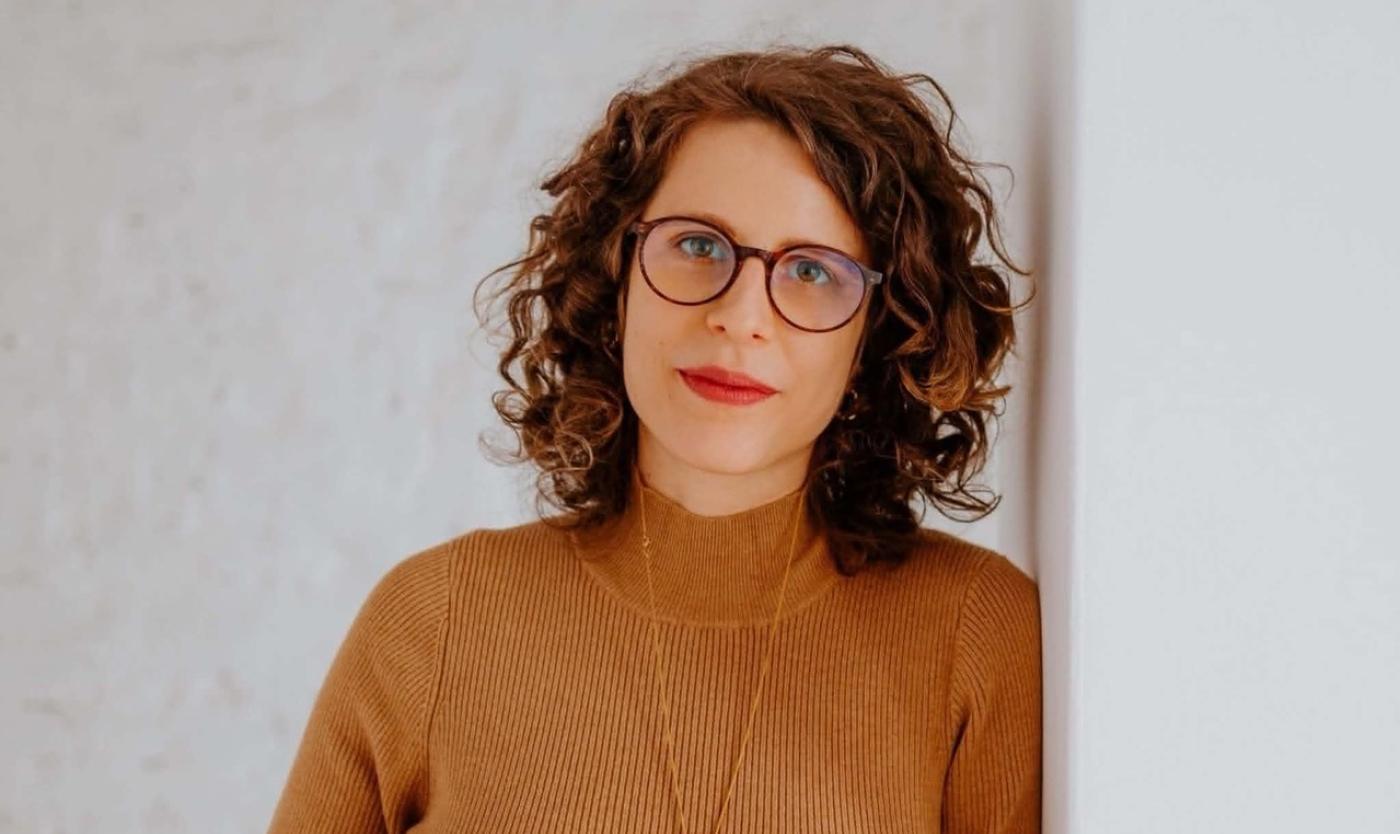
Imola Nagy-Seres
Today we consider young people adults at the age of eighteen. Is that boundary really so clear-cut?
Imola: “In my view, it is impossible to determine exactly when childhood ends. Of course, psychology distinguishes between different developmental stages, but there are so many individual differences. Modernist writers blur that sharp boundary between childhood and adulthood. They often created child characters who behaved like adults, sometimes even committing crimes. Conversely, many writers viewed childhood as a source of inspiration. They wanted to preserve that openness and fresh way of seeing the world into adulthood.”
“Children are often guided by sensory experiences that adults regard as of little practical use, but which can sometimes lead to innovative insights”
Children today grow up with smartphones, tablets and an abundance of toys. Can they learn anything from the children in these stories?
Imola: “We should, of course, distinguish between fictional characters and real children. But I am fascinated by how children in older stories amuse themselves with the simplest things. In Prelude by Katherine Mansfield, Kezia organises an elaborate imaginary dinner using twigs, stones and seashells. Even snails and ants join her at the table. Broken or incomplete toys also appear frequently in modernist literature. The pleasure children find in them moves me. Perhaps that is something children today can learn: to experience the world more fully through all their senses. And for parents and educators, it is important to give children sufficient time for free play, without attaching an educational objective to it.”
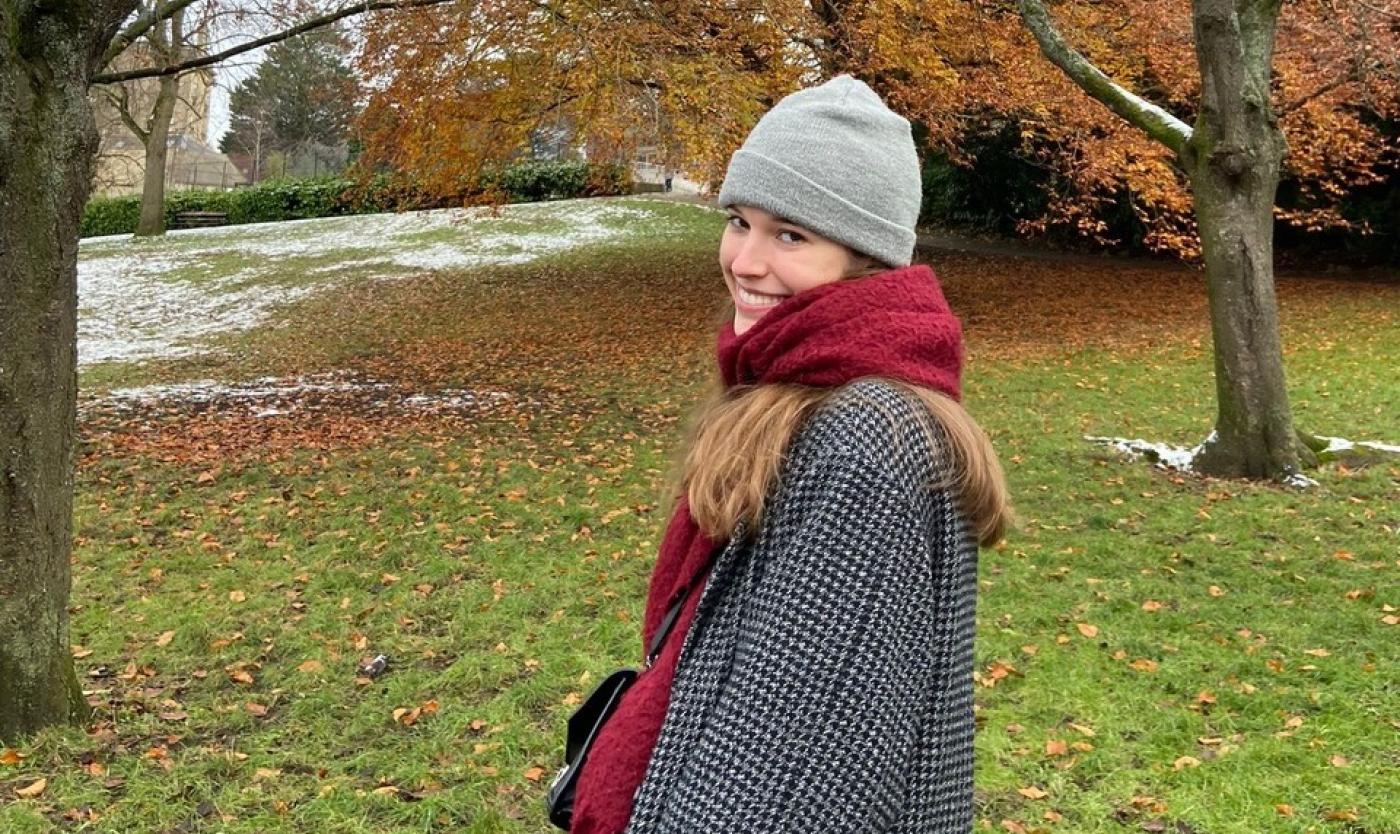
Beau Serrus
Beau: “One thing that stands out in my research is how often children are guided by sensory experiences that adults may consider unimportant, but which sometimes lead to genuinely innovative insights. Modernist writers drew inspiration from this. Perhaps we could do the same more often: paying closer attention to what is happening around us, with an open mind.”
“Female modernist authors show how caring for children can be deeply innovative and even radical”
Has your research changed the way you look at children yourselves?
Beau: “Absolutely. In To the Lighthouse by Virginia Woolf, I was struck by the contradictions with which she depicts children: sometimes angelic and innocent, then cruel or even sinister. As adults, we often project our own wishes and expectations for the future onto children. Modernist literature shows that children cannot simply be placed into a single category."
Imola: “My son is two and a half years old, and like many new parents I enthusiastically bought educational toys for him. But honestly? Most of them hardly interested him. He much prefers playing with stones or other everyday objects. That reminded me of Katherine Mansfield, who criticised some of Montessori’s ideas because she felt they directed children’s attention too strongly. We still have educational toys at home, although I may be the one who is most fascinated by them. I could not help smiling when I realised how closely my experiences as a mother connected with my research. Modernist literature has certainly influenced the way I see things.”
What do you hope to achieve with your research?
Imola: “Literature can make us think differently. My research also explores themes related to motherhood. Becoming a mother or staying at home to care for your child is not something we immediately associate with feminism. Yet female modernist authors show how caring for children can be deeply innovative and even radical. You can see this in modernist art as well. The German painter Paula Modersohn-Becker often depicted pregnant women and mothers as powerful, self-assured figures, using bold colours and brushstrokes. Modernist art can help us revisit deeply rooted ideas from a different perspective. That is what I hope to make visible to a wider audience through my research.”
Beau: “For a long time, research into modernist literature focused mainly on a Western canon. Through my project, I want to broaden that picture and highlight lesser-studied authors such as Mulk Raj Anand. How did modernist writers in different parts of the world think about children and education? Were there connections and influences between them? Sometimes it genuinely feels like piecing together a puzzle.”
On 20 November, children's rights take centre stage. How do you connect your research to children's freedom?
Beau: “Although they emerged from different social developments, I see clear parallels between modernist literature and the United Nations Convention on the Rights of the Child, adopted in 1989. They share an important principle: children are individuals with their own voices, deserving the space to discover the world for themselves.”
Imola: “Modernist literature played an important role in recognising children as individuals. That fits perfectly within the broader cultural, social and legal evolution.”
BIO
Beau Serrus is a PhD researcher at VUB, funded by the Research Foundation – Flanders (FWO). In her project, Far from Innocent: Modernism, Children and the British Empire (1897–1960), she examines how modernist writers used child figures to critically explore ideas of progress, nationalism and British colonialism. Her research has been recognised with both the BAAHE Thesis Prize and the Herman Servotte Prize.
Imola Nagy-Seres (KU Leuven) is an MSCA postdoctoral researcher working on the project “Modernist Childhoods: The Figure of the Child in Women’s Fiction, c. 1890 – 1950”. She investigates how female modernist authors portrayed children and childhood in fiction, thereby challenging traditional ideas about education, gender and identity. She has previously conducted research in Berlin and Tokyo.