



VUB guest professor Sarah El Amouri has received the Henri Rolin Prize 2025 for her book Regulating Business in Illegal Occupations: The Duty of Non-Assistance Revisited. In it, she examines the regulation of economic activities in illegally occupied territories under international law. She concludes that states must also take measures to prevent their companies from helping to sustain an unlawful occupation.
The prize was awarded at the Université libre de Bruxelles (ULB), during the opening of the academic year of the advanced master's programme in International Law at the Centre de droit international. The Henri Rolin Prize is a scientific distinction of the ULB, funded by the Fonds Henri Rolin. The prize carries an amount of 2,500 euros.
What happens when a state illegally occupies a territory and foreign companies continue to do business there? Can states then limit themselves to not providing support to that occupation, or must they also intervene when their companies contribute to it? El Amouri's research addresses that question.
Her answer is clear. Under international law, states must not contribute to the maintenance of an illegal occupation or support it. El Amouri argues that they must moreover make efforts to prevent companies possessing their nationality from doing so.
This may, for example, arise when a company's economic activities contribute to the continued existence of an illegal occupation. According to El Amouri, responsibility then lies not only with the company. The country whose nationality the company possesses is also responsible for taking action. It is precisely here that the core of her research lies.
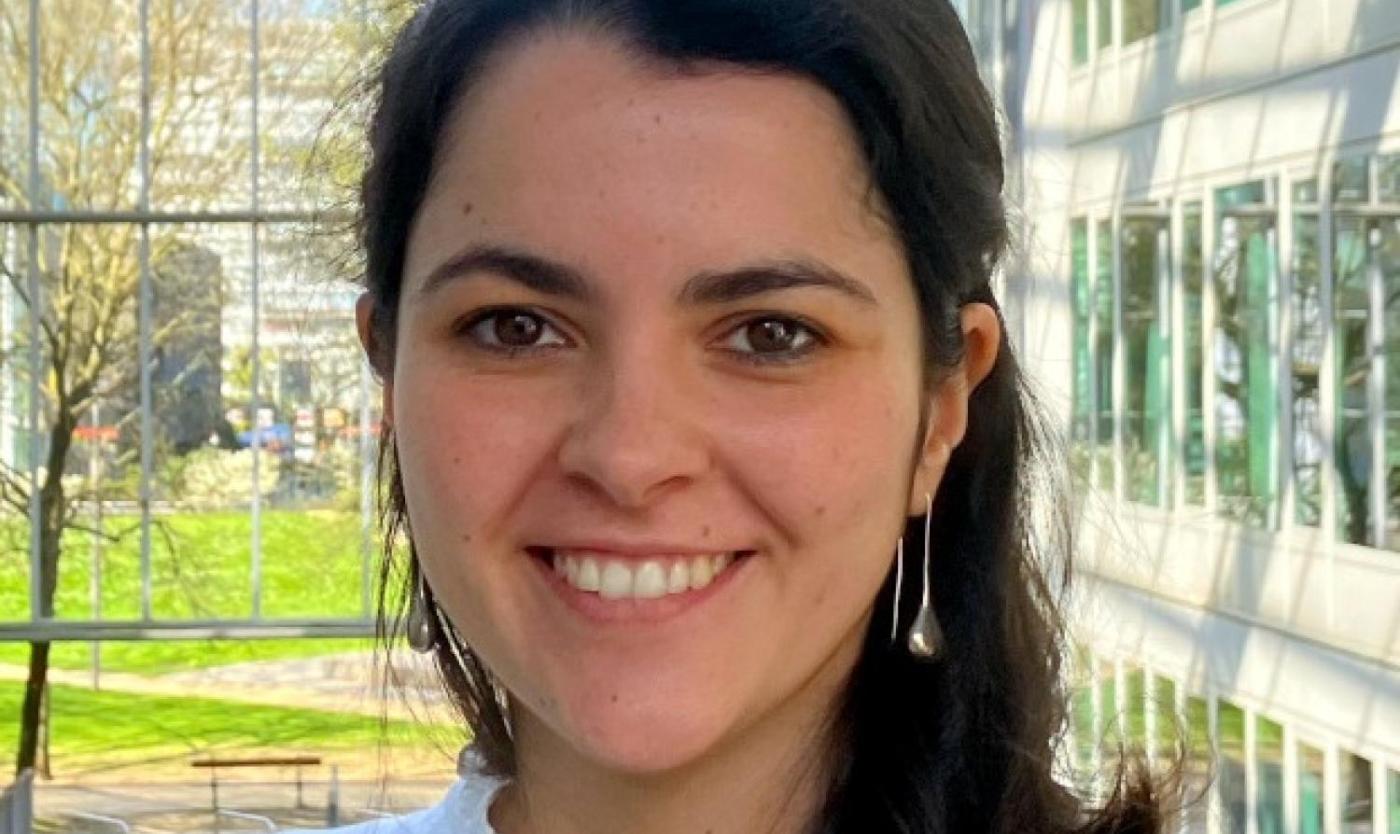
Sarah El Amouri
El Amouri gives a broader meaning to the existing duty of ‘non-assistance’ under customary international law, namely the duty not to provide support to a situation maintained in violation of peremptory rules of international law. Refraining from providing assistance to an illegal occupation through a state's own activities is, in her view, not always enough: states must also take measures to prevent their companies from helping to sustain such a situation.
El Amouri defended the research as a doctoral thesis at the VUB in 2024, under the supervision of VUB professor Stefaan Smis. In 2025, it was published in book form by Larcier-Intersentia.
From law student to guest professor
The academic career of El Amouri is closely linked to the VUB. As a law student, she graduated there in 2018 summa cum laude as the top student of her year. She subsequently gained experience in Belgian diplomacy and European institutions. From 2020 to 2024, she worked on her doctoral thesis as an FWO doctoral research fellow. During her doctorate, she conducted research at the Max Planck Institute for Comparative Public Law and International Law in Heidelberg and at the Lauterpacht Centre for International Law of the University of Cambridge.
Since the 2026-2027 academic year, El Amouri has been a guest professor at the Faculty of Law and Criminology of the VUB, where she teaches migration law. She is also a guest professor at the Brussels School of Governance, where she co-teaches European and international law. In addition, she works as an attaché at the Council for Alien Law Litigation. Her research focuses, among other things, on public international law, state responsibility, occupation law, businesses in armed conflicts, and migration law.
With the Henri Rolin Prize, the ULB recognises her research on the responsibility of states for economic activities in illegally occupied territories. The distinction aims to promote high-quality research in the field of international law.