



The summer of 2026 is all but over. It laid bare how closely heat, drought, ice and water are interconnected. It was a summer in which water disappeared from more and more places. Rivers fell to worryingly low levels, soils dried out, natural areas caught fire, and snow and glacier ice in the Alps melted away at an alarming rate. At the same time, European seas warmed exceptionally strongly. Four VUB researchers reflect on what appears today to have been an exceptional summer, but may well become the norm in the near future. “People still tend to think in terms of a single type of system or a single extreme event, as if these occur independently, whereas systems are inherently interconnected.”
The European summer of 2026 in fact began before summer had properly started. In May, an exceptionally early and intense heatwave swept across Western Europe. What followed was not a series of isolated weather extremes, but a chain reaction: the heat accelerated evaporation, soils dried out, rivers dropped to exceptionally low levels, and parched vegetation became fuel for wildfires. At the same time, snow and ice in the Alps disappeared unusually early, while European seas also warmed significantly.
June immediately set the tone. Western Europe experienced its warmest June since records began and, across Europe as a whole, it was the second warmest June ever recorded. The heat then persisted. July 2026 was the second warmest July ever measured globally, and Western Europe experienced its warmest June-July period since records began. New heatwaves followed in August.
Belgium was no exception. Several periods with temperatures above 30°C followed one another and, in August, local temperatures reached around 37°C. The consequences were not only uncomfortable but deadly. “This summer, excess mortality linked to heat in Belgium was among the highest in Europe,” says VUB glaciologist and climatologist Harry Zekollari. “That shows just how severe this summer has been. People have died because of the heat.”
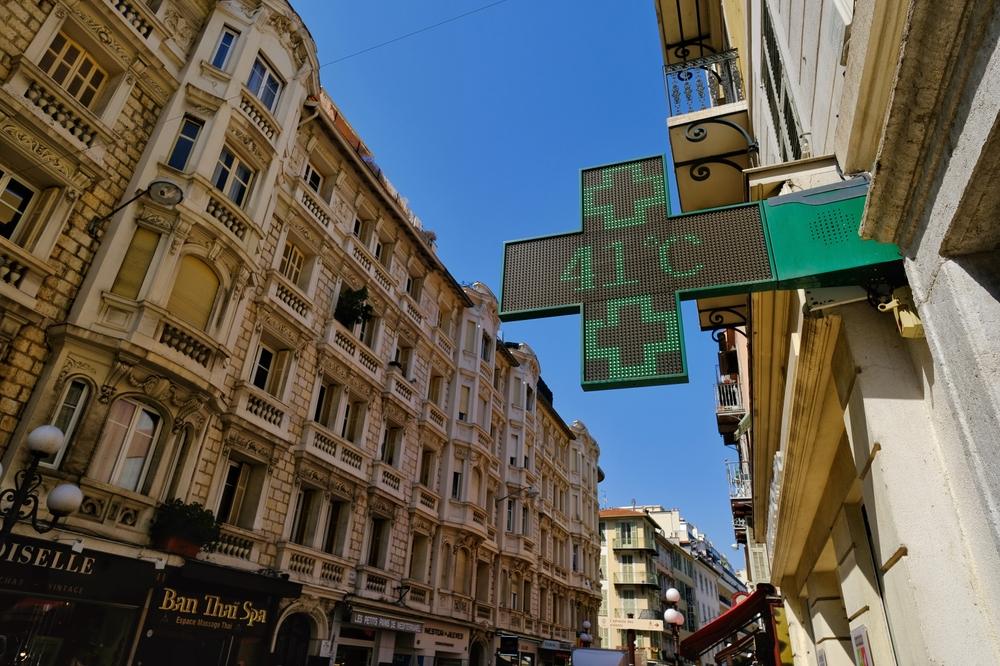
Cities are particularly vulnerable. Stone and concrete absorb heat during the day and release it again in the evening and at night. As a result, people have less opportunity to recover from the heat. Green spaces make a striking difference. “In a green environment with plenty of trees, temperatures can easily be several degrees lower,” says Zekollari. “If, on top of the urban heat-island effect, you add several more degrees of climate warming, people really feel it.”
More than just a lack of rain
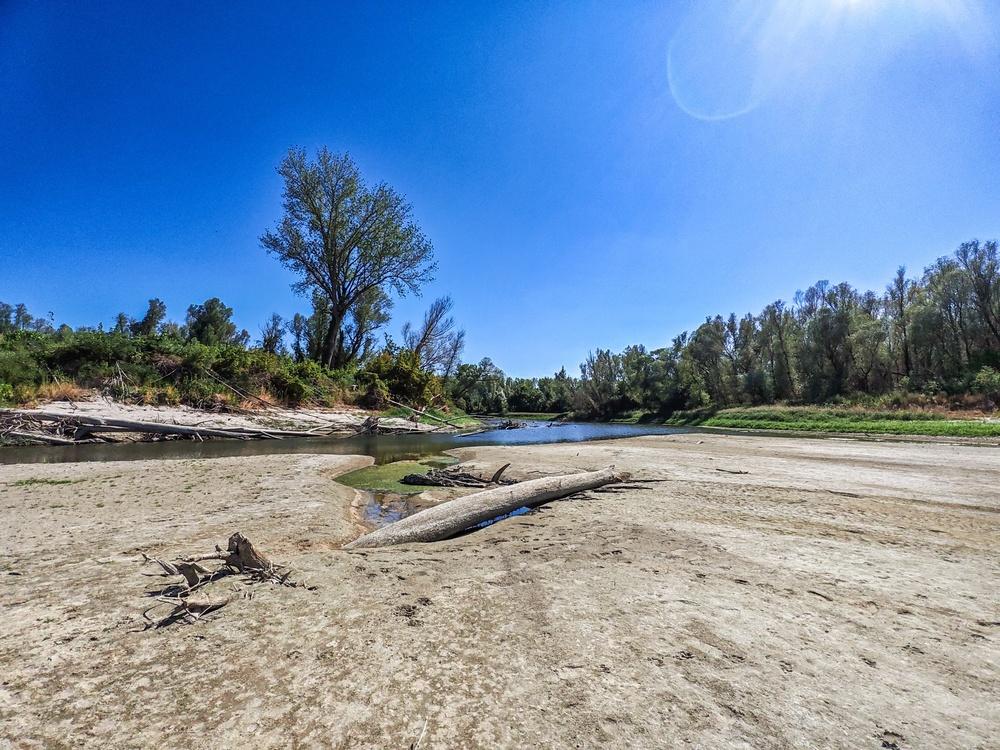
The summer also made it clear that drought is about much more than a lack of rainfall. Parts of Western Europe emerged from a relatively wet winter, but high temperatures greatly increase evaporation. Plants lose more water and soils dry out faster. By the end of July, around half of the territory of the European Union and the United Kingdom was experiencing drought conditions. Grasslands turned brown, crops suffered from water shortages, and rivers and streams rapidly lost discharge.
In August, major European rivers such as the Rhine, Danube, Loire and Po reached exceptionally low, and in some places record-low, water levels. Freight vessels on the Rhine had to reduce their cargo loads and navigation on the Danube also became more difficult. The effects extend to agriculture, industry and even electricity production, which depends on sufficient supplies of cool river water.
“People have died because of the heat”
Water reserves also came under pressure in Belgium. Yet for VUB Professor of Groundwater Hydrology Marijke Huysmans, it is important not to focus solely on the problem. Flanders is not a desert: enough rainfall falls over the course of a year. The challenge is to retain much more of that water when it is available. “Waiting for rain is not a strategy,” she wrote this summer in an opinion piece for De Tijd. Climate change is making droughts more frequent, longer and more intense, while they increasingly coincide with heatwaves.
Solutions do exist. Retaining water for longer, allowing rainwater to infiltrate into the ground, restoring wetlands, reconnecting rivers with their natural meanders and reusing treated wastewater can all increase water storage capacity. Agriculture, industry, the construction sector, cities and municipalities can also contribute through rainwater harvesting, controlled drainage systems, circular water use, depaving and greening initiatives.
What is particularly interesting is that such measures do not only help combat drought. Allowing more water to infiltrate and be retained can also reduce the impact of extreme rainfall. According to Huysmans, Flanders has already built up considerable expertise and experience through initiatives such as the Sigma Plan and the Blue Deal. The main challenge is not to postpone investment. “Let this latest dry summer become a turning point for accelerating and expanding investments in a robust water system.” The title of her opinion piece neatly captures the message: the next dry summer starts today.
Glaciers are heading towards another disastrous year
While rivers were drying up below, the winter snowpack high in the Alps disappeared exceptionally early. On the Rhône Glacier in Switzerland, the protective snow layer had already vanished by the end of June. From that moment onwards, it was no longer the snow but the glacier ice itself that began to melt. At some monitoring sites, more than a metre of ice disappeared in barely two weeks.
“The disappearance of permafrost is a risk factor”
“The two worst years so far were 2022 and 2023,” says Zekollari. “In 2022, Alpine glaciers lost around six per cent of their mass in a single year, and in 2023 around four per cent. This year we may be heading towards five per cent volume loss.” The cause is a combination of limited winter snowfall, a warm spring, an exceptionally warm June and then a long, hot summer. “We already know that 2026 will be a very bad year for glaciers. The only remaining question is how close we will come to the record losses of 2022.”
This also affects water availability. Glaciers are natural reservoirs that store water as snow and ice during winter and release it again during warm summers. Initially, warming even increases the amount of meltwater. But an ever-smaller glacier can ultimately provide ever-smaller quantities of water. Scientists refer to this tipping point as peak water.
“In the Alps, we have already passed that peak,” says Zekollari. “That means glaciers there are already supplying less water in summer.” Elsewhere, that tipping point is expected to occur later, in some regions only between 2050 and 2070. The stakes are high: globally, hundreds of millions of people depend on snow and glacier meltwater for their water supply.
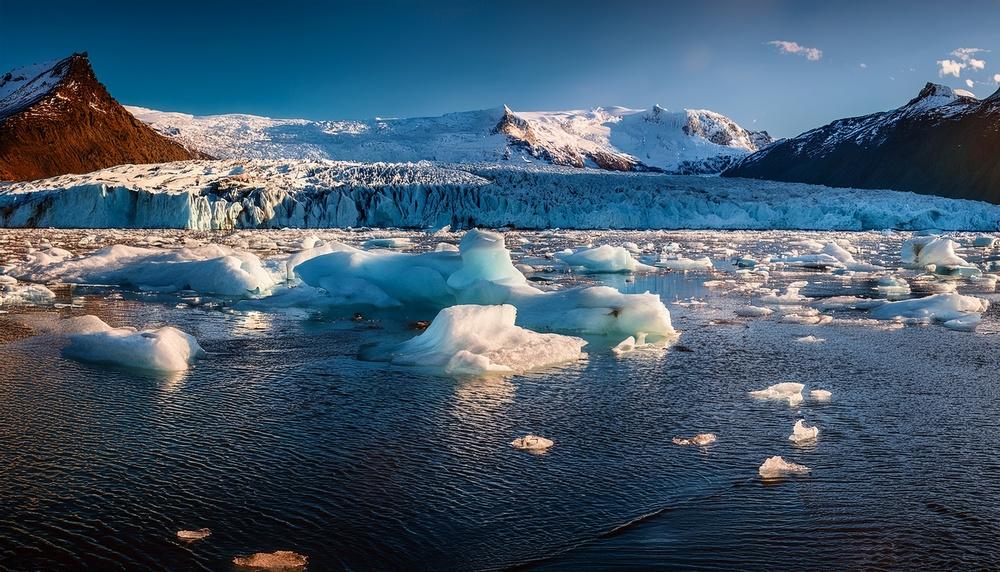
Changes in high mountain regions bring other risks too. Shrinking glaciers provide less support to mountain slopes, while rising temperatures degrade permafrost. These permanently frozen ground masses are found not only in soils but also in cracks within rock faces. When the ice in these fissures thaws, rock formations can become less stable. The disappearance of permafrost is therefore a risk factor that can increase rockfalls and mountain collapses. Furthermore, extensive permafrost regions across Eurasia and North America have trapped large quantities of greenhouse gases for hundreds of thousands of years, which are released as the ground thaws.
Zekollari nevertheless cautions against overly simplistic conclusions whenever a glacier or mountainside collapses. “Glaciers can also become unstable or collapse naturally. As scientists, we therefore mainly look at trends statistically. And there we do indeed see that such problematic events are becoming more frequent.”
A heatwave beneath the waves
Even the sea offered little relief this summer. In July, the Mediterranean Sea reached an average temperature of around 27°C, the highest average July temperature ever recorded. At the beginning of August, seawater temperatures near Mallorca reached approximately 33°C. A swim in the sea felt more like stepping into a bath. Yet marine heat was not confined to Southern Europe: the North Sea and Belgian coastal waters, the Atlantic coast, the Bay of Biscay and the Celtic Sea were all affected.
According to VUB Professor Tom Van der Stocken, who specialises in marine and coastal ecosystems, we should not focus solely on surface temperatures. Marine heatwaves can also occur in deeper waters and on the seabed, while current models still fail to capture these sufficiently.
“The summer of 2026 shows that heat is never just heat”
The consequences can be significant. Fish may migrate towards cooler waters, shifting their distribution ranges. Sessile organisms such as corals and sponges cannot escape. Prolonged heat can therefore lead to mortality, ecosystem changes and eventually impacts on fisheries.
However, Van der Stocken is particularly keen to avoid viewing all these phenomena separately. “People still tend to think in terms of a single type of system or a single extreme event, as if these occur independently, whereas systems are inherently interconnected.” What happens to an ice sheet can ultimately affect coastlines thousands of kilometres away. “The Greenland Ice Sheet and tropical coasts are much closer to one another than people think,” he says, summarising that planetary interconnectedness.
One summer, one system
A dried-up river, a burning peatland, a melting glacier and an overheating sea may seem like different problems. The summer of 2026 instead demonstrated how closely linked they are.
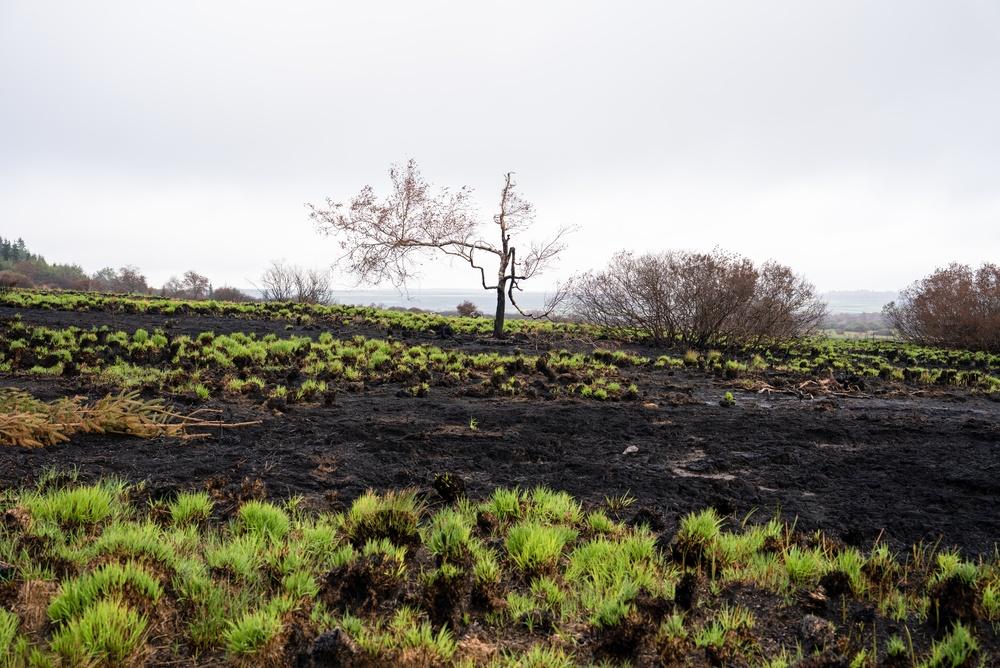
This was also visible in the High Fens, one of Belgium's wettest and coolest landscapes. In August, a wildfire affected around 3,000 hectares. Peatlands normally retain large amounts of water, but after prolonged drought they can themselves become combustible. A natural water buffer thus turned into fuel.
It is precisely here that the perspectives of the VUB researchers converge. Zekollari shows how centuries-old water reserves in the mountains are disappearing. Van der Stocken investigates how restoring mudflats, salt marshes and mangrove ecosystems, such as those in the Hedwige-Prosper Polder within the Sigma Plan area and the Guayas Delta in Ecuador, can store carbon and protect coastlines against erosion as nature-based solutions. Huysmans points out that we ourselves can do much more to retain water and make society more resilient.
The summer of 2026 therefore demonstrates that heat is never just heat. It accelerates evaporation, dries out soils, lowers river levels, fuels wildfires, speeds up glacier loss and warms rivers and seas. Europe will have to adapt to a water cycle that increasingly differs from the one to which its nature, agriculture, energy systems and infrastructure have long been accustomed.
“The natural world will respond on its own, although that will involve changes in species composition and, for many organisms, a decline in biodiversity, as has already been demonstrated for bumblebees and butterflies in Europe,” concludes Professor Harry Olde Venterink. “This summer, for example, you can already see grass species from warmer regions performing remarkably well along roadsides in Brussels. We are currently investigating how the success of these northward-moving species depends on temperature, drought and another environmental challenge: nitrogen enrichment. How the other sectors of society adapt will depend on decisions made by policymakers. You do not need a crystal ball to predict that action will be needed in the short term, because the coming years will be even warmer and, at times, even drier.”
The message is therefore not necessarily a gloomy one. As Huysmans emphasises, many solutions already exist. The key question is how quickly we choose to implement them.
In brief
- Heat triggers a chain reaction: drought, low river levels, wildfires and melting glaciers reinforce one another.
- Flanders needs to retain more water: according to Marijke Huysmans, the key lies not only in rainfall but also in water storage and infiltration.
- Alpine glaciers are heading towards a disastrous year: Harry Zekollari expects one of the largest ice losses of recent decades.
- The sea also suffered from extreme heat: marine heatwaves can profoundly alter ecosystems, fish stocks and coastal regions.
- Solutions already exist: faster investment in water management and ecosystem restoration will make Europe more resilient to drought and heat.