

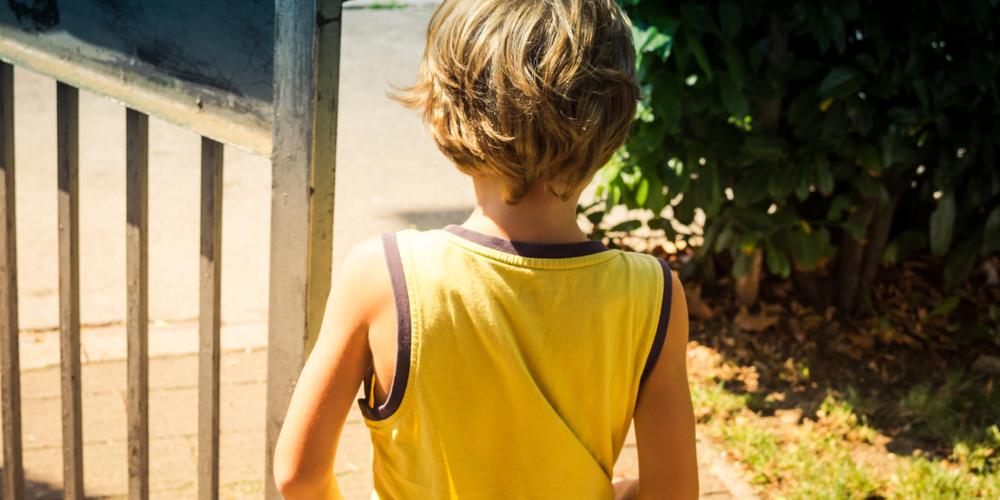


The crowdfunding campaign for the family of convicted criminal Grégory Lenoci raises the question for Joyce Albrecht of why the loved ones of prisoners cannot count on more support.
More than €80,000. That is how much was raised in just a few days for the wife and children of Grégory Lenoci, who was sentenced last week to 17 years in prison for attempted murder. More than 9,000 people contributed to the crowdfunding campaign. The organiser says that Lenoci's wife and children do not have sufficient financial means to pay their bills and put food on the table. People clearly feel moved to help and are showing solidarity with the family members, who have emerged from the case as unintended victims.
Much has already been written about the Lenoci case. About the severity of the sentence. About whether his punishment is justified. About the support he receives from the public. That is not what I want to discuss in this piece. Because whatever you think of the case, the solidarity campaign highlights something that goes beyond it.
When someone has to go to prison, it is not only that person who suffers the consequences. The lives of their loved ones change too, particularly those of their family. A partner loses an income and has to take sole responsibility for raising the children. Children have to go to school, sometimes in the aftermath of a media storm, and are confronted with differing opinions about the case. They often struggle with feelings of sadness, anger or even shame. And anyone who wants to maintain contact with the prisoner has to adapt to strict, largely child-unfriendly prison rules.
That is the reality for many families of people in prison. Yet they rarely receive the recognition or solidarity that we are seeing around Lenoci's family today. Research in recent years has nevertheless shown how families suffer from the far-reaching consequences when they are left without support.
Most children affected receive no financial assistance and are not explicitly told that they “are not to blame”. There is no widespread outrage over their financial situation, which suddenly comes under pressure. On the contrary, families often carry the stigma attached to the prisoner themselves. More than that, they are sometimes seen as accomplices.
Broadening solidarity
But children do not choose their parents, nor do they choose their prison sentence. They do not choose to witness an arrest or a house search. They do not choose to visit someone in prison. What children often do choose, however, is to remain silent and carry a great secret. As a precaution, so that they are not bullied. Out of fear of losing friends. Because they are afraid they will be treated differently. Research shows that children who have had a parent in prison can carry that experience with them for years, regardless of the facts or circumstances of the case.
And that is where the tension lies. Because we can hold someone responsible for what they have done while recognising at the same time that their children are not responsible. We can believe that a prison sentence is justified and still ask what it means for the prisoner's loved ones. One does not exclude the other. We can think about how to support them and how to safeguard their wellbeing. Whether they choose to maintain contact with the person behind bars or not, imprisonment leaves its mark.
That is why I find the crowdfunding campaign for the Lenoci family significant. Not because one family deserves more support than another, but because it shows that people are capable of recognising the consequences that imprisonment has for families.

Joyce Albrecht
The support for this family is clearly linked to the widespread public outrage surrounding the case, but it does not have to be that way. Can we, as a society, broaden the solidarity that has emerged? To other children who go through a metal detector every week instead of playing outside with their friends? To children who stop going to football practice because their mother no longer has time to take them? To grandparents who suddenly have to take on responsibility for caring for their grandchildren? To the teenage daughter struggling with whether she should cut contact with her parent?
Every child with a parent in prison deserves support because they are a child, not because we can find understanding for their parent's actions. Perhaps the most important question raised by the Lenoci case is therefore not why more than 9,000 people are giving money to this particular family. It is why so many other families have to make do without that solidarity.