

How can you make a university campus more sustainable while developing solutions for the cities of tomorrow? At Vrije Universiteit Brussel (VUB), scientific research and sustainable campus management go hand in hand. The university is turning its campus into a living lab: a real-world testing ground where sustainable innovations are developed, tested and put into practice.
A university campus is more than a place where students attend classes and researchers pursue new discoveries. Every day, thousands of people come together, consuming energy, eating meals and travelling to and from campus. For VUB, this daily activity offers a unique opportunity to test innovations under real-world conditions. Through its living labs, researchers, students, staff and external partners work together on solutions that reduce the university's environmental footprint while generating valuable insights for society.
More sustainable eating starts with smarter choices
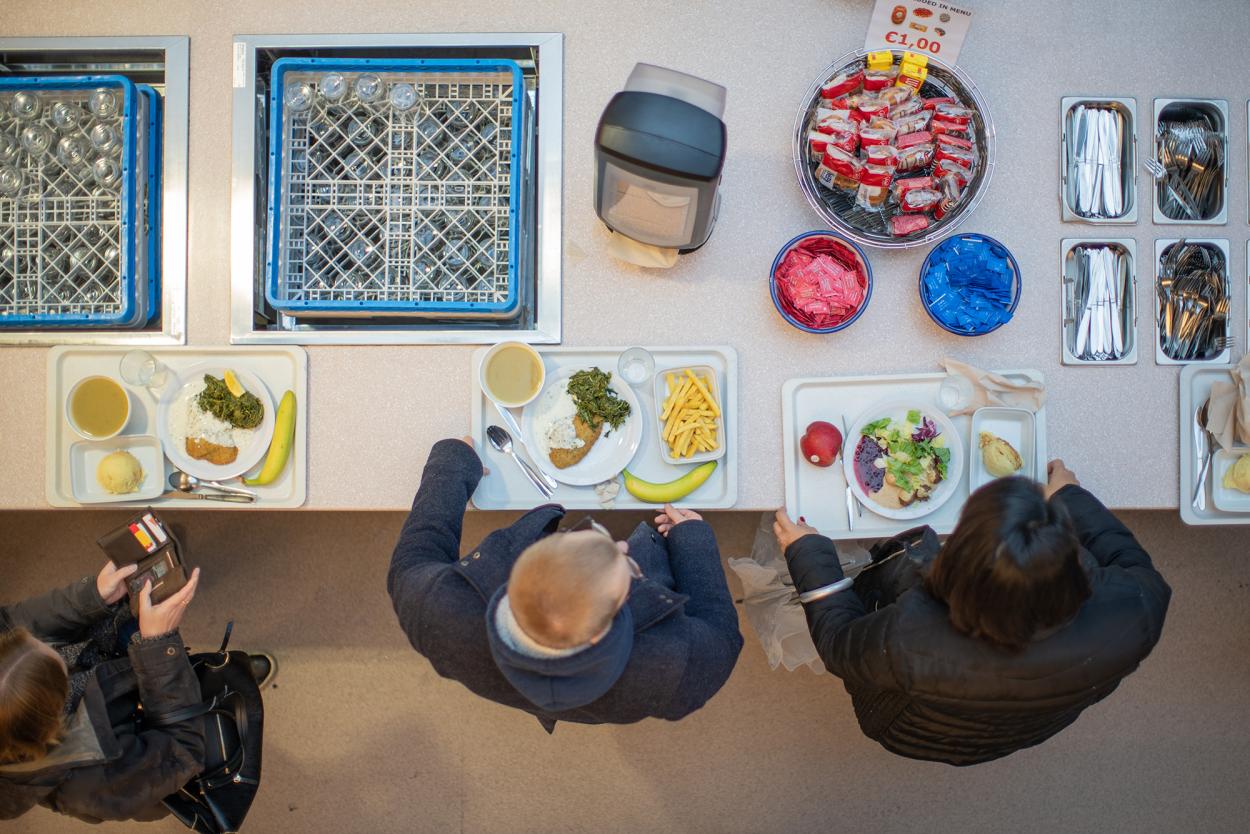
Hot meals served in VUB's student restaurants already carry an environmental impact label, showing how their environmental footprint compares with that of an average Belgian meal. The labelling system was developed through the work of Lise Vermeersch and the team at Ecotarian. Yet VUB research shows that information alone is not enough to change eating habits. Price, taste and familiarity often carry more weight than sustainability.
That is why VUB is exploring how the presentation, naming and positioning of dishes on menus can encourage students to choose plant-based meals more often. These insights support the university's ambitions under the Green Deal Protein Shift, through which VUB aims to achieve a balance of 60% plant-based and 40% animal-based protein consumption by 2030. In this way, the student restaurant becomes a real-world research environment where more sustainable food choices are actively encouraged.
Giving rainwater more room
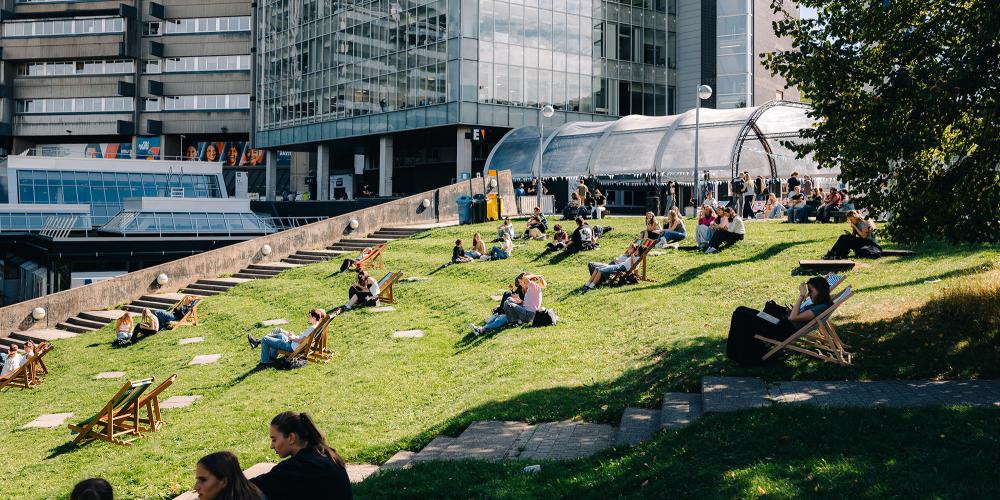
The campus landscape is changing too. VUB has created swales in several locations: shallow, planted depressions that temporarily collect rainwater and allow it to gradually soak into the ground. This reduces pressure on the drainage system, helps replenish groundwater reserves and makes the campus more resilient to heavy rainfall. Combining a permanent pond with an area that periodically dries out also creates different habitats for plants and wildlife.
These measures form part of a broader blue-green strategy that brings together water management, biodiversity and climate adaptation. At the same time, they provide insights that can be applied beyond the campus. VUB shares its expertise with partners including the municipality of Ixelles, where similar solutions could help make the urban environment more resilient to heavy rainfall and longer periods of drought.
Circular construction gives materials a second life
How can buildings last longer and materials be reused? This question lies at the heart of the Circular Retrofit Lab and the nearby Willy van de Meeren Living Lab. VUB researchers are experimenting with removable walls, modular components and reusable connections. These innovations make it easier to adapt buildings without generating large amounts of construction waste each time.
But the challenge goes beyond construction techniques alone. Circular construction also requires new agreements with contractors, adapted regulations and different business models. The living labs bring researchers and construction professionals together to develop feasible solutions. At the Green Energy Park, researchers are also experimenting with alternative building materials and fully demountable structures. In this way, VUB is helping to put the principles of circular construction into practice.
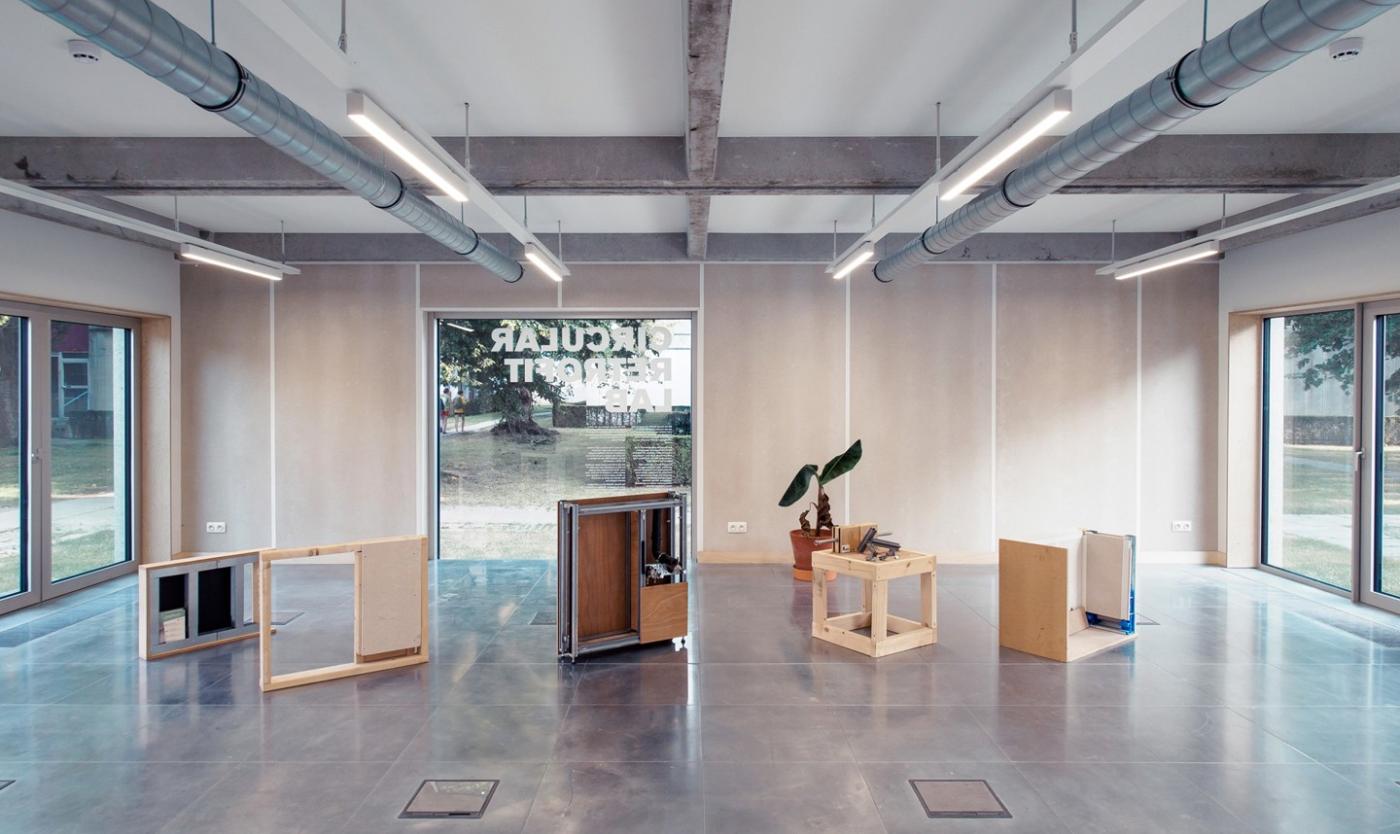
Circular Retrofit Lab
Smarter mobility on and around campus
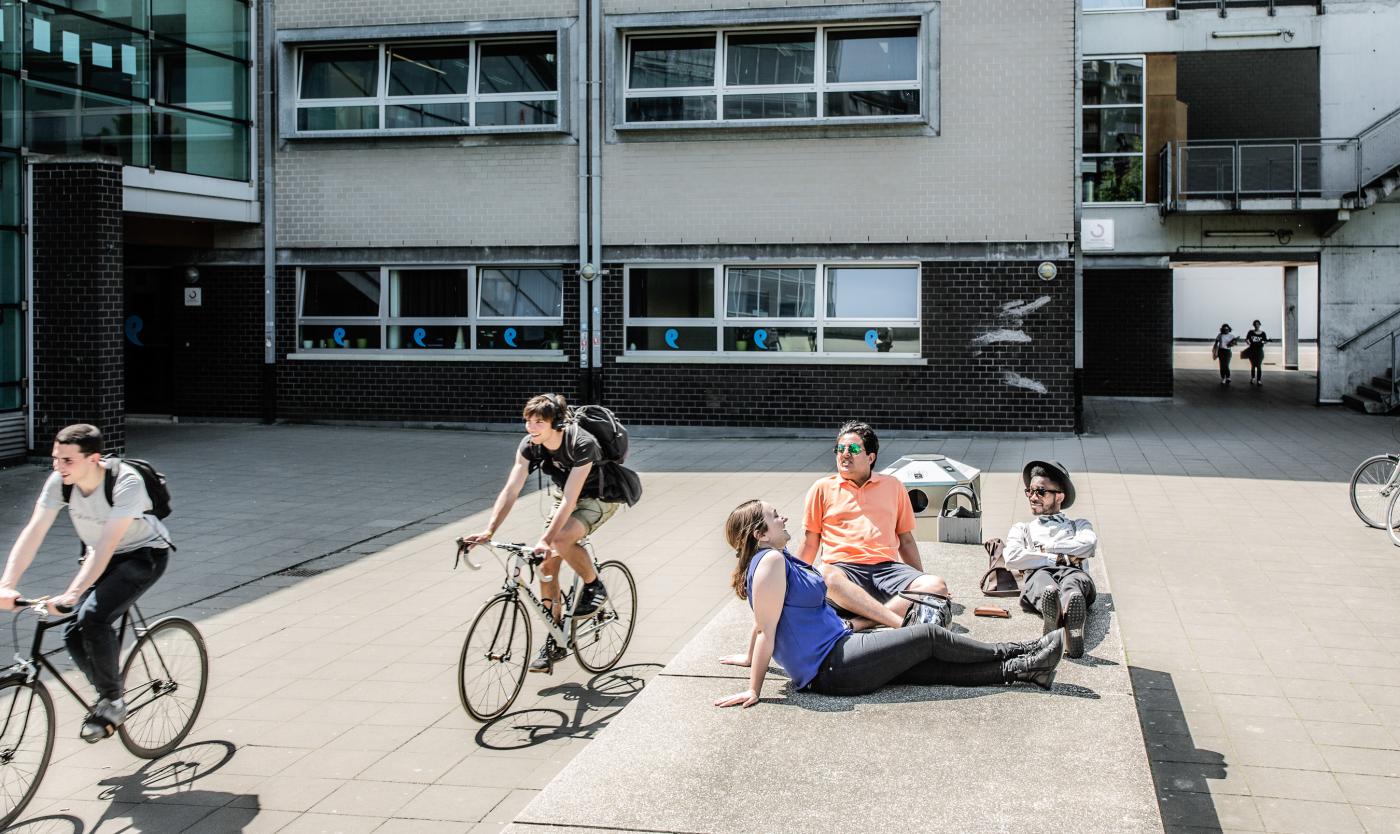
With around 24,000 students and 4,000 staff members, mobility has a significant impact on the university's environmental footprint. VUB therefore encourages cycling and public transport through initiatives such as secure bicycle parking, the Academic Bike Challenge and a cycle leasing scheme for staff.
The university is also exploring how parking data can contribute to more efficient use of space and whether electric vehicle charging points could be made available to local residents outside campus hours. Even daily deliveries are being examined. By consolidating orders and organising deliveries more efficiently, unnecessary journeys could potentially be avoided. After all, sustainable mobility goes beyond the transport choices of individual campus users.
The energy transition behind the scenes
One of the university's biggest sustainability challenges is largely invisible to students and staff. Heating, ventilation and powering university buildings require substantial amounts of energy. That is why VUB is systematically upgrading its technical infrastructure. Outdated heating systems have been replaced with more efficient condensing boilers, while the temperature of the heating network has already been reduced from approximately 130°C to 80°C.
A combined heat and power system also generates a substantial share of the university's own electricity and heat. As this system still runs on natural gas, VUB is investigating how it could eventually transition to lower-temperature heating networks, potentially powered by large heat pumps. Smart heating controls and more energy-efficient laboratory ventilation also help reduce energy consumption. Through these gradual investments, the university is working towards more energy-efficient campuses that are less dependent on fossil fuels.
A more sustainable campus, with an impact beyond its boundaries
Together, these initiatives show how VUB is integrating sustainability into both its research and day-to-day operations. Its campuses offer researchers the opportunity to test solutions under real-world conditions, while the university itself benefits from new scientific insights. Not every experiment immediately delivers the desired results, but that is precisely the strength of a living lab: discovering what works, making adjustments where necessary and developing successful innovations further.
By sharing this knowledge with public authorities, businesses and societal partners, VUB aims to contribute to a more sustainable society beyond its campuses. In this way, the campus becomes a place where the future is not only researched, but already taking shape today.
About HOST
House of Sustainable Transitions (HOST) is VUB's interdisciplinary research platform for sustainability. It brings together more than 200 researchers and 35 professors from 19 research groups to accelerate the transition towards a more sustainable society. HOST connects researchers and societal partners to address challenges such as climate change, biodiversity and social justice. During one of its monthly meetings, participants explored the sustainable living labs on the VUB campus.