

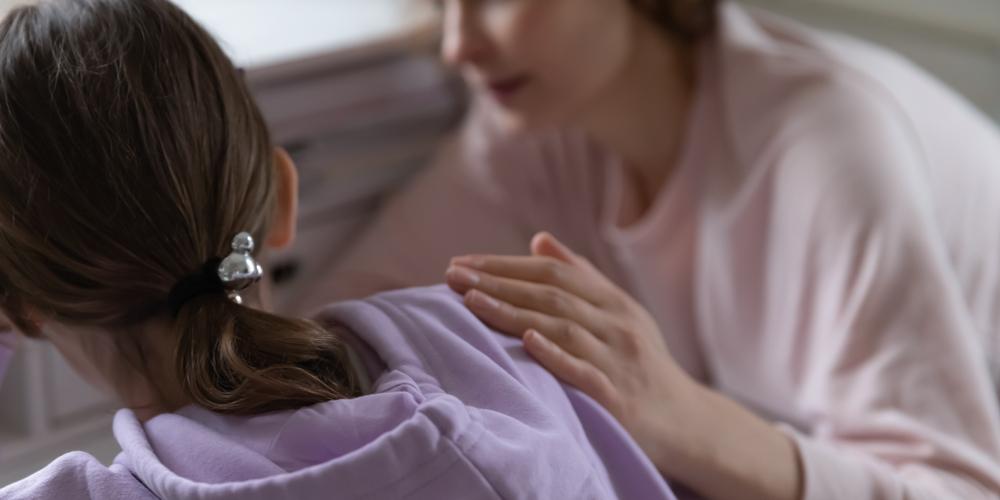


Looking away, downplaying what happened or remaining silent causes significant harm to victims of sexual abuse, write Kasia Uzieblo and Manon Cop. Kasia Uzieblo is the Flemish coordinator of Helpline 1712 and Professor of Forensic Psychology at the VUB. Manon Cop is a lawyer specialising in sexual criminal law.
How we, as bystanders, respond to sexual abuse partly determines how profound the harm to the victim becomes and to what extent recovery is possible. The second episode of the documentary series Het bestaat also makes clear that sexual abuse does not take place in a social vacuum. Around both victims and perpetrators are partners, family members, friends and professionals. Unfortunately, we see almost every day how bystanders fail to recognise warning signs, do not want to see the abuse, or do not know how to respond, thereby causing additional trauma.
One of the most poignant testimonies in the episode comes from a mother who explains that she initially did not believe her own child when the child disclosed abuse by the mother's new partner. Many people will react with disbelief: how can you not believe your own child? Yet this is not an unusual response. The image you have of someone you love and trust is suddenly shaken, and accepting that reality takes time. Some people may never be able to acknowledge it because they, too, have much to lose by confronting the violence. To reduce that discomfort, they may look for explanations that place responsibility on the victim or normalise the perpetrator's behaviour.
Adding to this is the fact that misconceptions about victims and perpetrators often stand in the way of recognition. People may wrongly assume that a child would immediately disclose such a traumatic experience, or that perpetrators display strange and therefore easily recognisable behaviour. Such misconceptions can lead to warning signs being misinterpreted or a disclosure not being taken seriously enough.
A human struggle
It is easy to judge such reactions. But the truth is that no one knows how they themselves would respond if such a disclosure suddenly affected their own family. Understanding this human struggle should not, however, prevent us from recognising when reactions become harmful. When contact with the abusive family member continues without regard for the victim's boundaries, when the victim is listened to but simultaneously asked not to speak about it again, or when people try to return to “normal” as quickly as possible, those around them may feel the problem has been resolved.
For the victim, however, that is often when doubt strikes hardest. Was it really that serious? Am I less important than the person who did this to me? Where am I still safe? Looking away, downplaying what happened or remaining silent causes considerable harm and helps sustain the violence. That is precisely why we must talk about bystanders and their responses.
Failing to act can also have criminal law consequences. Someone who knows that a person is in serious danger and fails to provide or seek help can, in some cases, be prosecuted for failing to render assistance. The legal aftermath can lead to human tragedies that we still understand too little about.
No instruction manual
The series shows how bystanders can struggle with guilt and doubt. If only they had noticed sooner or reacted differently, then... But there is no instruction manual that guarantees a positive outcome. Every situation and every victim is different and requires different actions and responses. Nevertheless, there are things many victims hope for. They hope to be listened to without judgement. They want their story to be taken seriously, for someone to ask what they need at that moment, and for someone to help ensure their safety.
Victims also want to regain a sense of control. Rather than being told what they must do, they want to hear what options are available, discuss them, and make their own choices.
Het bestaat is therefore not only about victims or perpetrators. It is also about you and me. If, on average, one or two children in every classroom experience abuse, there is a real chance that we ourselves are bystanders, sometimes without even realising it. But do we know how to respond when someone confides in us, or when we suspect that something is wrong? By informing ourselves and engaging in the conversation, we can learn to support victims more effectively and help stop violence. That, too, is a crucial key to prevention and recovery.