




For many researchers, setting up a spin-off seems like a major and risky step. According to VUB professor Heidi Ottevaere, however, it need not be. Entrepreneurial thinking can not only create social and economic impact, but often strengthens the research itself as well. Moreover, anyone wishing to take the step towards entrepreneurship does not have to do so alone at the VUB.
What actually stops academics from setting up a spin-off?
Heidi Ottevaere: “Above all, the fear of failure plays a part. Young academics are very focused on their CVs. If they invest time in a spin-off that ultimately doesn’t get off the ground, they may have published less during that period. The expertise they have built up is then more difficult to quantify.”
“That’s why guidance and coaching are so important. They enable us to lower the barrier to entry considerably. As an academic, you need to realise that a spin-off is actually a natural next step following on from your research. You reflect on your technology, who it’s relevant to and what problems it can solve. The insights you gain from this not only make you an innovator, but also a stronger researcher.”
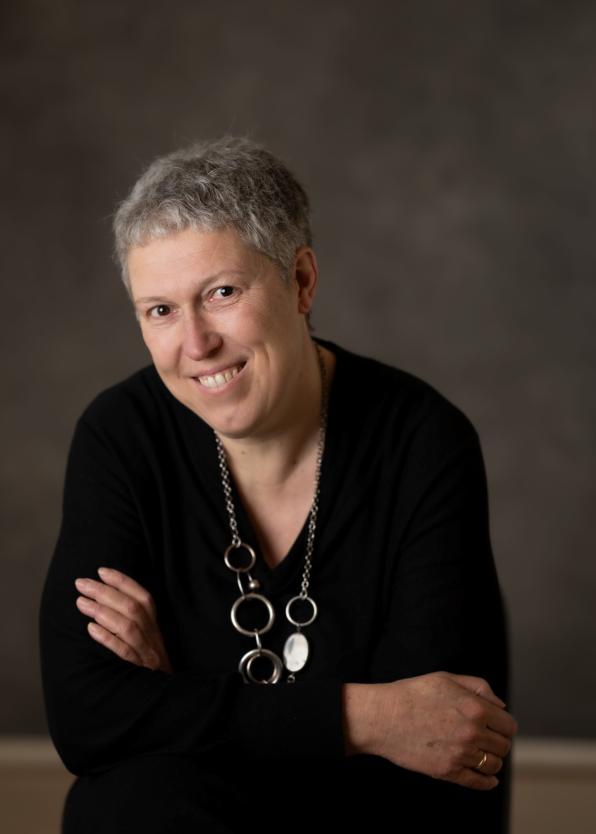
Heidi Ottevaere
"Researchers often underestimate the social and economic impact of their technology"
Do you need to have an exceptional or brilliant idea first?
“Absolutely not. In many cases, a very unusual or eccentric idea is actually more difficult, because the outside world won’t immediately understand what it offers us. Something simple that can really make an impact and make people’s lives better or easier can also be valuable.”
“So the crucial questions you need to ask yourself are: ‘What is the added value of my technology? Who can make use of it?’ Researchers often underestimate the social and economic impact their technology can have.”
Does every researcher ultimately have to become an entrepreneur?
“No, but every researcher should learn to think entrepreneurially. That makes you a better researcher. Research projects for which you’re seeking funding also become stronger when you can clearly demonstrate the impact your research can have.”
How does the VUB help researchers who want to find out whether their research has commercial potential?
“TechTransfer plays a key role. This service supports researchers in various areas: from project funding to advice on intellectual property, commercialisation strategies and funding opportunities for a spin-off.”
“And then there’s also StartLAB. Two postdoctoral researchers from our group recently took part in such a programme and were very positive about it. It’s accessible and allows you to explore ideas. You expand your network, pitch to potential clients and stakeholders, and are provided with practical tools. That can help make the connection: what I do in the lab can actually lead to a product.”
Do you have to set up a company straight away?
“No. There are programmes that give researchers the time to prepare for that step. With a VLAIO innovation mandate, you can spend two years continuing to work on research that has already been demonstrated in the lab, bringing it closer to a commercial product. During that period, you can, for example, investigate how to make something more robust or produce it on a larger scale. At the same time, you’ll have time to draw up a business plan and prepare for the launch of a spin-off. It therefore combines technological and business preparation with the aim of establishing a new spin-off within two years.”
Why is that preparation so important?
“You can’t put together a good business plan overnight. You need to talk to lots of people and understand what potential customers value. Have they already tried something similar? Why or why not? Where exactly does the added value lie for them? Researchers setting up a spin-off are sometimes too far removed from their potential customers. As a result, they end up developing something that isn’t quite what those customers need.”
"Researchers who set up a spin-off are sometimes too far removed from their potential customers"
Does your own research group have any experience with spin-offs?
“Within Brussels Photonics, we’ve already set up three spin-offs together with colleagues: Luceda Photonics, BIO INX and 4Tissue. Luceda Photonics has been active the longest and now has a large workforce. BIO INX develops inks for nanoscale 3D printing using biocompatible materials. 4Tissue works with polymers to help the body repair and reconstruct tissue naturally.”
Is there anything in particular that researchers with a promising idea should avoid doing?
“The first thing researchers often want to do when they have a brilliant idea is to publish it or talk about it at a conference. My advice is: speak first to the intellectual property officer at TechTransfer. They can check what already exists, search patent databases and offer advice. Sometimes it’s wise to keep an idea to yourself for a while. Because once something has been made public, you can no longer patent it.”
Bio
Heidi Ottevaere is a professor of photonics at the VUB and is affiliated with Brussels Photonics (B-PHOT). She heads the biophotonics research unit there and is responsible for the Instrumentation and Metrology platform. Her research focuses on photonic components, optical sensors and measurement systems for applications including medical and environmental ones.
Start your own spin-off
Do you have an interesting idea or do you see potential in your research, but aren’t quite sure what’s involved in setting up a spin-off? Or are you simply curious about what support is available? Then be sure to take a look at what TechTransfer or StartLab.Brussels have to offer.
StartLab Academics – BUILD will kick off this new academic year with its first session on 6 October. This completely free support and coaching programme is aimed at PhD and postdoctoral researchers with an initial idea or research project. The first semester offers an introduction to entrepreneurship within the academic context. In the second semester, we’ll get to work on your own research project in more concrete terms, with the aim of exploring whether it could develop into a spin-off and working towards a pitch and a validated business idea. Not quite ready for the full programme yet? You can also just take the first semester as an introduction to academic entrepreneurship.
Discover the full program on our website.
Any questions? Feel free to contact Program Manager Maarten De Ruyck.