

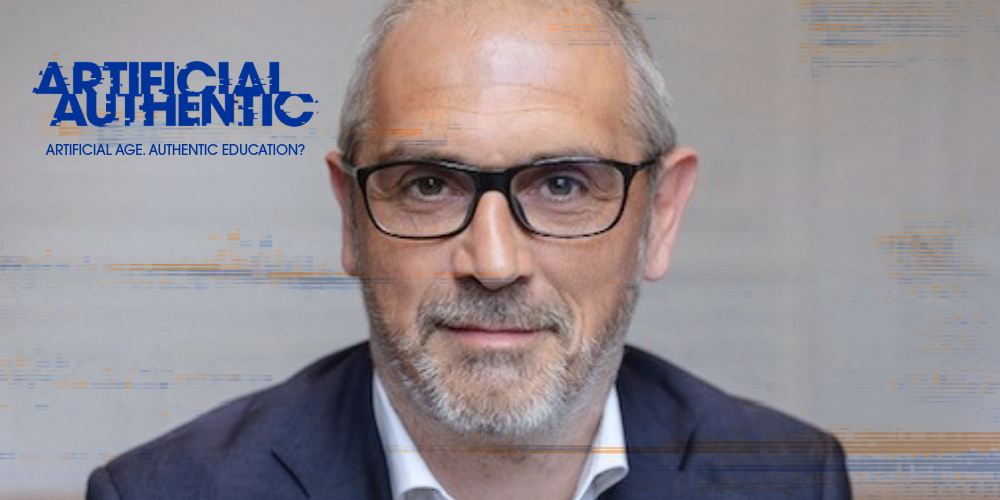


Does the world still need tax specialists? Absolutely, says Professor Dr Michel Maus, Senior Lecturer in Tax Law at VUB. AI will fundamentally change legal research and case analysis, but according to Maus, human communication, strategy and empathy remain indispensable. The lawyer of tomorrow will therefore increasingly combine legal expertise with technological knowledge.
Article series
AI is changing work. How will it change education?
Artificial intelligence is set to transform the way we work. But what does that mean for students who are building their careers today? In this series, VUB professors explain how AI is influencing their field, which skills will matter most in the future, and how degree programmes are adapting to a rapidly changing labour market.
Is there still a place for tax specialists in tomorrow’s labour market, where AI will play an increasingly prominent role?
Michel Maus: “Absolutely, we still need tax specialists. AI will have a major impact on the labour market, including that of lawyers and tax specialists. After all, law revolves around language and its subtleties. The AI systems we use today are language models. It is therefore logical that AI has many applications within legal science and legal practice. For certain tasks, such as pure case analysis, fewer people will therefore probably be needed. At the same time, our society is becoming increasingly complex. So we will always need people who can deal with that complexity.”
In what ways does human intervention remain necessary?
“Law is about rules that organise society and shape human relationships. People who turn to a lawyer often do not just want to know the rules. They also want reassurance. Human connection is very important in that regard.
The same applies to tax specialists. Taxation seems very rational: percentages, tax brackets and rules. But behind those figures are people and emotions. Take inheritance tax: sometimes you are in the middle of a grieving process, with people who have lost a loved one and are simultaneously confronted with taxation. Family disputes can also arise. Or a company that comes into conflict with the tax authorities. Here too, the human factor plays a major role.”
“AI can provide information, but human connection and strategy remain crucial.”
Which competencies will become more important? Which ones less so?
“Research and case analysis will change significantly. AI makes it possible to retrieve information much more quickly. In the past, you had to search legal databases using keywords. Today, you can ask an AI tool much more targeted questions.
But that does not mean research becomes less important. On the contrary. If you find information more quickly, you can use the time you save to dig deeper, compare more and verify more. In my view, the lawyer of tomorrow will actually have to be half a technologist. That combination of legal knowledge and technological skills will become important.”
Does AI mainly save time?
“There is definitely a time saving involved. But I am not convinced that this time saving always means that less work is being done. I also work at a law firm, and what we see there is that AI mainly allows us to go deeper. If we find the information we need more quickly, we can spend more time on analysis and verification. That makes the work higher quality. Personally, I often use AI to make international comparisons, for example. In my field of taxation, I know how something is regulated in Belgium. With AI, I can look much more quickly at how other countries deal with, for example, VAT. That is a major added value for me.”
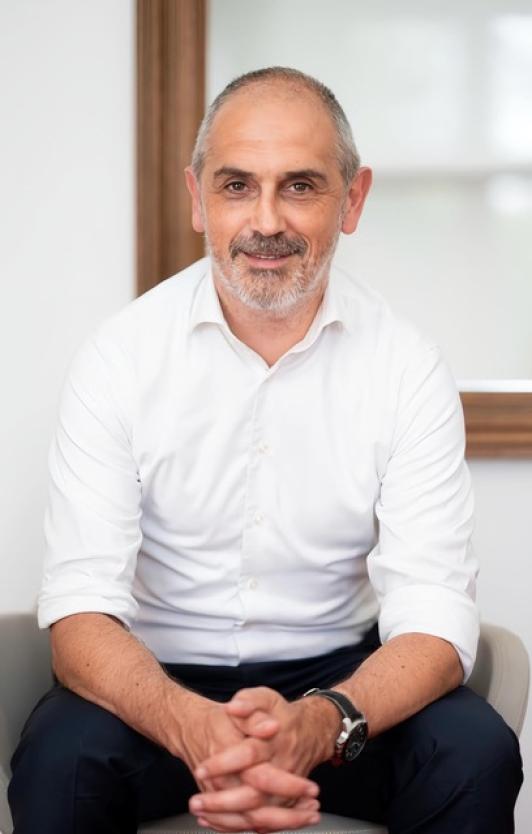
Michel Maus
“AI does not make us redundant, but gives us the opportunity to deliver better legal work.”
What exactly does the professional field require?
“We recently conducted a survey among both students and people in the professional field. The question was simple: do students expect the university to teach them AI competencies? And does the professional field expect graduating lawyers to possess those competencies?
The answer was very clear: of course. Students and the professional field expect us to prepare them for this. And preferably today rather than tomorrow.”
What have you already done within the faculty to adapt to this?
“One of the concrete steps is the Law & Technology specialisation, which is being offered for the first time this academic year. In addition, we reformed the bachelor’s curriculum last year and have now started preparing the reform of the master’s programme. AI integration will be an important area of focus there. The master’s thesis and the way students approach legal research are also changing. We do not only want to teach students that they can use AI, but above all how to use it responsibly and critically.
With our collaboration with Nexa Legal, we are taking a further step in this. VUB wants to play a pioneering role in integrating legal AI into education. We do not want students to encounter technology only after their studies when it is already being widely used in legal practice.”
VUB does indeed work with specialised legal-AI companies such as Nexa Legal and Ex Ante to actually integrate AI into education. What can students concretely do with this?
“They are specialised legal-AI tools that we can integrate into our education. Ex Ante is primarily a research tool, while Nexa Legal is broader and focuses, among other things, on case processing and legal analysis. That offers interesting possibilities. In the legal methodology course, where students learn legal research methods, we can use AI tools in concrete ways. Students must not blindly follow AI’s answer, but instead check whether what the tool produces is correct and whether there are any hallucinations in it. With Nexa Legal, students also gain access to an AI platform that is used in legal practice. Nexa Legal already works with more than one hundred law firms in Belgium and the Netherlands. This allows us to introduce students during their education to the technology they will later encounter in the professional field.”
“Doing nothing is not an option: as a university, we must teach students to use AI critically and responsibly.”
Is there not a risk that, as a university, we become too dependent on these AI companies?
“That risk exists. But I do not think doing nothing is an alternative. We also have to take the AI divide into account. Some students have access to specialised AI tools at home, while others do not have those opportunities. As a university, we must ensure that students have equal opportunities. That is why I am in favour of making specialised tools available. The problem, of course, is that this comes at a cost. Today, we simply do not have the budget to finance all of this ourselves. That is why we approached companies ourselves and looked at whether they were willing to think along with us about AI in legal education.”
What else do you want to roll out in the programme?
“We do not only want to offer AI tools, but also change the way we teach. For example, I teach tax procedures. Traditionally, this was strongly ex cathedra: I explained the procedural rules and the students received that information. I want to make it more ‘Americanised’, with more preparation, cases and discussion. Students can work on a case and use an AI tool beforehand. During the class, we then discuss what answer the tool gives and whether that answer is actually correct. The master’s programme is certainly suited to this, because you work with smaller groups. We want to offer much more interactive and practice-oriented education.”
Do lecturers also have to adapt to this new way of working?
“Certainly. We cannot teach students AI competencies if our own people do not know those tools. We are all somewhat pioneering in this area. But it goes beyond AI alone. We also want to connect students much more strongly with the professional field and with our alumni. I want to create a strong triangle between the faculty, students and alumni. Our alumni possess practical knowledge. We have to ensure that our education connects with what students and the professional field need. We also want to do this outside the curriculum, for example through debate evenings and contacts with people from practice. This gives students an insight, already during their studies, into the challenges that lawyers and tax specialists face in the professional field.”
What will the tax specialist of tomorrow be like?
“That tax specialist will save a lot of time on research and case analysis. As a result, he or she will have more time to deliver higher-quality work: provide better advice, conduct deeper analyses, develop legal strategies and pay more attention to the human aspect. The same applies to tax specialists working for the government. Today, there is often little time to communicate with taxpayers, sit down together and look for solutions. If AI can free up time there, I hope that time will go back into the human story. That is the tax specialist of tomorrow for me: someone who uses technology to become better at what a human can ultimately do better than a machine.”
Bio
Michel Maus is Senior Lecturer in Tax Law at Vrije Universiteit Brussel (VUB) and chair of the education council of the Law programme. He is also active as a lawyer and tax expert.
Academic Opening 2026
How do we prepare young people for a world in which artificial intelligence and technological change are having an ever greater impact? That question lies at the heart of the VUB's Academic Opening on Tuesday 22 September in Aula Q on the Etterbeek campus. Under the theme Artificial Age. Authentic Education?, the university will bring together students, researchers, lecturers, policymakers and societal partners for a debate on the future of education, knowledge and society.
For more information and to register, visit: Academic Opening 2026.
Also on 22 September: VUB Kick-Off
This year, the Academic Opening Ceremony and the VUB Kick-Off will take place on the same day at the Etterbeek campus. The Kick-Off is the annual welcome event that marks the start of the new academic year for students. Throughout the day, the campus will come alive with information stands hosted by VUB services, student associations and organisations from across Brussels. Students will have the opportunity to explore the wide range of services and activities available on and around campus, meet fellow students and take part in a variety of activities.