

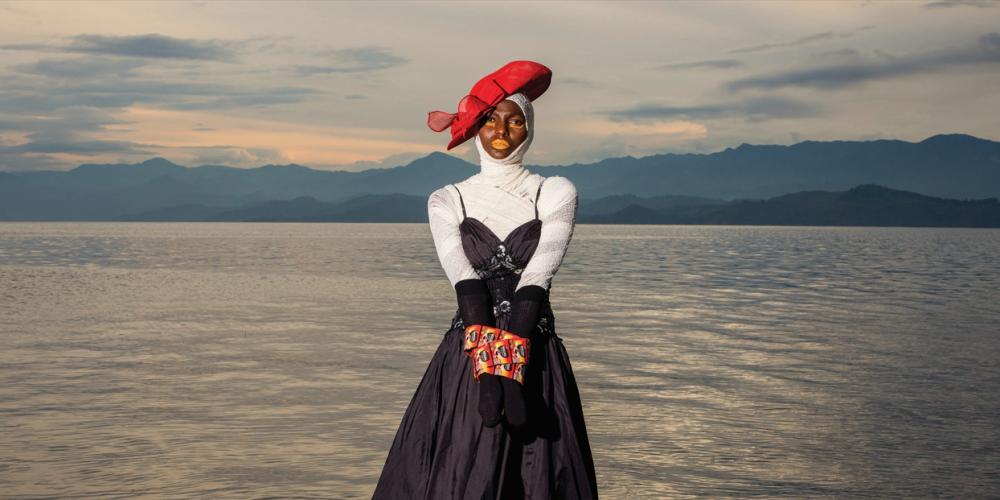


With the MABABU exhibition, the VUB is bringing an internationally renowned artist to Brussels this autumn. Congolese artist and photographer Pamela Tulizo uses photography to reveal forgotten stories of African women. From October 8 to 31, her work will be exhibited at De Markten, in an expo curated by VUB professor Katarzyna Ruchel-Stockmans. Pamela Tulizo: "For me, photography is the only universal language through which I can communicate with the world."
8 - 31 October | Expo Mababu - Spirit of The Ancestors, by Pamela Tulizo
Anyone viewing Pamela Tulizo's photographs will immediately notice that they are more than just portraits. Her carefully staged images combine fashion, historical references, symbolic objects, and powerful poses. In doing so, she tells stories of women who are often missing from history books and visual archives. The exhibition invites visitors to reflect on slavery, colonial history, gender equality, and representation. Central to the work are women, their memories, and their resilience.
The photographer was born in 1994 in Bukavu, in the Congolese province of North Kivu. She began her career as a television journalist but later transitioned to photography. In 2020, she won the prestigious Dior Photography and Visual Arts Award for Young Talents, which marked her international breakthrough.
Photography offered her an alternative, she tells Katarzyna Ruchel-Stockmans in an interview regarding their collaboration on the MABABU exhibition. "With a camera, you can express something without having to say a word. It is a universal language. I wanted to cross borders, reach other continents, and tell stories in a different way."
“Every woman has the right to be depicted as she sees herself”
That conviction runs like a common thread through her work. Tulizo wants to appeal not only to her immediate surroundings but also to people living thousands of kilometers away with completely different cultural backgrounds. "For me, photography is the only universal language through which I can communicate with the world. You don't need to translate anything: the details and the staging speak for themselves, like a silent film that everyone can understand without further explanation from the director."
A key principle for Tulizo is the way African women are often depicted. According to her, they frequently appear in international media as victims of war, violence, or poverty. In her work, she consciously chooses a different approach. She does not want to reduce women to their suffering, but rather to show their dignity and agency. "I believe all women are strong. To me, every woman has the right to be depicted as she sees herself."
Even when dealing with difficult themes, such as sexual violence, refugees, or extreme poverty, she seeks out the strength of her subjects. "To me, they are first and foremost survivors. It is precisely that resilience that I want to emphasize."
This vision aligns closely with the exhibition in Brussels. Visitors will not see images of passive victims, but of women who are present, active, and resistant.
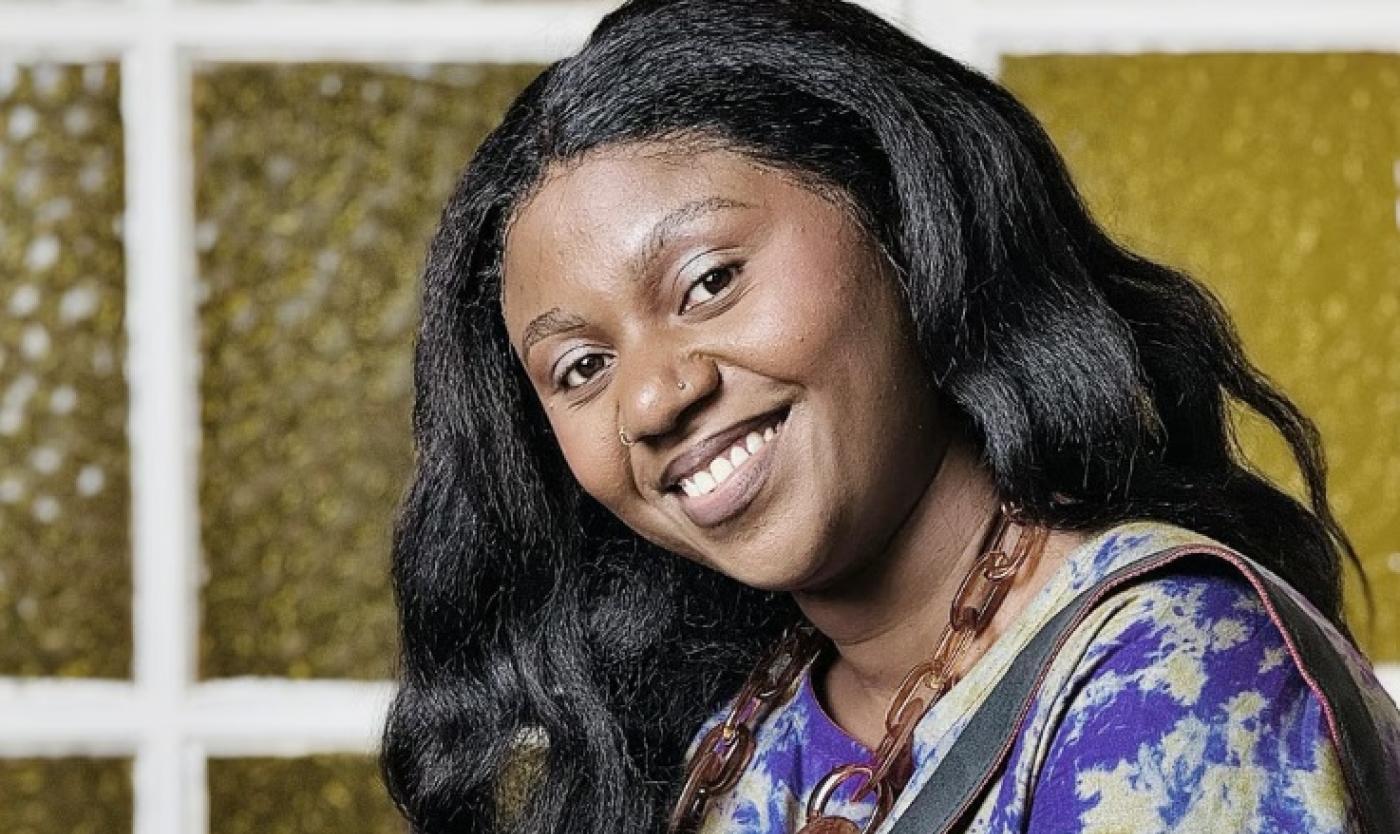
Pamela Tulizo
Living sources on inspiration
MABABU literally means "ancestors" in Swahili. For this series, Tulizo delved into the stories of historical African women whose contributions, according to her, were often forgotten, suppressed, or erased. "For me, it was therefore a kind of mission to make the history of African women visible."
In the exhibition, both anonymous women and historical figures appear, such as the Congolese prophetess Kimpa Vita and Queen Nzinga, who fiercely resisted Portuguese colonization in the 17th century. "I would want all young women to be able to draw inspiration from their strength and to be able to identify with these women." According to her, many young women are in need of role models who resemble them. "With these role models, we say to ourselves: If she could do it, then I can do it too, because she is a woman just like me."
The exhibition presents these women not as distant historical figures, but as living sources of inspiration for today. In doing so, Tulizo investigates not only historical figures, but also how images help determine who becomes visible and who disappears from collective memory. The exhibition presents these women as living sources of inspiration.
Fashion as self-imagination
A striking aspect of Tulizo's work is the significant role that clothing, fabrics, hairstyles, and accessories play. For her, these are not merely decorative elements. "Fashion is absolutely important in my photographs, because it is a language." Through clothing, she tells stories of identity, culture, heritage, and self-image. She uses fashion as a way to make women visible as they wish to be seen. "For me, fashion belongs to the universal languages: it makes it possible to make visible the strength, the beauty, and the hope that I perceive in the women I photograph." Therefore, in addition to photography, the exhibition also features specially designed dresses.
Tulizo does not limit herself to her artistic work. After winning the Dior Prize, she established a center for young female artists in Goma. With this, she aims to provide women with a safe environment to develop their talents. The motivation for this stems partly from her own experiences. "When I wanted to start photography, my father said I couldn't become a photographer because I was a woman."
Today, she wants to give other women the opportunities that she herself had to fight for. Her foundation organizes training, workshops, and programs centered around entrepreneurship and financial independence. Thus, her social engagement runs parallel to her artistic practice: both stem from the same endeavor to provide women with visibility, opportunities, and self-confidence. Fashion serves as a language to tell stories of identity and culture.
Mababu - Spirit of The Ancestors
Exhibition in Oude Markten, Brussels
MABABU runs from October 8 to 31, 2026, in De Markten (Oude Graanmarkt 5, Brussels). The exhibition includes photographic work by Pamela Tulizo, specially designed dresses, and a behind-the-scenes film about the artistic process in Goma. The exhibition was curated by Katarzyna Ruchel-Stockmans.
MABABU – Spirit of the Ancestors is a project by the VUB in collaboration with, among others, ULB, VLIRUOS Global Minds, BrIAS, Enough Room for Space, deMens.nu, De Markten, VISU VUB Research Group, City of Brussels, Humanistisch Verbond, Enabel, and Kuumba VZW.