



How do you regulate the food production of the future in a sustainable and fair way? And how can legislation and policy deal with new technology, the rights of farmers and the changes needed in our food system? It is around such questions that the VUB has established the International Joint Research Group on Agri-Food Law and Food Systems (IJRG-ALFS). Co-director and VUB professor Kim Van der Borght: “We combine international legal research with insights from environmental sciences, agriculture, economics, technological innovation and public administration.”
The international research group was launched on 15 April 2026 with funding from the VUB. Professors Kim Van der Borght and Jorge Milian-Gomez coordinate this new group, which brings together no fewer than ten universities from Europe, Asia and Latin America. “Food does not respect national borders. The rules surrounding agriculture, technology, trade and sustainability differ greatly from one country to another. That is precisely why it is valuable to enable researchers from Europe, Asia and Latin America to collaborate in a structured way,” explains Kim Van der Borght.
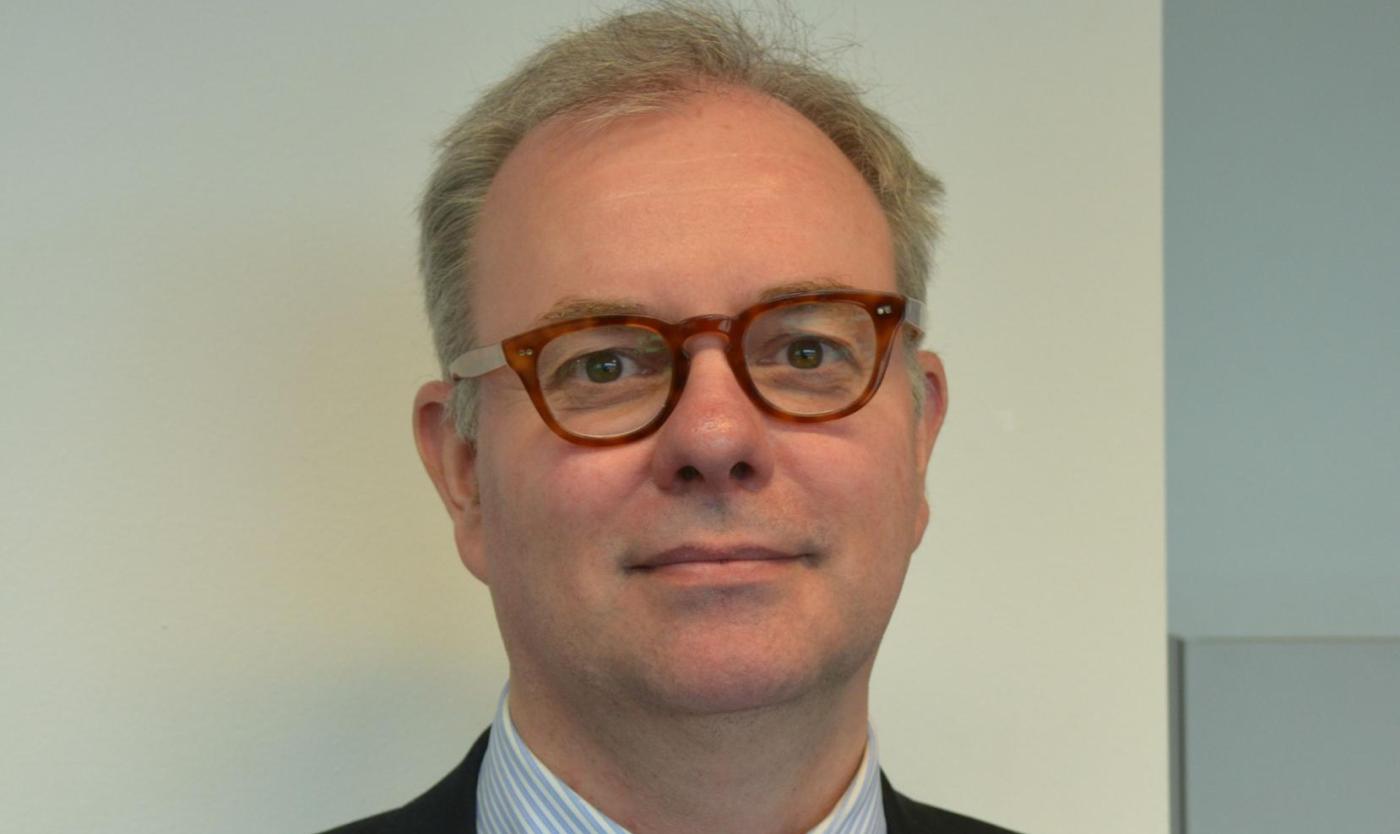
Kim Van der Borght
The research focuses on three major themes: the legal regulation of agriculture, food and food systems; sustainability, innovation and technology; and the relationship between food, rights and social justice.
The participating institutions aim to jointly develop research, submit international research projects, develop teaching and training programmes, and produce scientific publications. Doctoral supervision, exchanges, visiting researchers and training for early-career researchers also form part of the programme.
Large international network
The international reach of the new research group is one of its key pillars. In addition to the VUB, nine universities from Europe, Asia and Latin America have joined the initiative, including the Sant’Anna School of Advanced Studies in Pisa, Universitas Airlangga in Indonesia, and universities in Spain, Portugal, Bulgaria, Slovakia, the Czech Republic, Italy and Cuba.
Several partners have a strong expertise in agriculture and food systems. The University of Almería, for example, is regarded as a major research centre for sustainable agriculture and food production, while the University of Parma contributes specialised expertise in food law.
“Europe does not automatically have the answers for the rest of the world”
By bringing together researchers from very different countries, we can compare which rules and solutions work in practice and which do not,” says Jorge Milian-Gomez.
In addition, four specialised organisations from Belgium, the Netherlands, Bulgaria and Romania are involved in the network. The group may expand further, as discussions are under way with at least five universities from Australia, Africa and Latin America regarding possible membership.
Jorge Milian-Gomez
“In my home country, Cuba, food rights are under severe pressure. It is the combined effect of an economic crisis, the US embargo and natural disasters. That is when you see how agriculture, economics, climate, international trade and law all come together in something very fundamental: do people have access to food?” Jorge Milian-Gomez also explains regarding his personal involvement.
The new research group builds on years of international cooperation. Since 2022, the VUB has organised the Food Law, Policy and Diplomacy Conference, whose fifth edition on 15 October also serves as the official launch of IJRG-ALFS. The group brings together existing research projects while also reconnecting with a Brussels tradition in food law that dates back to the 1960s.
Food rights worldwide
“Food rights are being undermined across the world,” says Kim Van der Borght. “Wars, trade conflicts, climate change and economic crises have a direct impact on access to food. This makes food law particularly relevant today: ultimately, it concerns a very fundamental question, namely how we ensure that people have access to sufficient and affordable food.” Here is a selection of major global challenges.
Why can Cuba no longer feed its own population?
Cuba imports approximately 80 per cent of its food, while domestic production of products such as rice, pork and beans has declined sharply. How much of this is due to the US embargo, and how much is the result of the Cuban agricultural model itself?
Is Mercosur unfair competition for European farmers?
The trade agreement has sparked debate about cheap South American agricultural products, European production requirements and food safety standards.
Who owns the seeds that farmers use to grow their crops?
In Europe, there is a dispute concerning patents on plants and the freedom of farmers to save and exchange seeds.
Farmers receive less for their products. Why do consumers notice so little of this?
Belgian agricultural prices were on average 8.9 per cent lower in July 2026 than a year earlier. For animals and animal products, the decrease was 21 per cent.
Could the war in the Black Sea once again make our food more expensive?
Attacks on ports and vessels in Russia and Ukraine threaten international grain supplies and could, according to The New York Times, trigger a new global food shock.
When does the starvation of a population become a matter of international law?
At the beginning of October, the World Food Programme warned that renewed violence in Yemen is disrupting food markets, driving up food prices and hampering humanitarian aid.