



Artificial intelligence is not only changing jobs, but also what employers expect from graduates. Technological knowledge alone is no longer enough. Entrepreneurial competences, critical thinking, collaboration, initiative and practical experience are becoming at least as important. VUB professor and Entrepreneurship Officer Thomas Crispeels and Saskia Van Uffelen, Chair of the Belgian National Digital Skills and Jobs Coalition, are therefore calling for swift action. “We no longer have time to prepare for the future. The future has already begun.”
We hear it all the time nowadays: academics need to adopt an ‘entrepreneurial mindset’, but what exactly does that mean?
Thomas Crispeels: “To be clear, that does not mean that all graduates or researchers necessarily have to start their own company. It is important to distinguish between entrepreneurship and entrepreneurial competences. Starting a company is actually only the final step. Before that, you need knowledge: how does a company work, what are the legal and regulatory aspects, how do you draw up a financial plan? We already offer much of that at the university today.”
“But something else comes before that: the competences you need to act entrepreneurially. That means recognising opportunities, devising creative solutions, finding and deploying resources, and taking initiative. And those competences are much more broadly applicable than simply to starting a company. You also need them in government or as an employee in an existing organisation. We need to ensure that the entire chain is in place: developing entrepreneurial competences, providing knowledge about entrepreneurship and then giving students who want to do so the opportunity to actually launch a start-up.”
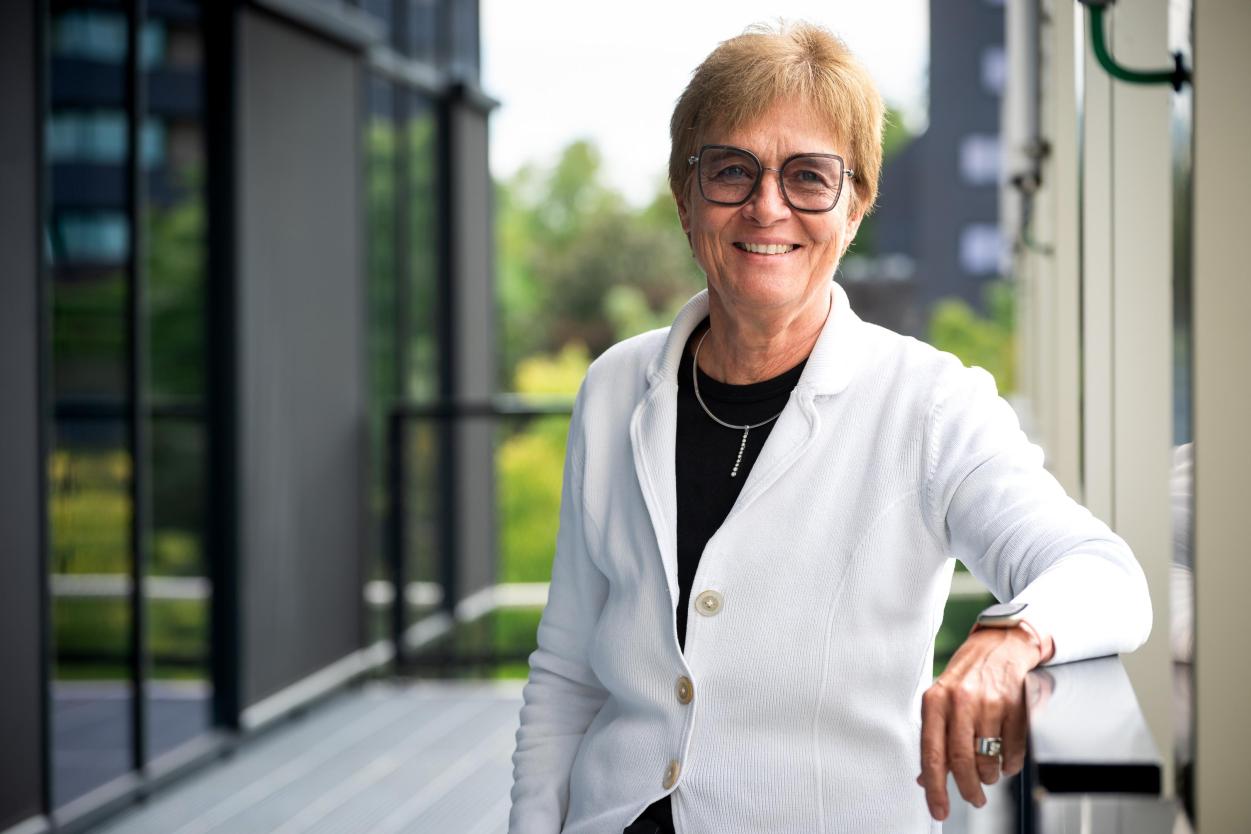
Saskia Van Uffelen
“For the first time engineering graduates struggle to find a job straight after university.”
Why have these competences suddenly become so much more important?
Saskia Van Uffelen: “Because several developments are taking place at the same time. We are in a difficult geopolitical and economic situation, which is putting financial pressure on businesses and universities. On top of that comes the enormous speed at which technology is evolving. That last aspect really is new. We have always experienced technological change, but in the past we had time. The capabilities of AI are now evolving so rapidly that you can no longer say: this profile or this degree programme will be good for the next three years. That speed is already having an impact on the labour market. For the first time, I am seeing engineering bachelor’s and master’s graduates who do not immediately find a job, whereas recruiters used to approach them sometimes as much as two years before they graduated.”
What new skills does an academic need today?
Saskia: “You need technological knowledge, but you also need the right behaviour. I prefer to talk about human skills rather than soft skills, because there is nothing ‘soft’ about them. You need to be able to communicate, for example, work in multidisciplinary teams and have the courage to take initiative. And you also need experience.”
Thomas: “Within the broader group of ‘entrepreneurial competences’, there are three main areas: ideas and opportunities, resources, and taking action. These include competences such as creativity, critical thinking, dealing with ambiguity, uncertainty and risk, collaborating, taking initiative and mobilising others. Much of that is actually already in the DNA of VUB and our researchers. Critical thinking, for example, is covered in many degree programmes. But today we are not always certain that we systematically teach all those competences. Creativity or recognising opportunities are probably less explicitly present.”
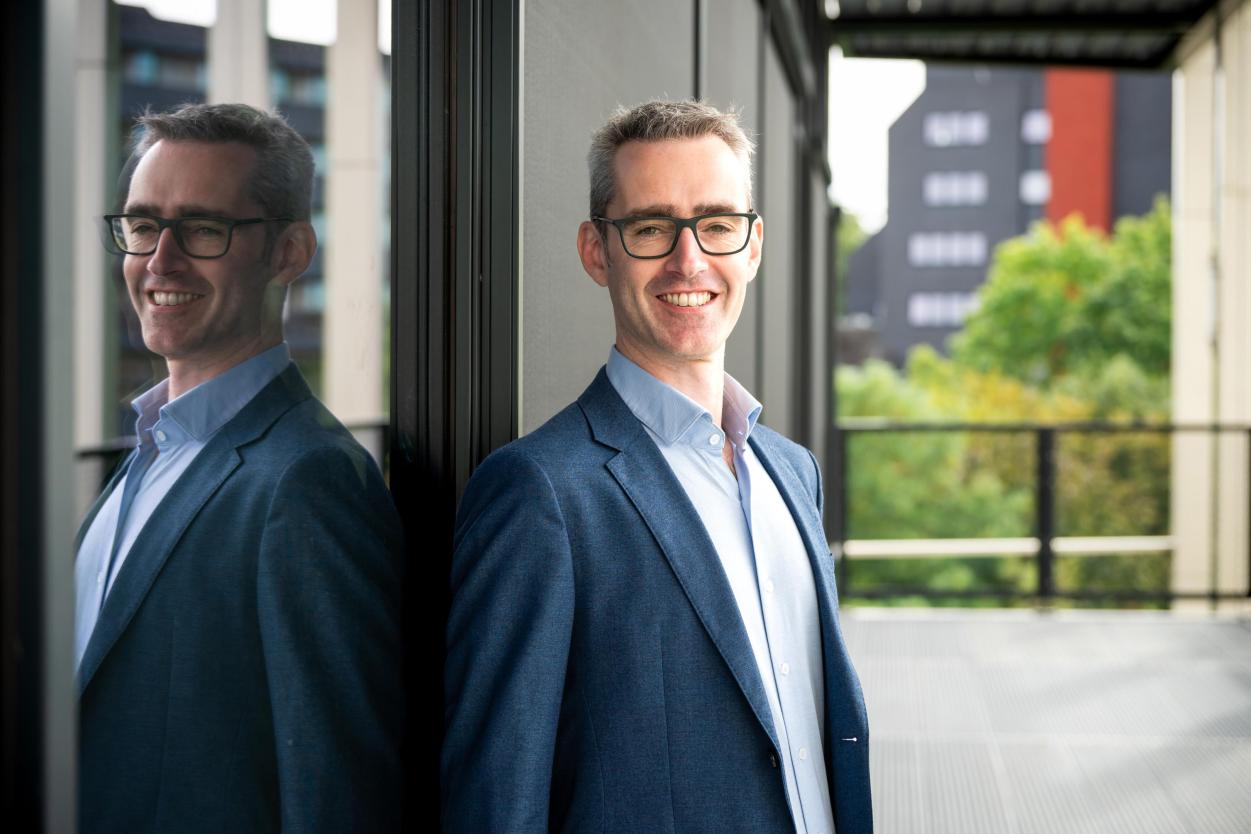
Thomas Crispeels
"Students should get hands-on experience earlier in their studies"
Does the university need to add new courses to every curriculum to achieve that?
Thomas: “That is precisely what we should not do. The labour market is now changing from month to month, whereas introducing a new curriculum or course sometimes requires us to start almost two years in advance. So we need to move towards components that can be organised and adapted much more flexibly.”
Saskia: “Reforming a curriculum requires a great deal of consultation and therefore a great deal of time. Then the first student still has to start that curriculum and study for several years before entering the labour market. We do not have that time. My proposal would be to organise the competences that everyone needs much more transversally, across all faculties. That way, you can make them available to everyone much more quickly.”
From what I hear, the necessary changes need to happen very quickly, without first studying and discussing all the possibilities, as we are used to doing. Doesn’t that approach involve enormous risks?
Saskia: “Absolutely, there is certainly a chance that we will get things wrong here and there. But if we do not act quickly enough, the consequences will be much worse. We no longer have time to prepare for the future. The future has already begun. What we do need to do when things do not go as planned is communicate about it transparently. And learn from the mistakes we make, of course.”
What specific measures do you have in mind, for example?
Thomas: “Gaining practical experience should come earlier in degree programmes. Bachelor’s students nowadays ask, for example, to be allowed to do an internship in order to improve their chances on the labour market. Traditionally, as a university, we say: first you need to acquire the basic knowledge and competences, and only at master’s level do you add practical experience. Only in a few degree programmes do students have access to an internship earlier. But in the meantime, students see peers at other institutions who are already working in companies or organisations and gaining very valuable experience there.”
Saskia: “In an ideal world, dual learning, for example, would start much earlier. Companies also still look too often at junior, mid-level and senior profiles. But that model is changing too. Someone who is very good at programming with AI today may immediately have a competence that a company needs, while someone else has years of practical experience that is equally essential. You need to bring those different competences together.”
"We need boomers just as much as we need Gen X, millennials and Gen Z"
Does that also change the idea of a career?
Saskia: “Absolutely. The traditional model was: I am born, I study, I get a degree, start as a junior, become mid-level and then senior, and eventually retire. That is no longer how it works. We need to move much more from functions to roles. That also means that different generations need each other. We need boomers just as much as generations X, Y and Z. The question is how you deploy all those people and their different competences within the current system.”
Thomas: “And that is why we should not limit ourselves to the competences students need when they leave university. Perhaps they will return just two years later to retrain and acquire new competences because the labour market has already changed again. We really are at a turning point in the role of the university. How do we remain relevant to people who are graduating, but also to people who need to continue learning throughout their careers?”
What can students who are graduating now do themselves?
Saskia: “There are many opportunities today to gain experience. You can take part in projects, volunteer or get involved in initiatives outside your degree programme. This also allows you to demonstrate to an employer that you have taken initiative and gained experience. My message would be: jump on the train and take initiative.”
Thomas: “I don’t think there have ever been so many opportunities to continue learning, including outside the university. Anyone with an idea for a start-up today will find an enormous range of support measures and incubators. You can also gain experience through volunteering and societal projects. A university degree has long ceased to be an end point. Just as we as professors are responsible for remaining relevant, graduates are responsible for that too. You need to keep learning and continue developing your knowledge and competences.”
Saskia: “In Belgium, we still do not have enough of that learning culture. Lifelong learning sounds to many people as though they not only have to work all their lives, but now have to keep learning all their lives as well. We need to look at it differently: long live lifelong learning! It is an opportunity to remain professionally relevant, but also to keep pace as a person with the evolution of society.”
Entrepreneurship with VUB StartLab
Bio
Thomas Crispeels is a professor at VUB in Business Technology and Operations and Entrepreneurship Officer. His research focuses on technology, innovation, technology transfer and entrepreneurship, and he teaches technological entrepreneurship, among other subjects. As Entrepreneurship Officer, he works to embed entrepreneurship in education and research and to develop VUB’s ecosystem for start-ups and innovation.
Saskia Van Uffelen is Chair of the Belgian National Digital Skills and Jobs Coalition. In this role, she focuses on the impact of digitalisation and technology on skills and the labour market. At VUB’s Academic Opening, she brings her perspective on technology, talent and the labour market to the debate on the future of higher education.
Fancy creating your own spin-off?
With a PhD under your belt, you have plenty of great opportunities on the job market, but as Thomas and Saskia explain in the interview above, there are other interesting paths for building a career. One of them is creating your own spin-off. That sounds very adventurous and naturally involves quite a bit of work, but at VUB you can count on plenty of support to help you bring it to a successful conclusion.
On 6 October, StartLab Academics – BUILD is organising the first session of this new academic year. This completely free support and coaching programme is aimed at PhD and postdoctoral researchers with an initial idea or research project. The first semester offers an introduction to entrepreneurship within the academic context. In the second semester, we work more concretely on your own research project, with the aim of exploring whether it can grow into a spin-off and working towards a pitch and a validated business idea. Not ready for the full programme yet? You can also choose to follow only the first semester as an introduction to academic entrepreneurship.
You can find the full programme on this website.
Questions? Feel free to contact Program Manager Maarten De Ruyck.