

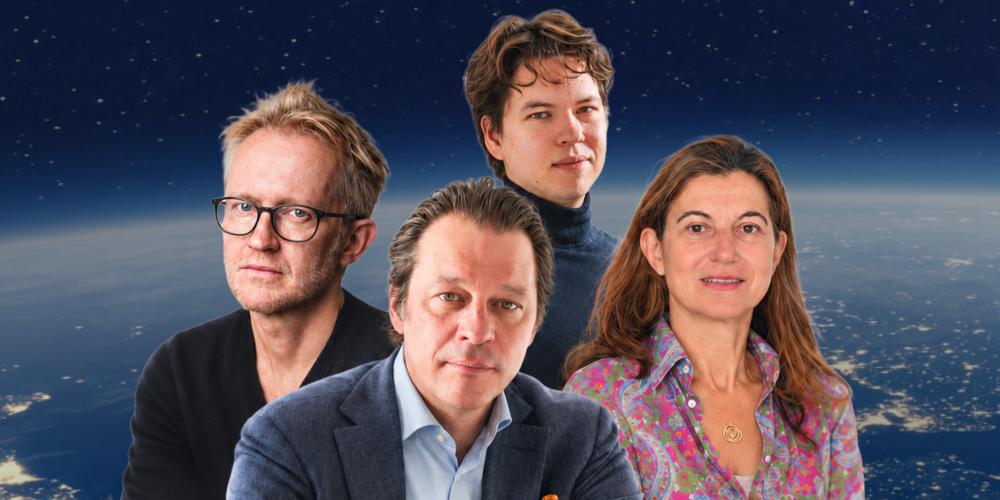


Who rules the world? With that question, one not to be taken lightly, the first Caroline Pauwels Lecture will be launched at Flagey on Tuesday 24 November: Who Rules The World? On Big Tech and Democracy. Three thinkers will get to grips with it, each from their own perspective: geopolitical expert Paul Verhagen, policy expert Diana Mangalagiu and historian David Van Reybrouck. A brief introduction.
The Soviet Union collapsed in 1991, coincidentally also the birth year of Paul Verhagen. Borders and enemies disappeared, the internet emerged, and technology connected cultures and economies. Verhagen’s generation grew up on a digital supercontinent. In his book The Techtonic Shift, he calls it Digital Pangea, after the supercontinent that existed before the continents drifted apart.
Today, that digital supercontinent is drifting apart once again. Borders and enemies have returned, and the technology that connected the world is now splitting it into three rival blocs: the United States, China and Europe. Time for Europe to break away from the American model, Verhagen says in De Morgen. “American technology is barely regulated, giving tech companies a free hand. (…) Their power is enormous, without any democratic accountability to match. (…) Their algorithms are poison for democracy. At least of cigarettes you can still say that they do not influence the way you vote.”
“Just as with the internet, China is thinking very rationally about the deployment of AI”
Paul Verhagen
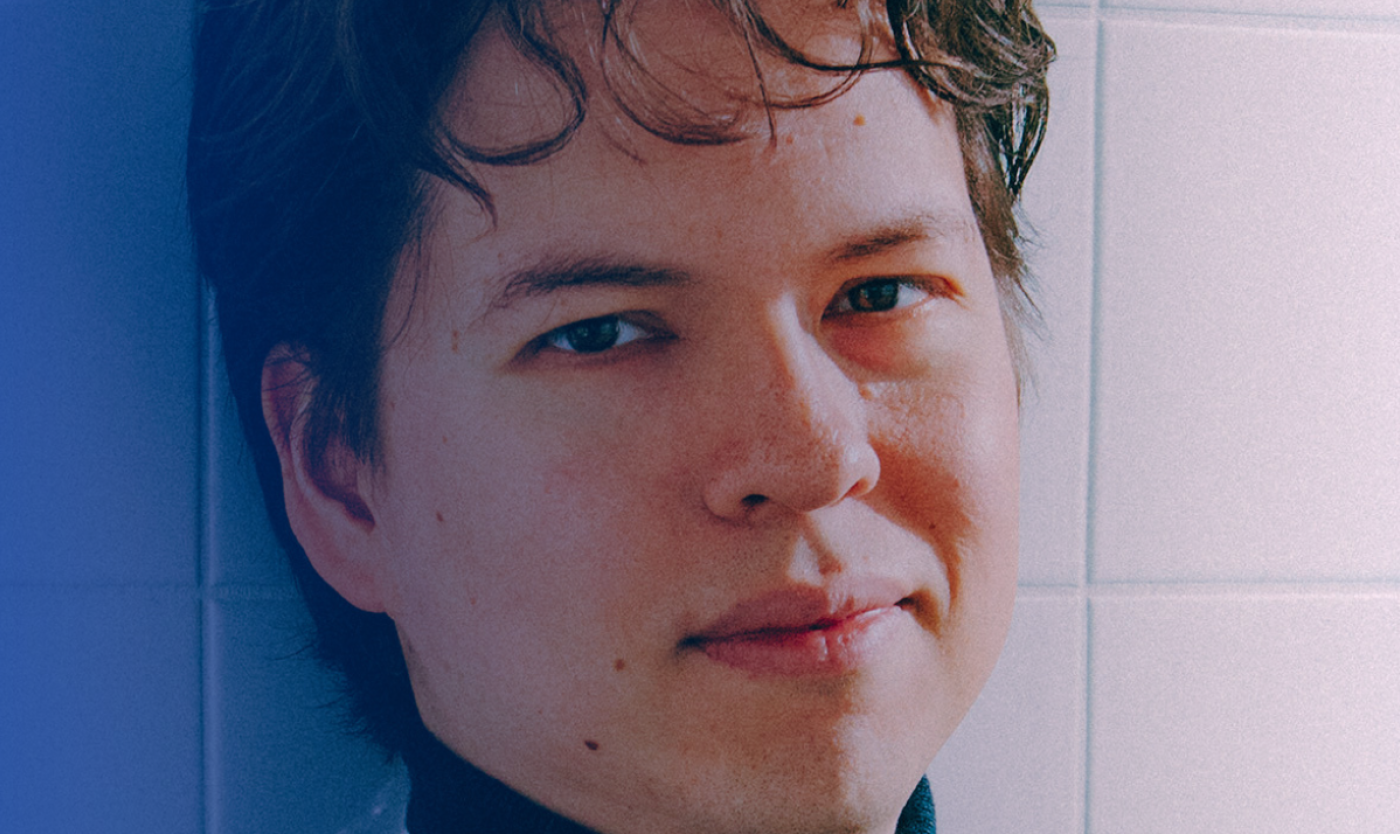
Paul Verhagen
Verhagen is Dutch and American, with Chinese grandparents on his mother’s side. A walking geopolitical conflict, you might say. Perhaps precisely because of that, he has a surprising view of what Europe should do: learn from China. “The West did not think about the dangers of new technology; China did. It saw the internet as a technology that could become disruptive for society.” The same thing is happening with AI, he argues. He rejects internet censorship, mass surveillance and corporate espionage, but he does advocate the use of Chinese AI models. These can be freely downloaded and run and modified independently. Food for thought there at Flagey.
“There is a gap between those who make decisions and those who live with the consequences”
Prof. dr. Diana Mangalagiu
Prof Diana Mangalagiu is also a citizen of the world: Romanian-French, speaks seven languages, and has lived, worked and travelled in nearly one hundred countries. “I grew up in a small town in communist Romania,” she recounts on the website of Spain’s IE University. “When I was twenty, the regime fell. I moved to France for my engineering degree and later my PhD in artificial intelligence.”
Further studies followed in fields including sociology, management and political science. Today she teaches and advises governments, the OECD, the World Bank and UN agencies on how technological change is reshaping societies and institutions.
To Flagey, Mangalagiu primarily brings attention to those who end up paying the price for new technology and ill-considered policymaking. “Those most affected by it are often not even anywhere near the rooms where decisions are made. That gap between those who make decisions and those who live with the consequences is one of the reasons why I work in this field.”
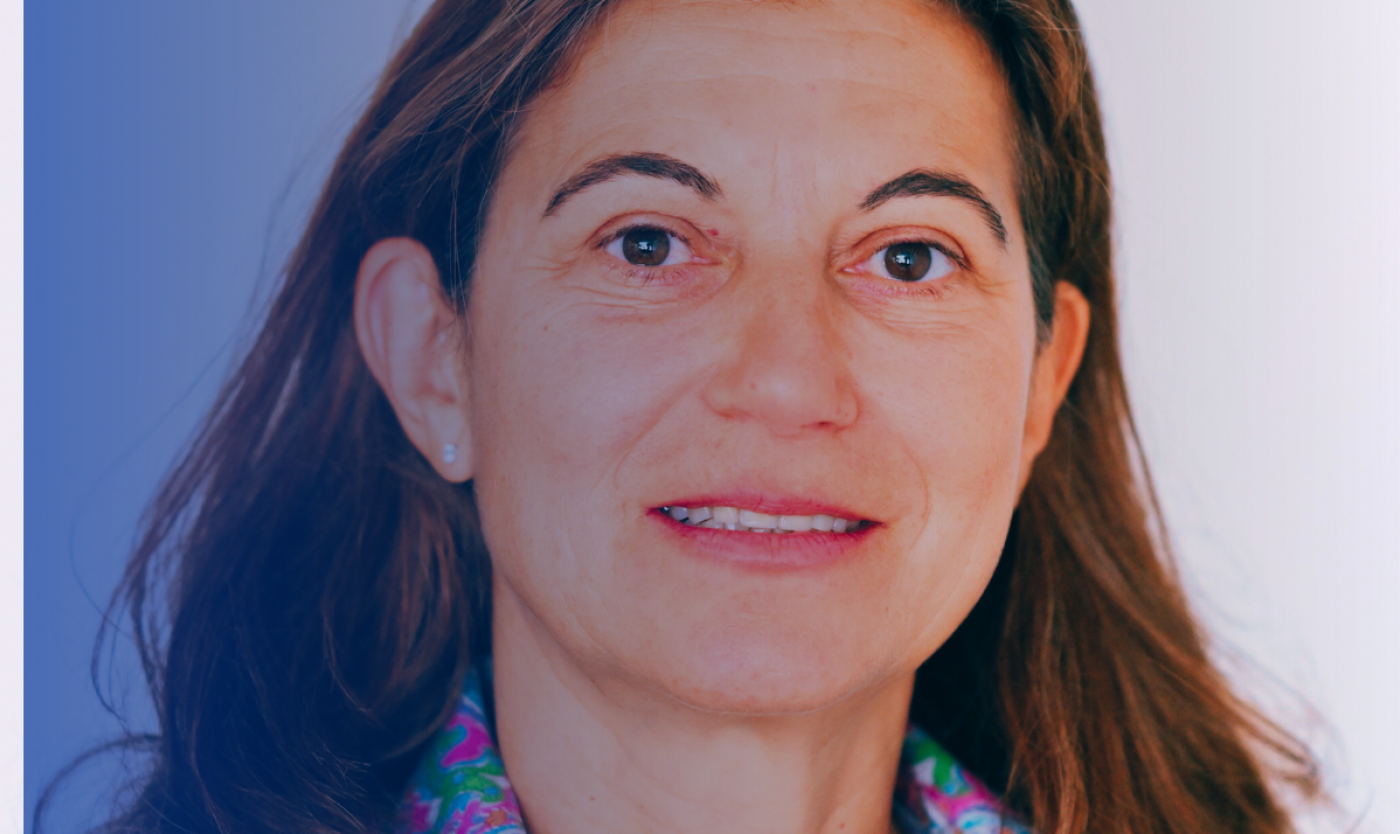
Diana Mangalagiu
“People with practical training do not recognise themselves in parliament”
David Van Reybrouck
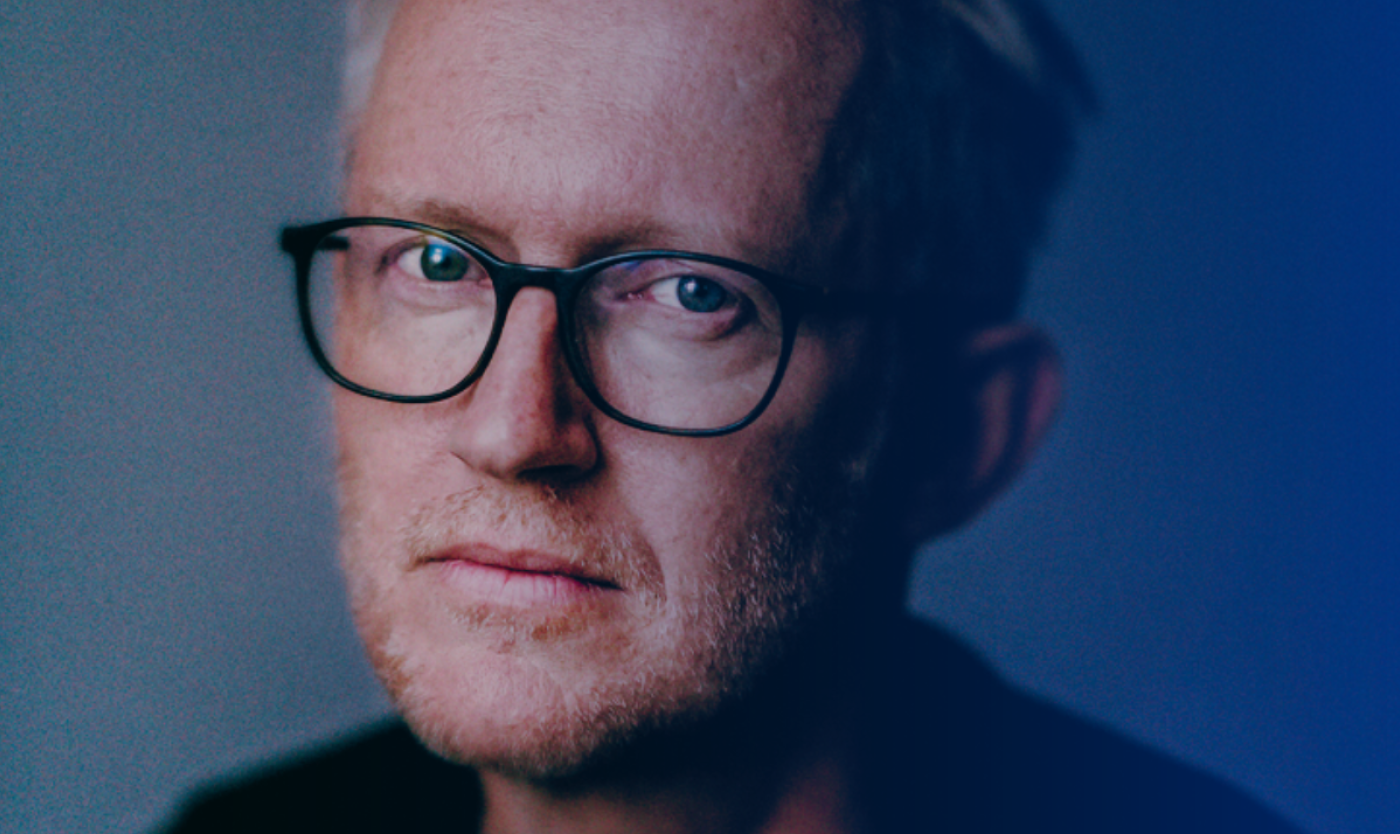
David Van Reybrouck
Historian and Dutch Thinker Laureate David Van Reybrouck is concerned with that same gap. He compares a democracy to a residents’ association: you may disagree about the solutions, but you must share the problem. According to him, that is where things go wrong. Because of digitalisation and filter bubbles, we share less and less of the same reality, and the public sphere is shrinking.
He put forward his solution in Against Elections, which has been translated into more than twenty languages: citizens’ panels selected by lot. In all Western democracies, parliament is filled with highly educated people, he told Univers, Tilburg University’s journalistic platform. “Then we should not be surprised that people with practical training do not recognise themselves in that parliament. In reality, we need a second form of representation. That is why I argue for more citizens’ assemblies. Bring together a representative sample of citizens to discuss the future with one another. Give them the opportunity to learn from each other and from experts, and to come up with creative, practical solutions.”
That it can work is demonstrated by Ostbelgien. Since 2019 it has been pioneering a permanent citizens’ assembly, partly inspired by Van Reybrouck. The assembly has already argued for better wages in elderly care and easier access to housing for young families. Politicians approved the proposals. And AI? According to him, it can help make citizens’ assemblies cheaper and faster, because processing participants’ contributions currently requires a great deal of time and money.
So, is AI a poison or a remedy for democracy? Verhagen, Mangalagiu and Van Reybrouck will not necessarily agree on everything. On 24 November, you can hear for yourself.
24 November 2026 | Caroline Pauwels Lecture | Flagey, Brussels
Who rules the world? On Big Tech and Democracy
Curator Koert Debeuf brings together international thinkers and commentators on 24 November. David Van Reybrouck is a writer and advocate of democratic renewal. Diana Mangalagiu (University of Oxford) researches the societal and environmental impact of technological change. Paul Verhagen is the author of The Techtonic Shift and an expert on the geopolitical power of Big Tech. The discussion will be moderated by Kasper Goethals (De Standaard).