


Educational quality of the programme
At VUB, the quality of the education takes centre stage. This isn't something we say lightly: we scrutinise our programmes regularly to align them with changing student needs in a rapidly changing society.
This public information is part of VUB’s quality assurance and was ratified by the Academic Council on 19/05/2025. Below is a translation of the Dutch version.
Sources: Peer Review 2024, Strategic plan, Factsheets, focus group discussion.
Strengths of the programme
- Broad language offering: The bachelor's programme offers students the opportunity to study the language, culture, and literature of two languages in depth and, as an elective option, to add a third language, including Chinese.
- Dedicated teaching team: The teaching team consists of enthusiastic lecturers with a strong sense of collegiality, who maintain close contact with students within each language specialisation.
-
Multilingual environment, multicultural classroom context, and strong internationalisation: the Dutch-taught and English-taught bachelor attract students from more than 25 nationalities. For most courses, students from both parallel programmes attend classes together. Through group assignments that take the diversity of group members into account, students learn to collaborate effectively in a multilingual and multicultural environment.
Opportunities
- Digital humanities: Investigate to what extent Digital Humanities can be incorporated into the curriculum.
- Stable curriculum: Ensure that the programme remains stable over a number of years so that the impact of curriculum changes can be properly assessed and evaluated.
Current developments
- Improving the registration process for international students: The programme is expanding its existing interview procedure and aims to provide prospective students with more comprehensive information about the programme content, the level of commitment required, and the necessary foundational knowledge.
- Monitoring student success rates: Student success rates are a particular area of attention, especially in the English-taught variant of the programme. To improve these outcomes, the programme is working on optimising the registration process, strengthening student support through feedback, organising information sessions on study skills and study pathways, facilitating networking events, identifying and addressing bottlenecks within the curriculum, and fostering social cohesion through extracurricular activities involving fellow students and/or lecturers, both on campus and in the city.
- Strengthening AI and research skills: The programme is paying increased attention to the research skills that are already embedded in the curriculum and is developing and implementing an AI policy.
Where do we get this information from?
As institution we routinely ask our students to give their honest opinion about the study programme during their academic career. We also consult our professors and assistants and gauge the expectations in the future field of work. We receive structured feedback from our former students and compare our programmes with others at home and abroad. Through a Peer Review every six years an expert panel endorses the programme’s assets and can recommend some actions. Lastly, VUBs Education Quality Council takes a formal decision about the quality and functioning of a programme.
Quality cycle
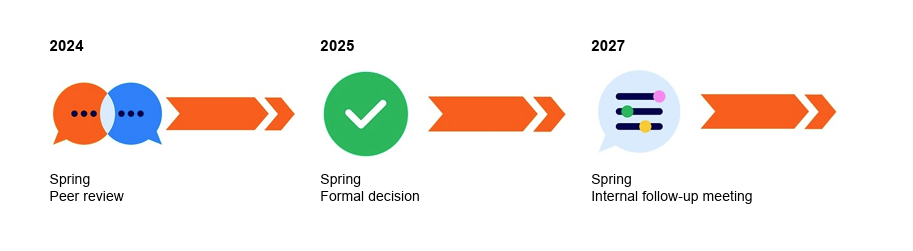
Each programme follows a six-year quality cycle. The timeline below shows the schedule for this particular programme.