



Practical
Thursday, 22 January, 2026
- 09:00 until 17:00
FREE
Photonics plays an important role in the screening of food products. This includes the detection of foreign objects, the classification of a product batch based on its quality, the monitoring of the (potential) presence of carcinogenic elements, authenticity tests on liquids in the framework of food fraud and the quality monitoring of water.
This one-day hands-on training course provides industry with a detailed overview of how photonics and photonics-based techniques can contribute to the quality control and safety of liquid and solid food products.
Some examples:
- Foreign object detection
- Ripeness classification
- Detection of mycotoxins
- Acrylamide precursors in potatoes
- Authentication of olive oils, honey and beers
- Monitoring of drinking water quality
In the introduction part, the theoretical aspects of the various physical phenomena that can occur during food screening together with their related measurement setups will be discussed. Different case-studies will be presented illustrating the selection of the appropriate test set-up and dataprocessing techniques.
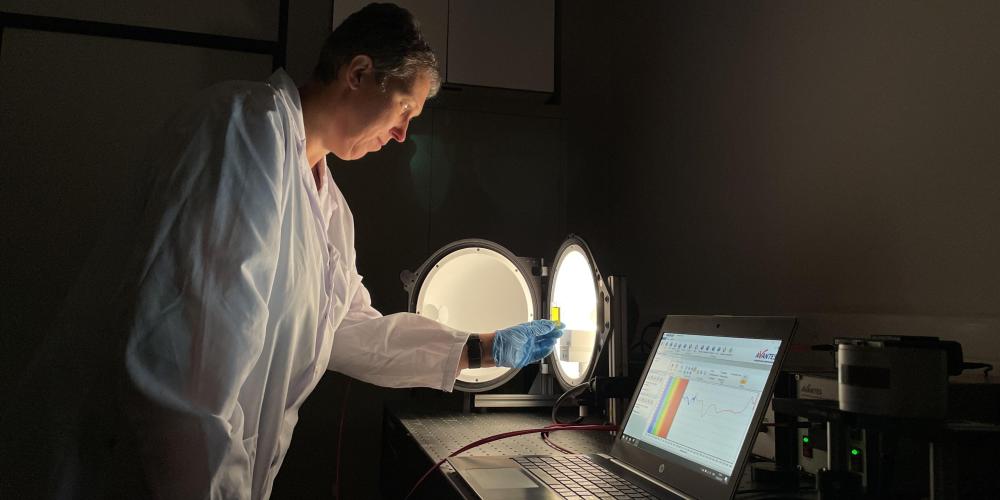
The second part of the course will focus on three demonstrators where participants can have hands-on experience.
Course outcomes
1. Understand key features of different photonics detection techniques used in food research
2. Evaluate various photonics test set-ups (hands-on activity)
3. Get familiar with machine learning techniques (hands-on activity)
4. Understand the photonic product design and manufacturing process
Course audience
It is desirable but not essential that course attendees have a basic understanding of photonics. The course is ideally suited for people from food and agriculture industry that want to explore the possibilities of implementing photonics-based techniques in their specific application. People from water companies are also highly welcomed.
Attendee experience
Some previous experience would be desirable but not essential