
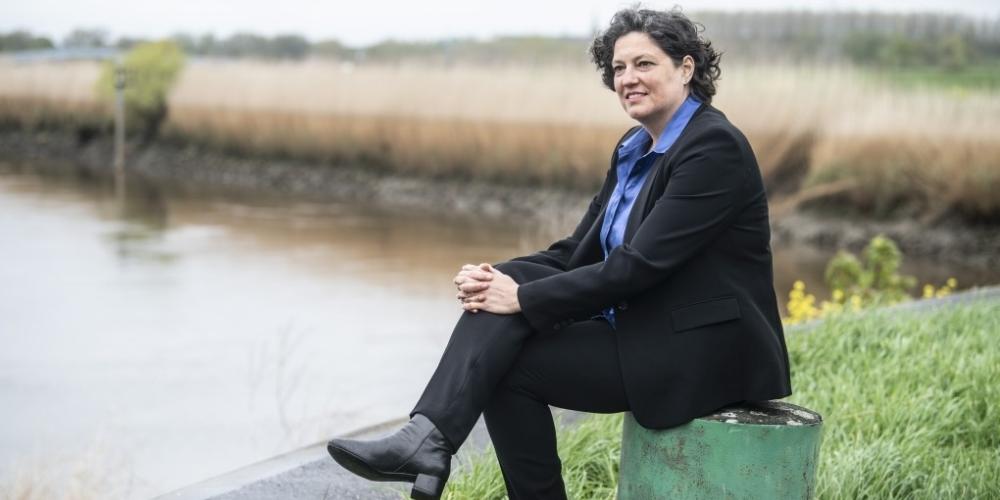


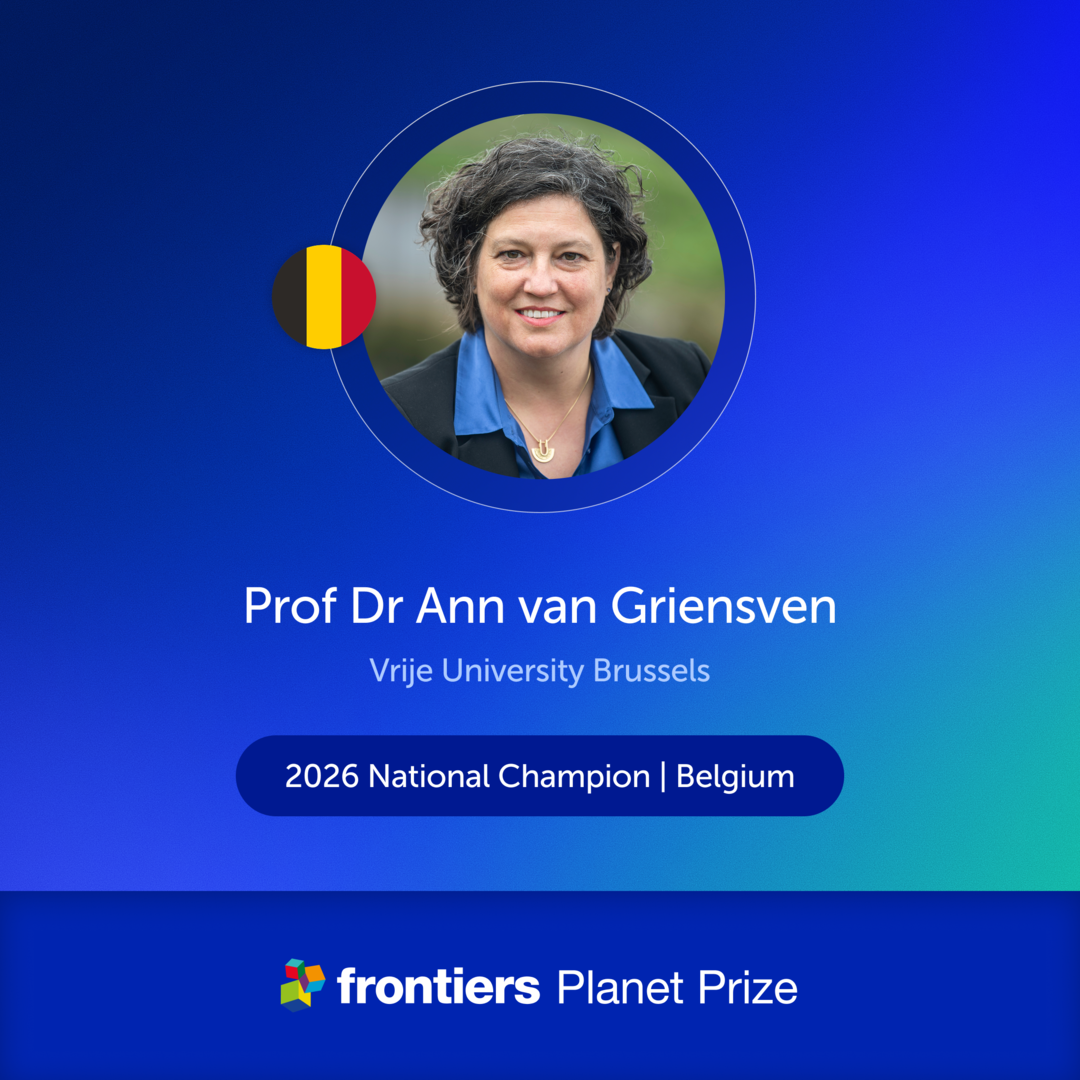
BRUSSELS 22/03/2026- Professor Dr Ann van Griensven (Water and Climate, Vrije Universiteit Brussel) has been named Belgian "national champion" of the prestigious Frontiers Planet Prize 2026. With her research on African waterways, she is competing for a grand prize of one million dollars. Her work establishes a direct link between local decisions in Africa and the stability of our global ecosystems.
Why this research concerns us all
Freshwater systems are the lifeblood of our planet, providing not only drinking water and agriculture, but also energy production and biodiversity for billions of people. However, the pressure exerted on these systems by climate change and deforestation is increasing dramatically. Van Griensven's research shows that we cannot understand the future of our water simply by studying climate models. Changing land use through local decisions on agriculture and forest management is at least as crucial to water security.
Key findings of the award-winning research:
- Increased water stress: model results show a significant decrease in the flow of several river basins such as the Senegal, Niger and Orange rivers.
- The impact of human activity: in the Congo Basin, deforestation and the expansion of agriculture are altering the regional water balance.
- Large-scale pollution: a continental analysis shows that around a third of African rivers exceed nutrient thresholds. This not only affects biodiversity, but also poses a direct risk to public health and the livelihoods of local populations.
Science in practice: from model to society
Professor Van Griensven's research is not limited to academic reports. His team is using a computer model (Soil and Water Assessment Tool, SWAT+) to simulate the complex interactions between water, food and energy under future climate scenarios. The results of the model will be used in UNESCO CRIDA (Climate Risk Informed Decision Analysis) workshops in Tanzania, Kenya and Bolivia to work with scientists, governments and local communities to identify vulnerabilities and seek climate-resilient solutions, such as natural filters to combat pollution.
Collaboration with local populations is essential in this respect. Through citizen science in Kenya and Bolivia, for example, young people are themselves monitoring the water quality of their rivers and the ecosystem services of papyrus swamps and nature-based solutions.
One of the main challenges in Africa is to fill the data gap: in much of the continent, there are no systematic measurements of water quality. That's why Van Griensven is combining satellite observations, computer models, local knowledge and networks to identify blind spots.
On the way to Davos
As national champion, Professor Van Griensven will now compete against 24 other scientists from around the world. An independent jury of 100 experts will select three international winners later this year. The final awards ceremony will take place on 18 January 2027 in Davos, where science and politics will come together to take concrete action for a healthy planet.
Contact:
Ann Van Griensven: ann.van.griensven@vub.be 0484761696