

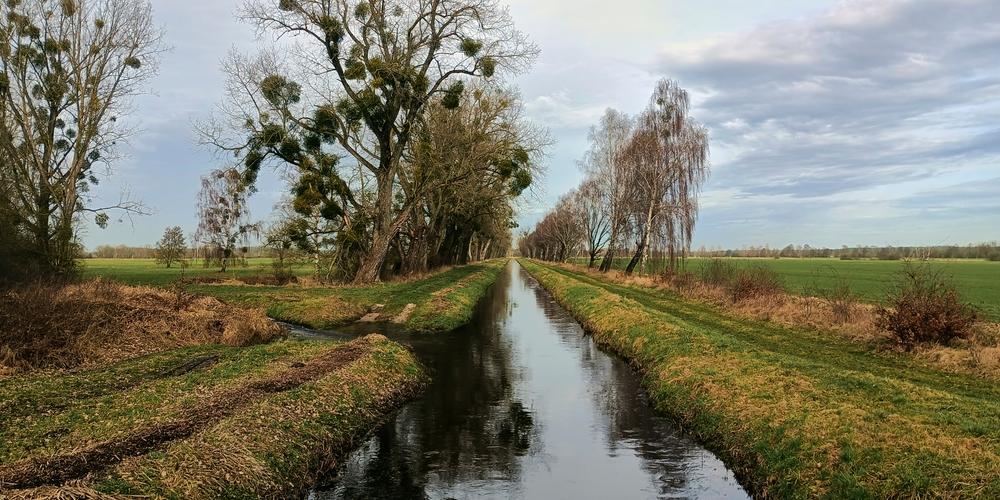


Groundwater keeps our country running, yet what happens beneath our feet remains surprisingly little understood. A new interdisciplinary project at the VUB aims to make this hidden world of water audible at last, using innovative fibre-optic technology that literally listens to what is happening underground. Professor Marijke Huysmans: “The first attempt ever to let the subsurface tell us, in real time, what it is doing.”
Groundwater is an invisible yet indispensable part of our society. It supplies our drinking water, supports agriculture and industry, and helps ecosystems survive during periods of drought. Yet the behaviour of groundwater remains largely hidden as it moves beneath our feet. How quickly does it flow? In which direction? And how does it respond to climate change or water abstraction?
To answer these questions, scientists rely on computer models. These models are essential for policymakers and water managers, but they still contain significant uncertainties. The main reason is that we mainly measure groundwater levels, while rarely observing how groundwater actually flows.
A new interdisciplinary research project funded by the FWO at the Vrije Universiteit Brussel aims to change that. The project is led by Professor Marijke Huysmans (Department of Water and Climate – HYDR) and Professor Francis Berghmans (Department of Applied Physics and Photonics – TONA). Notably, they are combining this groundbreaking research with important policy roles within the university: Francis Berghmans is Dean and Marijke Huysmans Vice-Dean of the Faculty of Engineering. Their involvement shows how strategic academic leadership and fundamental research can go hand in hand.
The central research question sounds almost poetic: can we listen to groundwater?
Why groundwater flow matters
Groundwater is constantly in motion, albeit slowly and silently. It seeps through sand and clay, or flows more quickly through fractures in rock. This movement — known as groundwater flux — determines how quickly water supplies are replenished, how pollution spreads, and how resilient a water system is during periods of drought.
Traditional measurements mainly provide information about water levels in monitoring wells. Yet two areas with similar groundwater levels may have completely different flow patterns. This makes it difficult to make reliable predictions about the impact of drought, infiltration or water abstraction.
By measuring groundwater flow directly, models can become far more accurate. The challenge, however, is that such measurements are technically extremely demanding, particularly because groundwater flow varies greatly across both space and time.
Fibre optics as underground sensors
The VUB project brings together two areas of expertise that are rarely combined: groundwater science and advanced fibre-optic technology. Fibre-optic cables, best known from telecommunications and data networks, are also extremely sensitive to tiny vibrations and deformations. The researchers are investigating two complementary measurement methods.
Listening with light: Distributed Acoustic Sensing
In Distributed Acoustic Sensing (DAS), a laser pulse is sent through a fibre-optic cable. A small portion of the light is reflected back along the cable. When the fibre deforms ever so slightly — for instance due to vibrations in the ground — the reflected light changes. By analysing these changes, researchers can detect where and when movement occurs along the fibre.
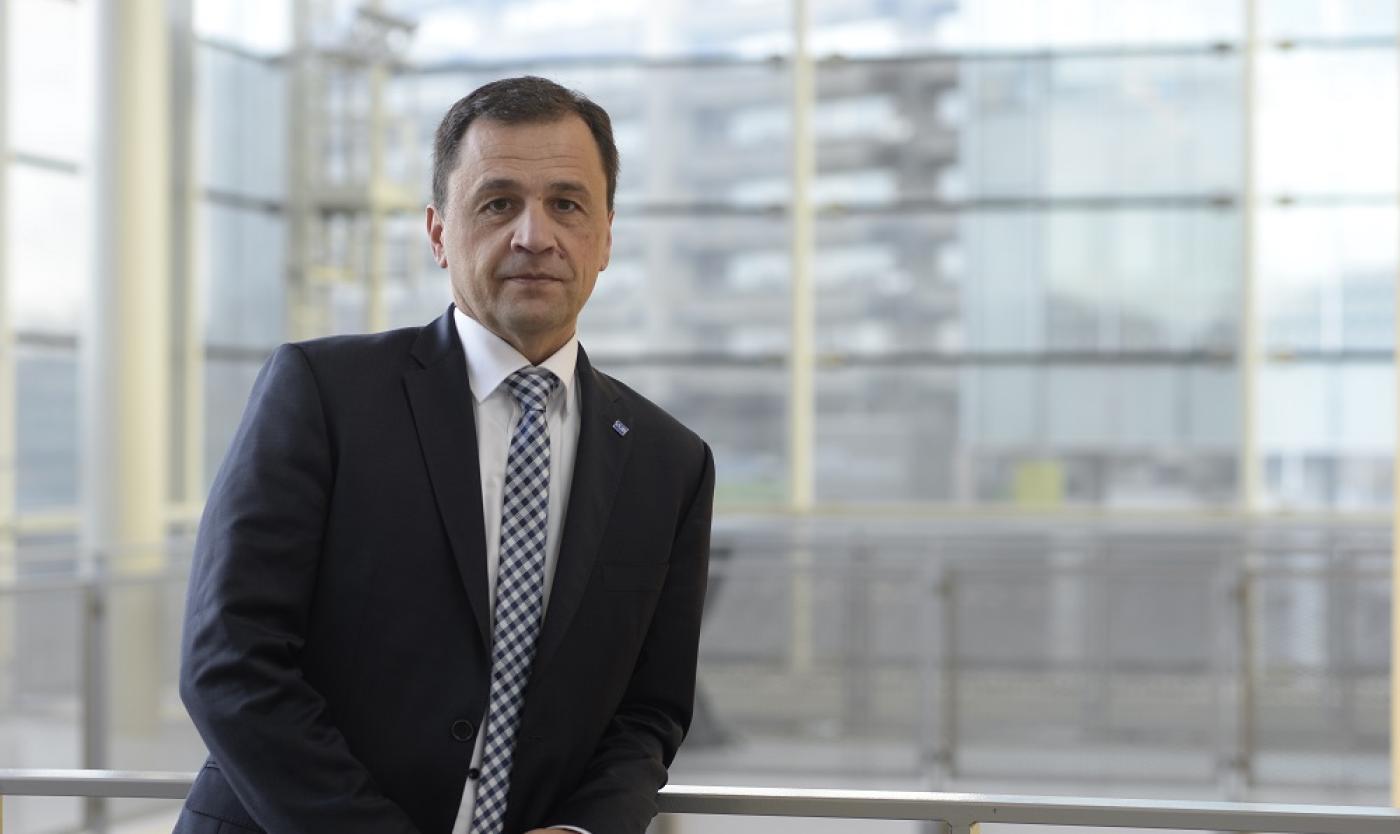
Francis Berghmans
When groundwater flows, it produces extremely small vibrations in the soil and in the fibre itself. DAS makes it possible to record these signals across hundreds of metres at the same time. The system therefore does not “listen” with a microphone, but with light. In this way, light functions as an exceptionally sensitive “hearing” for underground processes that have so far remained invisible. Although DAS has already been used to monitor earthquakes, traffic and pipelines, it has never been applied to natural groundwater flow. That makes this research high-risk, but also potentially groundbreaking.
The project also uses Fibre Bragg Gratings (FBGs): small sensors embedded within a fibre-optic cable. By locally heating the water slightly and measuring how that heat is carried away, researchers can determine both the speed and direction of groundwater flow. This method provides highly detailed, local information and serves as an ideal complement to DAS.
From laboratory to practice
The research will proceed in several stages. The sensors will first be tested in controlled laboratory environments — essentially in a sand-filled test basin. They will then be deployed at two realistic field sites: a shallow aquifer in agricultural land, where groundwater levels fluctuate strongly due to irrigation and drainage, and a deeper rock formation used for underground water storage as protection against drought. The measurement data will subsequently be integrated into advanced uncertainty models. This will allow researchers to assess how much groundwater models improve when flow measurements are added to traditional water-level observations.
Societal relevance
Better groundwater models lead to better decisions. For drinking water companies, farmers, governments and environmental managers, this could result in more sustainable water use, improved preparation for drought, a reduced risk of pollution, and an even stronger scientific basis for climate adaptation. The fact that this research is led by a dean and a vice-dean who are simultaneously responsible for faculty policy highlights the VUB’s vision that research, teaching, university service and societal responsibility should reinforce one another.
Voices from the project
Professor Marijke Huysmans: “We have long tried to understand groundwater by looking only at water levels. By also measuring groundwater flow and integrating it into groundwater models, we can drastically reduce the uncertainty in our predictions and make better decisions for the future of our water management.”
Professor Francis Berghmans, Dean of the Faculty of Engineering: “The fact that we can observe subtle movements deep in the ground using fibre optics and light shows how fundamental technology can open entirely new doors. It is precisely this kind of research that drives an engineering faculty forward.”
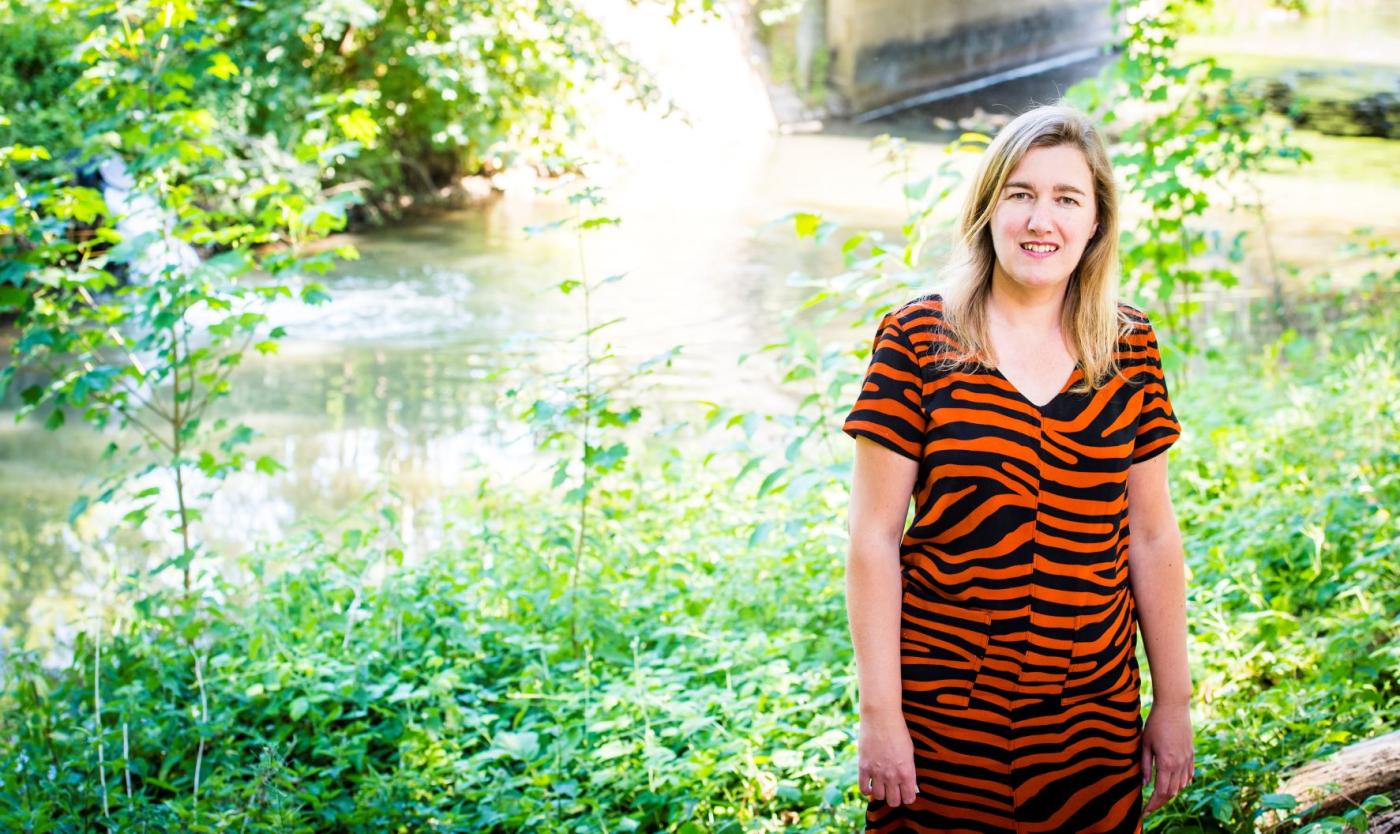
Marijke Huysmans