




Research by Wen-Juan Ma, who leads the Evolutionary Genomics of Sex lab at VUB, sheds new light on the remarkable diversity and evolution of sex chromosomes in the animal and plant kingdom. The researcher wonders why sex chromosomes remain stable in some species while in others they are constantly changing. Whereas in humans the Y chromosome determines the male sex and that system has remained relatively stable for millions of years, nature appears to be far more creative.
“In birds it works the other way around”, says Ma. “There the W chromosome indicates a female individual. In many other species it is even more complex and sex chromosomes can even be swapped.”
This is especially evident in amphibians, fish, reptiles, some insects and flowering plants, where sex chromosomes prove to be strikingly dynamic. The phenomenon, in which new sex chromosomes arise or existing ones disappear, rarely occurs in mammals and birds. “I wanted to understand where that diversity in other species comes from,” says Ma. Her research combines fieldwork, crossing experiments, molecular genetics, gene manipulation and comparative genomics to unravel the mechanisms behind sex determination and the evolution of sex chromosomes.
A central theme in Ma’s research is how this continuous renewal keeps sex chromosomes healthy. “Sex reversals help keep sex chromosomes ‘forever young’ and thus prevent the species from degenerating”, says Ma. “My postdoc mentor called that the ‘fountain of youth’. In humans and other mammals the Y chromosome has become smaller over the course of evolution and has lost genetic information.”
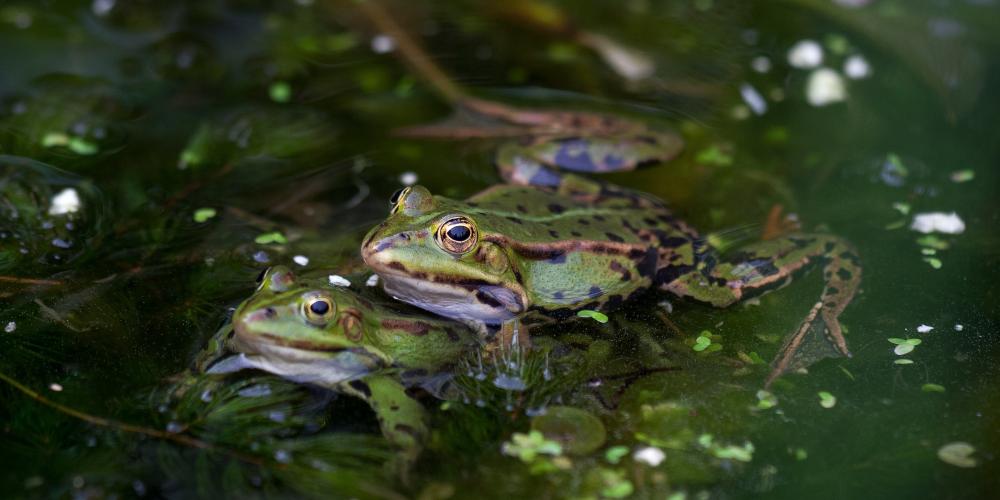
In many frog species the exact opposite happens: their sex chromosomes remain strikingly similar and are continuously genetically reshuffled. “That is a kind of self-repair mechanism”, Ma explains. “However, the process does not work equally well everywhere. In some evolutionary lineages degeneration does indeed occur.”
Precisely that is a core question of her research: why do sex chromosomes remain young in most lineages, while in others they begin to deteriorate? Ma and her team analyzed enormous amounts of genomic data using artificial intelligence. “AI helps us process all that data much faster and visualize the results better than ever before”, says the researcher. At the same time Ma emphasizes the importance of critical use of the technology: “I advise my students to use AI tools carefully and responsibly.”
The research is fundamental in nature, but in the long term it may also provide new insights for humans. “Our work can offer a new perspective on the diversity of sex chromosomes in the Tree of Life”, says Ma. “Perhaps it may one day help us understand why the human Y chromosome is more vulnerable and how it relates to certain health problems that occur only in men.”
Although the disappearance of the Y chromosome could only happen in millions of years, she points out that nature is remarkably inventive: in some rodents alternative mechanisms already emerged when the Y chromosome disappeared. “Deeper insight into those mechanisms can also help us tackle diseases linked to our sex chromosomes.”
Ma also emphasizes that her research contributes to a broader understanding of biological diversity. “As almost every biologist knows, the absolute dichotomy between male and female does not exist when you look at nature as a whole. Nature is infinitely more complex.”
The research shows how diverse the ways are in which sex is determined in nature and how flexible evolutionary processes can be. For her groundbreaking research Wen-Juan Ma received an ERC Starting Grant from the European Research Council.
More info:
Wen-Juan Ma: Wen-Juan.Ma@vub.be