



A new study published in Nature Geoscience by an international team of scientists provides new insights into the natural mechanisms behind century-scale increases in atmospheric carbon dioxide (CO₂), known as CO₂ jumps. The study, led by Etienne Legrain, paleoclimatologist at the Department of Water and Climate at the Vrije Universiteit Brussel, the Glaciology Laboratory of the Université Libre de Bruxelles and the Environmental Geosciences Institute of Université Grenoble-Alpes provides findings based on high-resolution measurements from Antarctic ice cores. The results reveal the significant role that Earth's orbital conditions play in triggering rapid CO₂ increases, particularly during periods of high obliquity. The research offers critical context for understanding natural CO₂ variability and its interaction with human-induced climate change.
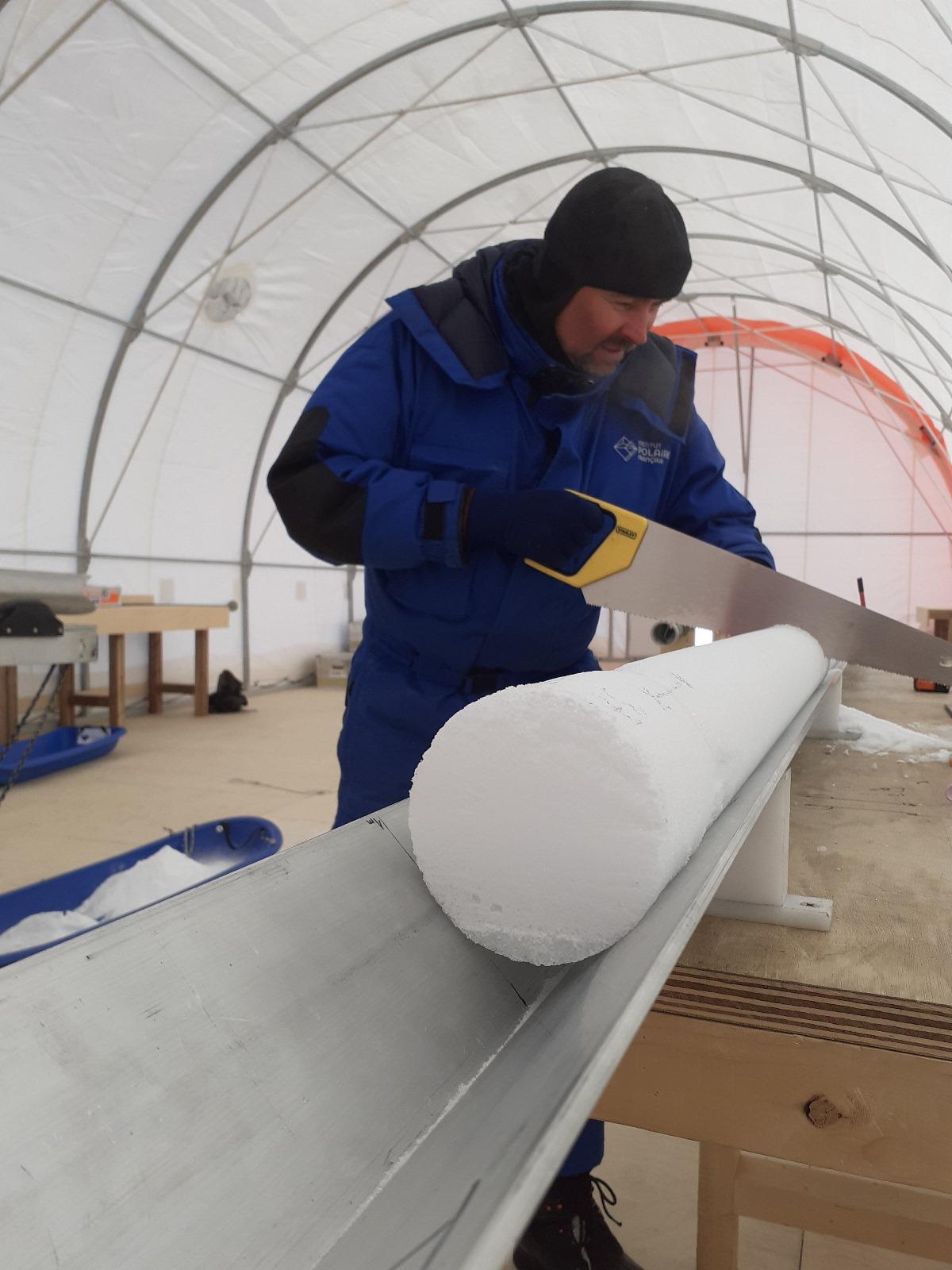
Scientist sampling ice from an Antarctic ice core. © Etienne Legrain
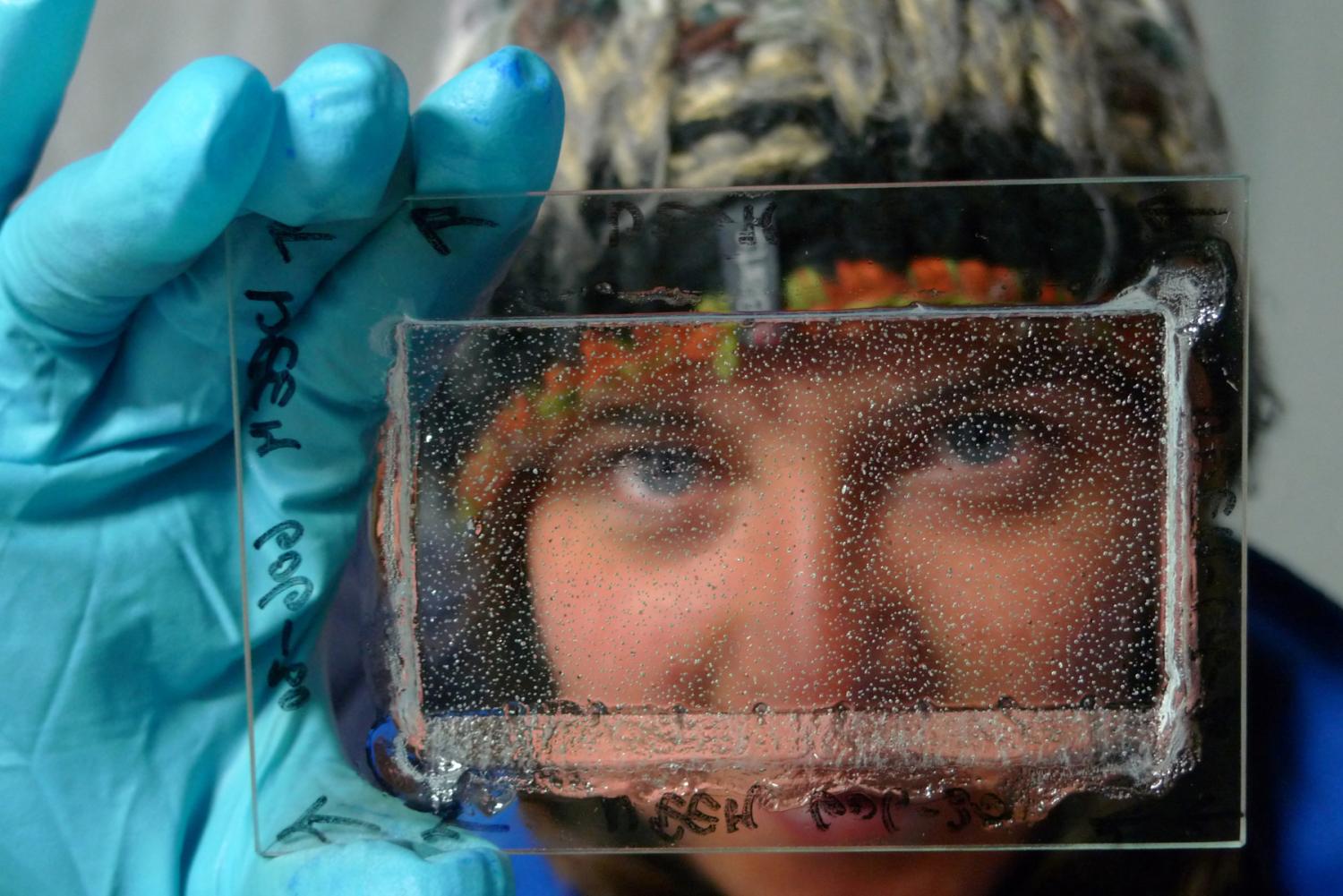
Sample of ice mounted on a glass slide for further analysis. © Etienne Legrain.
The authors affirm that we need to learn more about how these natural processes and human-caused climate changes interact and what it may imply for future climate evolution.
Reference:
Legrain, E., et al. "Centennial-scale increases of atmospheric carbon dioxide linked to obliquity-driven climate changes," *Nature Climate Change*, [DOI: 10.1038/sXXXX].
Contact:
Etienne Legrain:
Email: etienne.legrain@vub.be
Phone: +33767883755
This work is the result of a thesis conducted at the Environmental Geosciences Institute in Grenoble at the Université Grenoble Alpes, which was completed as part of a postdoctoral fellowship jointly carried out at the Glaciology Laboratory of the Université Libre de Bruxelles and the Department of Water and Climate at the Vrije Universiteit Brussel.