

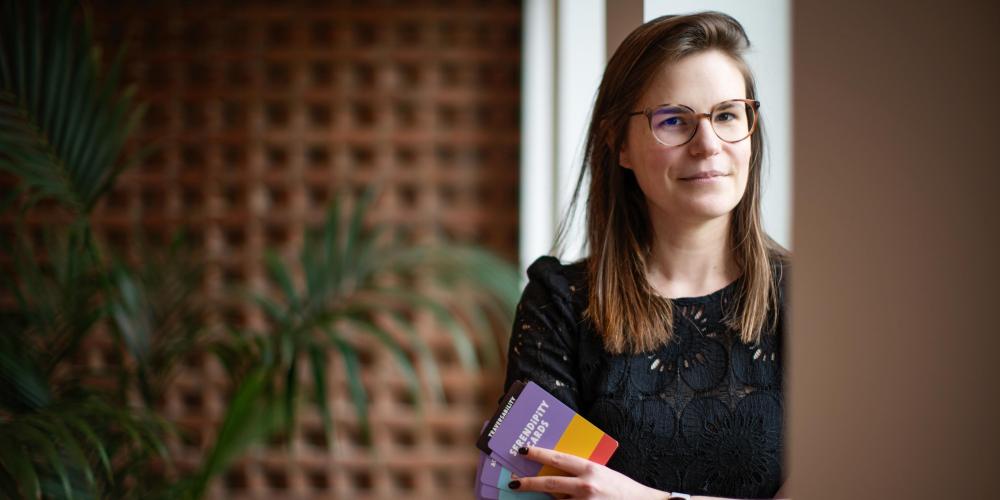


Serendipity—the unexpected discovery of something valuable—lies at the heart of the research conducted by Annelien Smets (imec‑SMIT, VUB). She analyses how digital and urban systems are increasingly steered by algorithms that prioritise efficiency and personalisation. While this evolution makes information faster and more relevant, it simultaneously reduces the likelihood of chance encounters and unexpected insights. Drawing on this tension, Smets developed the Serendipity Cards: a set of cards that translate abstract principles of serendipity into everyday online and offline life. We were given the opportunity to test them ourselves, under the guidance of the researcher.
Chance does not exist without interpretation
Even before the workshop begins, Smets refers to a remarkable example from science: the accidental discovery of nanobodies by Raymond Hamers at Vrije Universiteit Brussel. In 1989, Hamers and his students were conducting an apparently straightforward experiment in which antibodies were extracted from blood samples. As no suitable material was available at the time, he resorted to a frozen blood sample from a dromedary from an earlier study. That practical choice unexpectedly led to a surprising observation. The dromedary’s blood contained antibodies with an unusual, previously unknown structure. This discovery marked the starting point for further research that would ultimately result in the identification of nanobodies. These remarkable antibodies would later come to play an important role in, among other things, cancer research and the development of new therapies, for example against infectious diseases. The example illustrates how a chance observation can lead to a major breakthrough—a textbook case of serendipity.
Cards as a framework for thinking
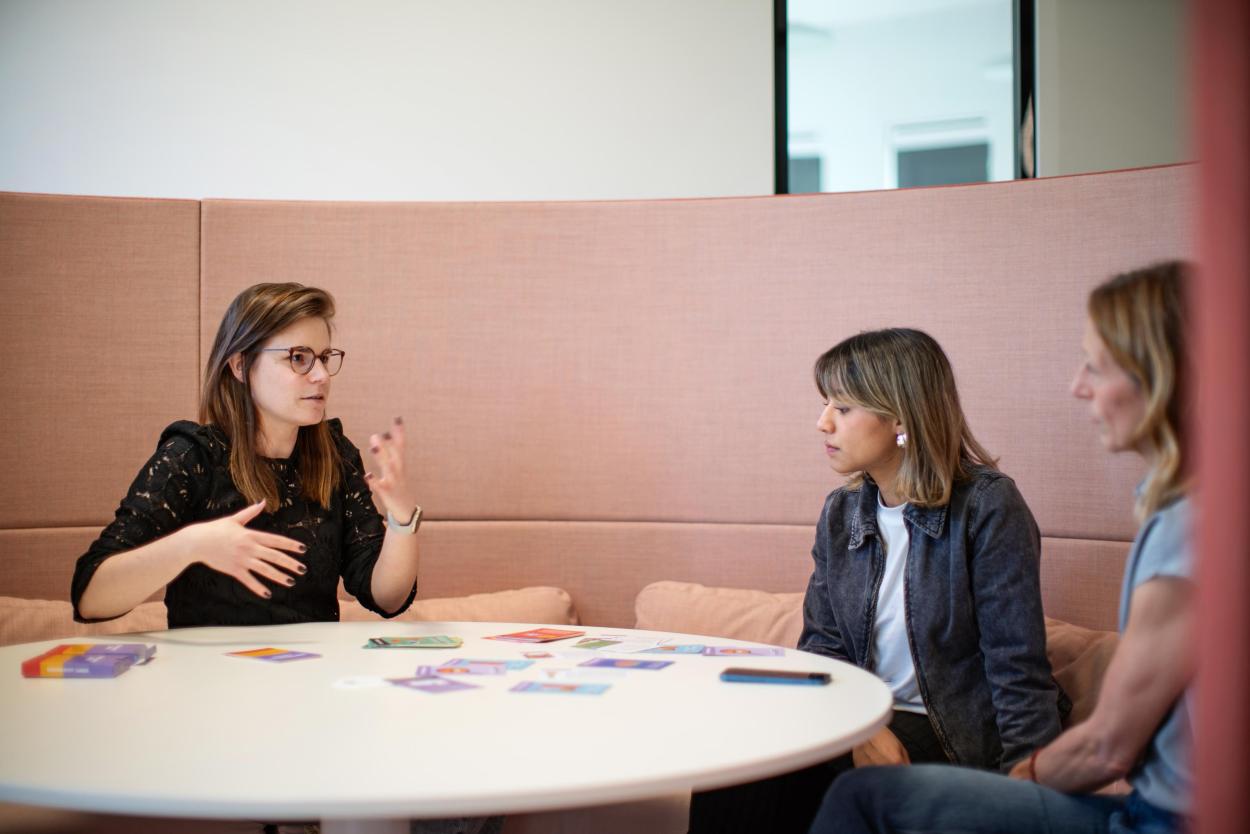
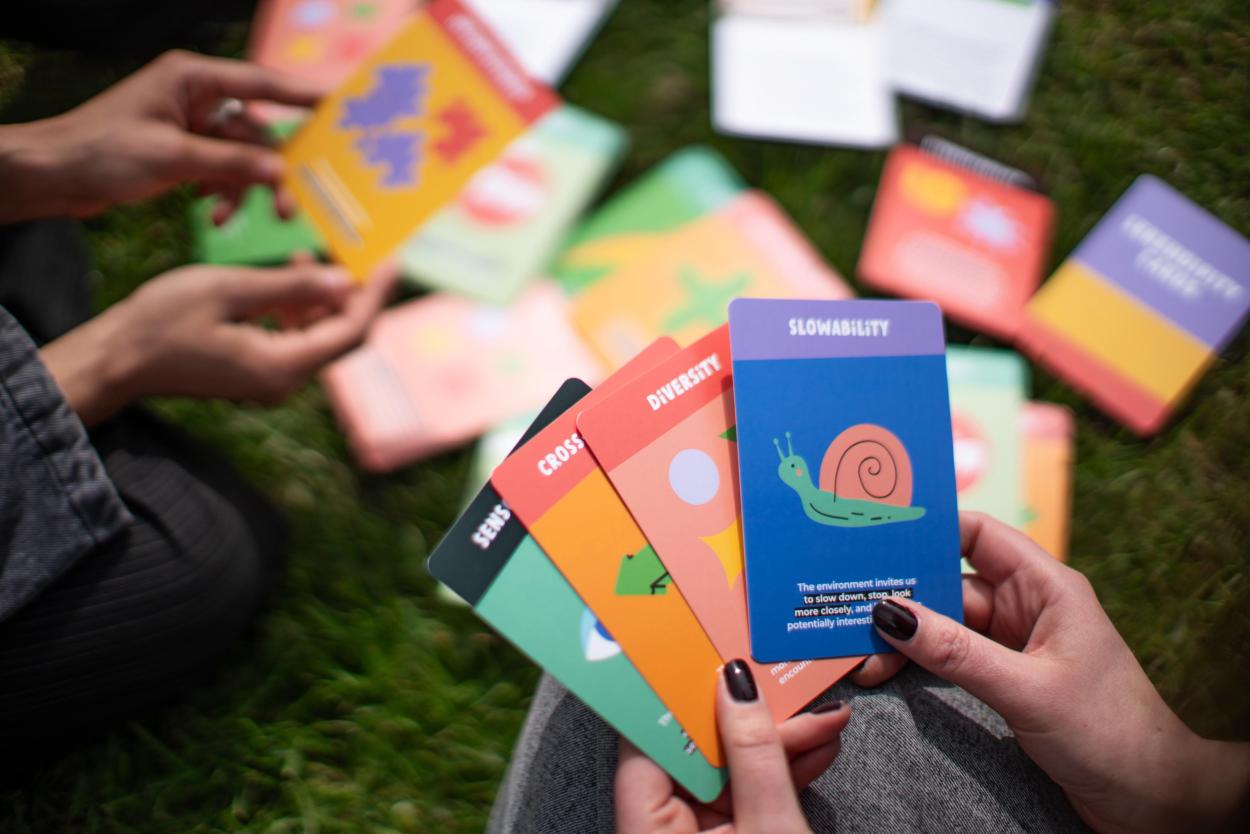
The Serendipity Cards are spread out on the table. Smets invites us to take our time to look at them and immediately apply them to a concrete case: how might we redesign ChatGPT using these cards to foster greater serendipity? There are no scores or winners. The cards offer concrete examples and design principles and function as a tool for reflection. “They are intended for architects, designers, researchers, policymakers, or anyone curious about how systems shape our ways of thinking and whether—or not—they allow room for the unexpected,” she adds.
Colleague Rashmi chooses the card Accessibility and raises questions about the way ChatGPT presents its answers. “The system provides an answer quickly, but it would be interesting if it also made external sources more visible, so that users could continue exploring on their own.” Smets connects this to personalised recommendations: systems that respond to users’ interests, while also opening up unfamiliar paths.
Slowing down to see more
I personally choose Slowness, illustrated on the cards by benches in public space that invite people to slow down and look around. In a digital environment where speed is paramount, slowing down may seem almost counter‑intuitive. Yet it is precisely this deceleration that opens up new possibilities. What if key names or events were accompanied by additional context—short snippets of information that users could click on if they wished? Small detours that invite the user to briefly step off the main path. The idea is well received. After all, who doesn’t linger over a good “did‑you‑know” fact? At the same time, the question arises as to how far such a digital system should go. Smets points out that while such features can foster greater serendipity, they should not get in the way of finding what one is actually looking for. Remaining alert to that balance is crucial. With the card Incompleteness, another tension comes to the fore: should ChatGPT explicitly indicate that its answer represents only one perspective? And could that very incompleteness prompt users to continue their search?
The power of the unfinished
To illustrate this principle, Smets refers to Building 20 at the Massachusetts Institute of Technology (MIT), a temporary wooden structure built in 1943 that went on to become a hotbed of innovation. Intended to remain in place for only a few years, it ultimately stood for more than fifty. Because the building was regarded as temporary, it was subject to very few restrictions: walls were drilled through, cables laid openly. That very ‘incompleteness’ proved fertile ground for creativity and scientific innovation, including the development of radar technology—researchers were able to test and continuously adapt radar systems directly within the building—as well as pioneering work in acoustics.
Translated to digital systems, this raises a fundamental question: must everything always be complete and fully finished? Or can leaving room for the unfinished in fact lead to new discoveries?
A conversation that slows down and deepens
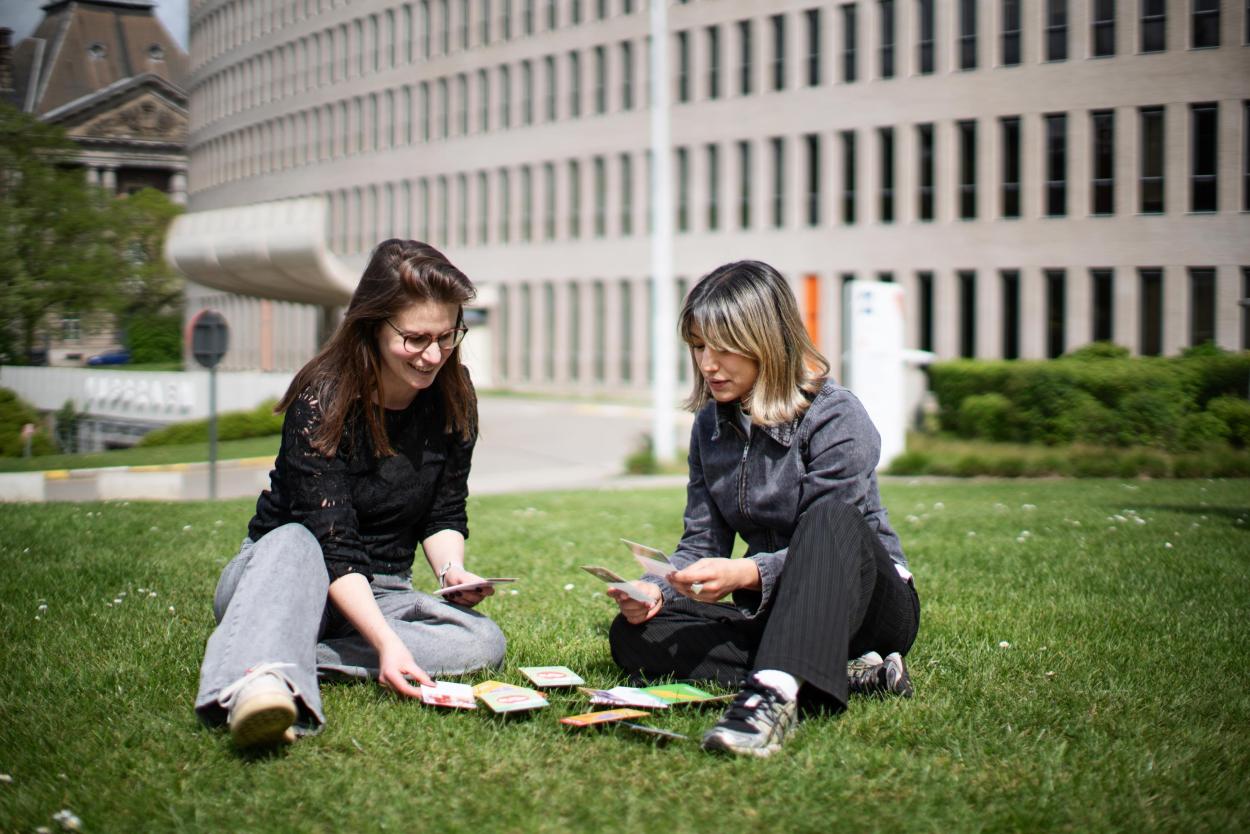
During the session, it becomes clear how the cards not only structure the conversation, but also slow it down and deepen it. Each card steers thinking in a different direction. Some ideas are immediately recognisable; others provoke doubt or only become clear later on. That layering is precisely what Smets seeks to reveal: design influences not only what we see, but also how we think and behave. The setting reinforces this effect. Gathered around an oval table in the Braem Building—with its curved walls, natural light and playful architecture—Smets points to three design principles that can stimulate serendipity: diversifiability, crossability and sensory richness. Elements such as variation, movement and stimuli can encourage people to discover new things. “Physical public spaces too, such as a university, play an important role in fostering serendipity.”
Efficiency and surprise
“We live in systems that are becoming faster and more efficient,” Smets says. “That is precisely why we need to keep making room for the unexpected.” The Serendipity Cards demonstrate that digital systems are never neutral: they shape what we see, what disappears, and in what order. At the same time, they offer concrete ideas for designing technology differently, with more room for chance and discovery.
“In a time when AI increasingly determines what we see and find, serendipity becomes more urgent. Not because everything should be left to chance, but because these new technologies present both opportunities and obstacles for serendipity. This is not just about the information we are shown, but also about our human capacity to explore and to notice. We must remain open to dealing with ‘apparent’ errors, and resist the urge to look away from uncertainty and ambiguity, instead recognising them as potential entry points for new discovery.”
Serendipity thus ceases to be a matter of romantic coincidence and becomes a design question: how do we build systems that are not only efficient, but also leave room for surprise—and for its interpretation?
What is serendipity?
Serendipity refers to the unexpected discovery of something valuable without actively searching for it. Chance plays a role, but it only gains meaning through interpretation and action. The term was introduced in the eighteenth century by Horace Walpole, inspired by the tale The Three Princes of Serendip, in which observation and reasoning lead to unforeseen insights. Today, serendipity takes on renewed relevance in digital contexts, where it serves as a counterweight to systems that prioritise efficiency and predictability above all else.
Bio
Annelien Smets is a research professor in the Department of Communication Studies at Vrije Universiteit Brussel and a senior researcher at imec‑SMIT. She teaches, among other subjects, media economics and digital innovation. Her work examines how digital technologies shape information experiences, with serendipity as a central design principle. The Serendipity Cards are a concrete outcome of this research and are used as a reflective tool in workshops. The card set was developed within the FWO SBO project Serendipity Engine, in which Smets acts as principal investigator.