

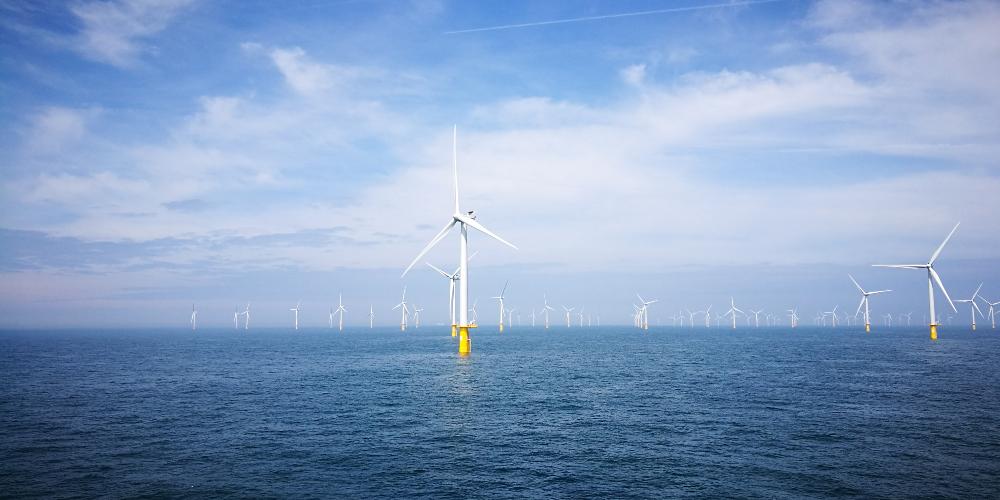


The Belgian state visit to Norway took place from 24 to 26 March. The VUB is taking part, represented by the rector and a delegation of researchers working on offshore wind energy. Offshore wind energy has evolved from a bold engineering experiment into a cornerstone of Europe’s energy transition. What began as a technically ambitious extension of onshore wind is now central to industrial strategy, energy security and climate policy. Nowhere is this transformation more visible than in the North Sea, where Belgium, the United Kingdom, the Netherlands, Germany and Denmark are rapidly expanding offshore capacity while positioning themselves as global innovation leaders. VUB’s Acoustic & Vibration Research Group (AVRG) researchers - Professor Christof Devriendt, Professor Jan Helsen, and Dr Jan Declercq - tells us more about offshore wind, Belgium’s pioneering role, and what VUB hopes to gain from discussions in Norway.
Pioneering role for Belgium
Jan Declercq sketches the background: “Belgium was among the early pioneers of offshore wind in Europe. More than 15 years ago, it deployed its first wind farms in the North Sea. Today, 399 turbines operate off the Belgian coast, connected via cables to offshore substations, before exporting electricity to shore and into the high-voltage grid. Subsea interconnectors link Belgium to neighbouring countries, allowing electricity to flow where it’s most needed.”
Offshore wind is not just turbines. It’s an entire industrial ecosystem. Belgium has global expertise in several niche areas, particularly in offshore foundations, cables, installation, marine logistics, wind turbine sub-components, and wind farm development and operation. But technological leadership also relies on research and close collaboration between universities, companies, and government. Both Vlaio (Flanders Innovation & Entrepreneurship) and the Federal FPS Economy (the Belgian Federal Department for Economy) share the vision. This triple-helix model has become a defining feature of the Belgian offshore wind story.
The Research Backbone: VUB’s Role
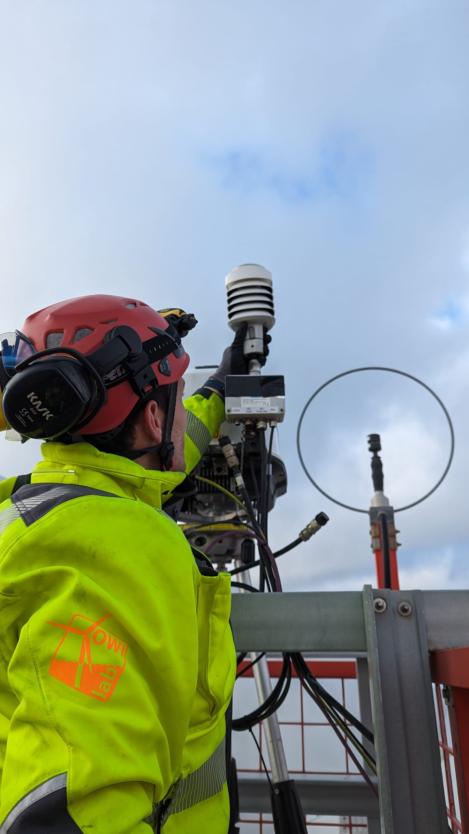
The VUB is a core partner in the Offshore Wind Infrastructure Application Lab (OWI-lab), a national centre of excellence and science-policy-industry interface dedicated to advancing research, innovation and technological development in the wind energy sector. It was set up through a long-standing collaboration between VUB, Ghent University, and Sirris. OWI-Lab has 75 researchers and technicians who cover expertise along the entire offshore wind value chain. Rather than relying on laboratory-scale experiments, the researchers work directly with operational wind farms in the North Sea, making it their living lab, bridging research with real-life challenges.
“One of VUB’s key research domains is the structural health and condition monitoring of wind turbines. Researchers have developed advanced signal processing techniques and physics-based and data-driven digital twins* to monitor and optimise turbines and farms over time. Closely linked to this is the Remaining Useful Life (RUL) research. They tend to last about 25 years. We use operational data to estimate RUL and assess structural reliability of these giants in the water. It allows operators to do more healthcare operations, balancing revenue and lifetime consumption checks, or to start planning their end-of-life/decommissioning. The economic implications are significant”, Jan explains.
Belgian State Visit to Norway: Triple-Helix Diplomacy in action
In March, VUB will join the State Visit to Norway, led by His Majesty the King. The diplomatic visit will put the spotlight on offshore wind as a strategic priority in foreign and industrial policy. VUB’s AVRG researchers are participating in a roundtable discussion with policymakers, industry leaders and Norwegian counterparts, exemplifying the triple-helix model in action. The event will explore OWI Lab’s positioning as an EU-level Centre of Excellence in wind energy, EU policy, and industrial challenges in offshore wind, and Europe’s long-term competitiveness.
The exchange with Norway, itself an offshore wind frontrunner and major energy exporter, offers an opportunity to share research insights, explore collaboration, and look at expanding a shared supply chain. For the VUB research team, the visit reinforces research-industry-government collaboration, strengthens academic networks and helps position Belgian expertise on the international stage.
From Data to Deployment
VUB’s research does not remain confined to academic publications. Technology transfer, valorisation, and spin-off creation are an integral part of its strategy. VUB’s spin-off 24SEA is today a leading structural health monitoring provider, servicing more than 25 wind farms worldwide. AI-driven analytics from VUB research help wind farm operators extract insights from turbine data, translating advanced algorithms into practical decision-support tools.
Jan: “This focus is particularly relevant as the first generation of Belgian offshore wind farms approaches the end of its 25-year life. Decisions will soon be required on decommissioning, life extension, or repowering. Data-driven lifetime assessment - an area in which VUB has strong expertise - will be crucial for determining safe and economically viable pathways. Data-enabled decision-making for smart operation and e.g. predictive maintenance is a key enabler for further costs reduction of offshore wind. VUB works extensively on digital operation and maintenance methods.”
Research extends into other challenges, such as infrastructure resilience. Offshore wind is intermittent, and large volumes of renewable electricity must be integrated into national and cross-border grids. Monitoring systems, data security, and digital infrastructure resilience are becoming increasingly important in a geopolitically sensitive environment.
Belgium in a Global Context
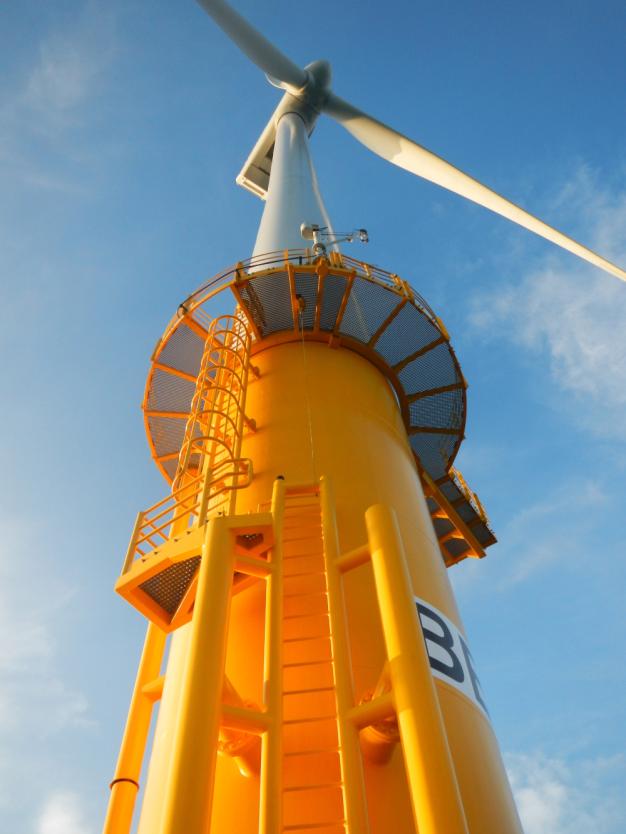
Globally, offshore wind is expanding rapidly. Europe’s strategic objective is to maintain technological leadership while scaling deployment. Offshore wind projects require large capital investments and long-term planning. Stable regulatory frameworks and cross-border cooperation are crucial for attracting these while sustaining industrial capacity. For Belgium, VUB OWI Lab maintaining its leadership means competing on expertise and reinforcing its status as a Belgian centre of excellence for offshore wind. Jan adds: “This project is meant to set up the Research, Development & Innovation roadmap of Belgian companies and academic institutions and has a strong focus on internationalisation.”
A Long-Term Commitment
Offshore wind is no longer a niche technology. It’s a long-term strategic commitment to innovation, industrial competitiveness, and energy security. The North Sea is becoming Europe’s renewable engine room. Belgium’s early pioneering role, combined with research excellence at institutions such as VUB and diplomatic engagements like the State Visit to Norway, demonstrate how a small country can shape a global industry. If the past decade proved that offshore wind works, the coming decades will be defined by integration, scale, and lifecycle management.
Centuries ago, windmills symbolised illusion and misplaced heroism in Don Quixote. Today, Europe’s offshore wind turbines represent the opposite: a clear-eyed, collaborative response to real challenges, powered not by solitary knights, but by researchers, industry and governments working together.
More on the VUB Acoustics & Vibration Research Group is available online.
*Digital twins are virtual, replicas of physical turbines which use real-time data, AI, and physics-based models to simulate, monitor, and predict performance.