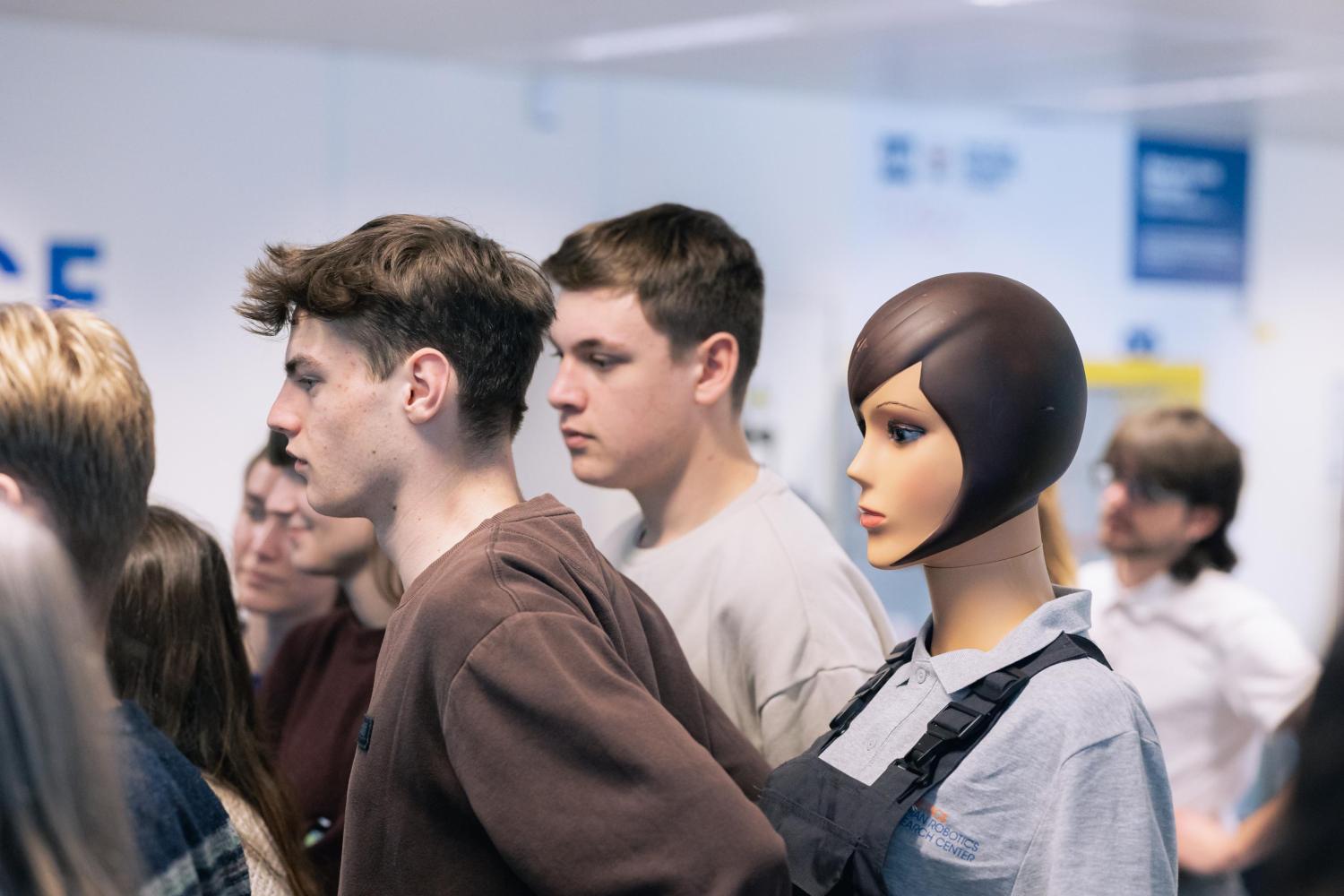


On Friday 6 March, final-year Latin-Science students from the Scheppersinstituut in Mechelen visited the BruBotics research centre. The centre at the Vrije Universiteit Brussel is known as a place where human-centred robotics is developed: technology that not only makes machines smarter, but above all supports people in healthcare, industry and everyday life.
Want to explore robotics with your class too? Contact us at scholen@vub.be
How better to show students what science can lead to and the societal impact robotics can have than at BruBotics, the VUB’s interdisciplinary research centre? The sixth-year students touring the centre today are clearly amazed. Where else are you literally surrounded by exoskeletons, prostheses and robots of all shapes and sizes? “Welcome to BruBotics,” begins doctoral researcher Stijn Kindt. “Here, different research groups collaborate on human-centred robotics and AI. In concrete terms, engineers and movement, computer and social scientists develop technology aimed at improving our quality of life and working conditions.”
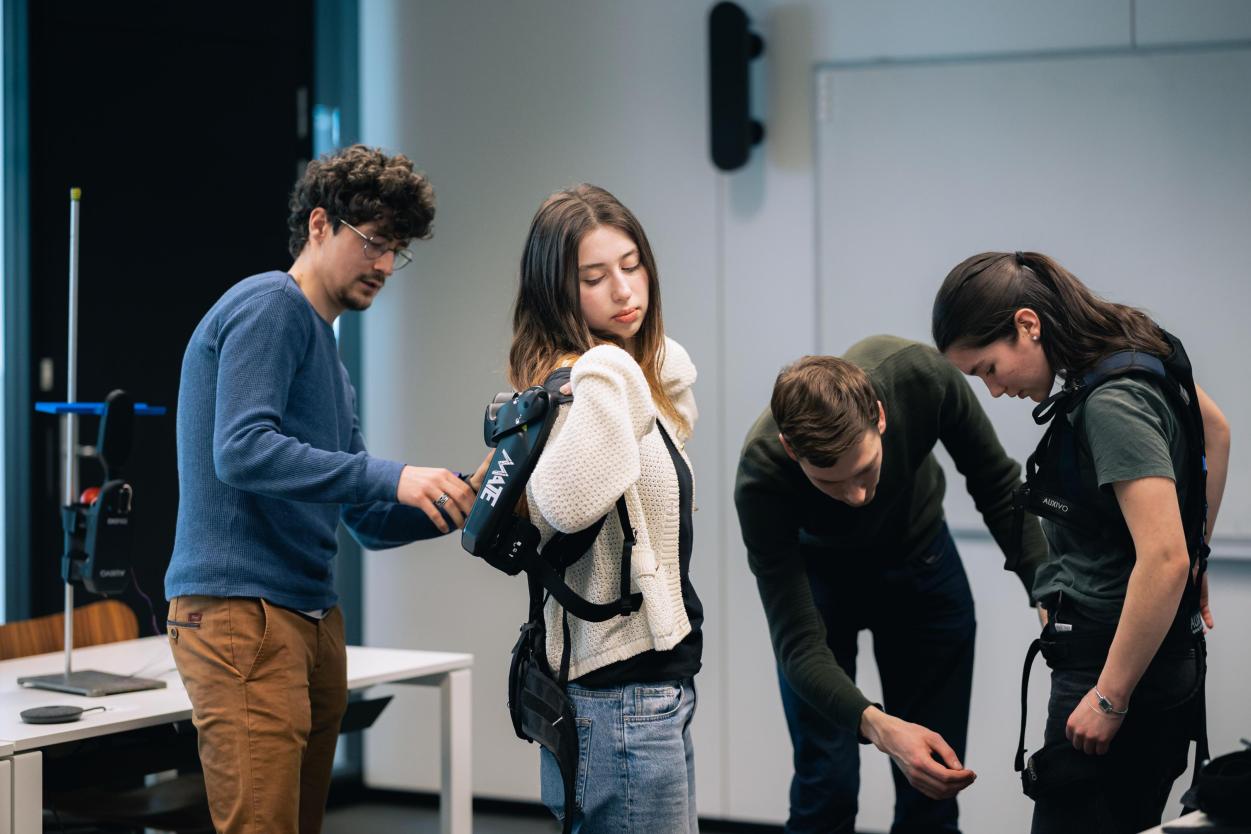
“These exoskeletons support heavy lifting movements and reduce the risk of workplace injuries”
He demonstrates how robots are developed to understand their surroundings through cameras and sensors, allowing them to work safely alongside humans. A robotic arm can pick up a fragile cup without breaking it because it precisely senses how much force is needed. Exoskeletons, meanwhile, are used in healthcare to improve people’s mobility, or in industry to support workers in physically demanding tasks. Self-healing materials are also part of the field. Think of a car tyre that repairs itself after a nail has been removed. Technology should above all be a tool, not a replacement for human capabilities, Kindt emphasises. BruBotics even researches social robots that can be used in therapy, for example to help children with autism spectrum conditions communicate and feel more at ease.
“Prostheses and exoskeletons are often fully customised and fine-tuned to ensure an optimal fit, comfort and functionality”
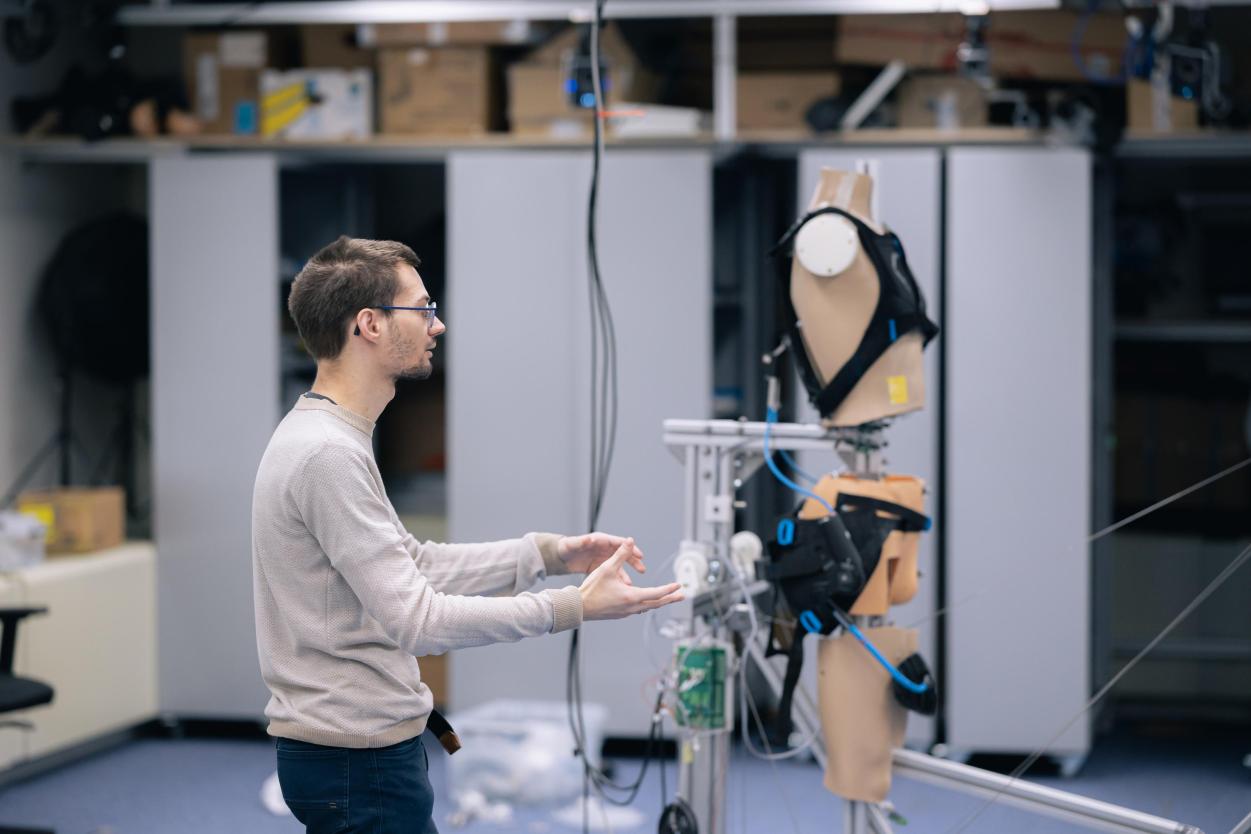
Stijn Kindt, doctoral researcher VUB
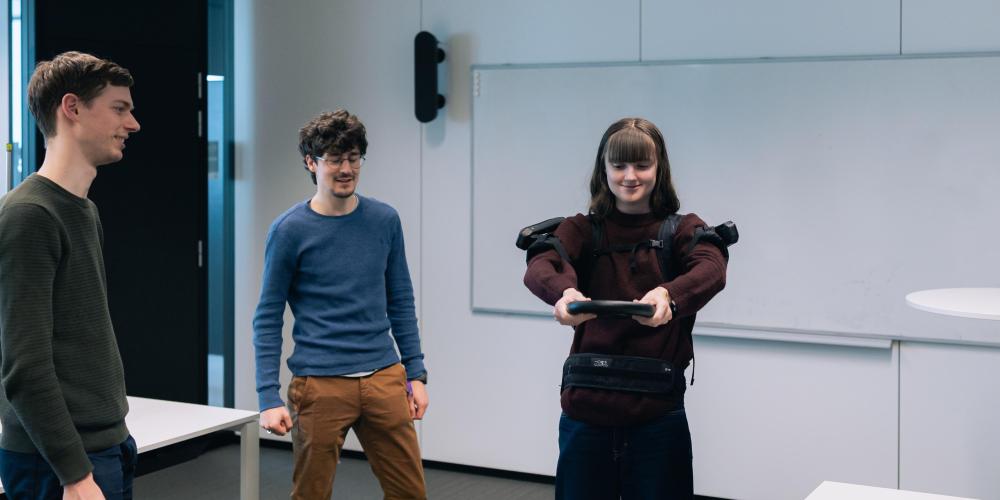
Can you sleep while wearing such an exoskeleton? How much does it cost, and how long before it reaches the market? The students’ many questions show just how engaged they are. They learn, among other things, that some exoskeletons already exist commercially — including in Belgium — but that new applications must be tested for years to ensure they are safe and affordable. After a short presentation, the students are guided around by fellow researchers. One of them is Elias Thiery. He graduated as a robotics engineer and now works full-time at BruBotics. “These exoskeletons support heavy lifting movements and reduce the risk of workplace injuries,” he explains. He also shows how sensors measure muscle activity and how prostheses can help people — for example those who have undergone a lower-leg amputation — to walk again.
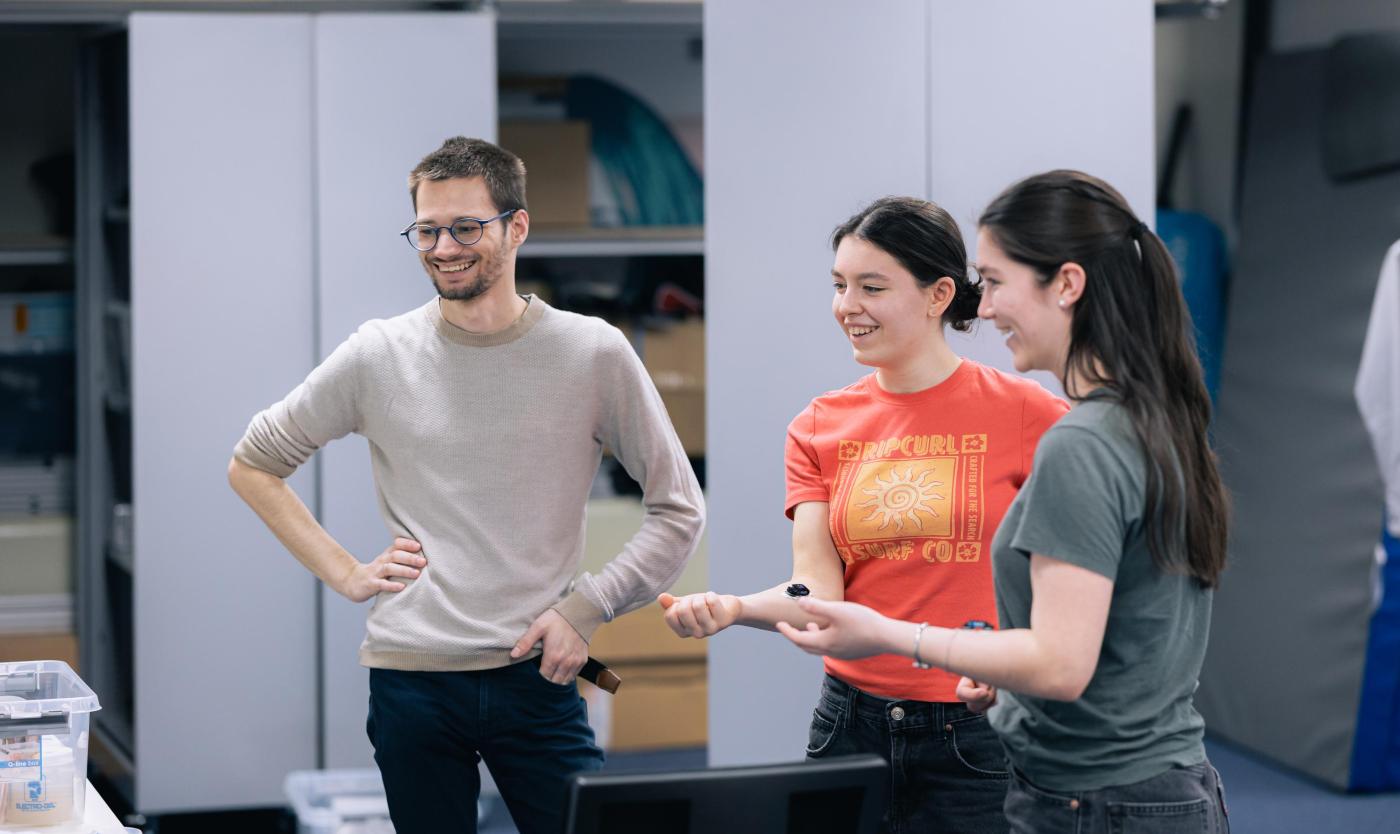
The sixth-year students are also given the chance to experiment themselves: EMG sensors register the electrical signals of their muscles, which they use to control a computer game. Suddenly, it becomes clear how body and technology can work together — a principle also used in prosthetic technology. The prosthesis demonstration makes this even more tangible. Students try walking with passive prostheses and experience how challenging it is. “People with a passive leg prosthesis use on average 25% more energy.” The researchers also explain why testing phases are essential. “Prostheses and exoskeletons are often fully customised and fine-tuned to ensure an optimal fit, comfort and functionality.”
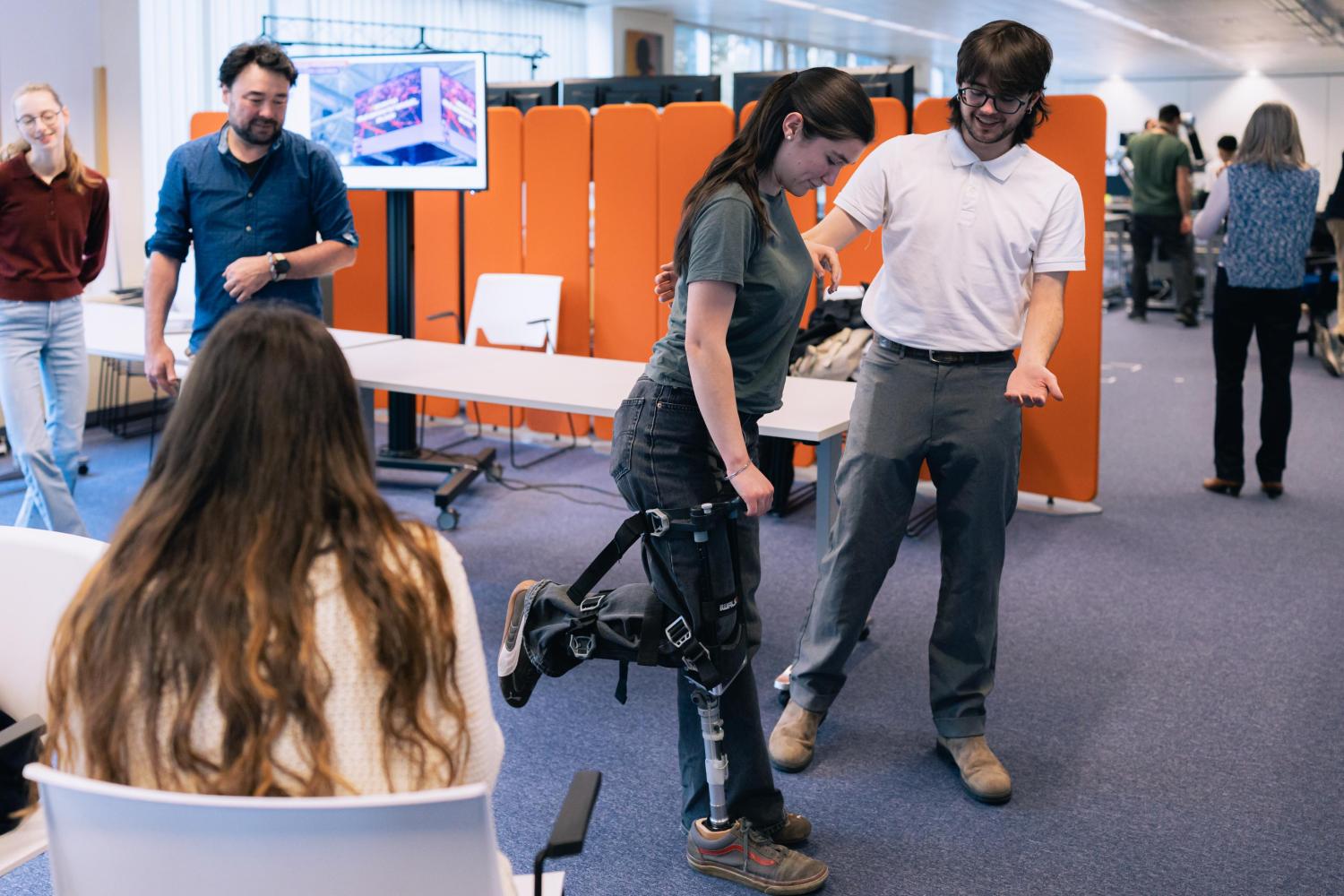
For the students, it becomes a day that offers more than just an introduction to science. They see how innovation can provide concrete solutions — from rehabilitation to everyday support and social applications — and gain a clearer picture of what researchers at BruBotics do. Some are impressed by the possibilities, others ask critical questions about the societal impact of robots. But after this visit, everyone is convinced that robotics can make a vital difference in people’s lives, both in industry and in healthcare.
Stijn Kindt on BruBotics and his specific role
Stijn Kindt: “BruBotics is a place where we try to bring technology closer to people. Robotics is not just about machines, but about collaboration: how can we develop systems that help people move, recover or work more safely? That can range from exoskeletons and prostheses to social robots that provide support, which we aim to make more efficient, lighter and more affordable. As an electromechanical engineer, I find it fascinating to work with cutting-edge technologies every day. I hope we can pass that passion on to the next generation of researchers today.”
What did the students themselves think of the visit?
Gijs Moldermans: “I always thought prostheses needed motors and batteries. Today I learned that passive systems also exist, using springs and other forces. That was surprising. I also found it interesting that muscles produce electrical signals when you tense them. I would like to become an industrial engineer, so who knows — I might come across robotics again in the future.”
Marten Salmon: “It’s new to me that you can measure electrical signals from muscles and use them to control technology. That allows prostheses and exoskeletons to work better with the body. It shows how science can truly help people. I’m considering studying medicine, so I found it particularly fascinating to see how robotics is used in healthcare.”
Katherina Van der Kelen: “In the future, robots could take over practical tasks, for example in restaurants or other jobs. That seems useful, as long as they don’t completely replace people. Testing a prosthesis myself made me realise how it can help someone walk again, but also how demanding it is. I want to study medicine, so the use of robots in the medical field definitely appeals to me.”
Yuno Dayers: “Some robots that talk or respond using AI felt a bit strange to me. But technology that helps people, such as prostheses and social robots, is above all a very positive development. If it allows someone to move again or develop more fully, it can make a big difference. In the future, I think robotics could help map the human body more quickly and support diagnosis. I would like to study history, so I probably won’t be building robots myself, but the interest is definitely there.”