



The more plankton, the less CO2
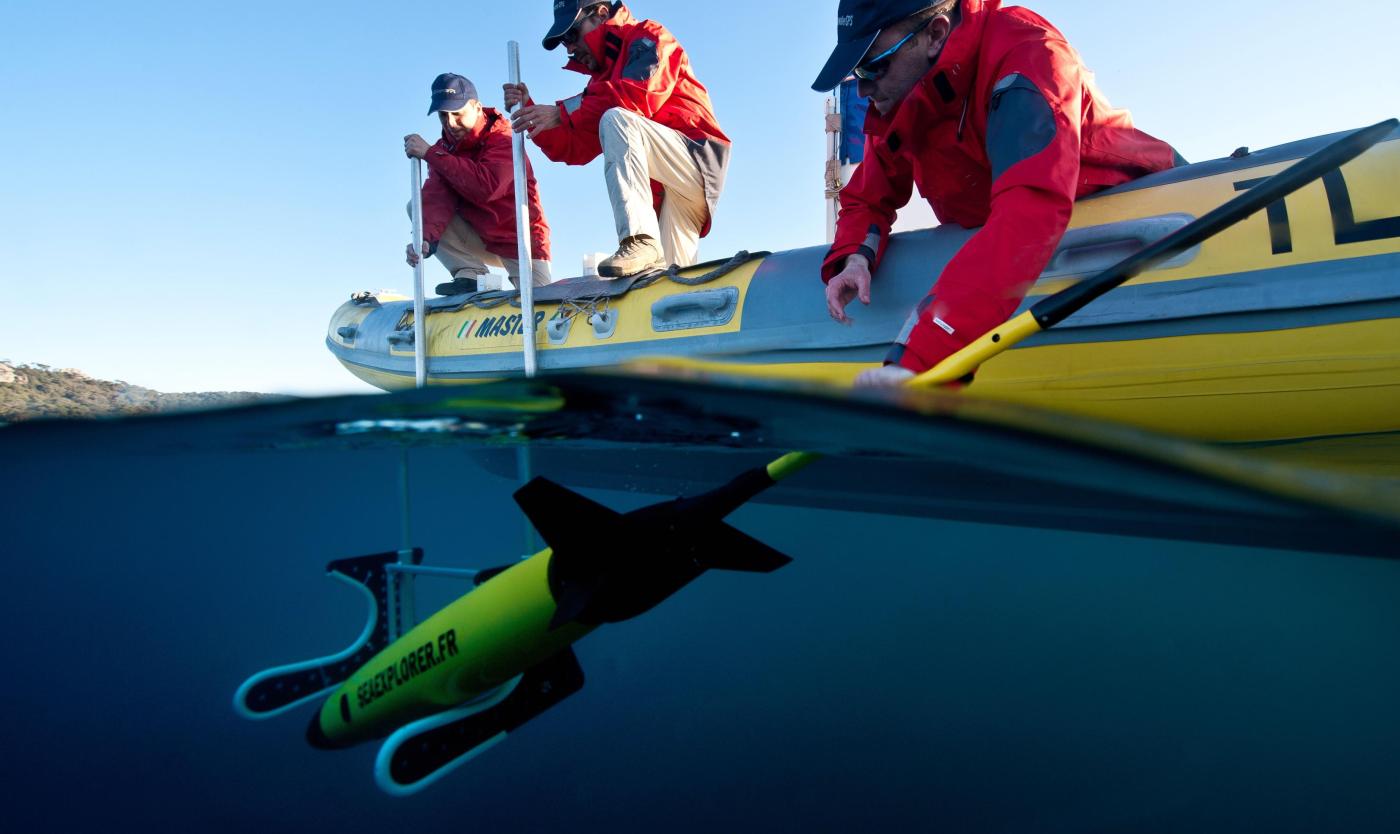
Like rainforests, plankton is able to store CO2 and thus combat climate change. Our researchers found that the presence of some trace metals can inhibit planktonic growth. They made this important observation thanks to the use of the SeaExplorer, an underwater robot that is much cheaper than a research vessel.
In November 2021, the ocean robot of VUB moved to the Flemish Institute for the Sea (VLIZ). This is a win-win situation: VUB enjoys extra research opportunities and the VLIZ marine robotics centre has gained a new, high-performance ocean robot.
Reducing CO2 in the atmosphere
Broadly speaking, there are 2 ways of reducing the quantity of CO2 in the atmosphere. Either limit its production, or absorb as much of this greenhouse gas as possible. Oceanic plankton is ideally suited for the latter. Oceanic plankton plays the same role as rainforests on land. It absorbs CO2 and transports it partly to the deep-sea floor, where for a long time it does not contribute to global warming.
Oceanographic research
Studies have shown that plankton is not equally abundant everywhere. Prof. Willy Baeyens and his colleagues of the VUB research group AMGC (Analytical Environmental and Geochemistry) delved further into that question.
How is planktonic biomass in the ocean linked to the availability of specific micronutrients?
The SeaExplorer: at VUB
Oceanographic research is needed to study this question. The deployment of a full-scale research vessel is extremely expensive. That is why VUB invested in the SeaExplorer, an ocean robot equipped with sensors. This satellite-controlled robot can operate independently for several months. VUB itself developed some unique sensors for the SeaExplorer. In the ocean, they can measure all the micronutrients that the plankton needs.

The SeaExplorer: at VLIZ
On Wednesday 10 November 2021, the SeaExplorer began its second chapter. VUB transferred its ocean robot to VLIZ. This allows VUB to significantly expand the scientific scope, both in the number of measurable parameters and the frequency of use of the glider.
VLIZ has enhanced the SeaExplorer with extra sensors and will use the robot in scientific projects. The institute is also investigating the use of new sensors to measure plankton and currents in places where this was not previously possible.