
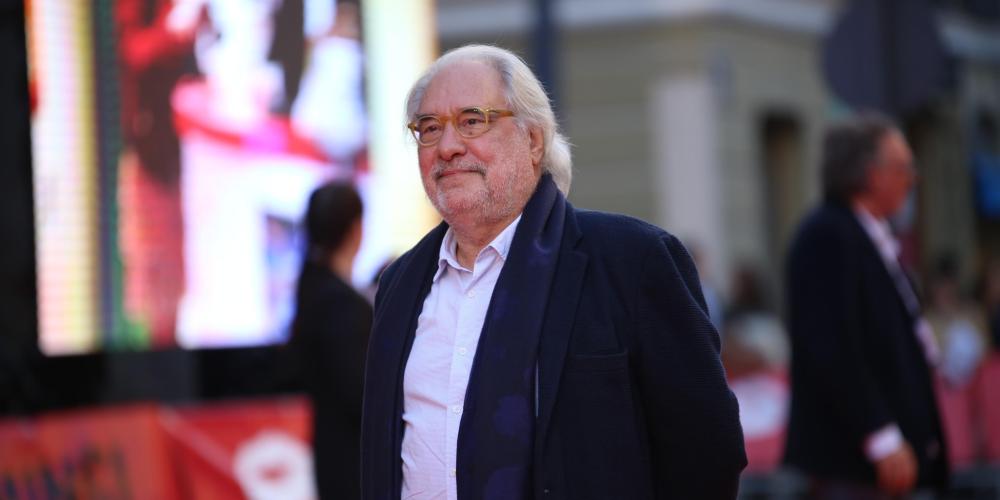


European integration stands at a crossroads, and Brussels could play a crucial role in shaping its future, argues sociologist Eric Corijn in his new book De Verenigde Steden van Europa.
All the democracy indices are flashing red. Across the board, a conservative nationalist mood is taking hold, marked by authoritarian tendencies and a narrow cultural outlook. Resistance is emerging from the cities, which are steeped in multiculturalism, diversity and exchange. The tension between urban life and national identity is only set to intensify. European integration, meanwhile, stands at a crossroads.
The city most profoundly shaped by the European project is undoubtedly Brussels. In total, 38 organisations of the European Union have either their headquarters or liaison offices in the Brussels-Capital Region, alongside eight agencies and centres linked to NATO, 25 United Nations programmes and agencies, and around 32 other intergovernmental organisations of varying size. Altogether, nearly 50,000 people work for European and international organisations in Brussels. This international presence accounts for as much as 20 per cent of the Brussels economy and up to 23.2 per cent of regional employment — more than 162,000 jobs. The city is also home to 33 international schools educating over 25,000 pupils.
Being the political capital of the EU has added another layer to Brussels’ long-standing diversity. Today, 80 per cent of the population has a foreign background, while two-thirds of households are linguistically mixed. Brussels has thus become the most diverse city in Europe. And yet official Brussels remains a city-region divided into two monolingual communities and nineteen autonomous municipalities. It is precisely this mismatch between the city’s social reality and the Belgian institutional framework that has produced political deadlock and a policy of “wait and see”.
Brussels therefore needs a renewed debate about vision, imagination and representation. At present, the city is too fragmented into communities, ethnic groups, religious groups and language groups. There is scarcely any shared vision of citizenship. Such a vision is essential if these divisions are to be overcome. It could become the defining theme from 2027 onwards, when Brussels becomes European Capital of Democracy. Imagination, art and culture should then occupy a far more central place in public policy.
“In Brussels, there is scarcely any vision of shared citizenship”
These are the three stages of a cultural policy for any multicultural and diverse city. First, all the cultures present in the city must be made visible — not only the state culture or those of dominant groups. Considerable work is needed to document and value urban diversity in all its forms. The second stage follows: the city, as a living laboratory, must test intercultural interactions, fruitful combinations and promising hybrid forms. In Brussels, collaboration, cross-fertilisation, subtitling and co-productions are already common practice. The arts sector is united within RAB-BKO (Réseau des Arts à Bruxelles and Brussels Kunstenoverleg). Their efforts have already produced internationally acclaimed successes such as Zap Mama, Stromae and Anne Teresa De Keersmaeker. Yet many silos still remain.
Territorial issues
Finally comes the most difficult stage. Showcasing diversity and illustrating mutual inspiration are already common practices within the artistic sector in most cities. The real challenge, however, lies in building an inclusive body of ideas capable of forming the basis for an urban citizenship committed to a shared city project. For such a project to succeed, the current communal structure is an obstacle: it resists forms of expression rooted in diversity, let alone interculturalism. Cocof and the VGC do not engage in dialogue about a shared city. In Brussels, communitarianism — and therefore a form of apartheid — remains the norm.
The construction of this inclusive narrative takes place not primarily in the cultural or religious sphere, but rather around territorial questions, shared urban planning, mobility and local services. That is why urban artistic practices are best rooted in local neighbourhoods and focused on issues of place-making. The act of building the city together happens above all in public space. What is needed there is a shared culture. And that requires political leadership. It is regrettable that the candidacy of Molenbeek for Brussels 2030 was not selected. If Brussels is still to become a European Capital of Culture and contribute to European integration, a new civic project must be developed. The city already possesses all the necessary ingredients. The groundwork carried out in preparation for the bid has shown that it is possible.
Now the method must be extended across the entire territory, the communal divisions dismantled, and there must be the courage to articulate that other form of society: the urban one. Europe truly needs it. First, Brussels must learn to tell the story of its own “Bruxellitude”, so that it may in turn inspire a broader sense of Europeanness. A magnificent challenge. We shall see.