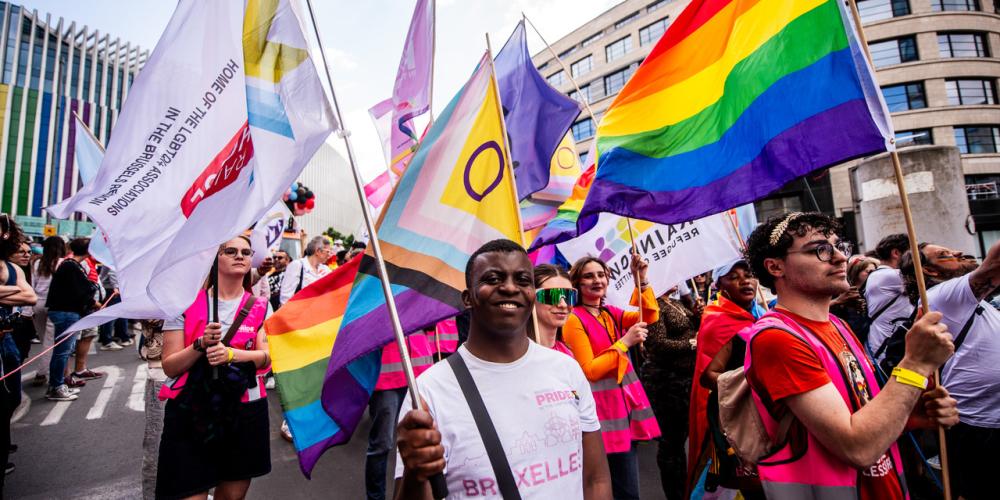


Thirty years ago, the first Pride took place in Brussels. Since 1996, Belgium has been a frontrunner in LGBTQIA+ rights. But is there still reason to celebrate today, now that those rights are under pressure around the world? Professor of political science Dave Sinardet believes vigilance remains essential. “Among young people, we are seeing acceptance of homosexuality decline.”
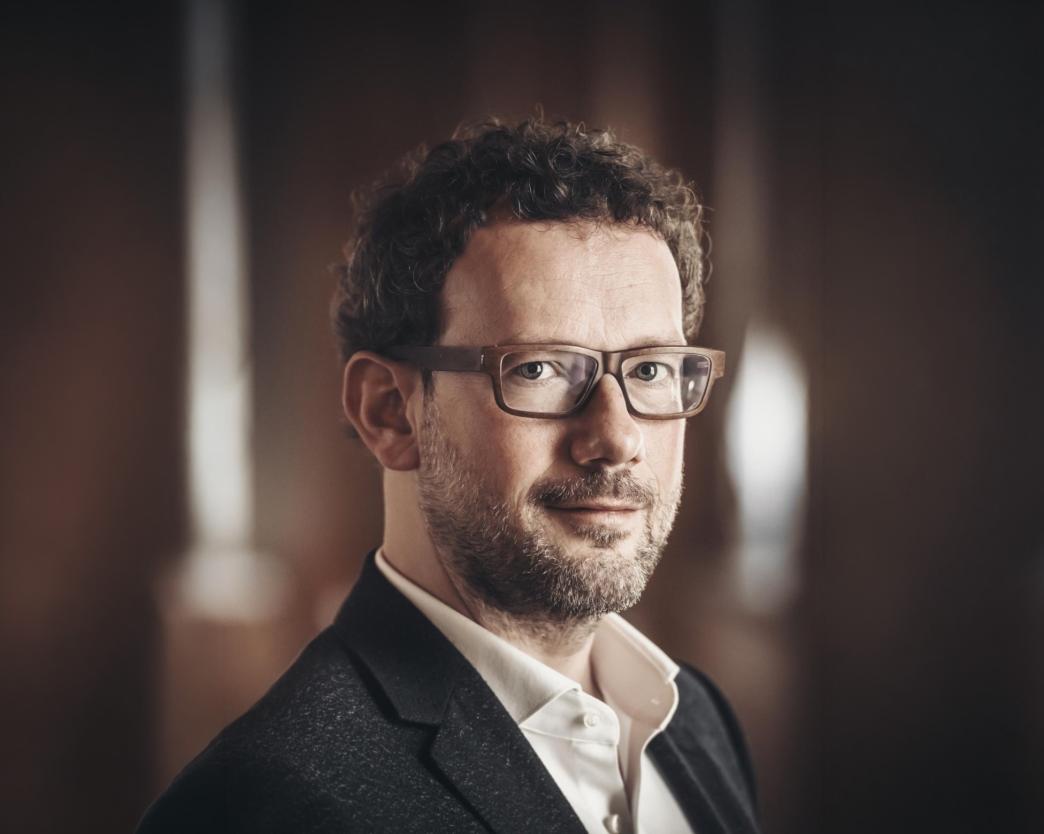
Dave Sinardet
You were there at that very first Pride. How did that come about?
Dave Sinardet: “I had come out the year before and was deeply interested in the struggle for gay emancipation, which I also actively supported. So it felt important to be there. I also conducted interviews because I was involved in what was then the only existing gay radio programme, on Antwerp’s Radio Centraal. Back then, Pride was still very much centred around politics. There was also still a great deal to fight for. Issues such as anti-discrimination legislation and equal treatment for same-sex couples were still fairly controversial in 1996. The then mayor of Brussels, François-Xavier de Donnea (MR), did not want the parade marching along the city’s main avenues, so we had to walk through small, grimy side streets. But we were impressed by the turnout: around 2,500 participants, including even a few green and socialist politicians. No one could have imagined that three decades later Pride would attract around 200,000 people, and that almost every political colour under the rainbow would want to join the march. And above all, that nearly all the demands from back then would long since have been realised.”
“This is not only about one community. It is also about the strength of our liberal democracy”
Is Pride still as political today as it was then?
“Compared to back then, the political dimension has shifted somewhat into the background. For many people, Pride has first and foremost become a celebration. The fact that more people, political parties, organisations and companies take part is in itself a victory. It shows that society has evolved and that LGBTQIA+ has become mainstream.
But Brussels Pride also remains clearly political. Just like Antwerp Pride, which has also become highly successful. You can see this, for example, in the themes it chooses. During the refugee crisis, one of the themes was LGBTQ refugees. At the time, I discussed that issue with Bart De Wever for their magazine. It remains important to preserve that political dimension. Rights are never permanently secured. You have to stay vigilant. In some countries, we are seeing rights slowly but surely being rolled back. Usually together with other rights and freedoms that form the foundations of our liberal democracy, such as freedom of expression, the separation of powers, and the boundary between religion and the state. These rights and freedoms are interconnected. This is not only about one community. It is also about the strength of our liberal democracy, with its fundamental rights and freedoms that exist for everyone.”
In the years after that first Pride, Belgium became the second country in the world to legalise same-sex marriage in 2003. Why were we pioneers in this area?
“We owe that to a combination of factors. It helped that the Netherlands went first. Especially in Flanders, there was a tendency to follow developments there. In addition, civil society and the LGBTQ movement were well organised. Cultural figures such as Tom Lanoye, who entered into a civil partnership with his partner as a political statement, also had an impact. Even before then, Belgium was already a highly secularised country for its time.
Then, in 1999, the first Verhofstadt government wanted to break with the past. For the first time, the CVP — a party that had often slowed progress on ethical issues — was no longer part of the majority. Eventually, the CVP itself evolved, and ironically a large number of its MPs supported same-sex marriage. At the same time, there were also liberal representatives within the majority who did not vote in favour, as well as some N-VA members. Only Vlaams Blok voted unanimously against it. Strikingly, resistance among French-speaking politicians was greater, even though Flanders was traditionally more Catholic and conservative. I once carried out a small study on this: perhaps the explanation lies in the paradox of a head start becoming a disadvantage. Wallonia had experienced less of the historical dominance of Catholicism, meaning opposition there was less organised. Pressure from the LGBTQ movement on politicians was also stronger on the Flemish side.”
Did it require political courage, or were politicians simply following public opinion?
“Research at the time showed that only about a third of the population supported the legalisation of same-sex marriage. Ten years later, a large majority was in favour. The legislation itself helped broaden public support. Same-sex couples became more visible, including outside cities, which led to greater normalisation. It shows that policymakers sometimes need the courage to lead from the front. In a liberal democracy, politicians should not be guided solely by majority opinion, especially when it comes to granting equal rights to minorities. Laws can therefore help change society. But they are no guarantee that society cannot change course again.”
“Policymakers must sometimes dare to lead the way”
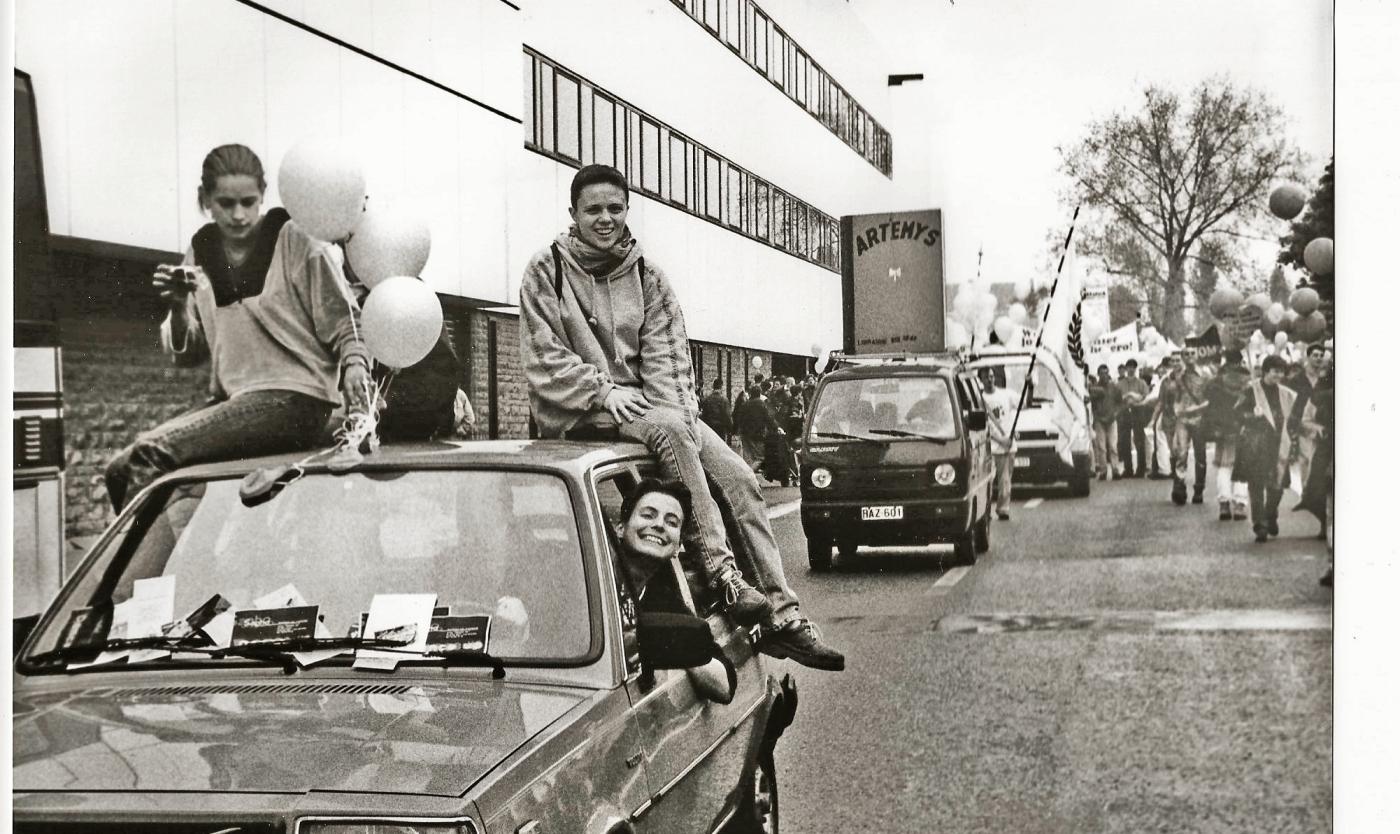
Brussels Pride 1996 © Artemys
Today, the context is different. ILGA-Europe, the international organisation advocating for LGBTQIA+ rights, speaks of a ‘coordinated global backlash’. How vulnerable is Belgium?
“We still rank second on the ILGA Europe Rainbow Index, meaning Belgium remains the second-best country in Europe in terms of LGBTQIA+ rights. Legally and institutionally, a great deal has been achieved. But in practice, things are not always smooth or equal everywhere. You can legislate rights, but you cannot fully direct society.
Recent studies show that acceptance is declining, especially among young people. For example, the number of young people who consider violence against LGBTQI+ people acceptable is increasing. The number of young people who would like to abolish same-sex marriage is also rising again. Lumi, the helpline for questions around gender and sexuality, is receiving more reports of violence. The rise of the manosphere plays a role in this. There is also a link with religion. Just as the Catholic Church long obstructed equal rights for LGBTQ people, we now see that homosexuality remains a sensitive issue among some Muslim and Jewish communities. I do not want to stigmatise anyone, but we do need to acknowledge that in schools with many Muslim pupils, and in Jewish schools, discussing homosexuality can be very difficult.
Another striking development is the growing distinction being made between the first three letters of LGBTQIA+ and the rest. Even within the movement, some argue for a return to a time when the focus was simply on equal rights for gay, lesbian and bisexual people. What do transgender or intersex people have to do with us, some ask — particularly in more right-wing circles. On the left, meanwhile, you hear arguments that more conservative parties should not be allowed to participate, or accusations of companies engaging in pinkwashing. Some also argue that the police should not be allowed to march in Pride, referring to Stonewall — the 1969 police raid on a gay bar in New York that led to the first Pride march. Whereas I see it as a major victory that the police now do participate. I find both these right-wing and left-wing forms of exclusion troubling. The rainbow flag should stand precisely for everyone’s right to be themselves, whether you are transgender or a gay police officer. Increasingly, the challenge is keeping everyone united under that same flag at a moment when rights are once again under pressure.”
Is there a risk of political backlash? N-VA, now the largest party, has not always been seen as progressive.
“I think that N-VA, especially since becoming a major force in government, has not acted as a brake on progress. On the contrary, the party supported the trans law in 2017, which simplified the official change of gender registration in the civil registry. The current coalition agreement also contains important measures, such as the protection of intersex people, including proposals to ban irreversible, non-essential medical interventions on intersex children.
At the same time, there is still a conservative wing within the party. Theo Francken does not hold particularly progressive views, especially regarding transgender issues, and a few years ago Els Van Doesburg also made comments that were poorly received within the trans community. But at present, that conservatism is not the party’s official line.”
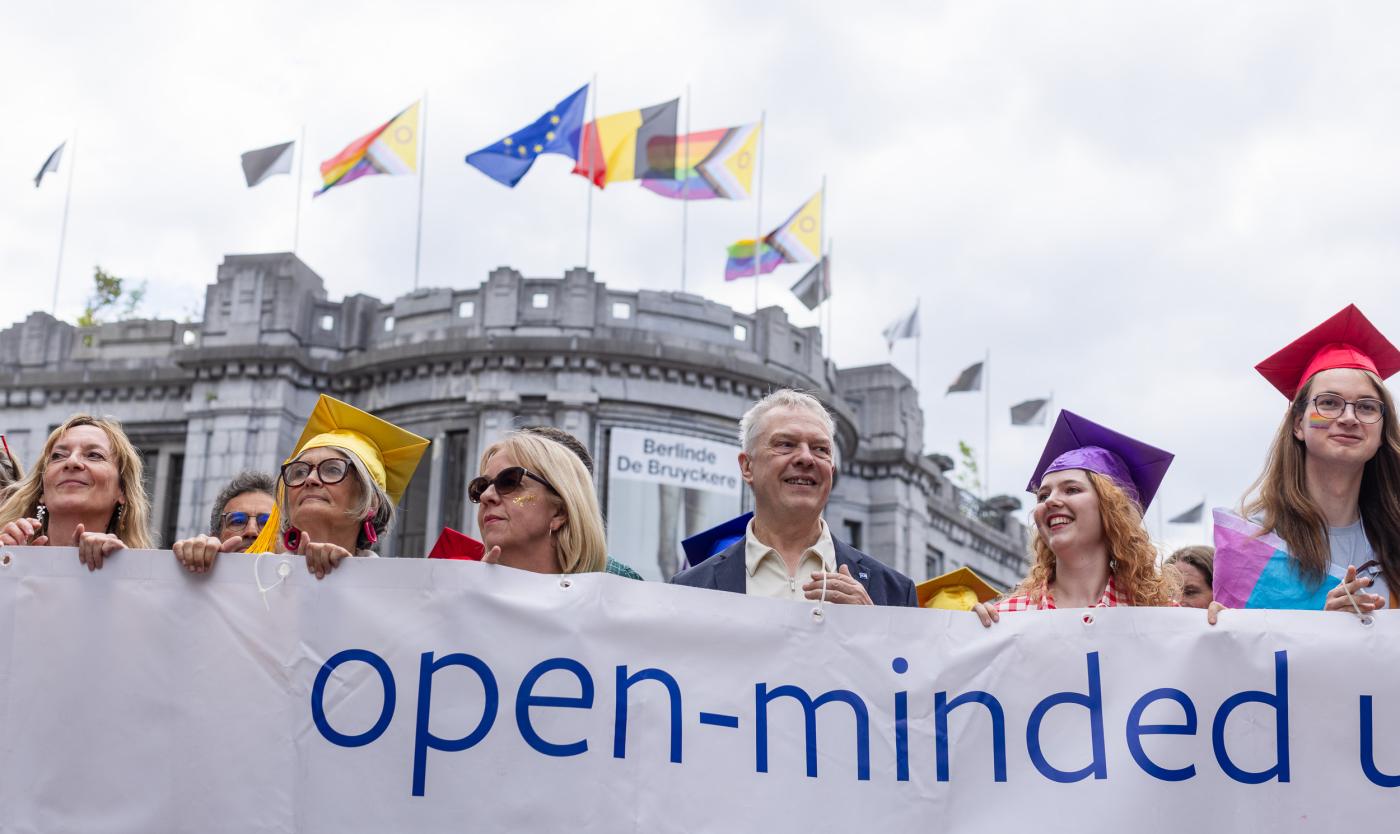
VUB and ULB during Brussels Pride 2025
What if Vlaams Belang were ever to come to power?
“Even they have moderated their tone these days. I sometimes jokingly say we should thank Muslims for that. In the days of Karel Dillen, Vlaams Blok believed homosexuality was entirely incompatible with our norms and values. Today, they argue instead that Islamic values are incompatible with ours, which has forced the radical right to embrace gay people to some extent. But their support remains very relative. Before the last elections, Vlaams Belang chairman Tom Van Grieken said: ‘We are not really in favour of adoption by gay couples, but if we come to power, we are not going to reverse it either.’ In other words, they are effectively saying: ‘We are still against it, but it is not a popular position, so we are certainly not going to campaign on it.’”
“Education plays an important role in passing on society’s values”
Recently, Equal Opportunities Minister Rob Beenders proposed enshrining same-sex marriage in the Constitution. Would that be meaningful?
“Yes. If you include something in the Constitution, you genuinely strengthen its protection. Amending the Constitution requires a two-thirds majority, meaning such rights become far harder to reverse in practice. Constitutional recognition also carries symbolic value. It acknowledges that something belongs to the fundamental rights and values of the state. In that sense, the proposal offers both symbolic and concrete protection. To be clear, I do not think there are currently political forces seeking to abolish same-sex marriage. But things can evolve quickly. Nothing is ever guaranteed.”
Laws are one thing, but what else can politics do to ensure LGBTQIA+ people feel safe enough to walk hand in hand in the street?
“More can be done through the softer side of policy, especially through education. I know there is currently a tendency in education to focus more strongly again on knowledge transfer, and that is undoubtedly necessary. But education also has an important role to play in passing on the values we consider important as a society. I think that role could be strengthened further.
That said, I know it is not easy. During the previous elections, I gave lectures to raise young people’s awareness about politics and elections. Because many young people see politics as something distant from their lives, I began those lectures with examples of how politics affects everyday life: at school, in traffic, and so on. One example was that if they were to fall in love with someone of the same sex, whether they could marry or adopt children would depend on the politicians in their country. Whenever that slide appeared, some groups responded with booing. That was difficult, because I wanted to explore the issue more deeply, but the format and time constraints did not allow it. Still, I deliberately kept that slide in.”
Is it not painful that this remains the reality, 30 years after that first Pride?
“To be clear, it did not happen in every school. But yes, it is painful to witness. My thoughts immediately go to the young people in those groups who are themselves struggling with such feelings and are pushed even further back into the closet as a result. That is exactly why it remains so important for education to continue making space for these conversations.”
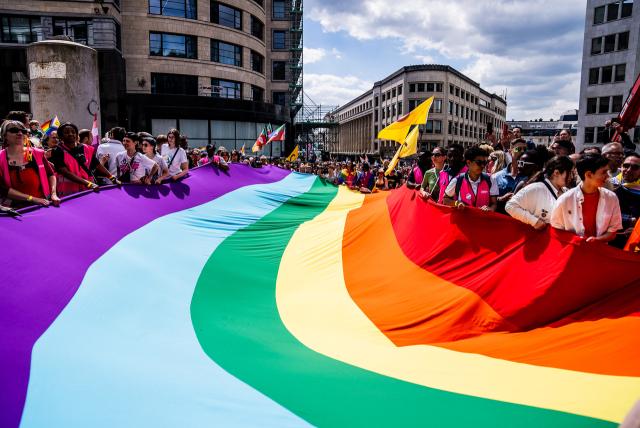
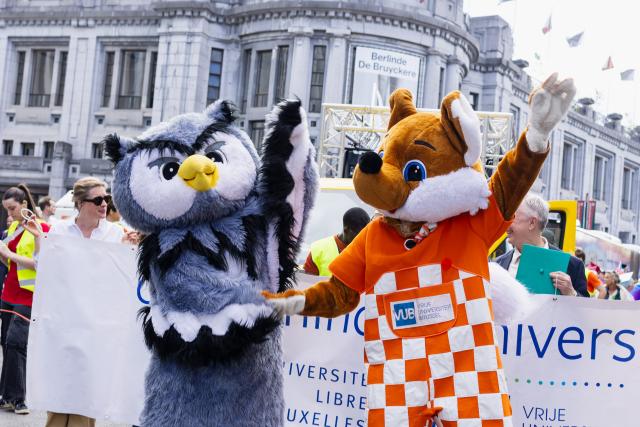
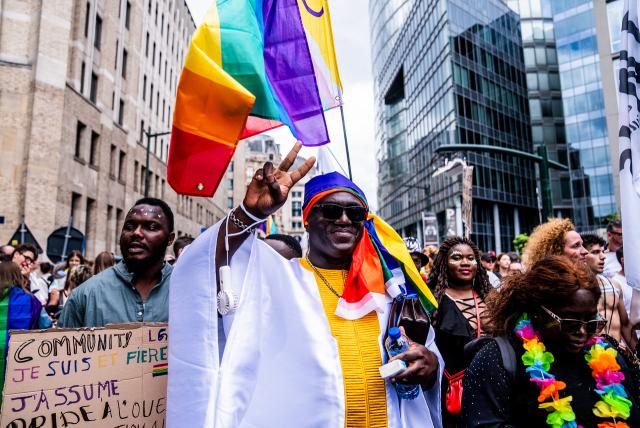
Join the march and celebrate Brussels Pride 2026
On Saturday 16 May, VUB and ULB will once again take part in Brussels Pride 2026. Everyone is welcome to join the march behind the shared parade float of both universities. We will gather from 13:00 in Ravenstein Street, Brussels.
Bio
Dave Sinardet is Professor of Political Science at the VUB. His research focuses primarily on nationalism, federalism, multi-level governance and multilingual democracy. Through his particularly active role in public debate, on both sides of the language border, Sinardet has also become one of Belgium’s leading political scientists.