

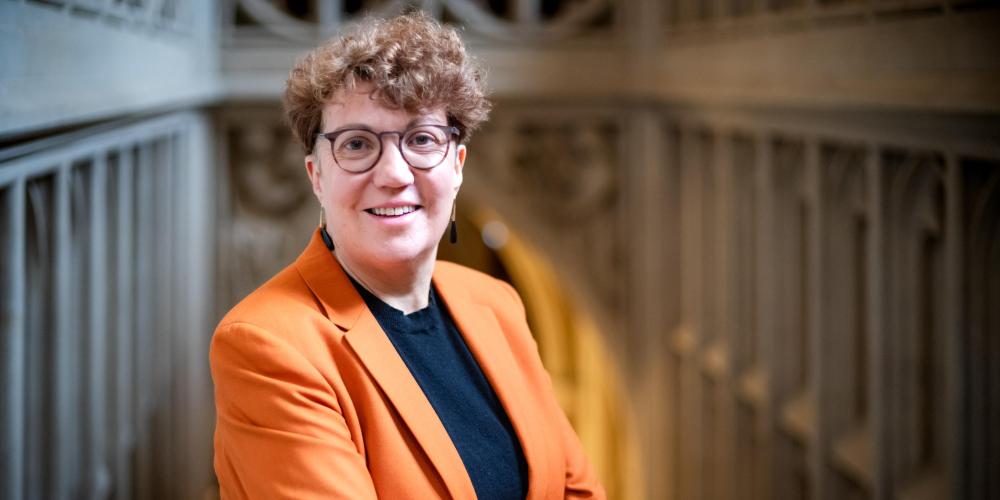


When Carine Lucas graduated as a computer scientist from VUB in 1991, there were four girls in her class. Today, at Agoria, she is not only committed to strengthening the Belgian technology sector, but also takes initiatives to attract more women.
You are Cluster Lead IT & Digital Transformation Services at Agoria, the sector federation for the technology industry. What does that involve?
“At Agoria, we represent 2,250 companies in the digital sector and the manufacturing industry. I am responsible for the IT companies. What keeps them awake at night? And what can we offer them in return? It’s a wide-ranging job, which I really enjoy. After my studies, I first did a PhD at VUB. That was, of course, very specific. After that, I broadened my horizons. Technology and software were the common thread, but the sectors were diverse. Before I worked at Agoria, I spent 15 years as an advisor to the Flemish Government on IWT subsidies for innovation and research projects by companies, organisations and educational institutions.”
The IT sector has evolved enormously since you graduated in 1991. What did you take away from your studies?
"Coming from Ostend, Ghent University would have been the logical choice, but I came to Brussels because Theo D'Hondt and Luc Steels had already established a strong computer science programme here, with a strong focus on algorithms and data structures. At other universities at the time, the emphasis was still more on mathematics."
"Computer systems have changed completely since my student days, but the programme was so strong conceptually that it still helps me today to understand new technological developments and their impact. In addition, the human aspect and open-mindedness of VUB also shaped me. At university, I learned to think critically and be open to diverse ideas."
"At university, I learned to think critically and be open to diverse ideas"
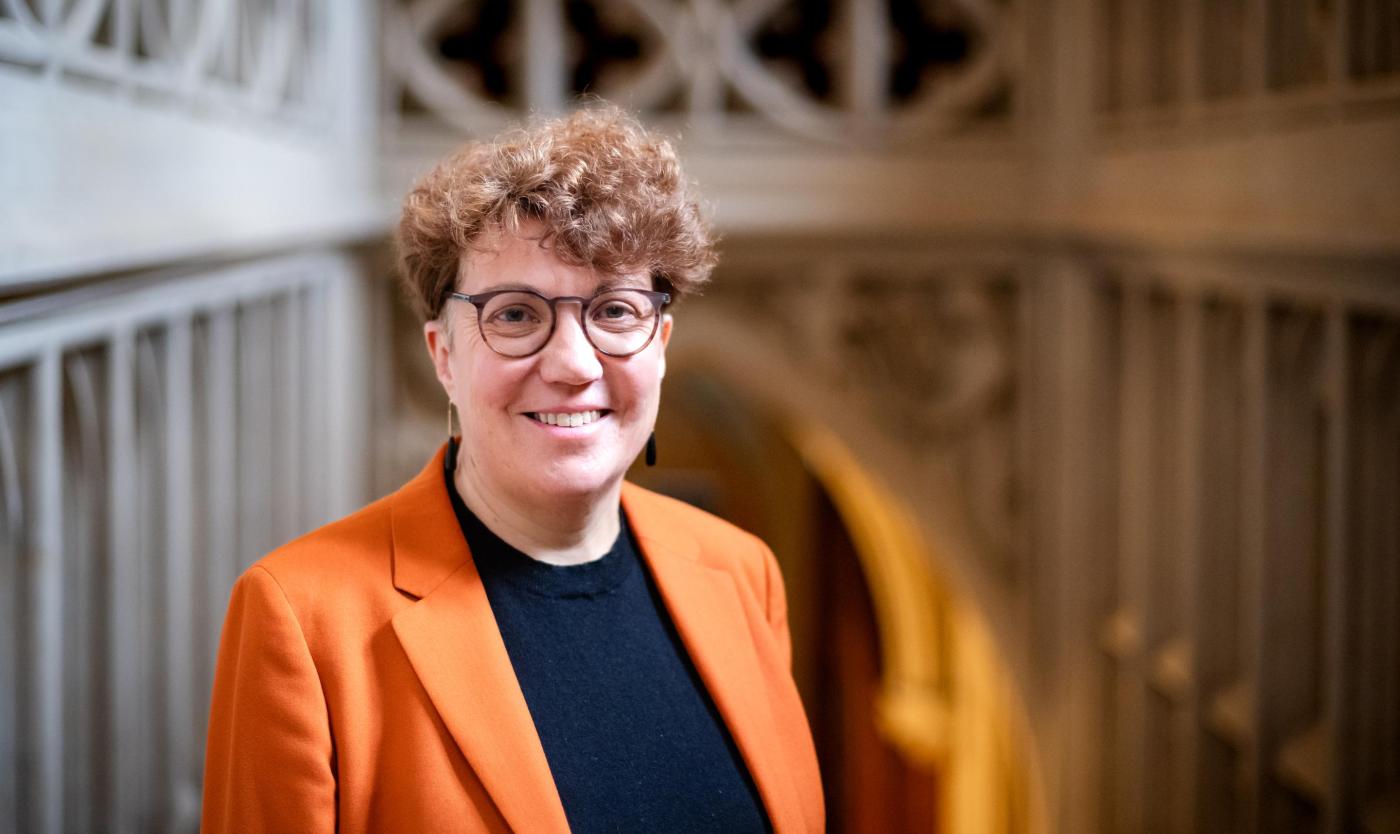
Do you still keep in touch with many of your fellow students?
"Working with my fellow students, especially during my degree programmes, is a cherished memory. I can still remember exactly which room – room F717 – we spent entire days working on our projects and theses. It was often hard work, but we also had a lot of fun and supported each other. Today, I don't have much contact with my former fellow students anymore. I think it has to do with the fact that there were so few girls. Four of us graduated, out of 55. Although one of those girls is still my best friend."
What are the main opportunities and challenges that students graduating today in your field will face?
"It is sometimes said that AI poses a threat to jobs in IT. But I think that IT graduates, just like in my day, still have plenty of job opportunities. People forget that those AI systems have to be built and maintained. I like to compare it to the evolution of software engineering over the past decades. Whereas we used to have to start coding almost from scratch, since the 1990s we have had more and more tools and components to build with. However, that has never meant that we need fewer people in IT. On the contrary, we have started to make more and more software."
"I think the biggest challenge is the human side of software development. It used to be much more technical. You built software and it was purchased and rolled out by an IT manager who understood what it was all about. Now you have to create applications for the marketing manager or the production manager. That has made good communication skills more important. You can no longer say that it is purely a technical job."
What advice do you have for students graduating today?
"Don't stress too much about your career path just yet. A career is a long journey, and there are many different things you can do. It's okay if you don't have a grand plan today; that will become clear along the way. I also want to emphasise the importance of the scientific method. Keep questioning things and set up an experiment if you don't know something. Many digital start-ups do this using the Lean Startup methodology. This is essentially the scientific method applied to business: you make an assumption about the needs of your users and test it with a prototype. This focus on users is very important. That's why working in multidisciplinary teams is so important. It's the only way to ensure that your software ends up in the right place."
"But perhaps the most important thing is the concept of pay it forward. Share your knowledge and experiences widely with others and refer people to each other. As a woman in a male-dominated world, I have often struggled with imposter syndrome. At the beginning of my career, I often thought: those men know much more than I do. But men bluff when they don't know something, and women tend to remain silent. So we need to help each other. When you hear women or people from minority groups at tech events talking about how they found their way into the world of technology, it always comes down to that one professor who helped them or that manager who encouraged them to take on a challenging job. So it's very important that you consciously make time for that."
Who gave you that extra push in your career?
"The great thing about the science faculty at VUB is that the groups are small, which means you have close contact with the professors. Professor D'Hondt encouraged me to do a PhD. He was someone who saw the potential in every student and encouraged and supported you when you were struggling."
Finally, how do you try to bring about social change?
"Agoria's goal of strengthening the technology industry in Belgium and Europe is very relevant in itself, because we in Europe need to build a strong digital sector of our own alongside American and Chinese companies. I am also part of a working group at Agoria to attract more women and diverse profiles to the tech sector. This has resulted in the VUB-ULB programme 'Executive Master in Digital and IT Essentials'. The aim of this master's programme is to teach the basics of computer science in six months. How is software made, how does cybersecurity work and what can be done with data and AI? This is followed by an internship. The idea is that women will gain more confidence to start a job in the IT sector, for example as a project manager or business analyst. We see that women find it more difficult to make the move to the tech sector, even for less technical positions. They think: 'I don't know anything about that sector and I won't be able to do it.' This programme helps them overcome that barrier."