



Yeast plays a crucial role in winemaking. For centuries, winemakers used their own yeast cultures, but today commercial yeasts dominate the sector thanks to their reliable performance. The species Saccharomyces cerevisiae is the absolute standard. Yet interest is growing in lesser-known yeast species, the so-called non-conventional yeasts (NCGs), because they can influence the taste, aroma and even the alcohol content of wine in a natural way.
Researcher Madina Akan, doctoral student at the Vrije Universiteit Brussel (Brussels, Belgium) and Hochschule Geisenheim University (Geisenheim, Germany), investigated how these alternative yeasts can contribute to modern wine fermentation. “We see that non-conventional yeasts offer surprisingly many possibilities to increase wine complexity”, says Akan. She studied both yeasts from nature and yeasts obtained through crossing or genetic techniques.
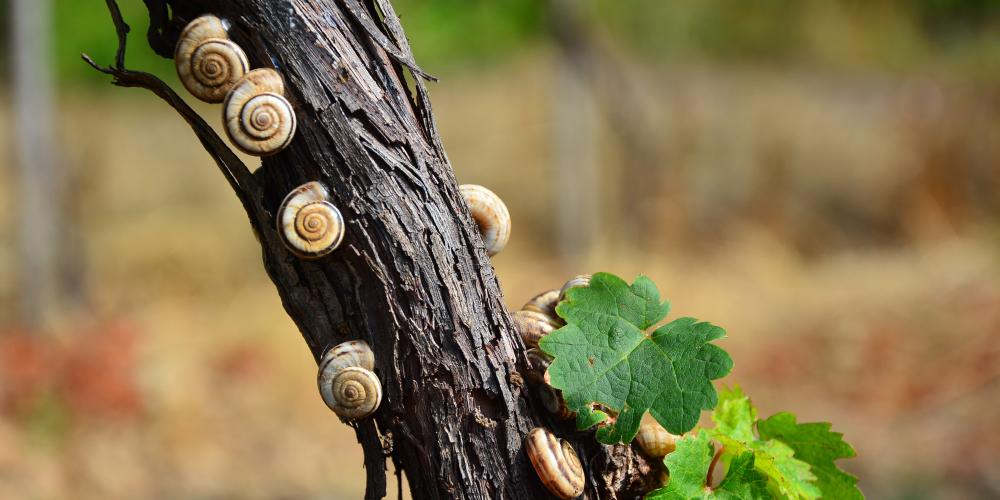
A striking part of her research concerned the question of how yeasts spread in the environment. Terrestrial slugs proved to play an unexpected but important role. “The diversity of yeasts we found on snails was impressive, from typical wine associated yeasts to even human pathogens”, Akan observed. “This shows how strongly snails contribute to the transport of micro-organisms.” Some of these yeasts turned out to be useful in wine fermentation.
Akan also investigated a particular species, Saccharomycopsis fermentans, and especially its trifluoroleucine-resistant variants. These mutants influenced the aroma of wine strongly and increased the production of higher alcohols such as isoamyl alcohol, a type of alcohol that naturally arises during fermentation, when yeast converts sugars into alcohol and aroma compounds. It is not a drinkable alcohol on its own, but a by-product that occurs in small amounts in wine and beer. Isoamyl alcohol can give a strong, sometimes fruity smell reminiscent of banana or solvent. In low concentrations it can contribute to a complex aroma, but in higher amounts it can give a sharp or undesirable smell.
Furthermore, Akan developed a new method to make genetic adjustments in lager yeasts easier via PCR-based gene targeting, with potential for many industrial applications. In addition, she created new hybrids between Saccharomyces jurei and S. cerevisiae, both genetically modified and non-GM variants. The hybrids were used in co-fermentations and produced wines with a lower alcohol content and a surprisingly rich aroma.
According to supervisors Prof. Dr. Ir. Ronnie Willaert (VUB) and Prof. Dr. rer. nat. Jürgen Wendland (Hochschule Geisenheim University), the results show that NCGs have an important future in the wine industry. By lowering alcohol levels and refining aromas, they offer winemakers new tools to create flavour profiles that are difficult to achieve with classic yeasts.
About the researcher: Madina Akan is a Marie Curie Fellow within the European AROMAGENESIS project. She develops new yeast strains for aroma and flavour production through biochemical analyses, fermentation studies and optimisation of metabolic pathways. She previously obtained a Master’s degree in Molecular Biology at NTNU in Norway and has already published seven scientific articles, two of which as first author.
PhD title: Co-fermentation as a means to generate low alcohol beverages with full flavour