




Clement Hiel is something of a living legend within the engineering faculty at the Vrije Universiteit Brussel—though he would never describe himself that way. From a technical school where he learned to forge metal to the heights of NASA, his career reads as a case for ‘simplicity through complexity’. In an open conversation, he reflects on his journey, Belgium’s role in exploring our solar system, and his close friendship with Caroline Pauwels.
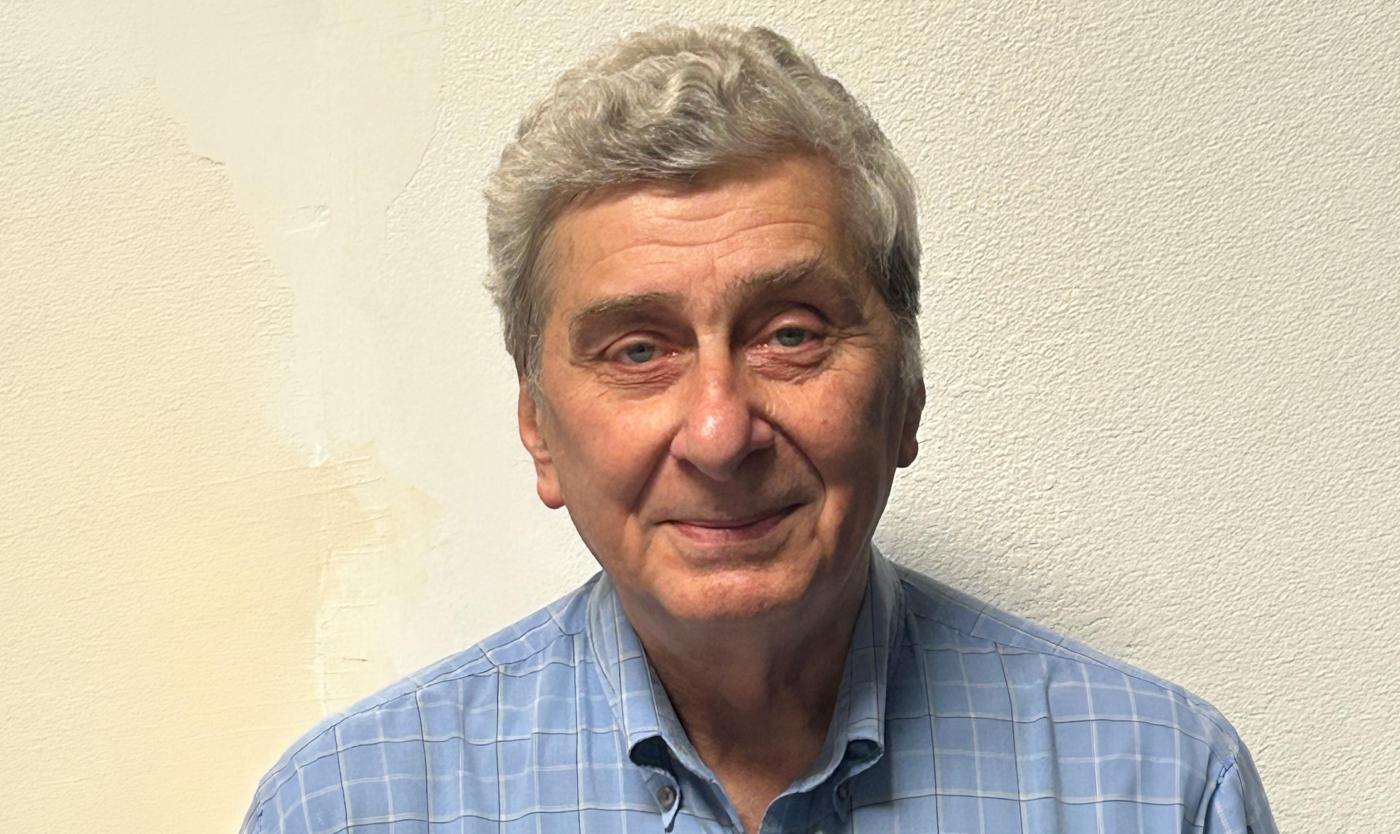
Clement Hiel
From the Forge to the Lecture Hall
Your career didn’t begin with heavy textbooks, but with a welding torch and a hoist. How did that practical foundation shape your view of engineering?
Clement Hiel: “My father was a natural technician. He never went to school, but he could fix anything: radios, televisions, engines. At thirteen, if I wanted to tinker with his car, I had to lift the engine out myself. So that hands-on mentality was there from the start. At twelve, I consciously chose technical school: welding, forging, milling. It helped me enormously later on. I still have great respect for people who can work with their hands and think at the same time.
When I later studied civil engineering at the VUB, I realised I had to learn an entirely new way of studying. You can’t memorise that material; you have to understand the underlying structure. You need to chew through it until the logic clicks. That’s something I always tell students today: stop memorising, start understanding.”
Roger Van Geen and the VUB Spirit
You speak with great admiration about Professor Roger Van Geen. What role did he play in your development?
“That started with my final project in industrial engineering at Bell Telephone. I worked on photoelasticity, a technique to visualise forces in materials. The leading expert in that field was at the VUB: Professor Roger Van Geen. I plucked up the courage and wrote him a letter. His response was typical VUB: ‘Come by’. He immediately opened his lab to me.
Van Geen was a pivotal figure. Not an authoritarian professor, but a mentor who recognised potential. The VUB had just split from the ULB, and there was an incredible pioneering spirit. The professors were young, the equipment was modern, and there was space for free inquiry. That critical mindset—never simply accepting what’s written in books—became part of who I am.”
The Anesthetic of Familiarity
You invented a revolutionary high-voltage cable now used worldwide. How do you come up with the idea to completely rethink something that hasn’t changed in a hundred years?
“That comes from what I call the anesthetic of familiarity: we become so used to things that we stop really seeing them. People walk under those cables every day, but no one questions them. I realised we could replace the heavy steel core with lightweight composite materials from aviation. The result? A cable with three times the capacity, but the same weight. In Africa, we’ve used this to bring electricity to millions of people for the first time, spanning rivers four kilometres wide without placing pylons in the water. Innovation is often about simplification: what isn’t there, can’t break.”
The Pale Blue Dot and the Belgian Rocket
You often link engineering to the ‘Pale Blue Dot’ image from Voyager 1. What does that image mean to you?
“Many people don’t realise that the photo might never have existed without a VUB alumnus: Karel Bossart. He designed the Centaur, the upper stage of the launch vehicles. When the first stage underperformed due to a leak, the Centaur had to burn longer and deliver extra thrust. It did so successfully, keeping Voyager 1 on course.
At six billion kilometres away, astronomer Carl Sagan proposed turning Voyager 1’s camera back one last time. Voyager 2 wasn’t in a position to take a similar image. NASA’s flight team initially resisted—the image had no scientific value and posed a risk to the camera. But Sagan insisted, and the iconic photo was taken.
The Earth as a tiny speck in the vastness. It reminds us how irrational it is to fight over a ‘fraction of a speck’. It forces humility. That is the essence of science: the connection between hard engineering and existential wonder.”
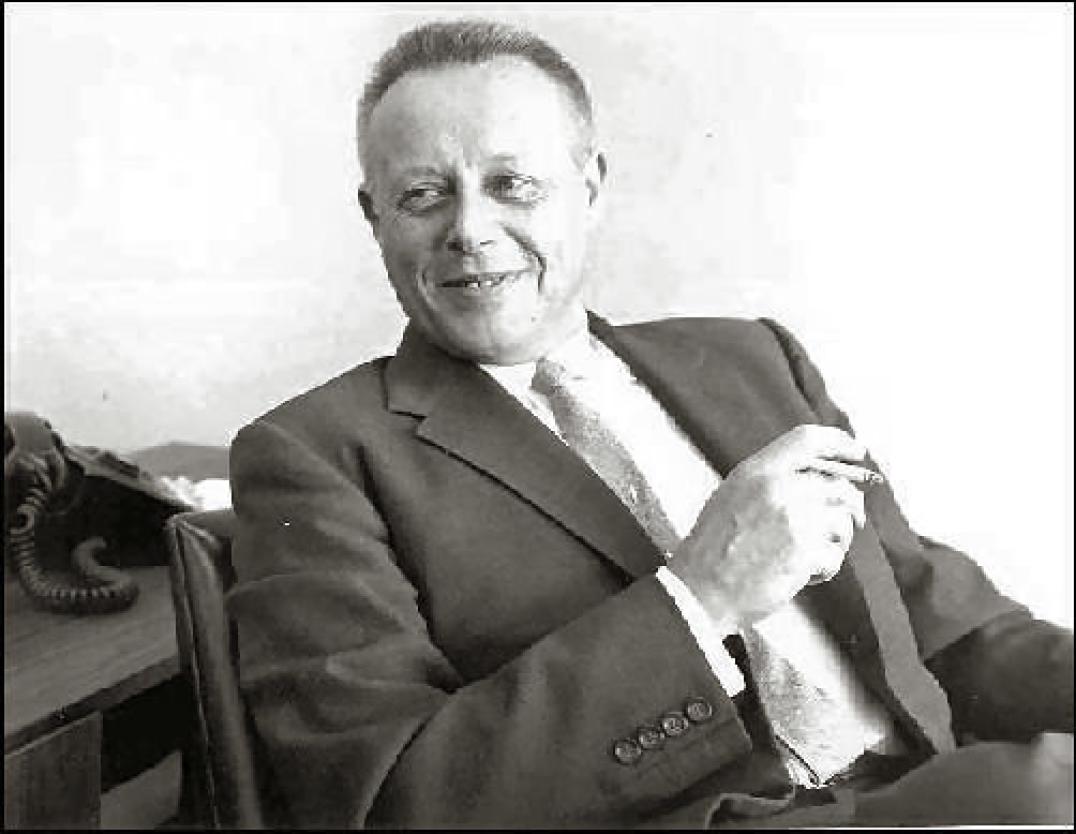
Karel Bossart
Wonder with Caroline Pauwels
You shared that sense of wonder with former rector Caroline Pauwels. How do you look back on your relationship with her?
“Caroline was a kindred spirit. She understood better than anyone that science and art are two sides of the same coin. She was fascinated by the Voyager’s ‘slingshot effect’ and often used the Pale Blue Dot to open the academic year. She didn’t see the university merely as a place of knowledge, but as a space for humanism and connection.
I remember that after a programme by Friedl’ Lesage, she immediately emailed me: ‘I want to see you before you leave for America.’ We could talk for hours about the ‘Ode to Wonder’. She was like a gardener—helping students grow not by ranking them, but by igniting their inner fire. She understood that you can only shape metal when it’s red-hot. We miss that energy deeply, but her legacy lives on in how we approach research.”
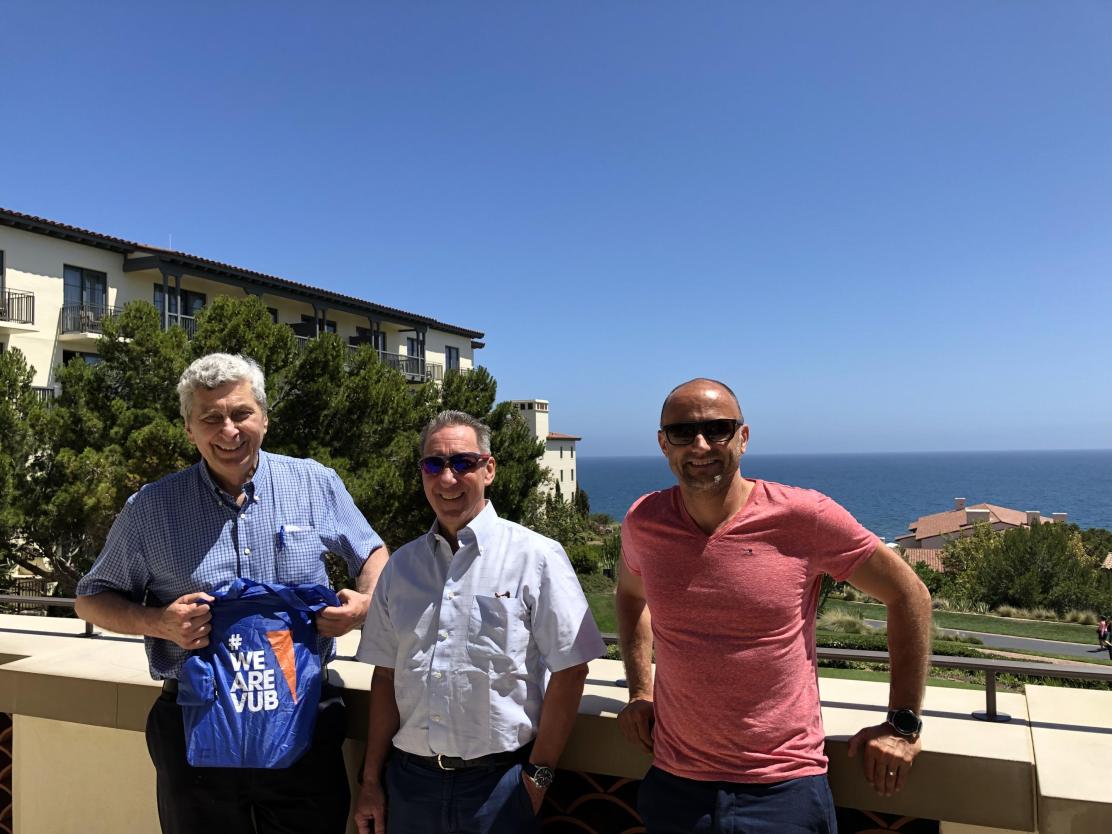
Clement Hiel (left), VUB professors Romain Meeusen (centre) and Bart Roelands (right) during a visit to Hiel’s home base in Rancho Palos Verdes.
Dare to Tinker
You are officially retired, yet you still mentor students and work on projects for Tesla. What keeps you going?
“I want to turn the people I work with into heroes. If I can help a student realise a new idea—and it works—that student becomes the hero of their team or company. That’s what drives me. We need more ‘tinkerers’ in politics and in boardrooms—people who understand how the world really works.
My advice to the VUB community? Stay curious about the ordinary. Dare to ‘weigh the air’, as the Royal Society did in the 17th century. It may seem pointless at the time, but it’s the only path to real breakthroughs. And never forget: life is the better writer. What you truly experience will always surpass what you could have imagined.”
Bio
Clement Hiel studied at Vrije Universiteit Brussel, where he earned a PhD in electromechanical engineering. After completing a postdoctoral fellowship in Virginia, he worked for NASA. He later founded a company that carried out projects for NASA, Boeing, and the United States Air Force. Clement Hiel is the designer of a radar tower whose components can be assembled using a click-fit system. In 2016, he received the prestigious Tibbetts Award for this innovation from Barack Obama.In 2021, he also received the George Lubin Award for his contributions to materials research.