

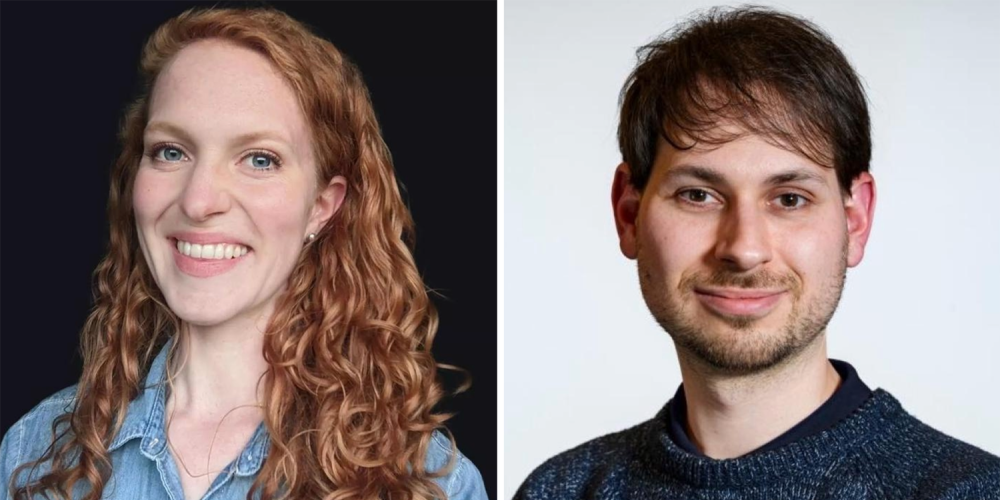


On 3 March, two VUB researchers will join the Young Academy: Tamás Lázár, a bioengineer who uses artificial intelligence to better understand proteins, and Hannelore Van Bavel, a social anthropologist specialising in gender, racialisation and the regulation of women’s bodies.The Young Academy selects members who have distinguished themselves in an exceptional way since completing their doctorate. Those who are admitted join a group of early-career researchers who frequently go on to build careers at leading universities in Belgium and abroad.
Bio‑engineer Tamás Lázár
Department of Bioengineering – Structural Biology Brussels (VUB)
Investigates the functional impact of protein variants through integrated data streams and AI-driven bioinformatics.
Why did you choose this field of research? Was there a defining moment?
“I had always been deeply fascinated by biology, as well as naturally drawn to its quantitative side. During my undergraduate studies in Budapest, I met several PhD candidates who were working as teaching assistants. They spoke about their research with such passion that, for the first time, I thought: this could be my world too.
In my third year, I was able to do an internship at the Institute of Enzymology of the Hungarian Academy of Sciences. There, I was given my first truly independent project. That feeling — that I could contribute something meaningful to science — was decisive. From that moment on, I knew this was the path I wanted to follow.”
What are you currently working on in concrete terms?
“All my projects revolve around the same fundamental question: how do variations in a protein affect the way it functions? Even the smallest mutations can completely disrupt a protein’s behaviour.
This research has wide-ranging applications. For instance, I analyse protein-coding genes of pathogens in order to detect emerging health threats at an early stage — such as more transmissible variants, or the point at which existing medicines begin to lose their efficacy.
I also study mutations in human genes, seeking to determine which variants are harmful and which are in fact harmless. Those same insights can then be used to design entirely new proteins, for example for biosensors or therapeutic applications.”
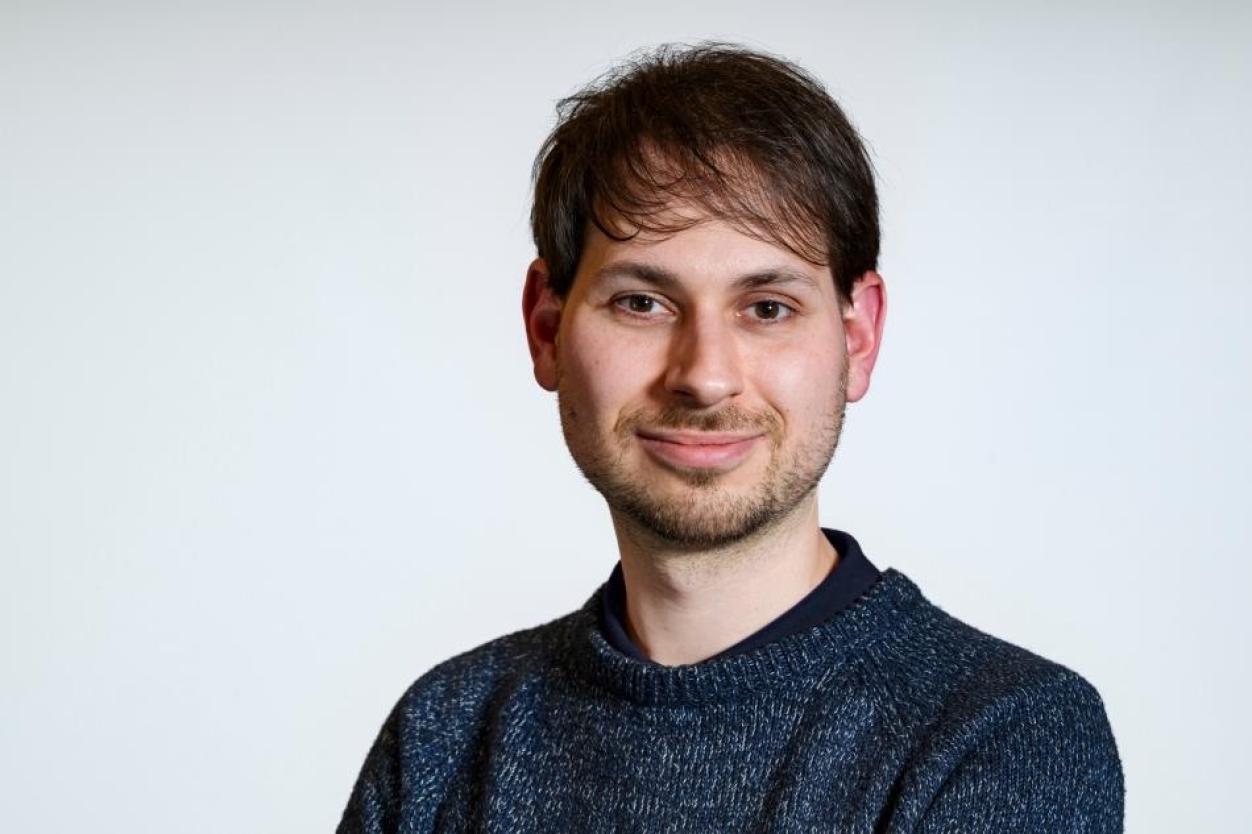
Tamás Lázár
“A fairer, less easily manipulated society — that would be real impact”
What impact would you like to have?
“I want to help us understand how proteins evolve and why they behave the way they do. My ambition is threefold: to detect biological threats more rapidly, to advance personalised medicine, and to equip researchers with better tools to generate new insights.
In my teaching, I try to pass on that same spirit of critical thinking. That’s why I favour interactive classes, brainstorming sessions and small-scale projects. A traditional lecture-based ex-cathedra approach simply isn’t as effective for that purpose.”
What is your big dream for the future?
“I want to build a research group where everyone — regardless of career stage — can fully realize their potential. A team that pushes one another forward, where strong results emerge almost organically from a healthy, supportive culture. I am currently working with Professor Wim Vranken, a fantastic mentor who is helping me refine those ‘people skills’.
My boldest ambition? That the global scientific community will finally present a united front against political and everyday disinformation. A fairer, less easily manipulated society — that would be real impact.”
Who is your role model?
“I have different role models for different character strengths. But if I had to name just one: Katalin Karikó. Her career — marked by setbacks, disbelief, and ultimately a Nobel Prize for her research into mRNA technology — is a testament to determination and resilience. Everyone should really take the time to read her story.”
Social anthropologist Hannelore Van Bavel
Rhea Research Centre for Gender, Diversity & Intersectionality (VUB)
Researches how gender, race, culture and colonialism regulate women’s bodies, using genital modifications as a case study.
Why did you choose this field of research? Was there a formative experience?
“I have always been fascinated by social inequality and by the ways in which gender, racism and North–South relations shape people’s lives. During my Master’s in Sociology, I carried out research on minors involved in prostitution in Tanzania. Around the same time, I attended a summer school at Mzumbe University, where I met Panin — a Maasai man who had just founded an NGO within his community.
When he heard that I was going on to pursue a Master’s in Gender & Diversity, he asked whether I would be willing to research female genital cutting among the Maasai. The following summer, I returned to conduct fieldwork.”
What struck you most during that time?
“How different the local narratives were from everything I had read about the issue in Belgium. I spoke to women who were deeply traumatised and wanted the practice to end. But I also spoke to women who were proud of it. And to women who said: perhaps this is not a good practice, but first we need water, education, healthcare.
That realisation — that dominant international representations barely connect with local realities — became the foundation of my PhD. I examined the colonial roots of the dominant narrative surrounding female genital mutilation and how that narrative continues to shape policy and interventions today, often with unintended consequences.”
What are you currently working on?
“I am researching female genital cosmetic surgery, such as labiaplasty, in Belgium, the Netherlands and now also in Kenya. I look at who undergoes these procedures, why they choose to do so, and how medical professionals approach them.
The central question remains the same: why is one type of genital modification heavily condemned, while another is socially accepted or even considered desirable? That contrast turns out to be far less self-evident than many assume.”
“My aim is to make the debate fairer, more careful and more inclusive”
What impact would you like to have?
“Sometimes my work is misread — as though I were trying to justify female genital mutilation or, conversely, to ban cosmetic surgery. In fact, I am attempting to move beyond that kind of black-and-white thinking.
I want to show how inequalities — racism, colonial legacies, classism — play a role in determining who does and does not gain control over her own body. Why are some women criminalised for practices that others are free to undergo without consequence?
There is no simple answer. That is why I work in a participatory way, alongside women, medical professionals and communities. My aim is to make the debate fairer, more nuanced and more inclusive.”
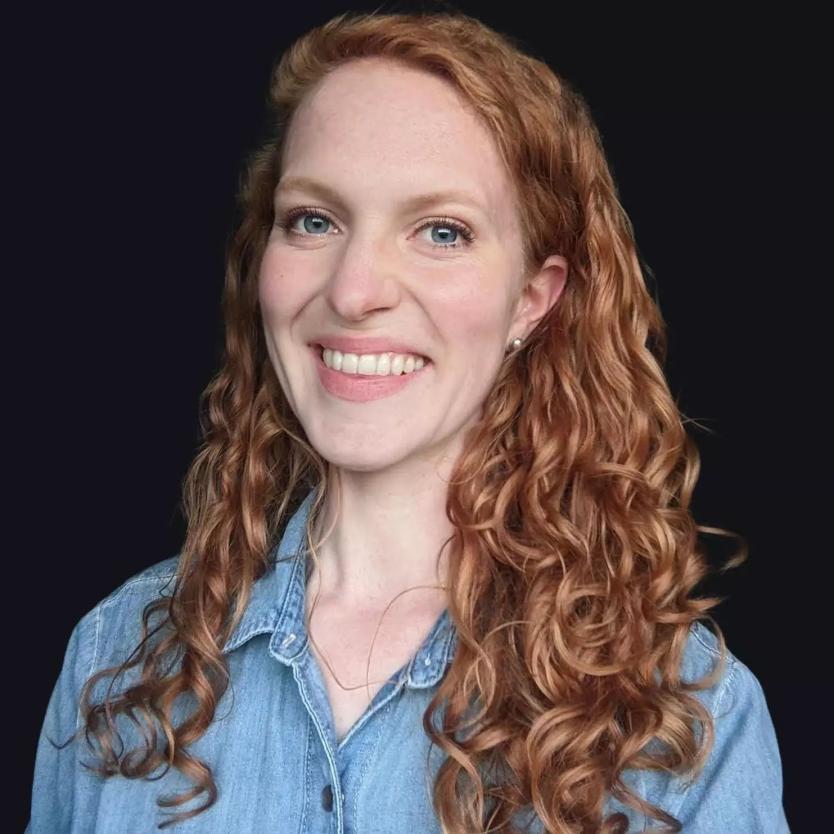
Hannelore Van Bavel
What is your long-term ambition as a researcher?
“In a future project, I want to explore sexuality and wellbeing after genital modifications in greater depth. The public debate is full of sweeping assumptions — from ‘sexual pleasure is impossible’ to ‘cosmetic surgery is empowerment’. I want to move beyond those clichés and examine how people genuinely experience their bodies and sexuality.
In the longer term, I hope to build an interdisciplinary research group that studies how societies interpret and regulate bodily interventions. What do we regard as ‘medical care’? What do we label as ‘cultural’? Who decides what is normal? And what role do gender, race and social inequality play? I want to investigate these questions through equal international partnerships and participatory as well as creative methodologies.”
Who inspires you?
“First and foremost, the women I work with. Their nuance and critical insight have profoundly shaped my thinking. I am also strongly influenced by thinkers such as Chandra Talpade Mohanty, Gayatri Chakravorty Spivak, Kimberlé Crenshaw and Sylvia Tamale. And, to be honest, many insights emerge from conversations with family, friends and colleagues. Those moments of confronting my own blind spots are indispensable.”