



While politicians abandon dialogue, scientists continue to collaborate across borders. That tradition has survived wars. It remains indispensable today and it has a name: science diplomacy. Jan Danckaert published this opinion piece in De Standaard and Le Soir. As well as being rector of the Vrije Universiteit Brussel, he is president of the European university alliance Eutopia.
Science is under attack. In the United States, universities are being hollowed out by the Trump administration: budgets are cut, critical departments are shut down, researchers are expelled from the country. Across Europe, higher education is facing budget cuts in almost every country, with the human sciences suffering the most. Even more worrying is the deeper trend: knowledge and expertise are increasingly questioned, and intellectuals are dismissed as “an elite to be fought.” In a world growing ever more chaotic, people too easily turn to what algorithms feed them.
And yet. In times of confusion and polarization, science has always provided a counterforce. Not as a political project, but as a shared method, a shared language, a shared search for answers. It is time to name and defend thattradition once again.
“Where political dialogue fell silent, scientific dialogue continued”
To understand why, we must return to the birth of modern science. During the Renaissance of the fifteenth and sixteenth centuries, humanists across Europe engaged in dialogue, through letters, in salons, in academies, about findings that often directly challenged accepted beliefs. They called it the Republic of Letters: a borderless community driven by curiosity rather than power. From that dialogue emerged the scientific method: a systematic, testable, self-correcting way of generating reliable knowledge. And from that method came the insights that transformed the world, that the Earth revolves around the Sun, that the universe follows the laws of gravity
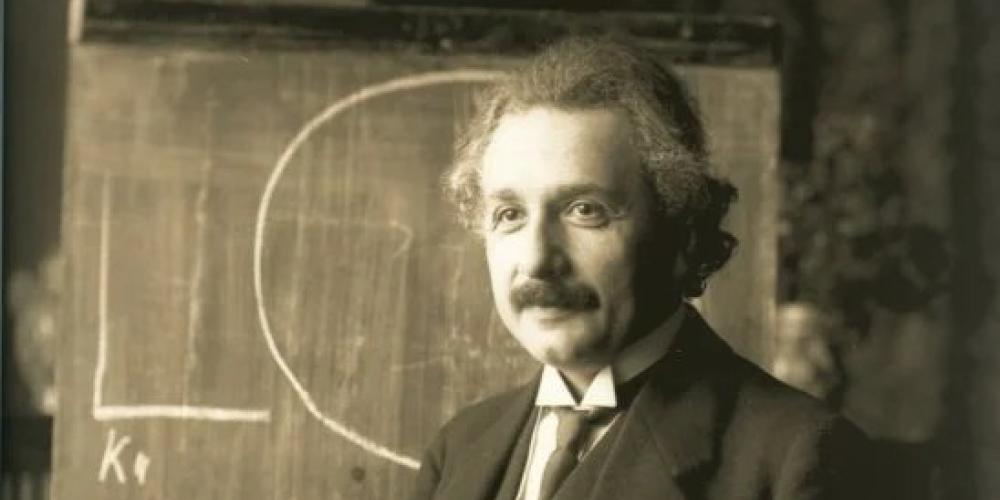
Three centuries later, in early twentieth-century Brussels, another chapter of that same history unfolded. The Solvay Conferences on physics and chemistry brought together the greatest minds of their time: Albert Einstein, Niels Bohr, Marie Curie. They debated, sometimes fiercely, and refined the foundations of modern physics. These historic conferences also took place in the 1920s and 1930s, as Europe was sliding into chaos, nationalism, and war. At the fifth Solvay Conference in 1927, the interpretation of quantum physics was established, a milestone we will commemorate in Brussels next year. Where political dialogue fell silent, scientific dialogue continued, laying the groundwork for technologies we now use every day.
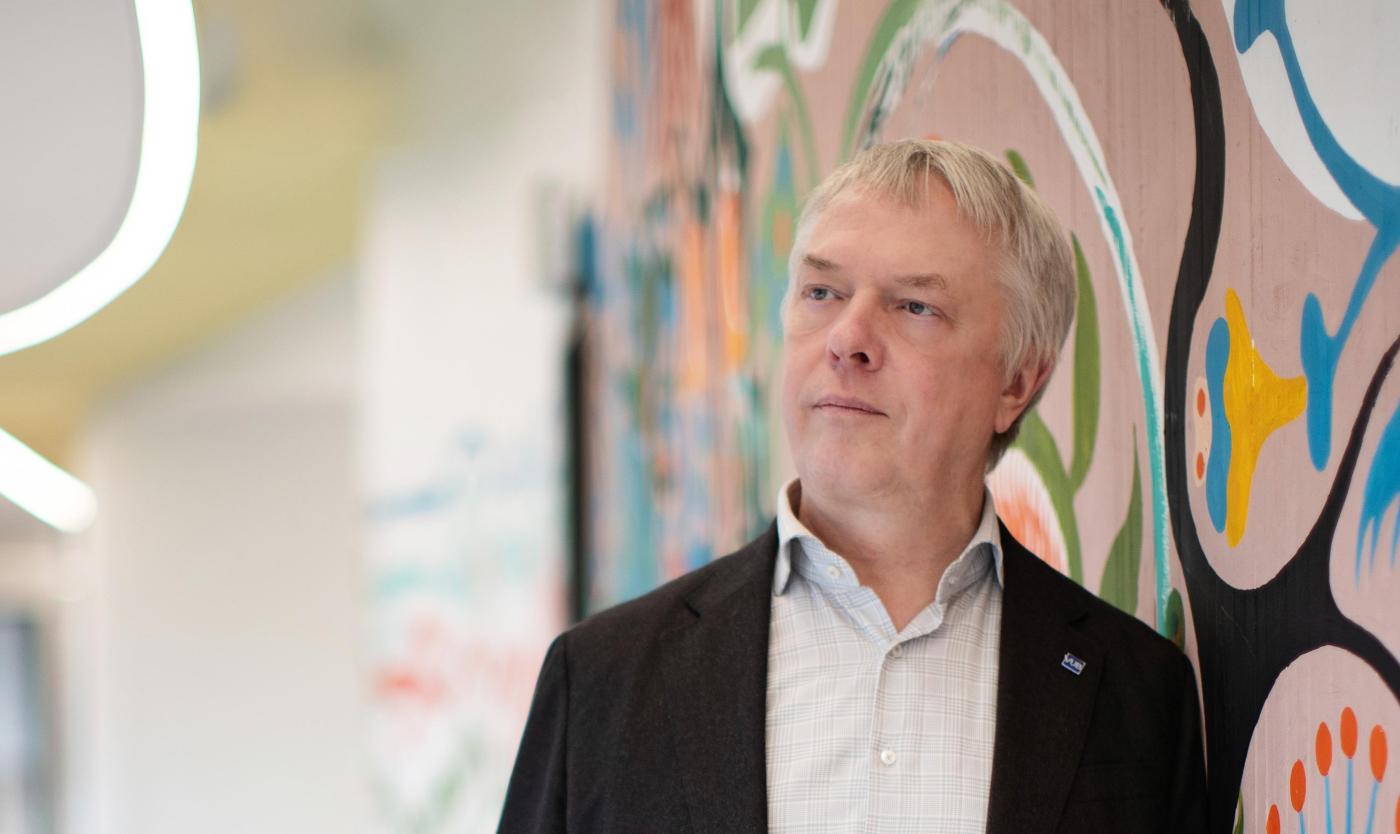
Jan Danckaert: “Science diplomacy is not a soft ideology.”
I witnessed this myself later on. As a young researcher during the Cold War, I saw how scientists on both sides of the Iron Curtain continued to share knowledge, even when political contacts were strained. CERN, founded in 1954 as an international institute for fundamental research in particle physics, stands as the most striking institutional proof of that power. Soon after its creation, Soviet researchers were already working side by side with colleagues from the West. Major discoveries were made there: at that same CERN, the World Wide Web was invented, not as a military or commercial project, but as a tool for scientific exchange.
Today, we are once again witnessing the collapse of international political dialogue. Climate summits that once brought scientists and policymakers together have turned into geopolitical spectacles. The UN Millennium Development Goals, which between 1990 and 2015 reduced extreme poverty from fifty to fourteen percent, now seem like a forgotten chapter. Social media have replaced political debate with a permanent confrontation. The consequences are clear: less cooperation, more distrust, a world that is fragmenting.
"A global community of researchers who remain in dialogue, regardless of the political context"
This is precisely the moment when science diplomacy proves its value. Science diplomacy is the use of scientific cooperation as a bridge between countries and systems where political relations are blocked or poisoned. It is not a soft ideology. It is a proven instrument of peace. Through joint research, personal relationships emerge that can help prepare political change, foster mutual understanding where distrust prevails, and establish de facto recognition between parties that officially refuse to engage with one another.
A recent example illustrates this clearly. In Europe, political dialogue with Viktor Orbán’s Hungary has been largely suspended. Targeted institutional sanctions have affected a significant part of the Hungarian academic system. Yet scientific dialogue with individual Hungarian researchers has continued. There has been no boycott of scientists on a personal basis, a strategic choice that distinguishes between individuals and regimes.
This captures the essence of the new Republic of Science I advocate: a global community of researchers who remain in dialogue, regardless of the political context. No individual scientist should be excluded solely on the basis of their country of origin. What matters is personal integrity and scientific expertise. That was true in the Renaissance. It was true at the Solvay Conferences. And it must remain true today.
The VUB is putting this conviction into action. Together with our global partners in the Eutopia alliance, we are exploring how science diplomacy can be structurally embedded in academic policy and education, a program thatequips researchers with the tools to build bridges even in tense international contexts. In a world where war and conflict dominate the agenda, we aim to give peace a renewed chance.