



Caroline Pauwels was our rector — but should we have called her rectrix instead? And why does a group of alumnae suddenly become alumni when a single male graduate joins them? Gender-neutral job titles alone will not make the university — or the world — a more equal place, warns Rik Vosters, professor of linguistics at the Vrije Universiteit Brussel. “Inclusive language does have an impact, but it is limited. It will not resolve structural gender inequality, though language can serve as a valuable starting point for reflection and greater awareness.”
‘At the VUB we write as inclusively as possible,’ states the university’s house style guide. ‘When referring to a job title, we use the masculine form as standard in order not to disrupt the flow of the text. So it is rector, vice-rector, professor, researcher and student.’ Over to you, Professor Vosters!
Rik Vosters: “I fully understand the reasoning behind house style guidelines, but personally I am not a great advocate of this kind of very general advice. Linguistic choices are always determined by your objective. In a smooth marketing text, free of friction, you can indeed work with neutral job titles. You might, for instance, refer to scientists. But if you want to raise awareness, it can sometimes be useful to make both masculine and feminine forms visible. In that case, you might explicitly refer to male and female scientists. It may feel slightly awkward, but that is not necessarily a bad thing.”
Many masculine job titles — rector, professor, researcher — are now experienced as gender-neutral.
“Rectrix is the feminine form of rector, just as dominatrix is the feminine form of dominator. Yet no one refers to a female rector as rectrix. Professor also appears neutral, as there is no obvious feminine equivalent in common use.”
And yet these are originally masculine words?
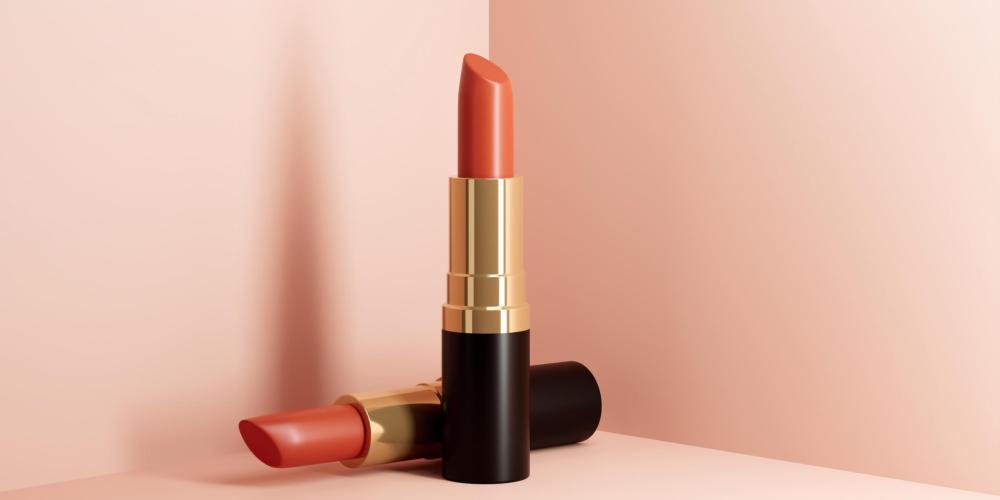
“Certainly, though they no longer feel that way. They are now used in a gender-neutral sense, but there is still a pitfall we should be aware of: when people hear the word rector or professor, many still unconsciously picture a man, because for a long time these roles were performed almost exclusively by men. When I speak to students about ‘the rector’s lipstick’, they always look slightly surprised. Even if rector seems like a neutral term, because there is no widely used feminine counterpart, it continues to evoke male associations.”
Is that effect less pronounced with the word researcher?
“Probably because there is already greater gender balance at that level. The higher you go up the academic ladder, the fewer women there are — and the stronger the masculine connotations become.”
“‘Studentinnen’ sounds far too archaic to my ears.”
You teach both male and female students yourself. How do you address them?
“I would begin an email with ‘Dear students’. But I sometimes teach groups made up entirely of women. In that case, you can of course use the feminine form. A retired colleague of mine always says studentinnen. That invariably makes the corners of my mouth curl upwards, because it sounds so archaic to me.”
The word alumnus has to be declined, following Latin endings.
“That’s right: alumnus and alumni for the masculine singular and plural, and alumna and alumnae for the feminine singular and plural.”
But for a mixed plural — one man is enough — we are expected to write alumni. Or perhaps we shouldn’t?
“Those kinds of prescriptions are very much under scrutiny today. Some more conservative voices call it simply a neutral grammatical rule, unrelated to gender or society. That is, of course, nonsense: these are choices we make, and through them past inequalities continue to resonate in language. As far as I am concerned, you can write alumni and alumnae, or adopt an avoidance strategy and refer to graduates instead. That way, you also avoid excluding people who do not identify as either women or men.”
Let’s turn to UZ Brussel, the VUB’s university hospital. Although more women than men have graduated in medicine for years, it was not until 2013 that the Order of Physicians replaced the term ‘geneesheer’ (‘male doctor’) with ‘arts’ (‘doctor’).
“You simply cannot maintain a term like geneesheer when the majority of doctors are women. Yet here too you see that blind spot: when people think of a doctor, they still very often picture a somewhat older, white man.”
“One sought a solution for men who felt uncomfortable being called a ‘nurse’ in the feminine form.”
Female professional titles appear to be less resilient: they tend to be replaced more quickly than their masculine counterparts.
“That’s true. Gender-neutral terms in predominantly female professions, such as teacher and nurse, have been well established for quite some time. They no longer sound unusual. Apparently, it was considered necessary early on to find a solution for the handful of men who felt uncomfortable being called a nurse in the feminine form. That was resolved more swiftly than the issue of geneesheren.”
The term verpleegster now even sounds slightly… perhaps condescending?
“That connotation does indeed exist. Just like the word juf for a woman standing in front of a class.”
Is that also why female managers prefer to be called directeur rather than directrice?
“Nowadays, directrice is more readily associated with a primary school than with a department of an international company. That evolution is not yet complete. In education, too, the rise of female directeurs will probably prove unstoppable.”
In the maternity ward of UZ Brussel, however, there is still one proud male midwife.
“That’s wonderful. Though perhaps still rather exceptional?”
“Feminists in the 1970s already clearly exposed how patriarchal dominance is reflected in language”
Is this the current trend: more gender-neutral professional titles, even if they are often of masculine origin?
“In my view, yes. That marks a shift from the more militant feminism of the 1970s and ’80s. At that time, explicitly feminine or double job titles were often introduced deliberately, to raise awareness of gender equality. The Australian feminist linguist Dale Spender wrote a book about this in 1980 that remains highly worth reading: Man Made Language. In it, she explains how patriarchal dominance is reflected in language. The struggle then frequently centred on specific terms and constructions, such as the so-called generic masculine: ‘every student brings his book’, or ‘every student brings his or her book’.”
How should that struggle be approached today?
“First and foremost, we must realise that language is only language. We will not fundamentally resolve problems of gender inequality by erasing linguistic differences or by fixating fetishistically on a handful of isolated words, without paying attention to the broader imagery and context. That said, research does show that inclusive language can have a tangible effect on people.”
In what way?
“Job advertisements are a good example. When a vacancy uses inclusive language and feminine job titles, women feel more inclined to apply. The effect is limited, but it exists. The same applies to course brochures. Communication must, however, align with the organisation and its values. Encouraging girls to pursue a STEM degree only to find that all the professors are men is hardly credible. Adjusting language only makes sense if it is accompanied by more substantive policy.”
Finally, we have only been talking about men and women.
“That is indeed another complexity. The debate used to focus primarily on masculine and feminine forms in language, but gender-neutral terms allow us to move beyond that strict binary. If we focus solely on feminine forms, we risk excluding people who identify outside the binary gender spectrum. New generations of feminists tend to see things in less binary terms. Quite rightly, they pay close attention to multiple forms of inequality, of which gender is just one possible factor.”

Patrick Van Den Abeele
Patrick Van den Abeele, midwife at UZ Brussel
“I am a male midwife — and I am proud of it”
It was only in March 2025 that Van Dale added the word vroedman (‘male midwife’) to its dictionary. The job title has never kept Patrick Van den Abeele awake at night. “My diploma says vroedvrouw and I have always been proud of that.”
“At first, I wanted to become a community nurse. But a placement in the maternity ward at UZ Brussel set me on a different path. I found childbirth so extraordinary and awe-inspiring that I decided to specialise in midwifery. I started working at UZ in 1983 and I still enjoy it just as much today. A fellow student and I were among the first generation of boys admitted to the maternity ward, thanks to new anti-discrimination legislation. Strange, really, because almost all gynaecologists were still men at the time.”
“I have always thought it nonsense to suggest that men cannot empathise with a woman in labour. If that were true, childless midwives would not be able to do so either. As a midwife, you need to be gentle and caring, and able to relate to the emotions that accompany childbirth and motherhood. At the same time, medical care is also technical, and in crisis situations you must remain level-headed and self-assured. That combination of ‘soft’ and ‘hard’ qualities is expected of every midwife, whether male or female.”
“In my view, the best teams consist of both women and men. We complement one another. But I do not immediately see more boys opting to study midwifery. Nowadays, you have to choose that specialism from the very first year. At eighteen, it would never have occurred to me either.”
Professor Rik Vosters is Professor of Dutch Linguistics at the Vrije Universiteit Brussel, where he teaches within the programmes in Linguistics and Literature and Applied Linguistics. As a sociolinguist, his research explores the intersection of language and society, often in historical contexts, with particular attention to themes such as language variation, language change, multilingualism and language policy. He coordinates the FWO research network in historical sociolinguistics and has, since 2022, served as Chair of the Council for Dutch Language and Literature, the central advisory body of the Nederlandse Taalunie.

Rik Vosters