

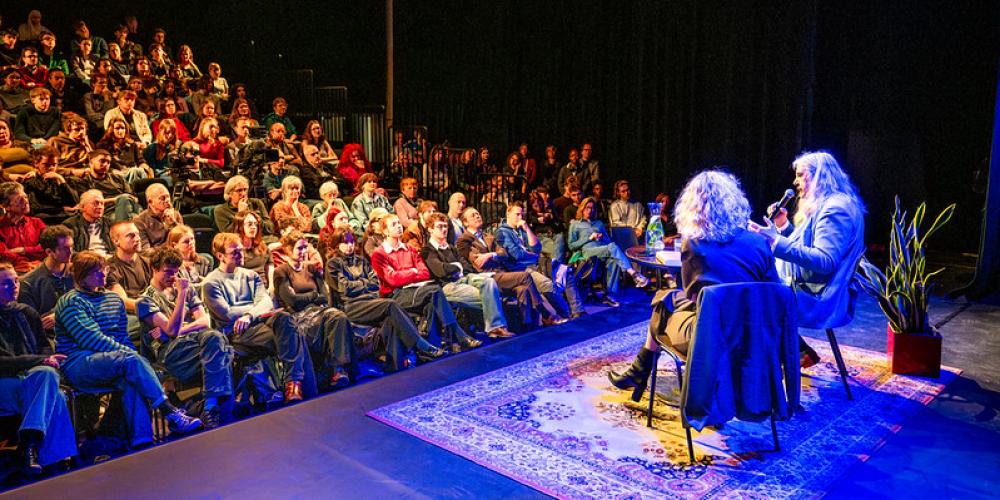


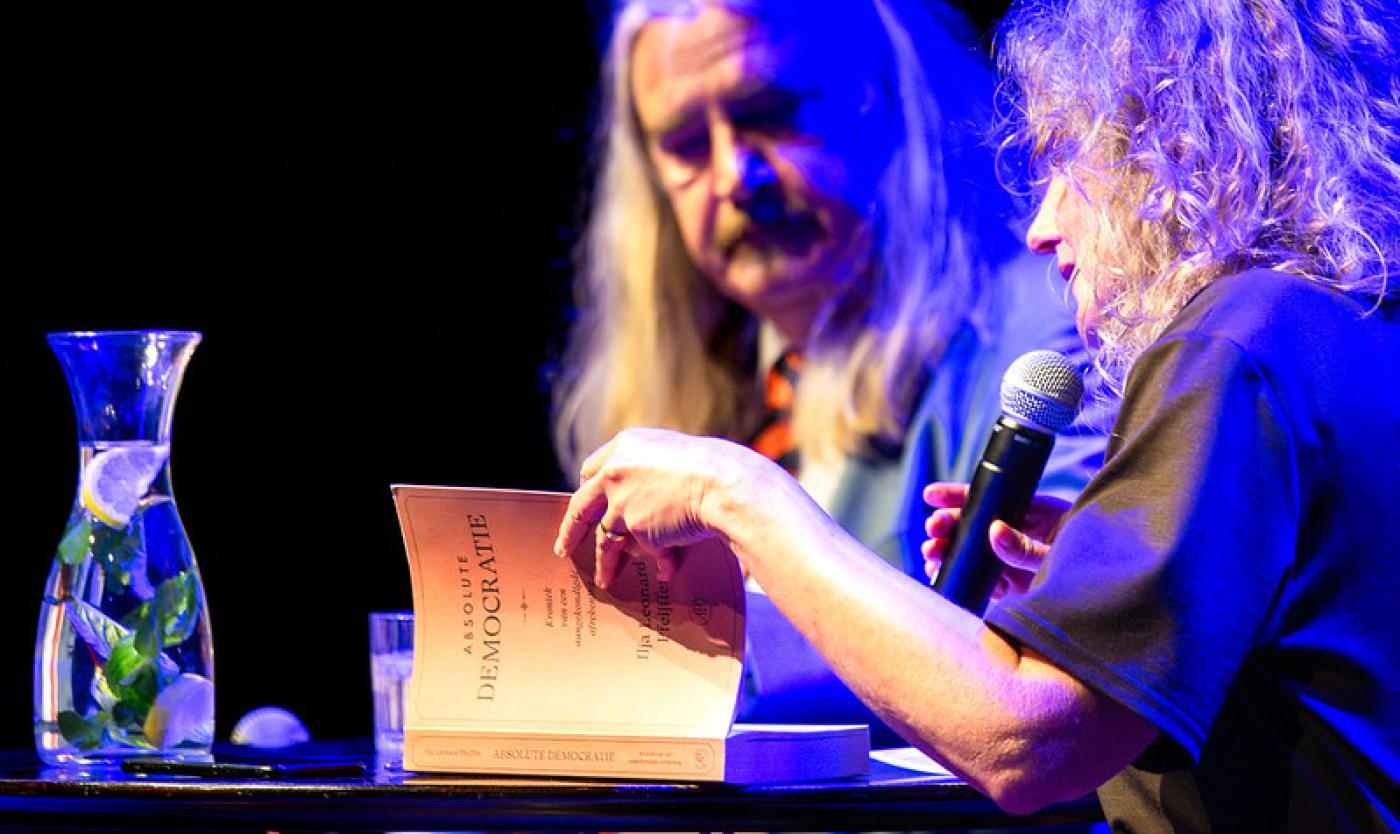
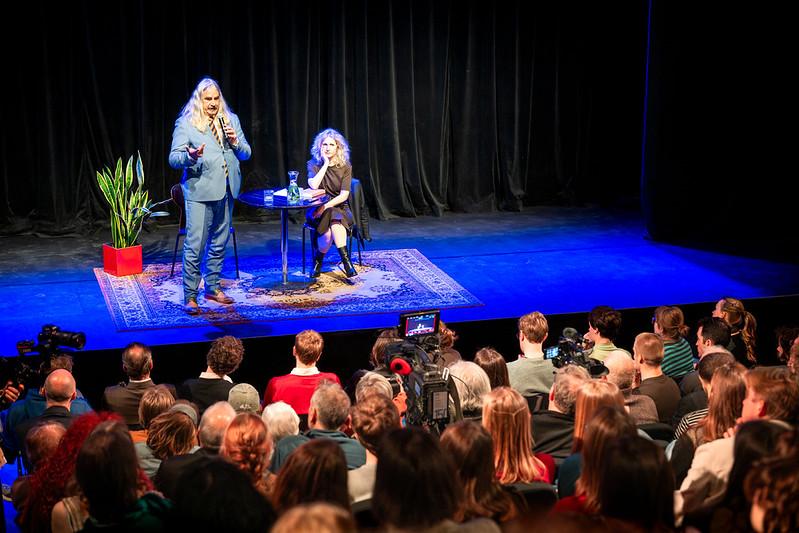
Ilja Leonard Pfeijffer appears before a packed auditorium full of students at Pilar. He engages them—together with Professor of Political Science Karen Celis—in debate. The occasion is his latest book, Absolute Democracy: Chronicle of a Foretold Reckoning. Pfeijffer is smartly dressed in a suit and tie, his long hair draped over his broad shoulders. In the background stands a sansevieria, a plant said to symbolise strength, resilience and assertiveness—set, no less, in a bright red plant pot. Even before the first word was spoken, the tone had already been set.
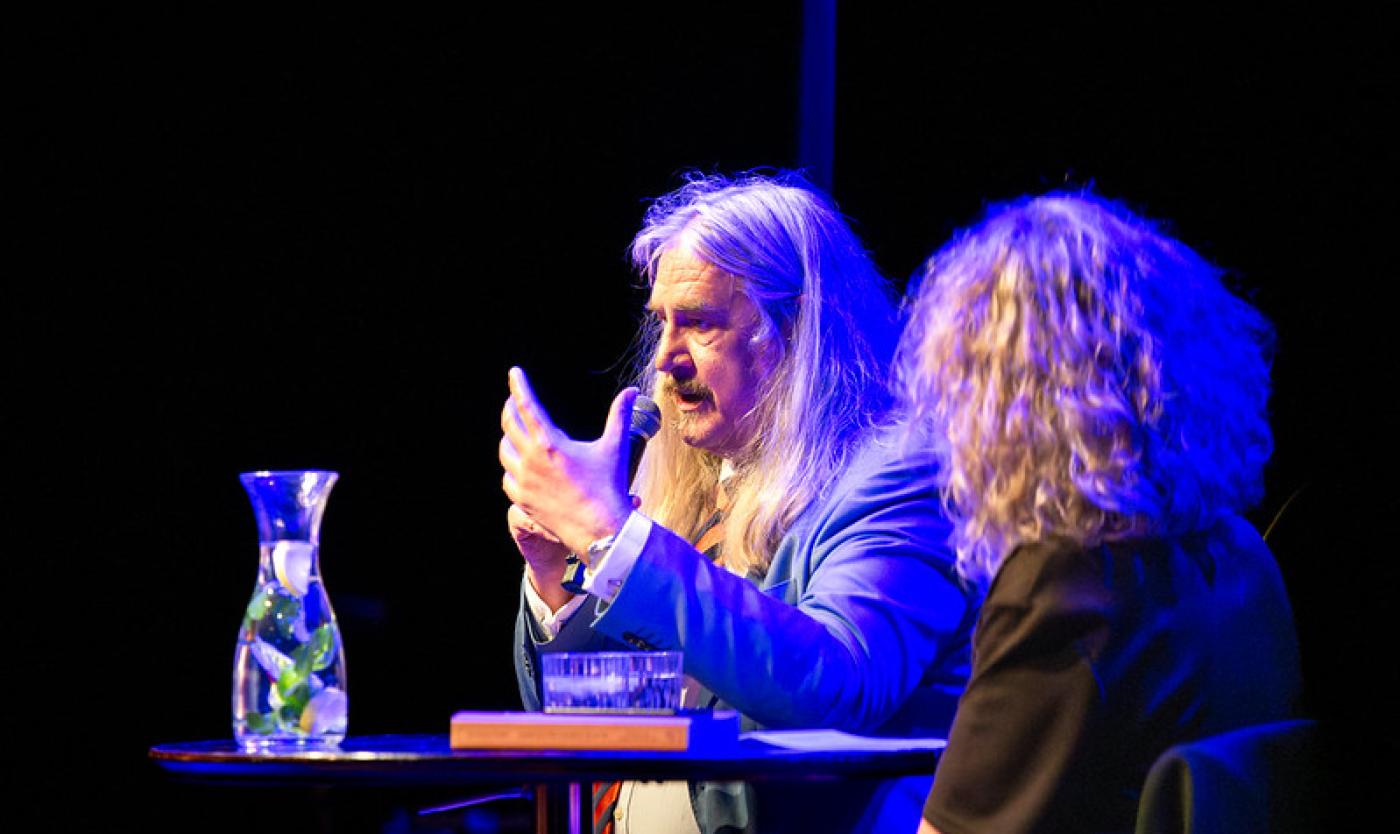
When Karen Celis opens with the question of what he means by absolute democracy, the writer carefully and eloquently explains that the constitutional democracy as we know it—where the tasks and powers of public institutions are enshrined in the constitution and other legal provisions—is no longer taken for granted. “For proponents of absolute democracy, it is in fact profoundly undemocratic if the winner of the elections, who after all represents the will of the people, finds himself constrained by all kinds of laws and regulations: the constitution, rulings by unelected judges, treaty texts, bureaucrats in Brussels.” An incident described in his book—somewhat bizarre and set in his home city of Genoa, where he struck up a conversation with an elderly couple about the state of democracy—proved to be an eye-opener for Pfeijffer. It revealed that within our society there are two diametrically opposed ideas about how a democracy should function, and that both groups regard themselves as the true democrats, viewing the others as a threat to democracy.
The unease of pasta à la carbonara
Karen Celis builds a bridge to the first essay in his book, The unease of pasta à la carbonara, about the ease with which the dismantling of democracy can be ignored. “You do not grant people the luxury of that ease,” she observes.
Pfeijffer responds: “Even if there are two opposing models of how democracy ought to function, and even if we can understand the reasoning underlying both, we must nevertheless acknowledge that the two models are not equivalent. The problem with an absolute democracy is that, in practice, it amounts to a dictatorship of the majority. An absolute democracy is a contradictio in terminis. It is a form of democracy in which the democratic mandate is used to dismantle democracy itself.
He draws a parallel between what is happening in the United States and what is unfolding in his home country of Italy, where Meloni’s party is implementing its anti-democratic agenda. “The most frightening thing is how easy it is not to notice any of it at all. That is first and foremost because I am privileged. I do not belong to the segments of the population that are the first targets of the far-right government. Following the example of her close friend and role model Orbán, Meloni invested a great deal of energy at the start of her term in curbing press freedom. And she succeeded: she managed to turn the state broadcaster, RAI, into a Meloni propaganda channel. If you depend on RAI for your information, as the vast majority of the Italian population does, you get the impression that not much is going on. That everything is ticking along nicely. The consequence is that this agenda to undermine—and in the long term dismantle—the rule of law is in no way part of public debate. People do not talk about it in the street. Such a process of dismantling proceeds very slowly, through a series of very small steps. Taken individually, they may not even seem particularly alarming, so you really have to make an effort to be concerned. And that may well be the essence of my book.”
Football
The head of the VUB research group Democratic Futures makes it clear that she knows nothing about football. Nevertheless, Karen Celis refers to an essay in Absolute democracy that centres on a football match. Pfeijffer reassures the audience that the piece is not really about football.
Ilja Pfeijffer says: “There was a match in Amsterdam between Ajax and Maccabi Tel Aviv, during which a large number of Israeli supporters had misbehaved in the city beforehand. They engaged in various extremely offensive chants and slogans, such as jubilantly singing that there are no schools left in Gaza because there are no children left—things like that. After the match, these provocations were answered by Muslims from Amsterdam. The city was unsettled all evening and there were scuffles. In the end, a few Israeli supporters were taken to hospital, but they were able to return home the following day. So the consequences were limited. Nevertheless, the next day an enormous outcry erupted in the international press, with claims everywhere that a witch-hunt against Jews had taken place in Amsterdam. This was an entirely Israeli framing of the events, which was uncritically adopted by Dutch politics and the media. The misconduct of the Israeli supporters was completely ignored; they were portrayed only as victims.
Ultimately, it was an intrepid sixteen‑year‑old YouTuber—who had actually gone out into the street and filmed what was happening—who made it clear that the pro‑Israeli framing did not hold up. By that point, however, the entire Dutch quality press had already followed that frame. “I found that genuinely shocking. Perhaps even more shocking was the fact that, a week or two later, the ombudsman of NRC Handelsblad, looking back on the episode, had to conclude that ‘the search for truth had suffered under political pressure’. If we are talking about truth—and we must be talking about truth—then it simply cannot be the case that it is concealed or manipulated under political pressure.”
“Democracy is a system based on debate. And you cannot conduct a debate if citizens are not informed.”
The elite university
Celis says: “Now that we have arrived at the theme of truth: we are sitting here on a university campus where great importance is attached to truth, truth‑finding and critical thinking. You write in your book that universities ought to be elite.”
Pfeijffer replies: “Do I write that? I had forgotten about that. What a provocative position (laughter). I agree with you that universities should be places where critical analyses are produced that run counter to popular opinion. I am perfectly happy to summarise that as elitist. There are two essential pillars of a democracy. One is the independent press; the other is education. The Italian political philosopher Mazzini, regarded as the intellectual architect of Italian unification in the mid‑nineteenth century, emphasised that Italy could not become a democracy without investment in education. And that is self‑evident. Democracy is a system based on debate. And you cannot conduct a debate if citizens are not informed and if they lack the critical capacity to deal with information. An independent press and education are crucial preconditions for the functioning of a democracy. You can see that authoritarian regimes have a tendency to attack those two pillars immediately—both the free press, as has happened in Italy, and education as well. Trump immediately embarked on a crusade against the universities. Less courageous autocrats in our region resort to the no less effective instrument of cuts (laughter).”
The task of academics
Celis asks: “Do you think academics should have a prominent presence in the social and political debate when it comes to democracy?”
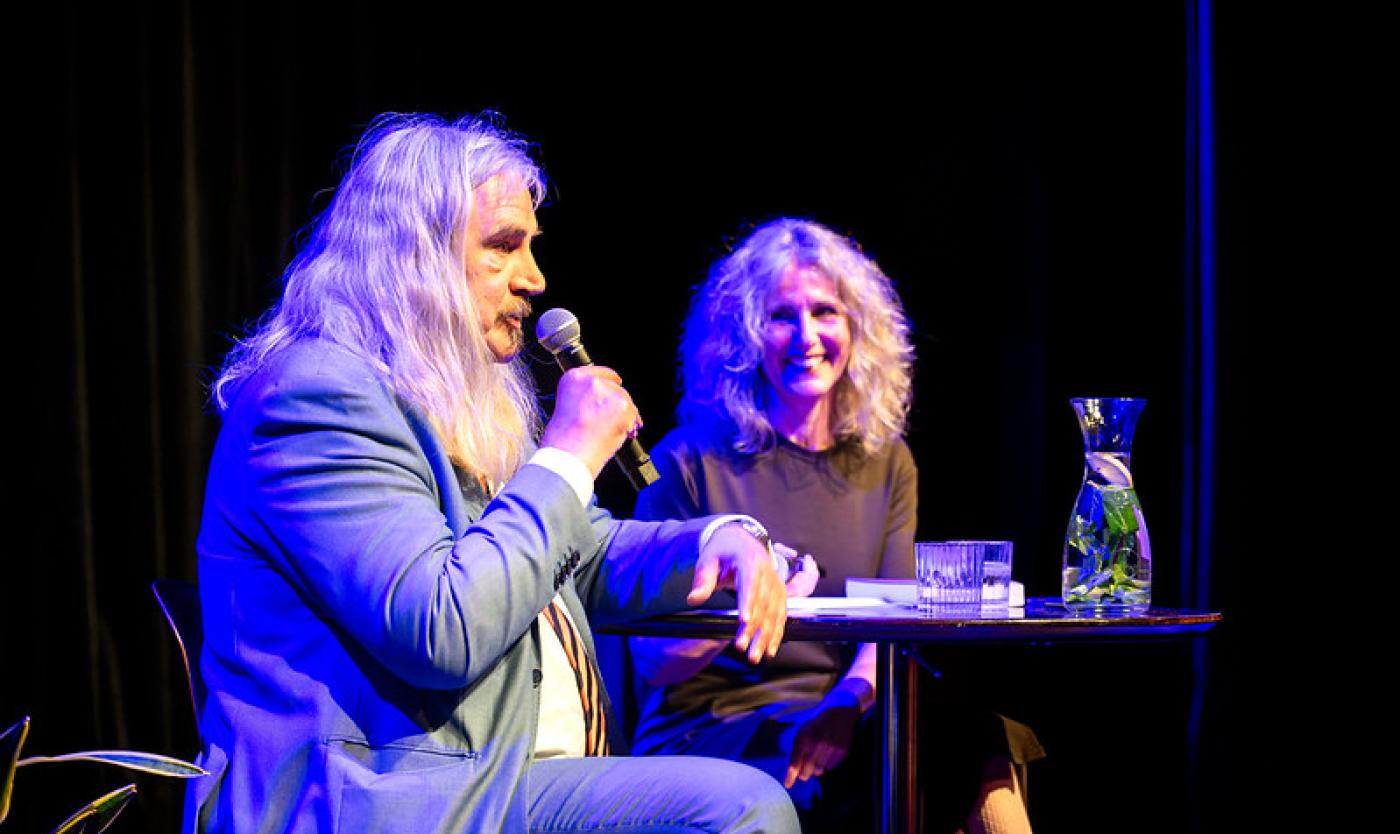
Pfeijffer replies: “It reminds me of a similar question that is sometimes put to writers. I once read an interview with the author Margaret Atwood. The interviewer asked her: ‘Do you think it is a writer’s task to take a stance in the social debate?’ Her answer stayed with me, and I am happy to quote it in full: ‘No, that is my task as a citizen. As a writer, my task is to make sure that you turn the page.’ I am inclined to give the same answer to your question about the role of academics. I do not believe that academics have a special duty to engage in public debate because they are academics—rather, because they are citizens.”
Cordon sanitaire
Celis says: “As right-wing discourse becomes normalised, space is also created for even more radical forms of the right. How can we prevent that? Here in Belgium we are familiar with the system of the cordon sanitaire, which is controversial.”
“My generation will no longer solve all these problems. So we must rely on the younger generation.”
Pfeijffer replies: “The phenomenon whereby views shift to the right is captured by the concept of the Overton window. This refers to the range of views that can be regarded as socially acceptable. That entire range has shifted dramatically to the right in recent years. What was unthinkable ten years ago has now become virtually mainstream on the right. Responsibility for this shift lies with the centre parties, which, out of a kind of timorousness, responded to the electoral appeal of the far right by trying to resemble it. I do not think the cordon sanitaire is intended as an instrument to halt the shift to the right. But it can help to keep the support for far-right parties limited. I do not consider it an elegant instrument, but it may be the only one.”
Hope as the final word
Celis says: “The final word of the final essay is the word hope. Hope is indeed very important; research has also shown that as long as people still have hope, it helps to keep them within the contours of democracy. Do you draw hope from the younger generation?”
Pfeijffer replies: “The fact that I am sitting here opposite all of you is genuinely hopeful. The fact that, in other places too, I have been able to exchange views primarily with students on this subject—on these problems, on everything that is currently happening in society. That is where the hope lies. And above all, hope in the younger generation. Because my generation will not solve all these problems anymore. It has had its chance and is completely spent. So we have to rely on the younger generation. The fact that the younger generation feels engaged gives me hope.”
“The pursuit of truth as practised at universities is crucial as a counterweight.”
No debate at a university would be complete without the voice of hope—in other words, the voice of the students. They were therefore given ample opportunity to express their concerns about the state of our democracy. Six of them put Ilja Pfeijffer through his paces.
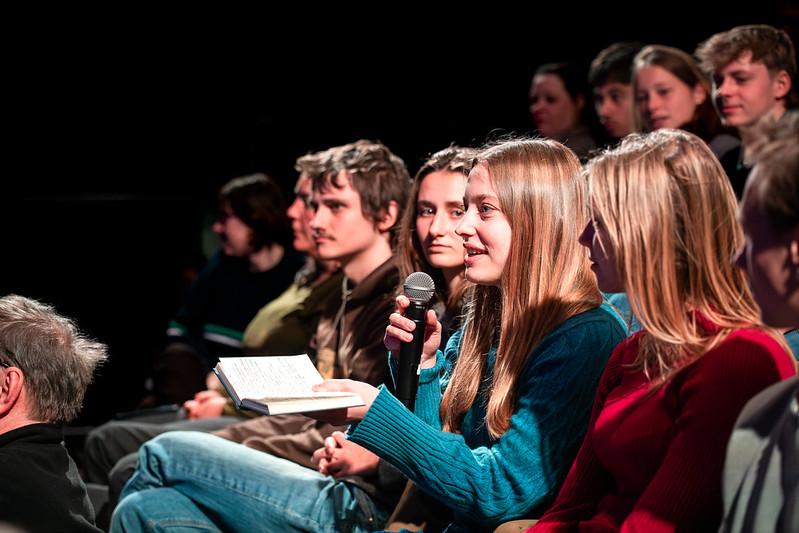
“Those on the right often invoke the right to freedom of speech when they begin to argue their case. How do you deal with that in a conversation with them?”
Pfeijffer replies: “They are entitled to claim that freedom, but it has to apply to everyone—and that is precisely what the far right does not want. It wants the freedom to deny other groups in society their freedom. And that is something we cannot accept. We can only accept their appeal to freedom of speech if the far right also respects freedom of expression for other groups. And it does not; it is a trick. Just as it is a trick of the far right to constantly cast itself in the role of the victim. They supposedly are the ones who are never heard, who have no access to the media, who are censored, who are drowned out by the dominant discourse of the left. That is all nonsense—it simply is not true. They are heard, and by now they have a far more dominant discourse than a traditional left‑wing party. But that victimhood is very dear to them, even when they are in power. I see it with Meloni as well. She is perpetually angry and indignant, because behind every corner lurks an enemy ready to stab her in the back. It is part of the rhetorical strategy of the far right to claim that victim role for themselves. So when they claim freedom on the grounds that they are victims of unfreedom, we must not fall for it.”
“You speak about the citizen’s task of participating in public debate. But what is the value of a public debate that is increasingly conducted on the basis of fake news, on facts fabricated by Trump on Twitter at two o’clock in the morning?”
Pfeijffer replies: “We must realise that there is nothing from which authoritarian forces and leaders across the world benefit more than our indifference. So we must not fall into the trap of thinking that it all no longer makes any sense and withdrawing from the debate. We have to keep our voice. But it is very complicated, precisely for the reason you point out, because we can often no longer even agree on the basic facts that ought to form the foundation of a discussion. That has a variety of causes.”
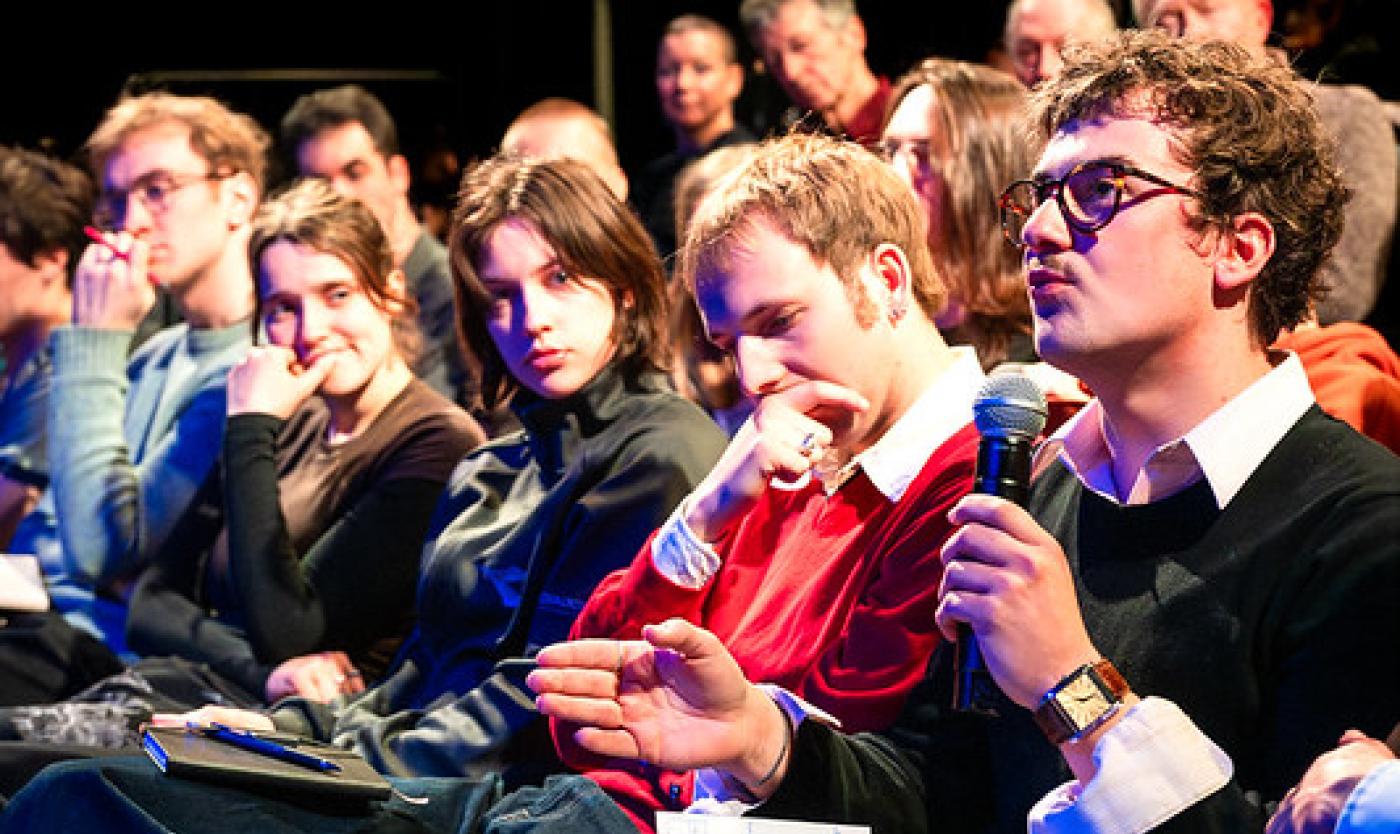
One of the main reasons lies in technological developments. Social media and widely used websites such as YouTube are, as you undoubtedly know, driven by algorithms. These operate on the principle that we are served more helpings of the dish we previously enjoyed. The Dutch comedian Arjen Lubach coined the term fabeltjesfuik for this phenomenon—a kind of funnel of tall tales. You are drawn ever deeper into your own prejudices, and at a certain point you receive nothing but confirmation of those prejudices. This leads to the fragmentation of public debate into different online bubbles, each with its own version of the truth. It is very important to realise that this is not a natural phenomenon. It has been conceived; it has been designed. These algorithms are created by people who make enormous amounts of money from them. And those are the very same people who were sitting in the front row at Trump’s inauguration. They have a vested interest in the fragmentation of our society. So if we want to fight to preserve debate based on facts, we are up against colossal counterforces that make this exceedingly difficult for us. And yet, we must not give up."
“As a university, we conduct research, we know the facts and we have the figures on many issues that are debated ideologically. Is it not therefore up to the university to assert itself more strongly in the public debate?”
Pfeijffer replies: “It is becoming increasingly important to proclaim, with the passion you are displaying now, just how necessary that is. You are absolutely right, and that is also why universities are the arch-enemies of dictators. Dictators have no interest whatsoever in your method, nor in truth-finding and facts. Those are the natural enemies of regimes that rely on lies. The pursuit of truth as practised at universities is crucial as a counterweight. But perhaps learning to think critically is even more important than studying at a university. Developing an academic, analytical way of thinking may offer an even stronger counterweight to autocratic forces. It is partly the responsibility of academics to make their research findings accessible to a broader public. But it is also the responsibility of the press and of policymakers to seek out that information.”
“We have talked mainly about the far right. But at the same time you also see that the far-left side dares to use some of the same cunning tactics and regularly flirts with authoritarian regimes. Are there certain tendencies you also recognise on the left?”
Pfeijffer replies: “If you start asking yourself how it is that far-right parties have such strong appeal among the electorate, you have to acknowledge that there is an enormous amount of anger and discontent in society. And that anger and discontent are not invented; they are real. Of course, they are not caused by asylum seekers. That is simply the scapegoat that is offered. The real reason for this anger and discontent is that, economically speaking alone, we live in a profoundly unfair society. Inequality is taking on proportions that are no longer sustainable. The problem is that in the 1990s, traditionally left-wing parties embraced the free market and capitalism. In that historical context, this may have been understandable: the Wall had just fallen. It seemed to be the final victory of capitalism over communism. In that context there was Tony Blair’s ‘Third Way’. In the Netherlands, Wim Kok spoke of the need to shed ideological feathers. From that moment on, traditional social democracy could no longer credibly embody a promise of change. They came to be seen by the electorate as representatives of the status quo, and therefore as part of the problem. Meanwhile, the far right does manage to articulate that promise of change in a way that appears credible. It is, of course, a false promise, based on nostalgia—on a return to a mythological era in which today’s problems supposedly did not exist. It is a promise of change that traditional left-wing parties cannot match and cannot deliver. But as soon as a left-wing politician or party emerges somewhere with the courage to question the system as such, it suddenly has far greater electoral potential. Look at Mamdani in New York, or Bernie Sanders, who almost became a presidential candidate with a programme that included, among other things, calls for the closure of Wall Street. To return to your question: I do not think the far right has a monopoly on populism. But I would explain the electoral success of those left-wing parties rather as the result of a demand for change that traditional left-wing parties are unable to articulate.”
“How do you think the left can regain persuasive power without itself lapsing into a populist discourse?”
Pfeijffer replies: “All the major problems we are currently facing can, without a single exception, be traced back to the free market and to capitalism. I forget which year it was exactly, but Oxfam once calculated that the eighty richest men in the world could all fit onto a double‑decker bus and together owned as much as the poorest half of the world’s population. What was most shocking was that a few years later Oxfam already had to revise that comparison. By then it was the forty richest men—and you would not even need a double‑decker anymore. I calculated that with the private fortune of Elon Musk, which is estimated at 500 billion dollars, you could eradicate all hunger in the world for twelve and a half years. The most perverse thing is that we have designed a system in which we cannot do anything about that. Inequality is beginning to take on proportions that are no longer acceptable and that constitute a threat to the freedom of millions of citizens. Another phenomenon, of course, is the climate crisis, which confronts us with the hard fact that the model of endless economic growth is no longer sustainable. But if we abandon that model, the foundations of capitalism collapse. We have reached a point in history where we must fundamentally ask ourselves whether capitalism still works. Left‑wing parties lack the courage to make that argument, because it would require us to think about alternatives—and that is not easy. In any case, we must not shy away from that fundamental question.”
“In Hungary, Magyar has been elected. We also see Meloni’s support for Trump and for Israel shifting. Is there still hope, then, that absolute democracy can remain constitutional?”
Pfeijffer replies: “I am very glad that you have been granted the privilege of asking the final question, because it is a question that implies a great deal of hope. Orbán’s electoral defeat is an extremely hopeful signal—I phrase it deliberately that way, because I do not yet know whether Magyar’s electoral victory in itself is necessarily such a hopeful sign. In the coming days we will see how he intends to deliver on the promise of restoring the democratic rule of law, because that is by no means easy. In Poland, the struggle is still ongoing. There you have the strange paradox that Tusk’s government is trying to restore the rule of law, but cannot really do so without violating the laws enacted by its predecessors. In Chile, it proved possible to restore a democratic constitutional state after Pinochet’s dictatorship, but that process took twenty years.”
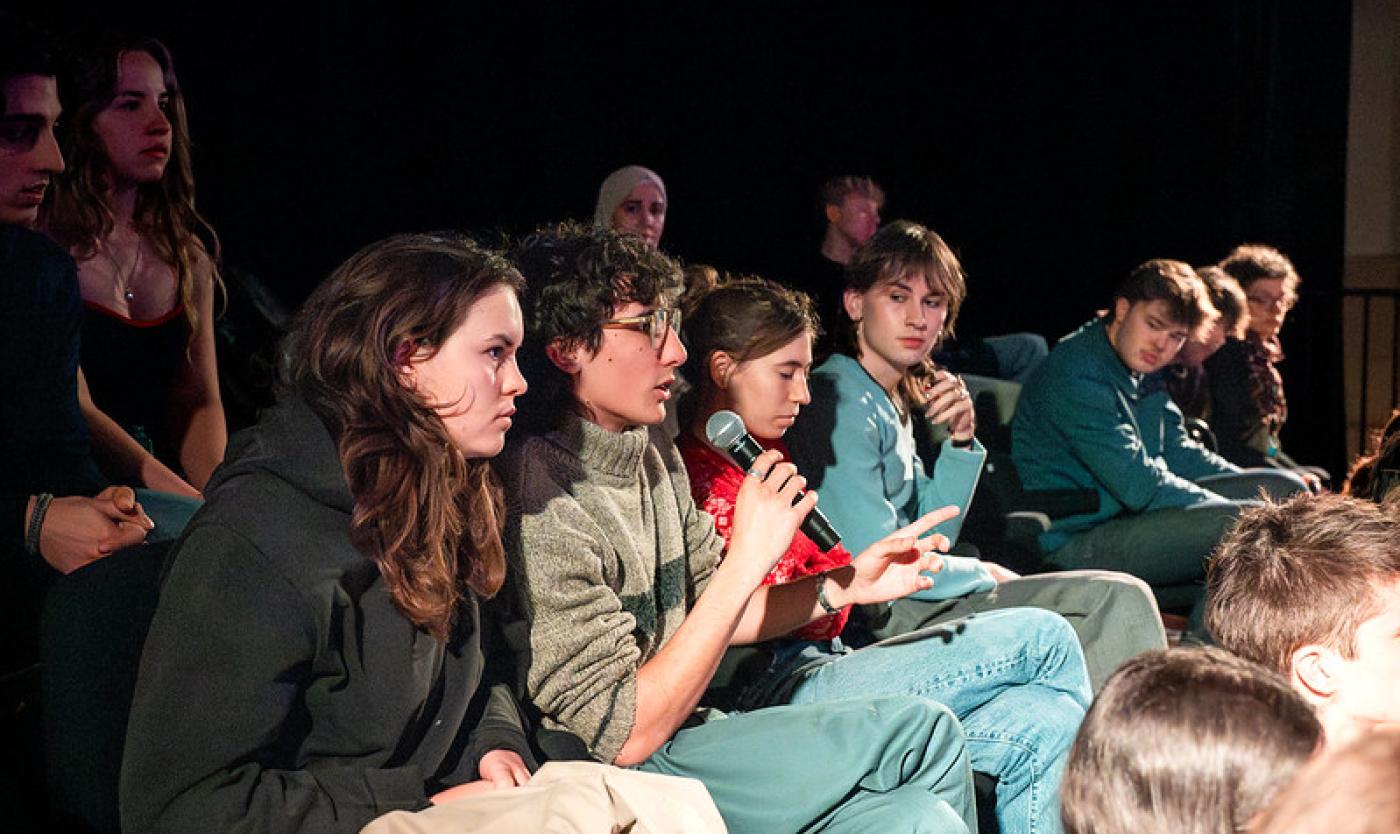
Trump’s re‑election may, in a certain sense, turn out to be a blessing in disguise. It is so starkly evident that what is currently unfolding in the United States has become a kind of wake‑up call for many people, particularly in Europe. That is true both in terms of the destructive potential of an absolutist interpretation of democracy and from a geopolitical perspective. And you can see that the far right in Europe, which until recently was only too happy to flirt with Trump, is now scrambling to distance itself from him. Even figures such as Bardella in France, who once argued for France’s withdrawal from the European Union, are now calling for rapid European integration and a European army. Meloni is distancing herself from Trump in order to protect the Pope, and now also from Netanyahu. This is not because these far‑right politicians have suddenly become wise or prudent, but because they sense that public opinion is shifting."
What the students thought
After the debate, we asked several students for their reactions. There was clear satisfaction with what they had heard, but it also became evident that the path towards sustained engagement with political discourse remains a long one.
Victoria did not know Pfeijffer beforehand, but after seeing the announcement of the debate on Instagram, she did some research on him. “I didn’t really know what to expect from the debate, but I found it extremely interesting to hear how the far right has hijacked the public debate. At the same time, I appreciated that left-wing populism was also addressed.”
Robbe knows Ilja Pfeijffer as a writer and had recently attended the debate between him and Verhofstadt at Bozar. “But that discussion was rather sedate. Here, the audience was far more critical. Karen Celis also asked very strong questions, to which he, incidentally, had ready-made answers. When I asked how the left can achieve electoral success without being populist, he didn’t really provide a clear answer. To be honest, I’m not sure myself whether that is even possible.”
Elin knows Pfeijffer from his novels and from his essay written in response to Kierkegaard. “I also knew that he was a good speaker, and he certainly proved that today. But I was especially surprised by his knowledge of politics and by how clearly he articulated his positions. I largely agree with him, and I also think it is important that we reflect on why the far right resonates so strongly and why this keeps happening again and again. It’s not the first time, after all. Fortunately, there is a great deal of room for debate at the VUB. You just have to take part—that’s our responsibility as students.”
Loïc had previously come across a number of his ‘witty’ remarks on political issues. “So when I heard that he was coming to speak here, I signed up straight away. Did I gain new insights? Above all, he clearly confirmed what I already thought. What he said about not giving in to indifference is very important.” “And that may well be the hardest thing for our generation,” Elin adds. “We are overwhelmed by information about so many complex issues. That makes it difficult to see the wood for the trees, and as a result also difficult to stay engaged and not become indifferent. And that happens to many people.”

After the debate, Ilja Pfeijffer stays on to sign copies of his books.
The world needs you
This initiative is part of VUB's public programme, a programme for everyone who believes that scientific knowledge, critical thinking and dialogue are an important first step to create impact in the world.
As an Urban Engaged University, VUB aims to be a driver of change in the world. With our academic edcuational programmes and innovative research, we contribute to the Sustainable Development Goals of the United Nations and to making a difference locally and globally.