

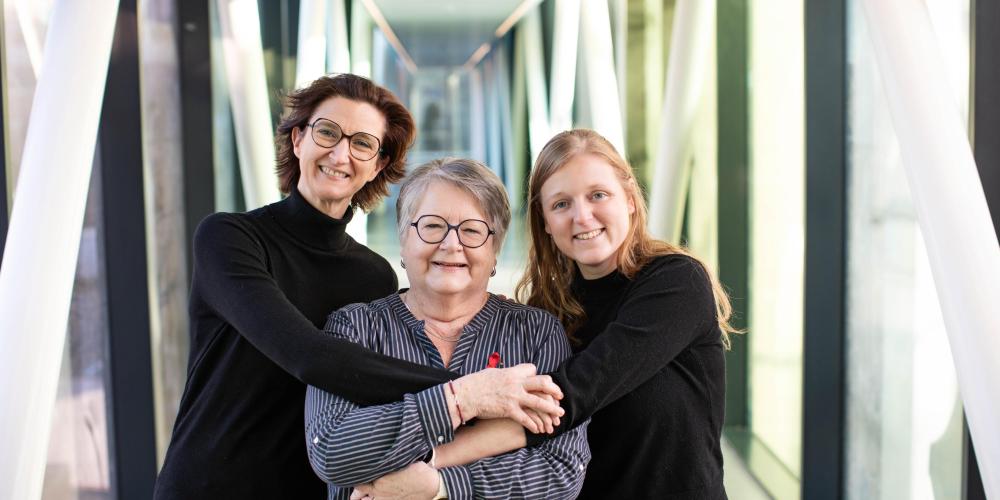


UZ Brussel wants to portray the lives of people living with HIV through an app and a travelling exhibition. The project, Positive Stories, is supported by De Warmste Week, which this year focuses on people with an invisible illness. “We urgently need to break the taboo,” says Prof. Dr Sabine Allard. “The stigma attached to HIV makes people feel lonely and afraid to get tested. We will never get the pandemic under control this way, even though medically it is perfectly possible.”
In 2024, 662 people in Belgium were diagnosed with HIV. After years of decline, the numbers have been rising again since 2020. What stood out: among heterosexual men, the number of new diagnoses increased by 33 per cent. Among gay men, the rise was ‘only’ 15 per cent. The new figures, published by Sciensano on 20 November, caused concern among many HIV experts. Our opening question to Sabine Allard, head of Internal Medicine and Infectious Diseases at UZ Brussel, was therefore obvious.
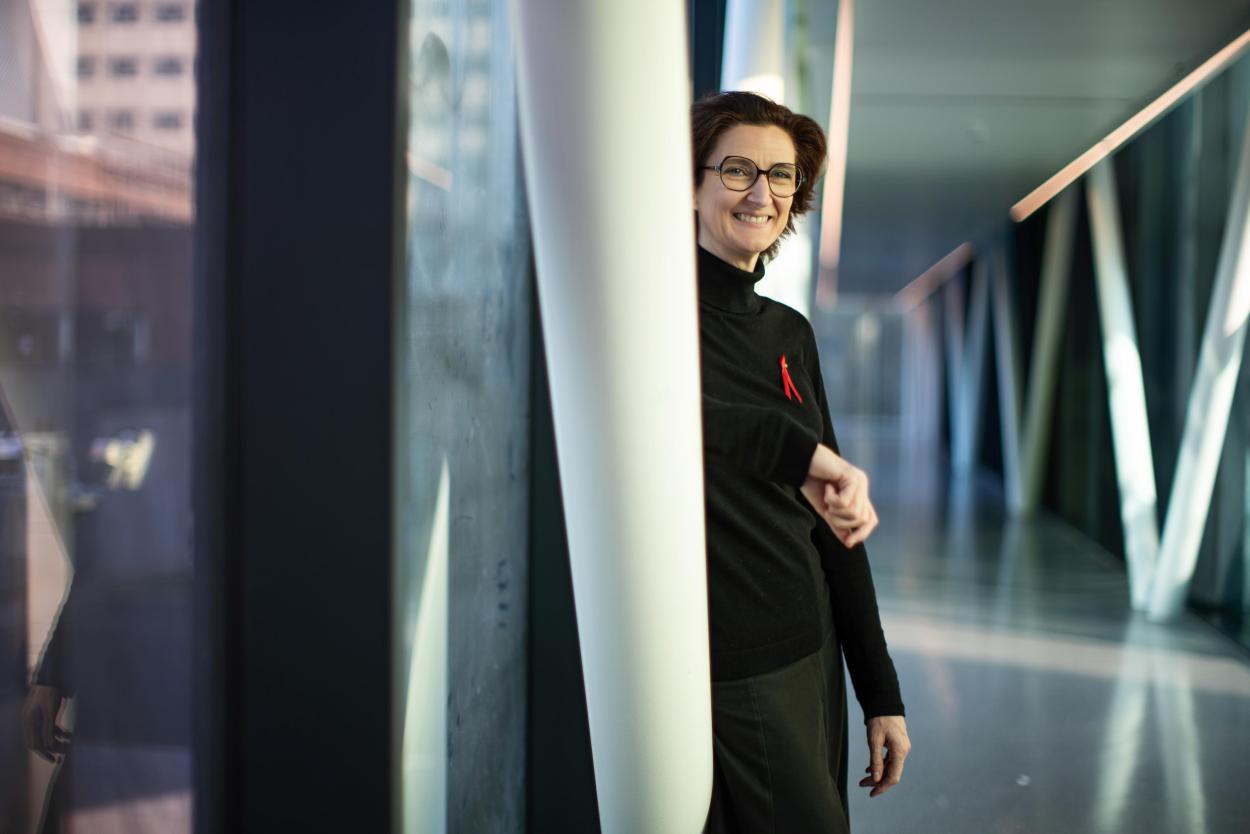
Sabine Allard, head of Internal Medicine and Infectious Diseases at UZ Brussel
How is this possible, after decades of prevention campaigns?
Sabine Allard: “HIV is no longer a death sentence but a chronic condition that we can manage well with medication. Perhaps some people have therefore become less cautious. Or perhaps they think the disease only occurs within the gay community. That is not true. In 2024, half of the diagnoses were made among heterosexual men and women. HIV can happen to anyone. Every face you pass at work or on the high street could belong to someone living with HIV.”
To illustrate her point, Sabine invited one of her patients to this interview. Nadine is a sprightly 70-year-old from Brussels. She speaks openly and candidly about living with HIV.
When were you diagnosed?
Nadine: “In 2011. I was 56 and due to undergo back surgery. The day after the operation, Dr Allard came into my room. They had tested my blood and I turned out to be HIV-positive. I was completely taken aback. I thought: shit, what now? I called my best friend in tears. She was with me a few days later when Dr Allard explained everything. She told me that with medication we could keep the virus under control and that I would be able to live a normal life.”
Was that a relief?
Nadine: “Yes, it was. My friend said: you’re not going to die. Take your medication, look after yourself and you’ll be fine. She continued to support me in the years that followed.”
Sabine: “It helps enormously when you can share it with someone. Otherwise such a secret can make you very lonely. That’s why I advised Nadine to meet with peers when, two years after her diagnosis, she suddenly found things difficult.”
Nadine: “I had kept it from my mother because she had dementia. When she died, it suddenly hit me really hard: I have HIV!”
How did that contact with other HIV patients go?
Nadine: “The first time was on a Sunday afternoon, with coffee and pancakes. I paced up and down for fifteen minutes before I could gather the courage to walk in. Someone welcomed me straight away. When I sat down and looked around, I realised: all these people have HIV, but you can’t see it on their faces. And you can’t see it on mine either. That was an important moment. Later on, I also supported and reassured other people living with HIV myself.”
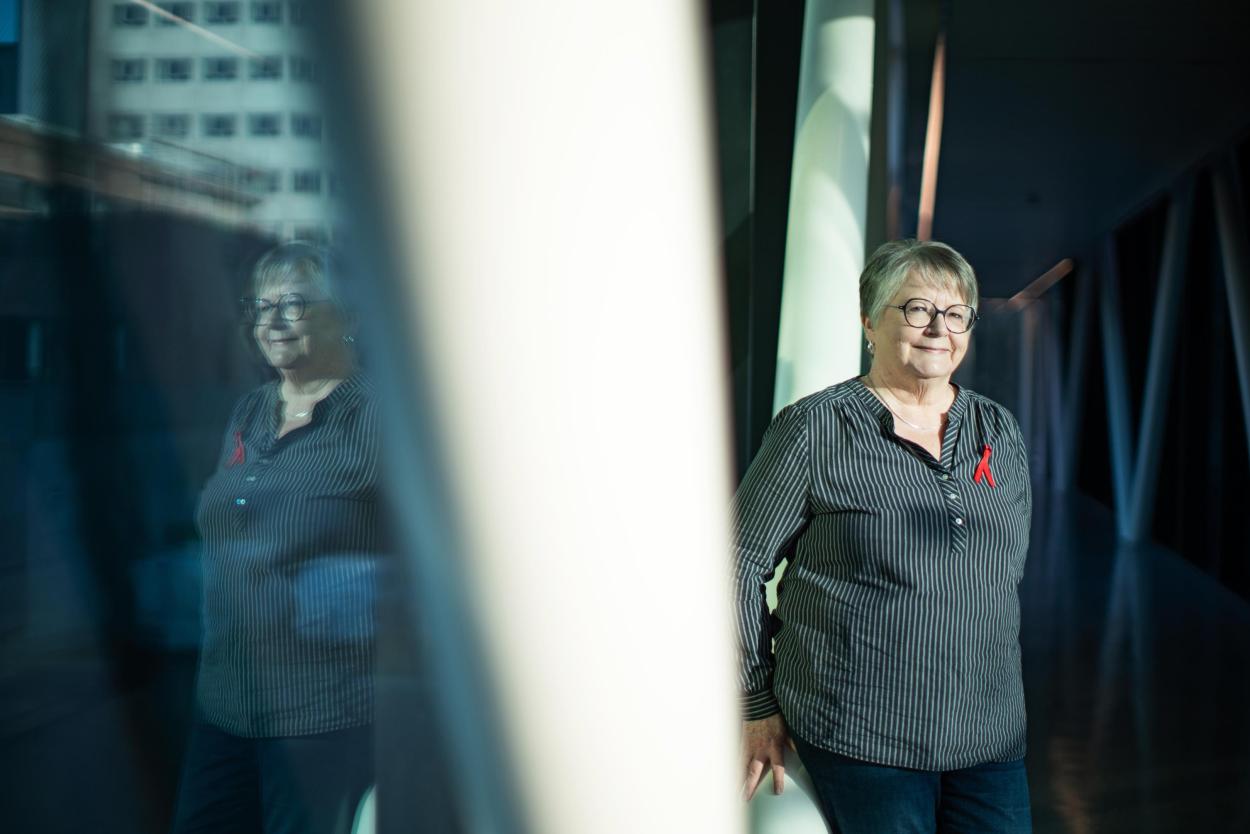
Nadine was diagnosed with HIV almost 15 years ago
“I had to find a different dentist”
Who have you told?
Nadine: “My daughter found out after two years, when she accidentally opened a letter from a patient organisation. She was angry at first because I had kept quiet. She wanted to tell her best friends and even came with me to see Dr Allard once. She asked whether I was going to die. No? Well then… I’ve told some friends but not others. I don’t always feel the need to. At work, I told them when I retired. My managers were surprised, but why should I have said anything? It didn’t affect my work.”
Were you ever surprised by people’s reactions?
Nadine: “I had to find another dentist. My previous one refused to treat me anymore, supposedly because he couldn’t sterilise his equipment properly.”
Sabine: “The stigma exists in the healthcare sector as well.”
Nadine: “I find it awful that even people with medical training can be so badly informed.”
Does your medication have side effects?
Nadine: “I had a bit of trouble with my liver when I switched to a new medicine, but that was quickly sorted. I take one pill after breakfast, and that’s it. Just like other people take a pill for their blood pressure or cholesterol.”
Sabine: “Medications are more effective now and cause fewer side effects. That one pill contains two active molecules, dolutegravir and lamivudine. They inhibit the virus in two different ways.”
“The amount of HIV in the body becomes so low that you are no longer infectious”
The medication works so well that the virus even becomes undetectable.
Sabine: “Yes, provided you take the medicine consistently. And when HIV is no longer detectable, it is also no longer transmissible. My patients are sometimes in tears when I tell them they can no longer infect anyone.”
Nadine: “That took an enormous weight off my shoulders. It gave me the courage to start a new relationship. My partner came with me to the consultation, and Dr Allard reassured him that he couldn’t be infected. We’ve since split up, but for other reasons. Thanks to medication, people with HIV can live ‘normally’. A young woman I met in the peer group had been infected by her ex. She now has a new partner and two children with him.”
Is this achievable for all HIV patients?
Sabine: “Anywhere the medication is available. If at least 95 per cent of HIV patients take their medication and if the virus becomes undetectable in at least 95 per cent of that group, the pandemic would come to a halt. That is the global goal.”
Has HIV changed your life?
Nadine: “There’s a before and an after. The deep connections with peers were heartwarming and incredibly enriching. I appreciate life more than I used to. I have a four-year-old grandchild, so I’d like to stick around for a while longer.” (laughs)
“In our wildest dreams we’ll be at Pukkelpop and Tomorrowland next year”
What would you like to say to people who don’t have HIV?
Nadine: “That we’re not monsters, and we’re not dangerous either — we’re ordinary people who lead ordinary lives. And that it can happen to anyone. We were looking for love, like everyone else. I didn’t know my partner had HIV. We used condoms, except that one time.”
Sabine: “Who doesn’t sometimes drive without a seatbelt? But because HIV is sexually transmitted, the taboo persists. That taboo needs to go. Many patients fear other people’s reactions and choose to remain silent. That’s a pity. Sharing your experience lifts a burden from your shoulders and helps you accept the illness. It also helps spread knowledge about HIV. Right now, awareness is poor. It’s as if the disease no longer exists. Some people don’t think about it at all; others still have those images from the 1990s in their minds of people developing AIDS and dying.”
A picture that is completely outdated today.
Sabine: “Hence our project proposal for De Warmste Week. We want to give people insight into the daily reality of those living with HIV, through an app and a travelling exhibition. In our wildest dreams, we’ll be at Pukkelpop and Tomorrowland next year.”
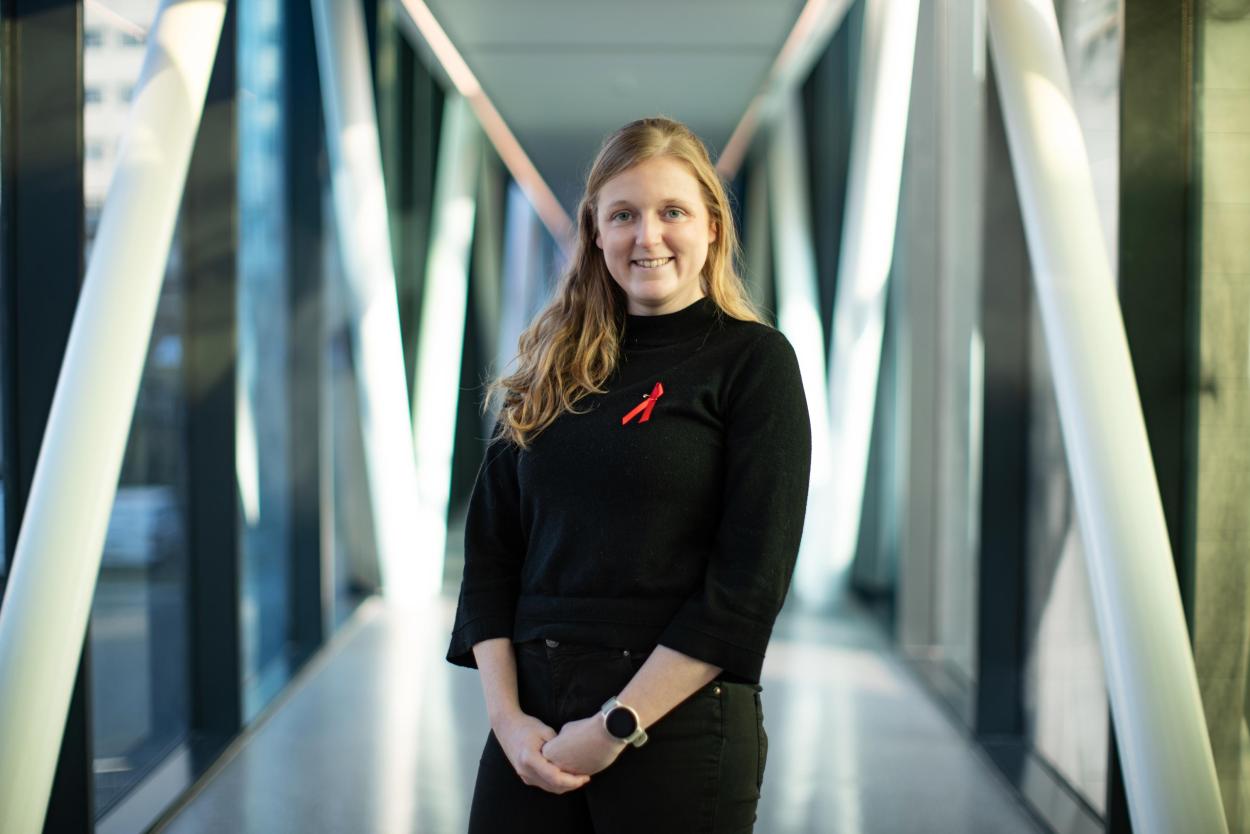
Researcher Thessa Laeremans
HIV: from death sentence to cure
In 1981, AIDS was recognised as a new disease that was almost always fatal. The discovery of the HIV virus in 1983 made targeted research and the development of treatments possible. The major breakthrough came in 1996 with the introduction of antiretroviral therapy combining three active drugs, which for the first time was able to keep the virus under control. After 2000, new classes of medicines were developed — more powerful and with fewer side effects. Since 2010, most patients have been able to manage with just one pill a day, containing two or three active substances. This therapy makes the virus undetectable and untransmittable. In this way, HIV evolved from a death sentence into a chronic, well-controlled condition.
And there is more in the pipeline, says VUB researcher Thessa Laeremans. “Existing treatments will continue to improve, so that eventually one pill a week or one injection every six months could be enough. But the major breakthrough would be a cure. At the VUB, we are working on two strategies: a therapeutic vaccine that activates T-cells, and an approach based on natural killer cells.”
The first avenue aims to strengthen the T-cell response in the immune system of people living with HIV to such an extent that their own immune defences (so without lifelong medication) can detect and eliminate HIV-infected cells. Not easy, says Thessa. “The HIV virus is present in cells throughout the body, without those cells looking any different. That makes them hard for T-cells to recognise. There’s no ‘flag’ saying: this cell contains HIV.”
In her doctoral research, Thessa studied a second strategy, involving another type of immune cell: natural killer, or NK, cells. “Unlike T-cells, they don’t need a specific ‘flag’ to recognise and attack HIV-infected cells. That makes them very promising. NK cells do have two drawbacks: relatively few of them circulate in the blood, and they reach HIV-infected cells less efficiently. So we are looking for a method that increases both the number of NK cells and their ability to locate infected cells.”
Bio Prof Dr Sabine Allard
Prof Dr Sabine Allard is head of Internal Medicine and Infectious Diseases at UZ Brussel. She studied medicine at the VUB, obtained her PhD in 2012 on HIV immunotherapy, and specialised in general internal diseases, HIV, sexually transmitted infections (STIs) and complex infections. She leads the HIV Reference Centre and the S-Clinic for STIs.
Bio Thessa Laeremans
Thessa Laeremans obtained a Master’s degree in Biomedical Sciences at KU Leuven (2017). She completed her PhD in 2023 and now works as a postdoctoral researcher at the VUB. Her research focuses on HIV immunotherapy, specifically the role of natural killer cells in controlling the viral reservoir and strategies for functional cure.