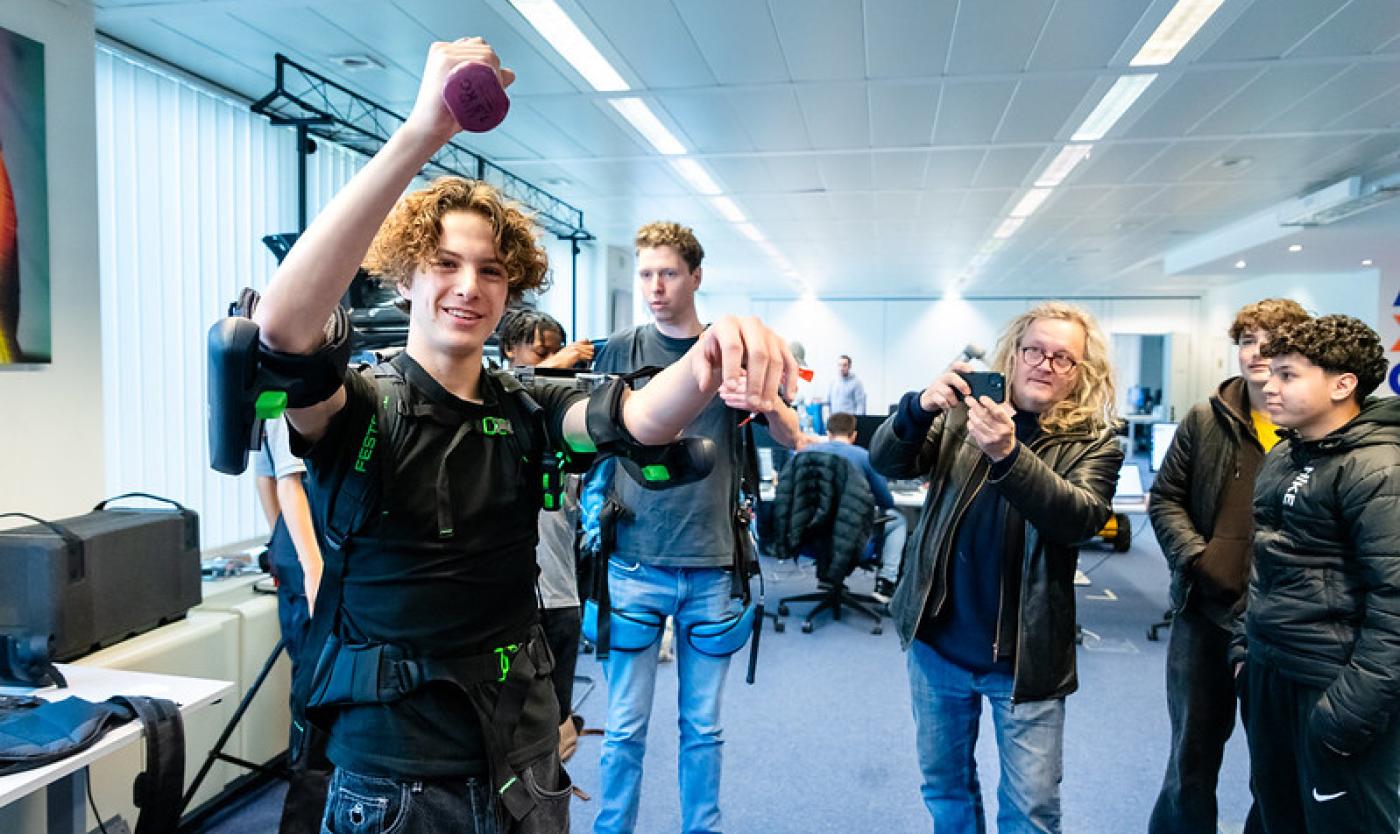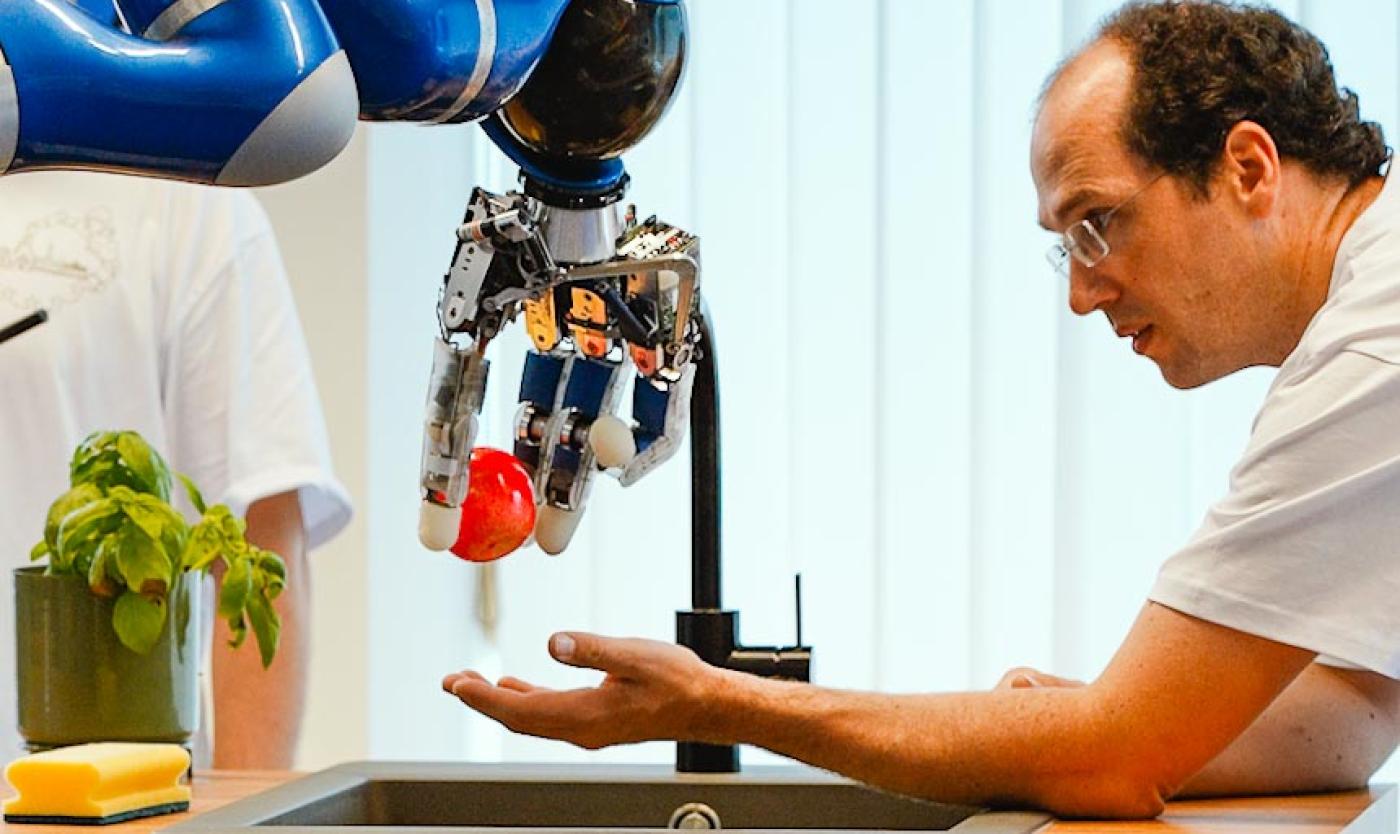


The Einstein Telescope is a project that sets the hearts of many scientists racing. This is certainly true at the VUB, where several experts are closely involved in its construction. Untill Sunday you can visit a beautifully designed, interactive exhibition on the VUB campus that offers a clear insight into the purpose of the Einstein Telescope and the challenges that still lie ahead in bringing this technological feat to fruition.
“Weeeeeeee!”, it goes as a few final-year pupils from the BimSem school in Mechelen send some small balls across a broad, round canvas, the centre of which is indented by a single large, heavy ball. The small balls move in an elliptical orbit around the large ball, illustrating how the planets in our solar system orbit the Sun. The difference is that the small balls quickly end up in the depression caused by the large ball. A member of staff from the VUB’s Science Communication department patiently explains why that is – fortunately – not the fate of planets like Earth. Check! Another question answered on the sheet the students were given at the entrance and which they will have to hand in once completed.
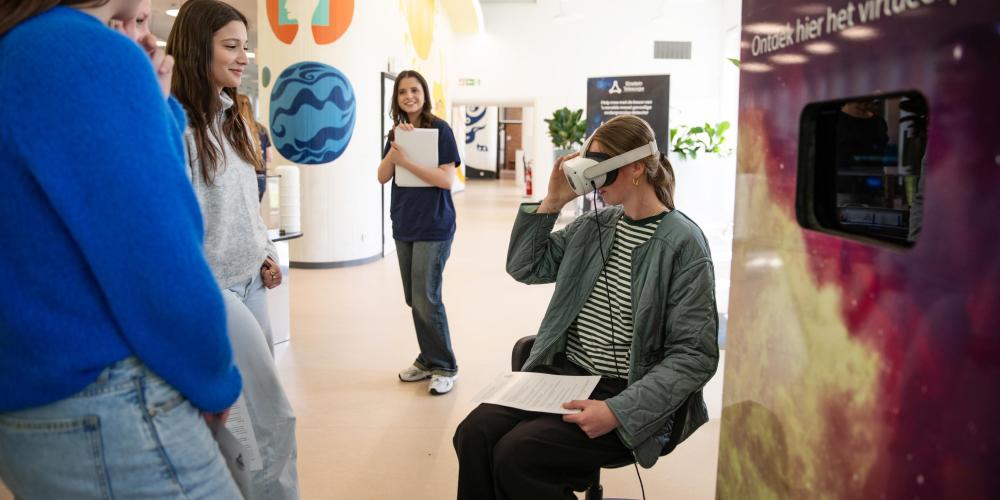
Together with a few pupils from Campus Kompas in Schaarbeek, the students from Mechelen are visiting the interactive exhibition ‘The Einstein Telescope and the Secrets of the Universe’ in the Braem Building on the VUB campus in Etterbeek. Whilst some of their peers are making strange gestures with VR headsets on their heads – it later transpired that they were virtually exploring space and visiting the Einstein Telescope – others are listening intently to a first-year Physics student at the VUB explaining the technology used to suspend a mirror perfectly still. The other aspects of the Einstein Telescope are also explained one by one through interactive screens, scale models and experimental setups.
Cacophony and photonics
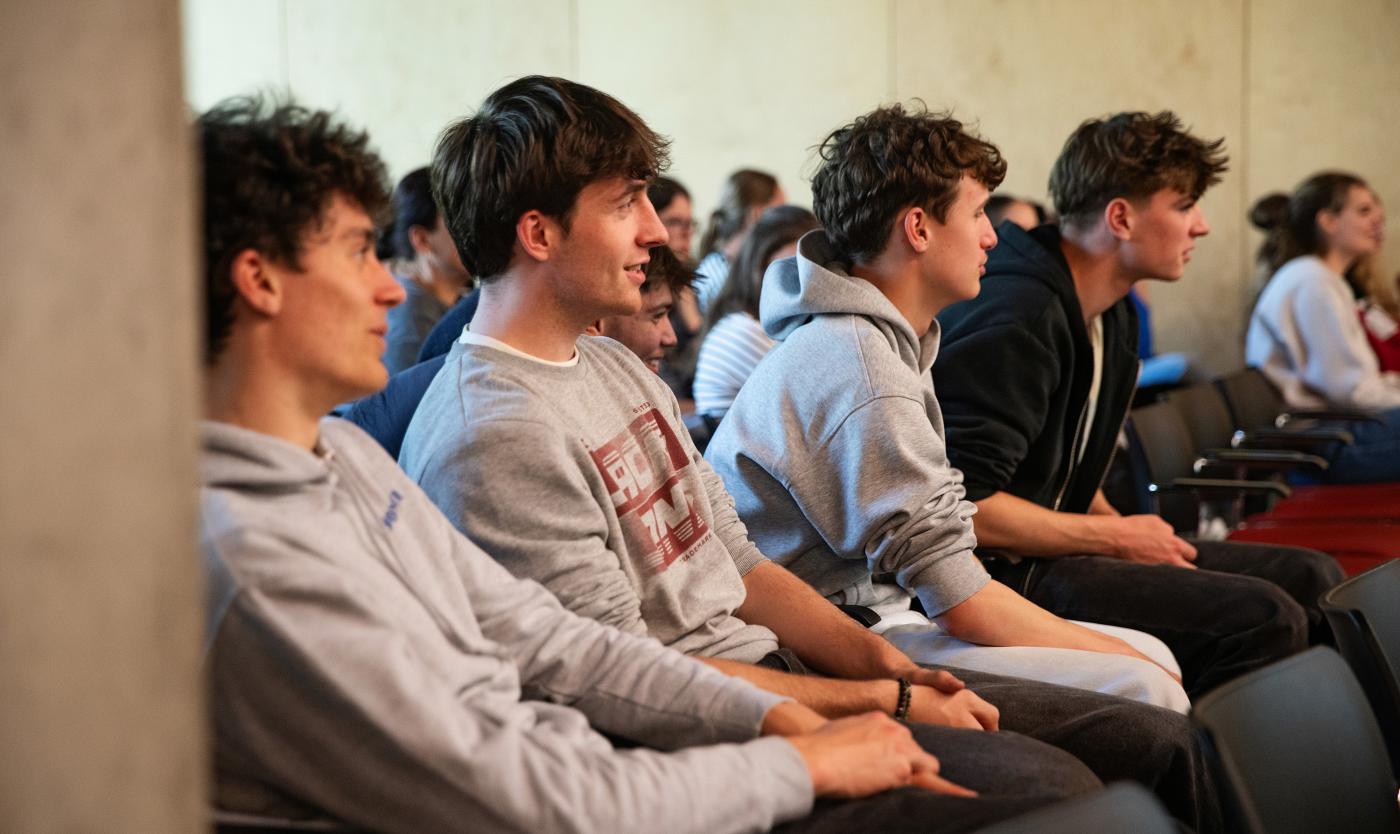
Before they are allowed to visit the exhibition, the pupils have already spent over an hour listening intently to Daniel and Annelien, staff members from ET Vlaanderen, who treated them to a crash course in cosmology, electromagnetism and photonics, amongst other things. Heavy going, but with a number of visual aids and interactive moments, they manage to hold the youngsters’ attention right to the end. None of them would have got up that morning thinking they would have to imitate the ‘sound’ of colliding black holes, spinning neutron stars or exploding supernovae that day. Initially a bit hesitant, and with a touch of embarrassment, they eventually do it. It results in a lovely cacophony.
“Anything to do with space generates more interest among our pupils than many other subjects. The Big Bang, the recent Artemis II mission: that really fascinates them”
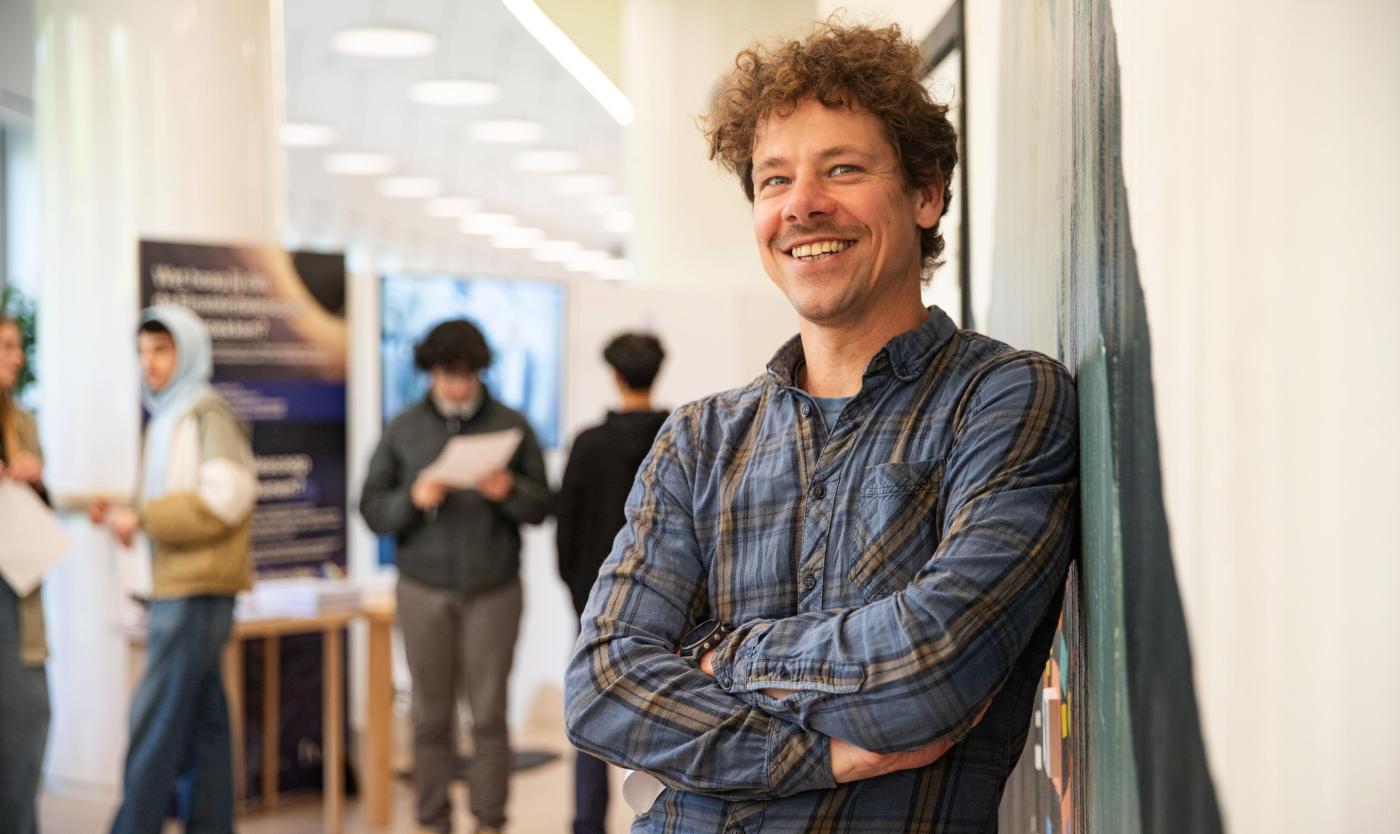
Joop, geography teacher at BimSem in Mechelen
“It’s certainly not a simple subject, but I thought they explained it well and clearly,” says Joop, a geography teacher at BimSem who has come along today with his pupils as a supervisor. “It also ties in very well with my colleague’s physics lessons. Anything to do with space tends to attract more interest than many other topics. The Big Bang, the recent Artemis II mission: that really fascinates them, and we try to make the most of that.”
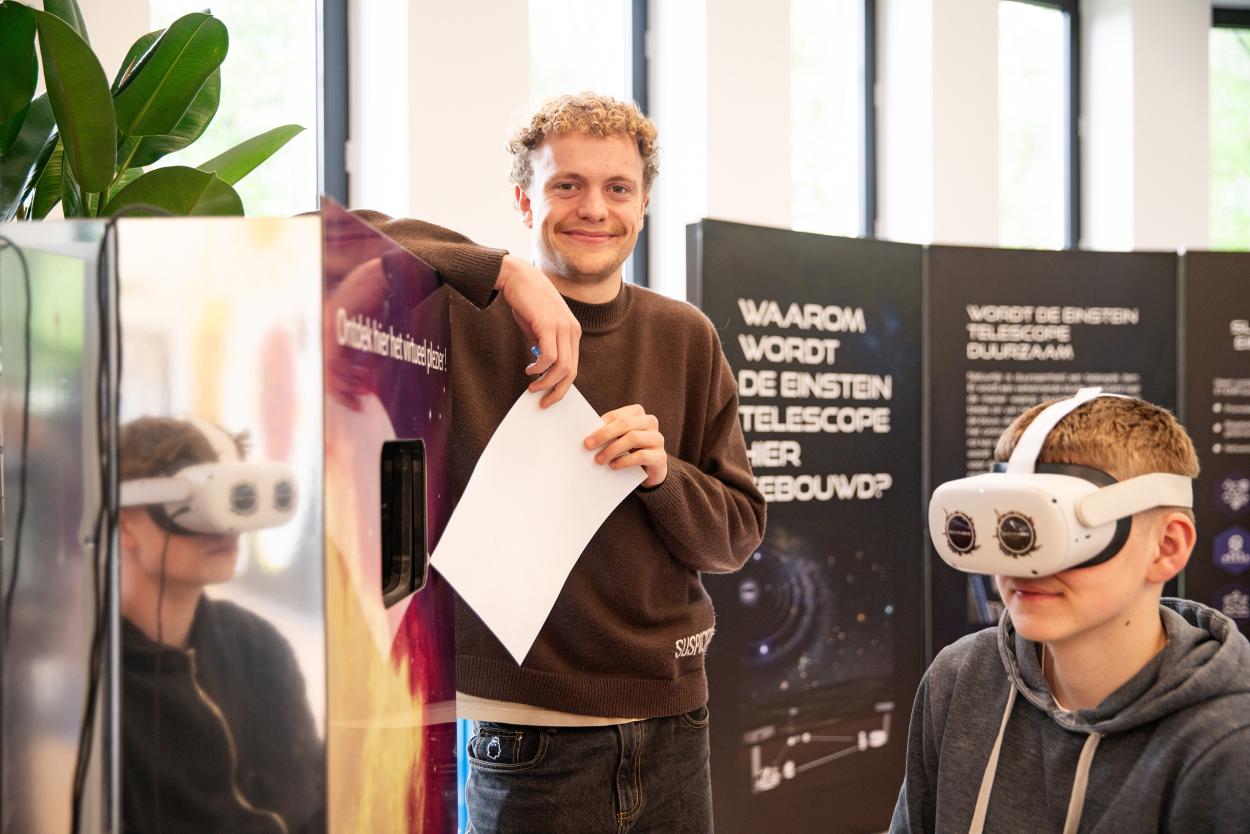
Gijs, student at BimSem
Contribute later
“I thought those VR headsets were the coolest,” says Lamarana from Campus Kompas about the exhibition. “But I also found the explanations behind them really fascinating. I’d never heard of it before, but I think the Einstein Telescope really captures the imagination. As scientists, we need to find out as much as possible about the world we live in, don’t we? I’m not quite sure what yet, but I’d definitely like to study a science-related subject after secondary school. Maybe I can get involved in this project later on.”
Gijs, a student at BimSem, agrees: “I’d read about it before, but thanks to Daniel and Annelien’s explanation, I now understand the aim much better. And the exhibition makes everything even clearer, especially because it’s so interactive. Only now do I realise how complex and challenging this project is. No, I don’t think I’ll be working on the Einstein Telescope myself. I’ve decided to study bioengineering next.” (laughs)
Female role models
After visiting the exhibition, the pupils return to the auditorium of the U-residence for a few more presentations. This time, the floor is given to VUB staff members who are directly involved in the project. Hannah Duval from the High Energy Physics lab explains the scientific ambitions of the Einstein Telescope once again, whilst Tatevik Chalyan from B-PHOT enthusiastically unveils the advanced optics and photonics that will be used for this purpose. Elise Van den Bossche talks about the ETpathfinder R&D lab in Maastricht, where she and dozens of other brilliant minds are pushing the boundaries of science to ensure the success of this project, and finally, Professor Marijke Huysmans explains why groundwater is one of the major challenges of the project.
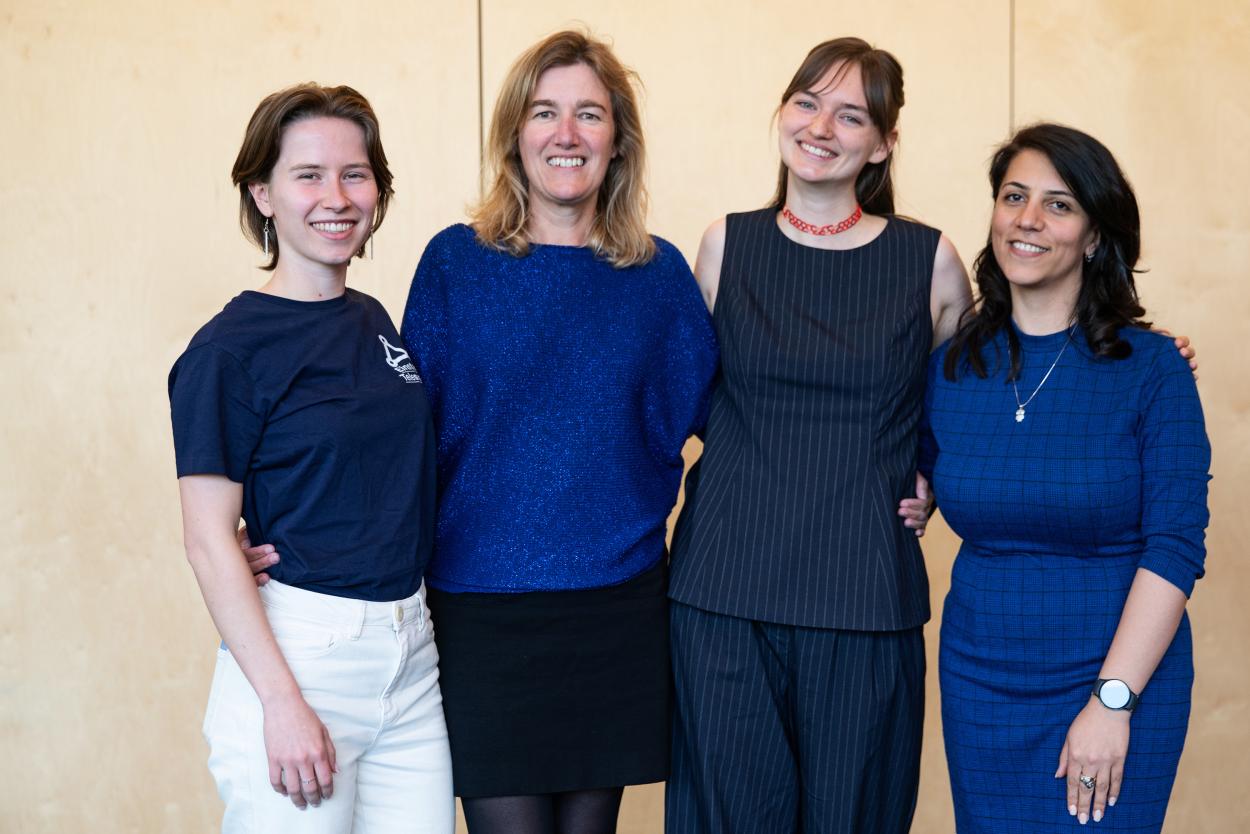
Elise Van den Bossche, Marijke Huysmans, Hannah Duval & Tatevik Chalyan
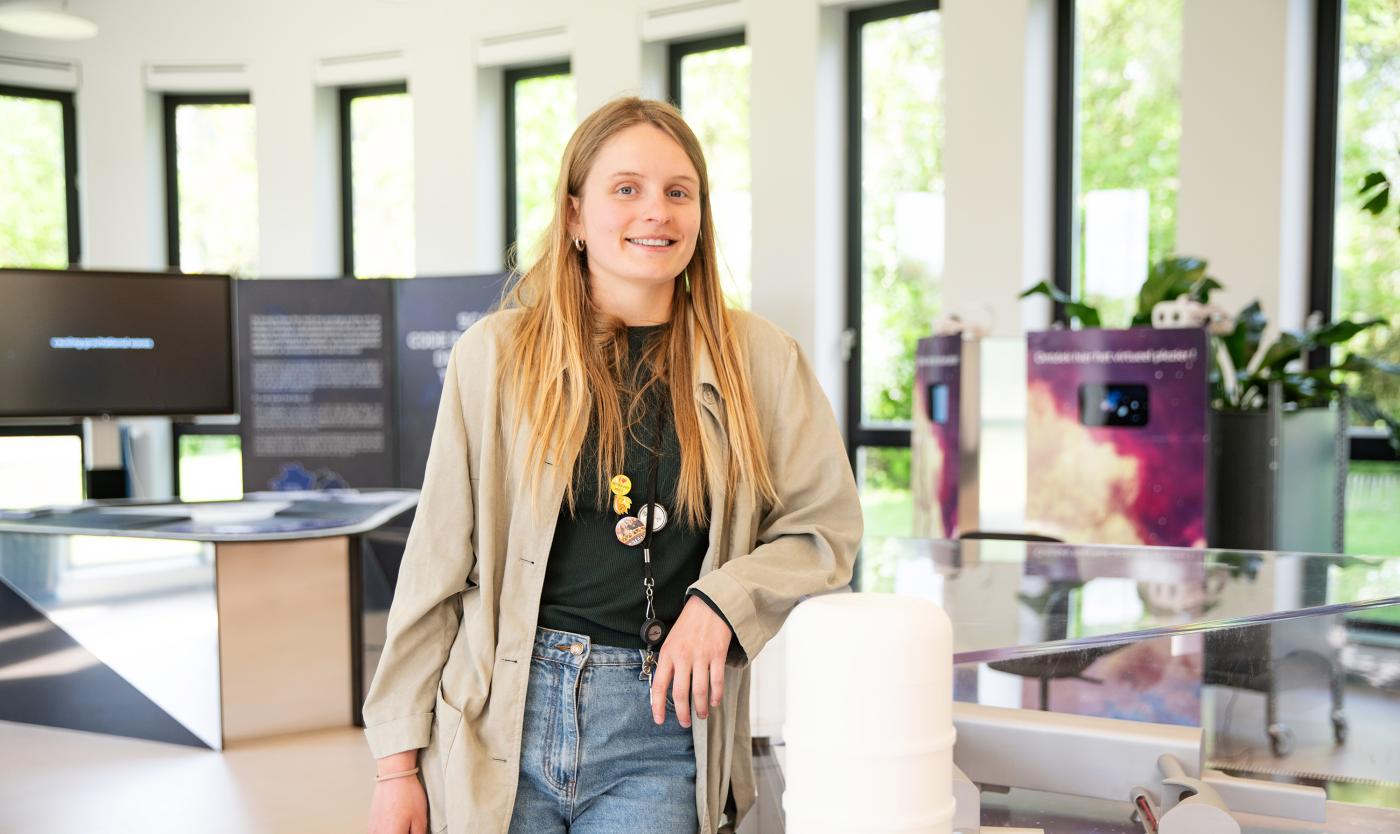
Elise, chemistry and geography teacher at Campus Kompas in Schaarbeek
“I found it very special that the closing presentations were all given by women. It is very important for our girls to see that it is possible to get this far in this world”
“Personally, I thought those final sessions were a lovely way to round off the visit,” says Elise, a chemistry and geography teacher and supervisor of the fifth-year students from Schaarbeek. “With trips like this, we want to give our pupils as much of a taste of the world as possible, to show them what jobs might lie ahead for them. I also found it very special that the closing presentations were all given by women. It’s very important for our girls to see that it’s possible to get this far in the world. You really shouldn’t underestimate the impact of encounters like this.”
Nordine, one of her pupils, says she thoroughly enjoyed the visit to the exhibition: “I’m already interested in everything to do with space. I often watch videos on those kinds of topics, and yet I’ve learnt a lot more today, including at the exhibition. For example, seeing those balls rolling over that dented sheet really helped me understand how time and space can be distorted. And I find the precision with which they aim to measure those deviations in the laser beams to detect the presence of gravitational waves simply astonishing. On another trip, we got to know what the Biology Department at the ULB had to offer, and that was also very interesting, but this fascinates me even more.”
You can already see the stars twinkling in his eyes. Who knows…
Visit the exhibition ‘The Einstein Telescope and the Secrets of the Universe’
What is the purpose of the Einstein Telescope? What are gravitational waves? How do you produce the perfect laser beam? You’ll find out all this and more at the interactive exhibition ‘The Einstein Telescope and the Secrets of the Universe’, which runs until Sunday 26 April in the Braem Building at the VUB. Admission is free, but to ensure everyone can visit the exhibition at their leisure, a ticketing system will be in place on Sunday. So book your ticket quickly to visit at a time that suits you best.