



Within the Sport and Society learning pathway, Professor Hebe Schaillée connects students of Physical Education and Movement Sciences with sports organisations, from Brussels to South Africa. At the Education Conference, she will highlight both the added value and the practical challenges of co-creative education. “I choose strategically where to use co-creation: the learning gains for students need to be significant, but it also has to remain organisationally feasible.”
Education professional at VUB? Register for the Education Conference on 26 May.
You will speak at the Education Conference about co-creative education — education built on equal collaboration between students, lecturers and professionals outside the university. Which project is particularly close to your heart?
Hebe Schaillée: “I immediately think of the group mobility programme to South Africa that we have organised for several years now for around ten students in Sport and Movement Sciences. There, we bring students, lecturers and professionals from the field together as equal partners. We collaborate with Sportstec, an organisation that supports physical education teachers.
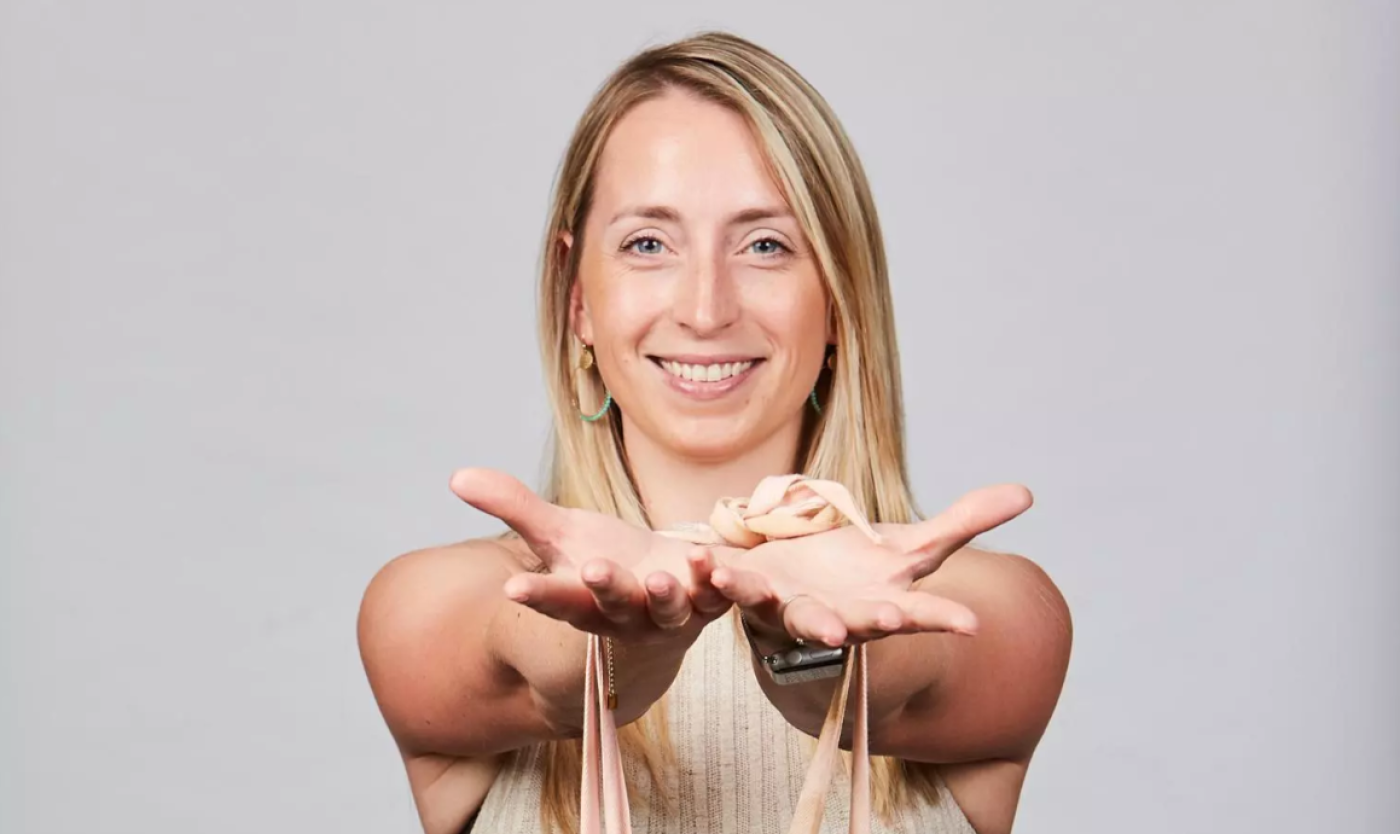
Hebe Schaillée
During the latest edition, our students contributed to the process evaluation of the Good Moves Active School Programme, which Sportstec has rolled out across 750 schools. Together with the Sportstec team, they reflected on which data needed to be collected to assess the programme’s effectiveness.
What makes this project truly co-creative is Sportstec’s intensive involvement. The aim is not for our students to observe from the sidelines and formulate recommendations as outsiders. We want to go through the entire process together and give the local partner ownership. Thanks to their daily presence in schools, they have built sustainable relationships and have access that we simply do not have. In that sense, Sportstec plays a crucial bridging role.”
“Co-creative education makes learning concrete and meaningful because students start from real experiences”
Does the international experience make this project even more valuable?
“Absolutely. A traditional exchange semester is not always feasible for many of our students, because they are involved in competitive sport or committed to a sports club as coaches or members. This project, which lasts three to four weeks, still offers them a meaningful international experience.
The South African context differs greatly from our own. Physical education there is part of the subject Life Orientation, which prepares young people for life in a broad sense. Sport is strongly used to develop soft skills. In addition, physical education is not a standard part of mainstream teacher training. Sportstec responds to this by offering practice-oriented training to teachers already working in the field.
By working in a context that clearly differs from their daily reality, students experience first-hand how cultural sensitivities and local circumstances influence professional practice. You can explain this in a lecture theatre, but it only truly becomes clear in practice.”
What is the incentive for your local partner?
“Sportstec receives funding from companies such as Nike and SPAR and needs to demonstrate the social impact of its work to those partners. That is precisely where the added value of collaborating with us as a university lies. Together, we developed and refined evaluation tools such as questionnaires and observation instruments. These help Sportstec not only to better understand its impact, but also to communicate it to funding partners in a well-founded and credible way.”
Is this project part of IMPACT, the collective learning community you lead within EUTOPIA?
“Unfortunately, our learning community was initially less successful than we had hoped because of staff turnover and changing roles among partners. However, it did lead to stronger collaborations with several global partners within the EUTOPIA network, such as Stellenbosch University and Monash University. For example, Professor Ruth Jeanes has been appointed for three years as an unpaid visiting professor and co-course coordinator of the module International Perspectives in Sport Management, in which the group mobility programme plays a central role.”
“Co-creative education only makes sense when the learning gains are substantial and it remains organisationally feasible”
How are you working with co-creative education in Belgium?
“I conduct research into the social impact of sport. In my teaching, I want students not only to gain theoretical insights, but also to engage with the concrete challenges faced by organisations that aim to create social impact through sport. That is why, within the Sport and Society learning pathway, I collaborate with several organisations in Brussels and Flanders.
To be honest, I would like to embed co-creative education even more strongly within the regular curriculum. But as a lecturer, I also encounter a number of practical challenges. My current teaching load is already high, and co-creation with organisations requires a great deal of extra time: administration, preparation, coordination and supervision.
Especially when working with large groups of students, co-creative education can become demanding. For the group mobility programme, there is also an application procedure through Global Minds (a programme that stimulates collaboration between Flemish universities/universities of applied sciences and the Global South, ed.). Only through additional efforts — including those of colleagues such as Professor Inge Derom and, in earlier editions, Professor Marc Theeboom — is it possible to realise these kinds of meaningful international and co-creative learning experiences.
That is why I try to choose strategically where I apply co-creation: the learning gains for students need to be significant, but it also has to remain organisationally manageable.”
Which arguments will you use at the Education Conference to convince other lecturers to embrace it anyway?
“For me, the added value of co-creative education is threefold: professional and societal, insight- and context-oriented, and didactic.
First of all, it gives students the opportunity to build a professional network early in their studies. In this way, we create learning environments in which students learn to participate in professional dialogue.
Secondly, this approach helps students better understand what organisations do and how theoretical concepts function within real-life contexts. By placing students firmly in practice, they develop an understanding of contextual sensitivity and learn how to translate abstract knowledge into specific situations.
Finally, co-creative education offers a clear didactic advantage because students learn to connect experience with theory. Since students start from lived experiences, reflections and classroom discussions gain far greater depth. This leads to richer learning processes and more meaningful interactions within education.”
“We create learning environments in which students learn to participate in professional dialogue”
Are sports organisations in Flanders and Brussels eager to become more involved?
“Some certainly are. At the same time, we need to ensure that we do not overburden them — students also approach them for internships and other assignments. Moreover, these organisations receive students from other educational institutions and programmes as well.
But as long as the collaboration remains feasible and well-structured, several sports organisations in Flanders and Brussels are keen to be involved. Students can, for instance, play a valuable role in refining policy plans, evaluating activities or supporting the organisation of sporting events.”
How did you personally discover co-creative education?
“My research focuses on sport as a context for experiential learning, particularly for the development of personal and social competences among diverse target groups. This experiential learning approach is also an important foundation within my teaching and within the Sport and Society learning pathway.
One example is the integrated work placement Sport as a Means, in which we connect first-year students during their first semester with organisations in Brussels and Flanders that use sport as a social and pedagogical tool for specific vulnerable groups. This broadens their understanding of what sport can mean in society.
Co-creative education fits seamlessly within this approach because it allows students to deepen that broader perspective in collaboration with actors from the professional field. By learning, experimenting and reflecting together within authentic practices, learning becomes concrete and meaningful. These lived experiences leave a much stronger impression — and stay with students much longer — than if I were simply to talk about them in class.”
Bio
Professor Hebe Schaillée, active in Sport and Movement Sciences, specialises in the social role of sport. Her research focuses on how sport contributes to the social inclusion of vulnerable young people and to the promotion of gender equality within sporting environments.
VUB Education Conference 2026
On 26 May, VUB hosts its annual Education Conference, where education professionals share new insights on innovation in education. In a plenary session, Vice-Rector for Education Nadine Engels will outline the challenges facing future-proof education and how policy, support and innovation can respond. Six parallel sessions will then focus on themes that impact study success: from ‘how to use AI as a learning partner’ to ‘how to ensure teaching materials and curricula are accessible to everyone’.