



Ibn Khaldun
Why do politicians and policymakers continue to point to population growth as the cause of climate change, housing shortages, or migration flows, even though scholars have demonstrated for decades that these problems arise from political and economic choices? In her doctoral research, Dr Soumaya Majdoub investigates why Malthusian framings, named after the 18-19th-century economist Thomas Malthus, remain so remarkably persistent.
Majdoub’s research shows that this persistence is no accident, but the result of a process she terms ‘Malthusianisation’: a dynamic and adaptive process through which structural problems are systematically transformed into demographic questions. “When communities demand climate justice, policy shifts towards migration management”, Majdoub explains. “When housing becomes unaffordable due to financialisation, the debate turns into discussions about ‘absorption capacity’. And when the fossil industry displaces entire populations, they are redefined as ‘climate migrants’ who must be managed.”
Her study draws on analyses of Dutch population policy (which seeks to steer the size and composition of the population), the EU Migration Pact, climate governance documents (such as IPCC reports and National Adaptation Plans), and historical genealogies tracing how certain ideas and policy logics emerged, shifted, and took on new meaning over time. From this analysis, the dissertation identifies seven mechanisms that show how political questions end up repackaged as technical ‘population problems’. These mechanisms, ranging from the deployment of scientific models, to the convergence of disparate political actors, from feminists, environmentalists, to security strategists, in an unlikely coalition, to the affective mobilisation through the staging of nostalgia and urgency, are not mere repetitions of old Malthusian ideas, but a sophisticated, mutually reinforcing apparatus.
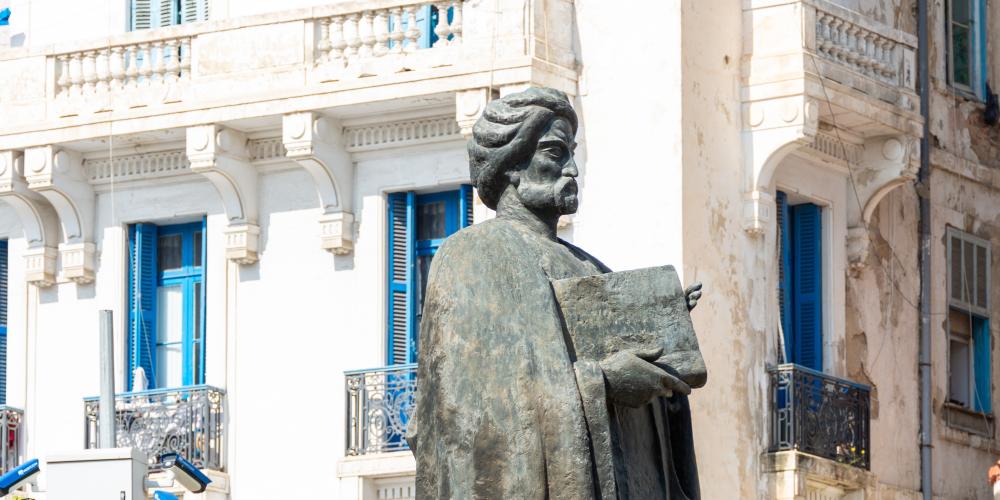
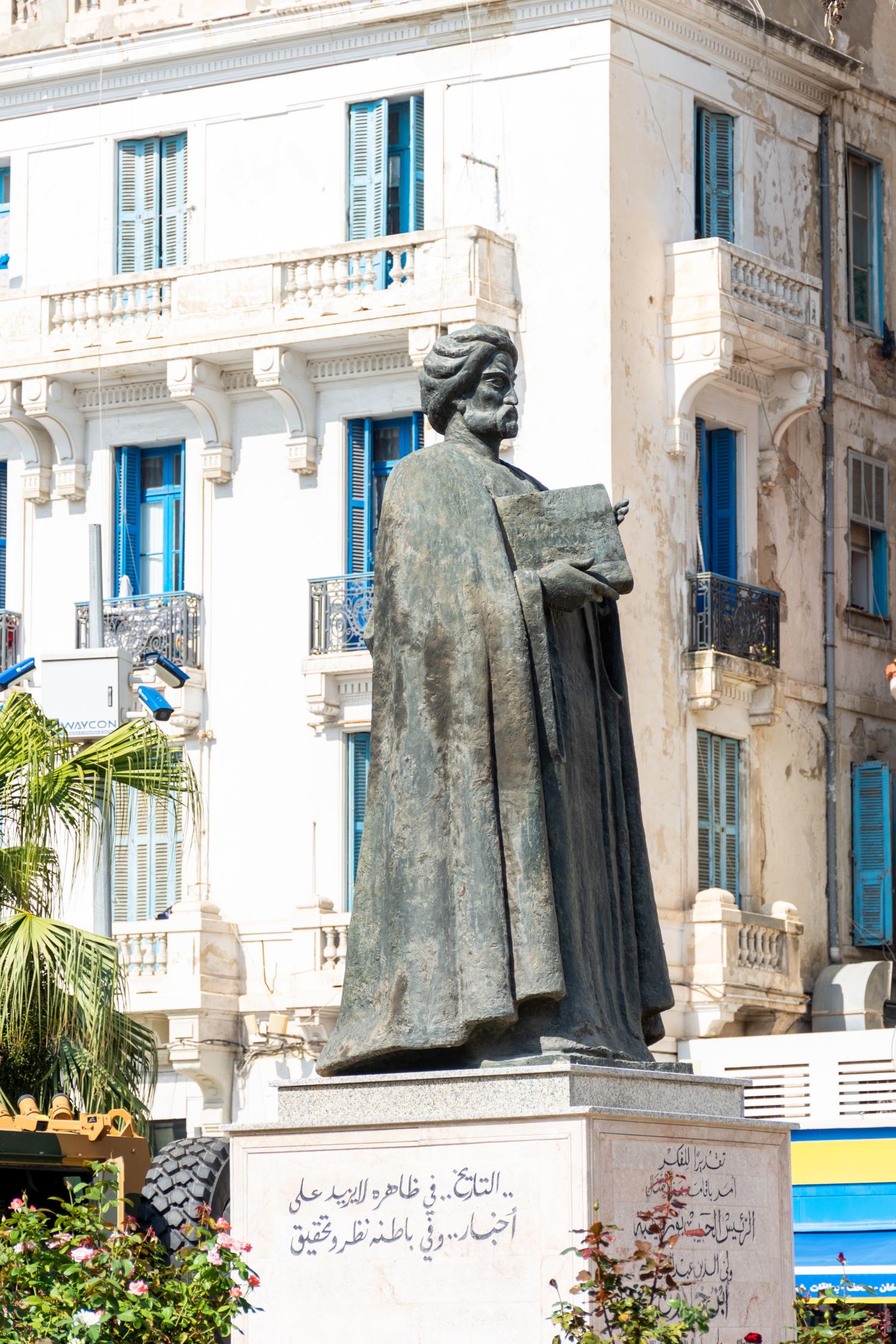
A central insight of the research is what Majdoub calls ‘epistemic foreclosure’: alternative ways of thinking about population are systematically excluded from scientific and policy discourse. For instance, she re-examined the work of Ibn Khaldun, a fourteenth-century thinker who developed advanced demographic ideas centuries before Malthus. Whereas Malthus assumed a linear trajectory of disaster, ever more people, ever fewer resources, Ibn Khaldun identified cyclical patterns in which population growth drives civilisation. “If we take Malthus as our only point of departure, we shut out other ways of thinking about society and demography”, Majdoub argues. What might climate and migration policy look like if we built on Khaldunian cycles and community-centred visions, rather than on the presumed inevitability of demographic catastrophe?
The relevance of these seven mechanisms emerges clearly from four concrete case studies central to the dissertation. In the Dutch report Moderate Growth, Majdoub identifies the use of ‘demographic melancholy’: the sentiment that Dutch society is fundamentally changing due to immigration. The EU Migration Pact turns out to sort people into categories of economic ‘usefulness’ or burden, wrapped in humanitarian language. In climate documents produced by the IPCC as well as in National Adaptation Plans, victims of the fossil industry suddenly become ‘climate migrants’ to be managed. And historical research shows that eugenic ideas travelled through post-war birth-control movements to simply get rebranded in environmental terms.
Majdoub also demonstrates that alternatives do exist and are already being put into practice. In the United States, African American women organise birth care through their own midwifery centres and doulas, without the state determining who may or may not have children. In Latin America, women chain themselves to threatened lands under the motto ‘our body is our land’, understanding forced relocation not as a neutral solution but as a form of rupture. And Indigenous communities, from the Zapatistas to the Māori, regulate who is welcome through ceremonies and reciprocal obligations, not through quotas or statistics.
“In an era of accelerating climate change, in which authoritarian movements deploy population anxieties as a political weapon, understanding Malthusianisation becomes not only analytically but also politically urgent”, Majdoub emphasises. “These mechanisms are at work today in rhetoric about ‘invasions’ at the border, in European migration policy, and in climate plans that normalise migration as adaptation.”
The study serves as a wake-up call for policymakers: stop looking away from the real causes of crises. Housing shortages are not caused by ‘too many people’ but by speculation and failed policy. Climate-displaced people are not a ‘demographic problem’ but victims of our fossil-fuel dependency. Only by understanding how this misleading transformation, from politics to population, works can we finally ask the right questions. For it is only when we stop counting and start listening that space opens up for real and systemic solutions.
Who was Thomas Robert Malthus (1766–1834)?
Malthus was an English cleric and scholar who profoundly influenced economics and demography through his 1798 essay on population dynamics. He is best known for his theory that population growth tends to outpace food production. He argued that population grows exponentially, while food supply increases only linearly, inevitably leading to poverty, famine, and social tension. His pessimistic predictions about overpopulation sparked enduring debates about resource limits and continue to shape contemporary discussions on sustainability and demographic policy.
Majdoub, S. (2025). Who's Too Much? Commonalities, Mobilisation and Persistence of Malthusian Framings [Doctoral dissertation]. Vrije Universiteit Brussel.
Contact:
Dr Soumaya Majdoub
soumaya.majdoub@vub.be