

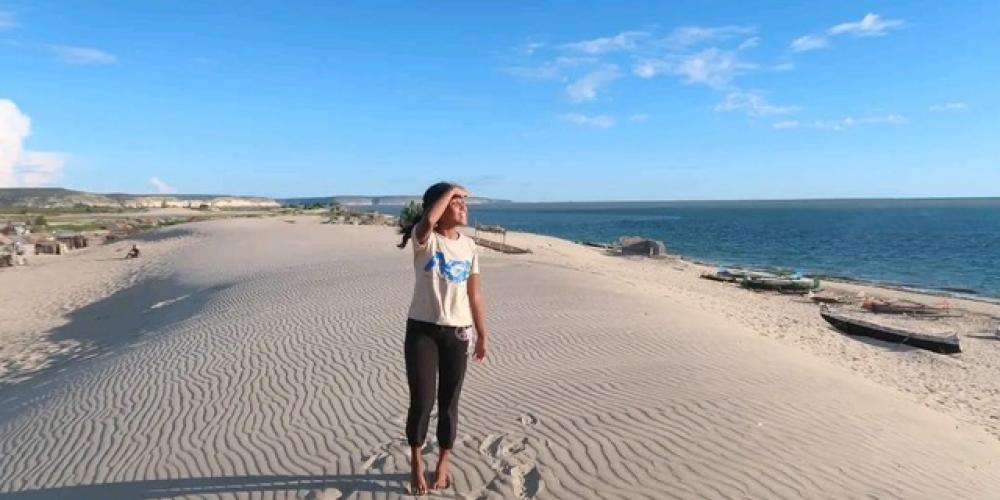


The VUB is one of the most international universities in Belgium. More than a third of our students come from abroad. But who are they, what drives them, and how do they experience life in Brussels? In this new series, we introduce you to our international students. Today: Nomena from Madagascar, a Master’s student in Biology through the Erasmus Mundus programme Tropical Biodiversity & Ecosystems (TROPIMUNDO).
Nomena is 23 and currently in her first year of the Master’s programme in Brussels. Her degree is part of an Erasmus Mundus programme, meaning she will study in several countries during her programme. “My first semester is at the VUB and the ULB,” she explains. “Next semester I’ll be going to Kenya.” That international experience was not entirely planned. “I applied to several Master’s programmes,” she says honestly. “My original plan was to study somewhere else, but thanks to a VLIR-UOS scholarship I received this opportunity, and I’m very grateful for it.”
Growing up in Madagascar
Nomena was born in Antananarivo, the capital of Madagascar. When she was eight years old, her family moved to Toliara in the south of the country, where her father had found a new job. “That’s really where I grew up,” she says.
Her academic background connects closely with her current studies. In Madagascar, she studied Marine Sciences and Fisheries at the Institut Halieutique et des Sciences Marines, a programme that further deepened her interest in nature, ecology and biodiversity.
First encounter with Belgium
Before coming to Brussels, Nomena did not know much about Belgium. “I mainly knew Belgium because of a singer I had seen on TV,” she laughs. “Angèle. That was about it.” The move to Brussels was therefore quite a big change. “The biggest difference is public transport,” she says. “Here everything is scheduled. You can see exactly when the tram or bus will arrive. In Madagascar you simply wait, without knowing when it will come.” The city itself also felt different. “The food, the atmosphere, the way of life… everything is different. Sometimes it feels like another universe.” Still, she is adjusting step by step. “It was and still is difficult, but I’m doing my best.”
What Nomena misses most is her family. “That’s the hardest part,” she says without hesitation. “But apart from that things are going well, and I try to stay positive.” Music helps her with that. “In Madagascar I often listened to English songs to learn English. When I arrived here, I actually started listening to a lot of music in Malagasy because I felt homesick.”
The transition to an English-taught programme has also been a challenge. “French is not a problem for me, but learning English and studying in it at the same time was new.” Still, she keeps going. “It’s not easy, but I learn something new every day.” The programme itself strongly focuses on biology, ecology and the environment. “We study biodiversity, ecosystems and environmental issues in different parts of the world,” she explains. The international mix of students is something she values greatly. “My classmates come from Peru, Bolivia, Indonesia, the Philippines, Germany, the US… It’s really enriching.”
Campus life in Brussels
The university campuses in Brussels are very different from what she knew in Madagascar. “What I really like here are the large libraries and study spaces,” she says. “Sometimes I missed places like that there — quiet spaces where you can really focus on studying.”
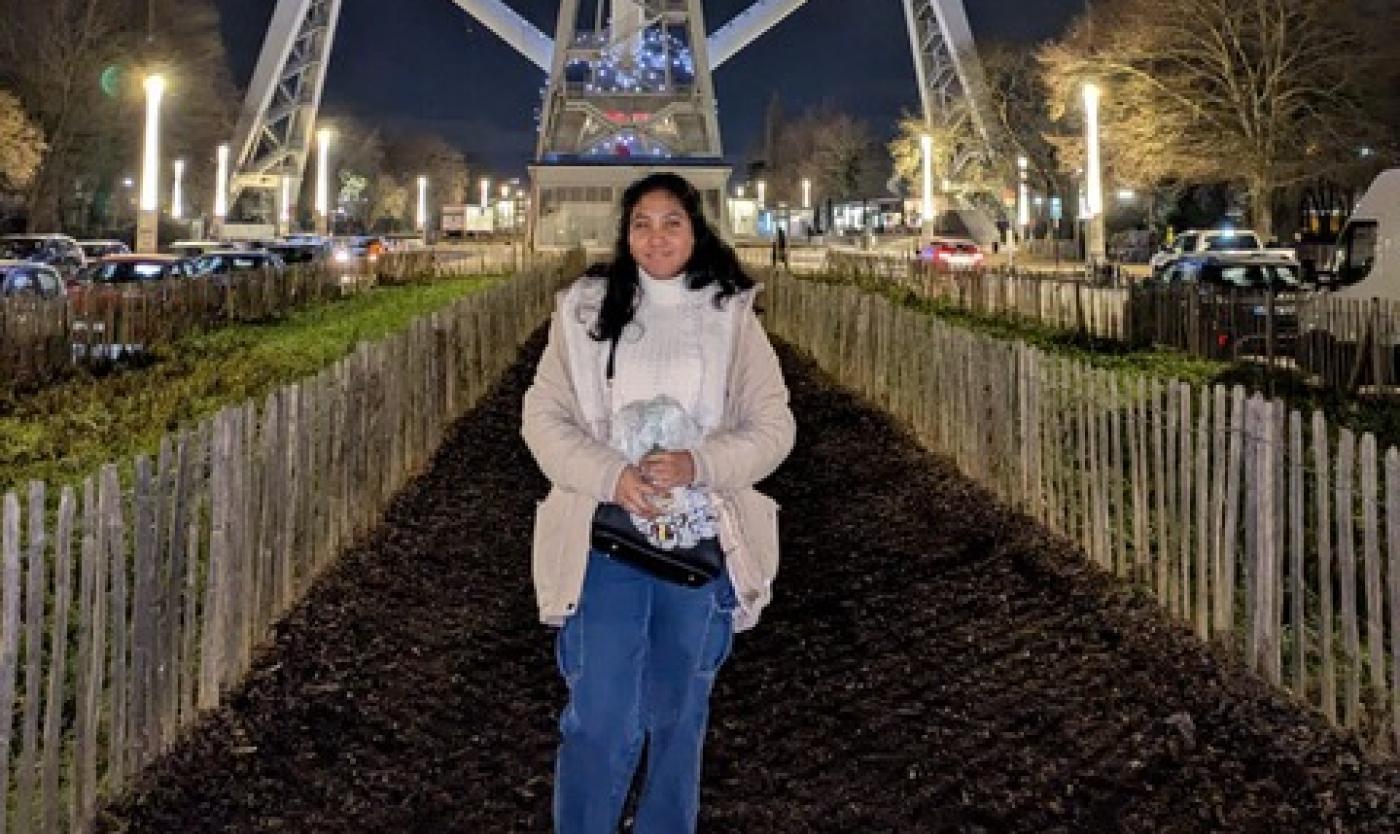
The infrastructure also stood out to her. “Lifts, escalators, large buildings… that took some getting used to.” In her free time, she explores Brussels on foot. “I don’t really have a favourite place yet, but I once visited the Bois de la Cambre and I found it a special place.”
Future plans
After completing her Master’s, Nomena is keeping her options open. “I try not to plan too strictly,” she says. “In life, things don’t always turn out the way you expect.”
Still, she has a clear dream. “If I can choose, I would love to work in marine biology, preferably in Madagascar.” She hopes to use the knowledge she gains here for her home country. “There is so much nature there, but it is also under pressure because of climate change. I hope that what I learn here can help contribute to the development and protection of our ecosystems.”
