

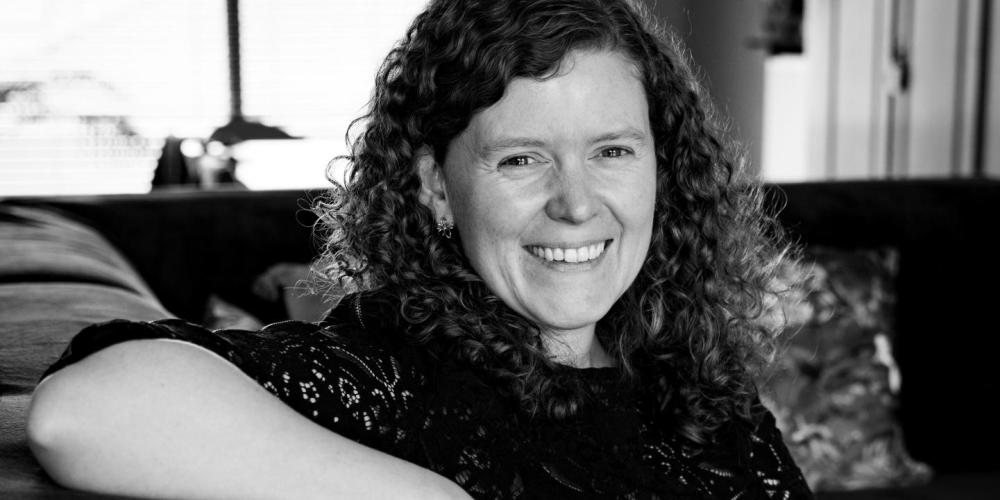


Humanist meeting centres have for decades been an important gathering place for freethinkers in Flanders and Brussels. Art historian and archivist Elise Dewilde of the Centre for Academic and Humanist Archives (CAVA) has brought them together in a richly illustrated book, Unbelievable Encounters: Humanist Centres in Flanders and Brussels. The result is not only a historical overview, but also a portrait of committed communities. “What struck me most was the passion.”
What exactly is a humanist centre?
Elise Dewilde: “The term ‘humanist centre’ has two meanings. On the one hand, it refers to a service-oriented association, for and by the local non-confessional community, which acts as a local showcase for humanist and freethinking ideas. On the other hand, there is often also a building owned by that community in which activities take place. That physical setting is also referred to as a ‘humanist centre’. In most cases, the organisation and the building coincide, but this is not always the case. Not every initiative has its own infrastructure.”
“It is not a closed chapter: even recently, new initiatives have emerged.”
How did these centres develop historically?
“The predecessor of the Humanist Youth Centre De Kim in Ostend opened its doors in 1963, and there were also early initiatives in Boom and Merksem. However, the theoretical starting signal was given in Knokke. In 1970, Gilbert Deygers launched a manifesto there in which he argued for a counterweight to the dominant role of the Catholic Church in society. One of the proposed solutions was the establishment of humanist centres. That idea found resonance. Most centres subsequently grew from the bottom up, driven by local engagement. Only later was the umbrella organisation, the Federation of Humanist Centres, established. At the same time, it is not a closed chapter: new initiatives have also emerged in recent years. Open Dialoog in Aarschot, for example, was founded in 2022.”
What kind of activities take place today?
“The spectrum is very broad and fluctuates over time. Humanist centres represent the interests of the local community and draw attention to humanist and freethinking viewpoints. They also make infrastructure available to associations that identify with humanist values and function as meeting places for freethinkers. In several centres, there is a Sunday morning aperitif where the community comes together, but lectures, debates and cultural activities are equally common. Social engagement often plays an important role. In Kortrijk, for example, the humanist centre is the driving force behind the annual plant sale for the charity Kom op tegen Kanker. In this way, humanist centres distinguish themselves from the huizenvandeMens, which focus on supporting people with existential questions.”
Do the centres reach a broad audience?
“We do not have conclusive figures, but the interviews I conducted show that attracting new members is not always straightforward. Boards are often made up of older volunteers, and it is not easy to engage younger generations. This is, incidentally, a challenge shared by many associations. There is a wide range of lectures and cultural initiatives on offer, which means it is not always easy to remain visible. Nevertheless, centres do succeed in organising surprising and relevant activities. VC De Molensteen in Oostkamp, for instance, once organised a lecture by CD&V politician Herman Van Rompuy. The Night of the Freethinker in Ghent also consistently attracts large audiences.”
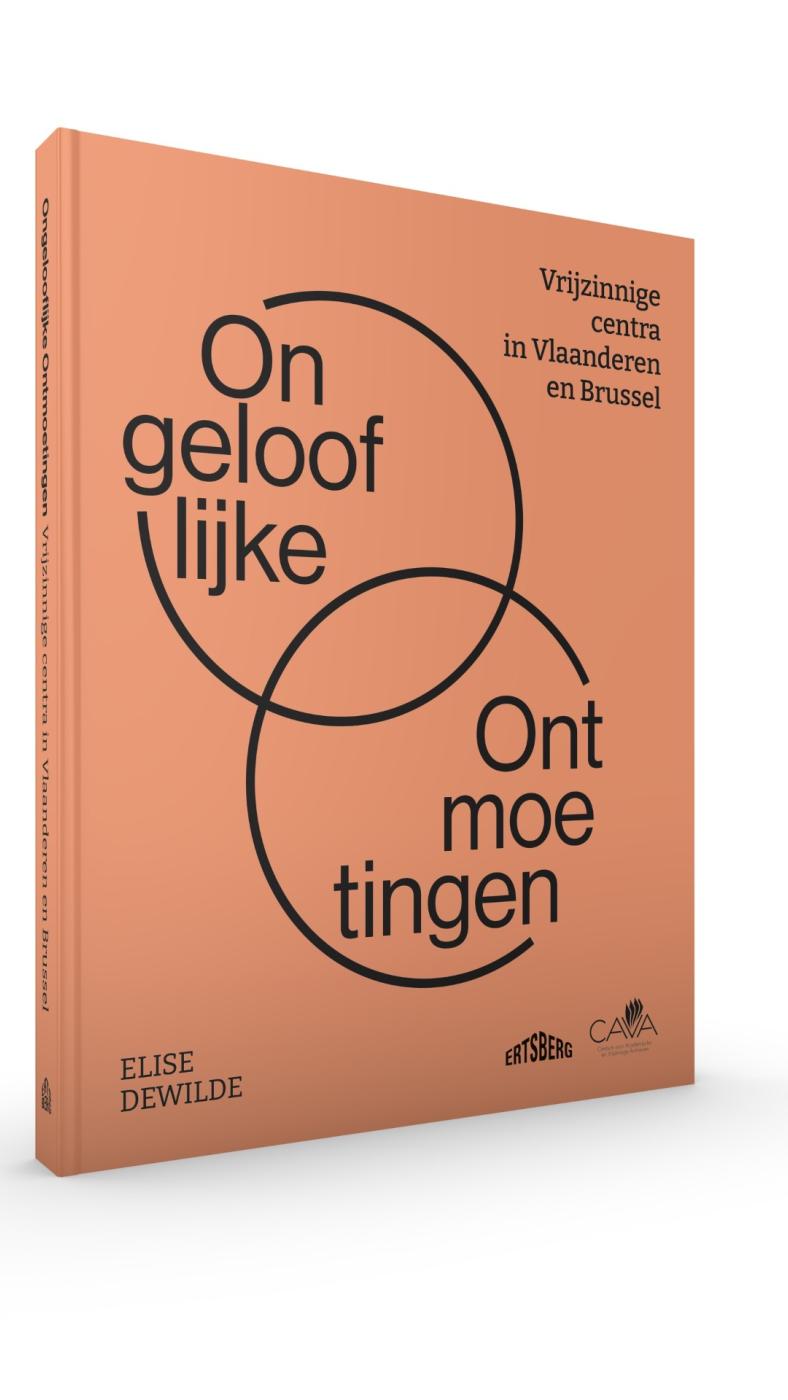
The book is organised by province. What regional differences stand out?
“In total, we included 39 stories about humanist centres, spread across five provinces. West Flanders has by far the largest number of centres. A number of these were established in the wake of the manifesto from Knokke. Antwerp comes second. The province of Antwerp is also home to the Humanistisch Verbond and the Oudervereniging voor de Moraal, two important nationwide humanist organisations. Flemish Brabant and East Flanders count 6 and 7 initiatives respectively, while Limburg has only 2. The subtitle of the book Van God los in Limburg about organised humanism in that province is, I think, quite telling in this respect: ‘Organised humanism in a Catholic stronghold’. The introduction also discusses a number of centres in Brussels. We chose to highlight them there partly because some of them were less strongly rooted at the local level.”
How did you go about collecting the information?
“It was relatively easy to obtain an overview of the centres that are currently active, but much more difficult to trace initiatives that existed in the past and have since disappeared. CAVA’s collection, including the archive of the Federation of Humanist Centres, was an invaluable source in this regard. In addition, we conducted extensive interviews and visited the centres that are still active. For a number of centres, including those in Flemish Brabant and Brussels, I received help from colleagues. In this way, we have for the first time brought together a great deal of information about the humanist centres. At the same time, we hope that the publication will have a sensitising effect and encourage those involved in humanist centres to take good care of their archives. Moreover, the book is conceived as a starting point for further research.”
“What also stands out is the enormous diversity of buildings: from a former abbey to a barn, a castle, a toll house, a building on the grounds of a football club, and even a windmill.”
What stayed with you most from those visits?
“The Geuzetorre in Ostend will certainly stay with me, both because of its scale and its origin story. The building was designed from the outset as a humanist centre, which is fairly unique. That is also why we chose this location for the book launch. More generally, the sheer diversity of buildings is striking: from part of a former abbey to a barn, a castle, a toll house, a building on the grounds of a football club, and even a windmill. The level of social engagement also made a strong impression. The Vrijzinnig Antwerps Trefpunt, for example, has a gallery function (right near the KMSKA), with part of the proceeds going to a charitable cause. And then there is the personal commitment: in Turnhout and Zomergem, individuals made their own property available in the absence of a suitable building, while in Zwijndrecht volunteers quite literally rolled up their sleeves to build and renovate the centre themselves. That level of involvement was truly remarkable.”
Biography
Elise Dewilde (1992) is an art historian and archivist. She is affiliated with the Centre for Academic and Humanist Archives (CAVA) at the Vrije Universiteit Brussel (VUB). Previously, she conducted research into the interaction between archival practice and intangible cultural heritage.