




Are talent and hard work enough to get ahead in life? Or does status have more to do with background and the right connections? The MERLIT research group is investigating how meritocratic narratives – ideas about merit, value and success – are expressed in English-language literature over the last four hundred years and the role literature played in their development. The values of the VUB are deeply rooted in meritocratic principles, says Prof. Dr. Eva Ulrike Pirker. Yet she is concerned. ‘Those principles are under pressure everywhere. The cuts in higher education are yet another nail in the coffin of the meritocratic ideal.’
On Thursday 11 December, at noon sharp, a large demonstration against the cuts set off from the Braem building at the VUB. According to trade unions and student organisations, this is a last-ditch attempt to change the Flemish government's mind. Many professors, lecturers and researchers are also taking part. On the evening before the demonstration, we talked to Prof. Pirker. Would she demonstrate too? “Yes! I'm not someone who takes to the streets easily. But in this situation, and considering the centrality of questions of access to knowledge and power in our research, I feel I have no other choice. We must speak out about the damage that the cuts threaten to cause to the democratic project that we must continue to invest in. Because: What would be the alternative?”
You taught in Düsseldorf until 2023. When you received an ERC Consolidator Grant of 1.9 million, you moved to Brussels to set up the MERLIT research group. Why?
Eva Ulrike Pirker: “I was in the process of negotiating with German universities and research institutes when the VUB offer reached me. I knew the vibrant work and colleagues at the Centre for Literary and Intermedial Crossings and other centres and colleagues in Flemish and Belgian universities, but hadn’t really considered conducting the research in a completely different system and country. But the more I thought about it the more it made sense. I haven’t regretted it. Being in Brussels, and being at VUB, a Flemish University in the City of Brussels comes with a constant sense of complication, negotiation, irritation. This also gives rise to a lot of creativity.”
What do you mean?
“Germany is a violently monolingual country. Here, I found myself in an extremely multilingual city and campus. That has had a huge impact on me. It’s an environment that forces you to constantly rethink your own place and position. To constantly translate. The literary scholar Ottmar Ette once described translation as “irritation-provocation”. That’s what it is, a challenging of boundaries. I was impressed by how the VUB embraces this. This kind of hospitality is necessary in a city in which the whole world is at home. And it’s liberating, a space of possibility. If you stay in one bubble, you don’t learn.”
Your team, too, is international.
“There are seven of us: Four PhD students, one postdoc, one external senior researcher and myself. Plus research students, interns, invited researchers. There’s a Flemish presence, too, but given the field – anglophone literature in a transcultural context – recruiting internationally was imperative. I’m glad, for instance, that we found a researcher with unique expertise in African literature for the subproject on Afrofuturist mediascapes – a vibrant international field, but one in which US-American perspectives dominate. Think of Octavia Butler, think of Black Panther. Or the music of Sun Ra, whose band, however, has always been international.”
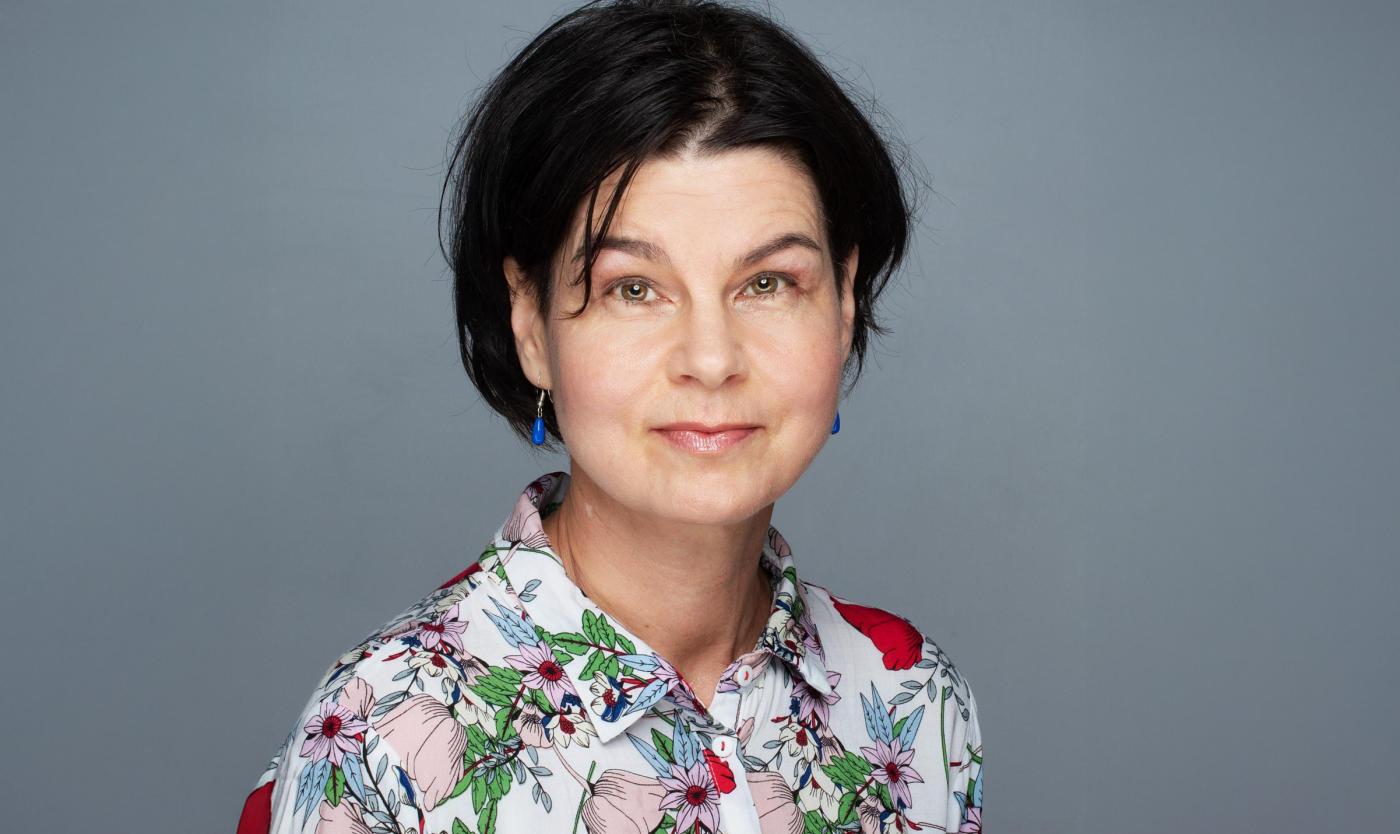
VUB-professor Eva Ulrike Pirker
“The theatre was the platform par excellence for open debates on new social ideas”
You mainly work on literature. Why?
“The phenomenon of meritocracy has long been studied by sociologists, political scientists, psychologists, philosophers and economists, but literary studies have lagged behind. The study of literature can help us understand how meritocratic thought operates. Literary texts give us access to the zeitgeist of a particular period. They shape, co-construct, and sometimes criticise popular ideas of entitlement, success and failure and ideas about who should ‘govern’.”
Your research follows a chronology. The first subproject zooms in on the seventeenth century and theatre from the Restoration era. What was special about that period?
"The Restoration is a little-known but unique period in British history, roughly from 1660 to 1710. It followed a terrible civil war, the beheading of King Charles I and a strict Puritan, republican regime under Oliver Cromwell. During the Restoration, the monarchy was restored, but the power of the monarch, Charles II, was reduced. It was a period in which views about how society should be organised and who should be in charge clashed."
What does that have to do with theatre?
“After Cromwell had closed them, the theatres reopened. Also, for the first time, women were admitted as actresses, something that had been forbidden before, even for female roles. During the Restoration, the theatre was the platform par excellence for open debates on new social ideas, including meritocracy. A character in one of the plays of that time, Elkanah Settle’s The Empress of Morocco, argues: ‘Men are to worth and honour raised, not born’. In other words: a person’s merit should not be the result of their descent, but of their actions.”
That sounds modern.
“We’re here on the threshold to the modern age. In a sense, the debates we have about what we call meritocratic thought are not new. Circumstances, constellations change. The Victorian nineteenth century, for example, was more puritanical than the Restoration. This was due to the rise of a new powerful social class, which invented all kinds of rules for itself in order to be seen as respectable and praiseworthy."
“Some of the writing women upheld patriarchal values”
MERLIT is studying a special literary genre from that period: travelogues. What were they?
“In the nineteenth century, more and more people could afford to travel. There was an enormous fascination with other countries, archaeological findings, and new knowledge about geology. Travellers’ first-hand experiences, poured into writing, became a popular, again zeitgeist-shaping, genre. We are taking a closer look at the travelogues of women who were travelling alone.”
What do these travelogues reveal about meritocracy?
“All of them are also narratives of self-actualization, personal advancement. The growth of the traveller. But they also reflect and comment on ideas about ‘social progress’ that were current at the time.”
Isn't that wonderful? What’s to criticise?
“We study these travelogues and make them accessible. We do not provide a moral commentary. Throughout the 19th century, women were formally ‘second class’ members of society. And still some of the writing women uphold patriarchal and imperial values. Some – not all! – of them pit ‘civilised’ Europeans against other, supposedly ‘less civilised’ cultures. Some engaged in co-constructing the British Empire as a better guardian of the world than other empires.”
The ideas about meritocracy are old, but the word itself apparently is not.
“The term has been spread by Michael Young’s dystopian novel The Rise of Meritocracy, published in 1958. The story is set in 2034, the year in which the ‘Populists’ rise up against a ‘meritocratic elite’. That elite consists of high-achieving individuals who believe that they are better and morally superior. The ‘less gifted’ are structurally disadvantaged. Young pointed out that a purely meritocratic society is not necessarily fairer, but potentially harsher and less empathetic, as it is ruled by a mercilessly competitive culture.”
Is the meritocracy a myth?
“I would rather say: an ideal that is worth pursuing, but with flaws. That is precisely why we founded MERLIT: to study and expose those flaws and structural defects through literature and contribute to the critical debate. Two years later, we find ourselves in a situation that suggests that the very ideal of a meritocratic culture has been thrown overboard. While there never was a level playing field, it seems that the very efforts of creating a level playing field from which excellence could emerge, are no longer seen as an aim worth pursuing. Already more than a decade ago, the British sociologist Jo Littler wrote about the dangers of the meritocracy turning into a plutocracy.”
“Critical debate is suffering everywhere”
The impending cuts to higher education are weighing heavily on people's minds.
"The sums on the table seem insane. Tens of millions are being cut, almost overnight. This is a huge threat to research and education. It's certainly not going to benefit the students. An ERC Grant earns applause and my team and I are ‘safe’ for the time being. But of course we think beyond the immediate phase. We are dependent on well-trained students and emerging researchers, from Flanders and abroad. Closing the door to international students would torpedo previous efforts to establish Flemish universities as vibrant research institutions. We cannot do without their perspective and knowledge. And defunding teaching is a divestment from the future. Without students, there is no university; research and teaching must go hand in hand."
Perhaps governments are underestimating the impact of their cuts?
“To say that it is ignorance seems to me to be an understatement of what is going on. To me, this comes across as a deliberate disregard for higher education. Yet higher education plays an indispensable role in the development of critical and independent thinking and the continuous construction of democracy. The VUB and the ULB emerged from a history of struggle. The fact that they are the ones who will suffer most from these cuts is an extra hard blow. So I find it hard to believe that there is no bias at work.”
Surely we're not going to follow the US's lead?
“Belgium is not an innocent island of happiness. This is a development with global repercussions. What happens in the US has an impact on European research. Organisations that are promoting transatlantic dialogue and have previously received funding from the US experience major cuts or find themselves walking on eggshells. Critical debate is suffering everywhere. Companies, institutions, individuals have become careful about the words they use as a consequence of the DEI policies. It is a slow but steady process of intoxication.”
“As an open and hospitable space, Brussels is particularly vulnerable to the spread of dubious ideas"
While state-funded higher education is bleeding, some private research institutions are rolling in money.
"Indeed. I recently received another invitation to a conference organised by the Mathias Corvinus Collegium Brussels, which has close ties to the Hungarian government. They organise conferences with titles such as “Battle for the Soul of Europe” or “The War against the Past: Fighting for our history”. It looks innocent, but the ideological picture is clear. They convene in fancy venues that we can only dream of, like the Solvay Library. Powerful players are steadily creating an uneven playing field. As an open, hospitable, to some degree ‘undefined’ space, Brussels is particularly vulnerable to the spread of such dubious ideas."
What can we do?
‘Continue the work we are doing. Take nothing for granted. Organise our own events. Our faculty’s public lecture series “Ties that Bind Us”, for example, focuses on the things that connect us as complex individuals instead of adhering to the narrative of polarisation. And we must continue to advocate for properly subsidised and affordable higher education. That is the best approach to generating equal and fair access to individual and collective advancement.’
About Prof. Dr. Eva Ulrike Pirker
Prof. Dr. Eva Ulrike Pirker first worked at the Albert Ludwig University of Freiburg. She then taught at Heinrich Heine University Düsseldorf, where she coordinated the Master's programme in literary translation and the Centre for Translation Studies. She joined VUB in 2023 as Professor of English and Comparative Literature. She is the Principal Investigator of the ERC-funded project “Meritocracy and Literature: Transcultural Approaches to Hegemonic Forms” (MERLIT)