
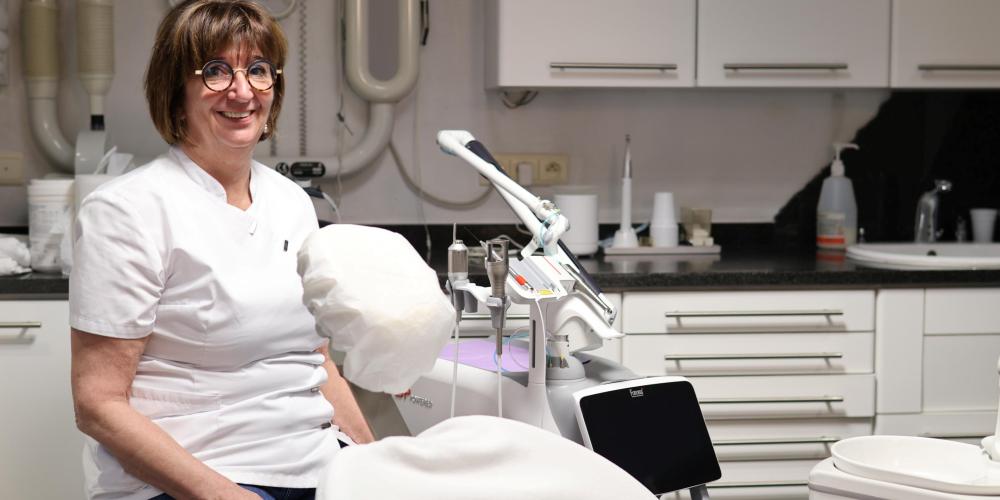


For 35 years, laser technology has offered an alternative to traditional treatments for gum disease. Yet in Belgium it remains seldom used, largely for economic reasons. Dentist and specialist Beatrijs Deruyter, who has worked with the technology since its early days, hopes to change that. At a symposium hosted by the VUB and the University Dental Centre (UTC) on 12 February, she set out to highlight its potential.
In dentistry circles, only a few are familiar with laser technology. What is this device actually used for?
Beatrijs Deruyter: "The technology is ideal for cleaning the mouth in cases of periodontal problems. A healthy mouth relies on a natural balance between the microorganisms (such as bacteria, viruses and fungi) that live in the mouth and your body's immune system. Normally, the skin and oral mucosa protect you against harmful intruders, but around the teeth, this protective layer is interrupted. In this area, unwanted microorganisms can penetrate and cause inflammation. If the immune system can no longer cope with this burden, a serious gum disease develops in which soft tissue, the fibres that hold the tooth in place, and even jawbone can be lost.
How are periodontal problems treated in most practices?
"The classic treatments are scaling and root planing, in which tartar and affected tissue are mechanically removed using an ultrasonic device and curettes (sharp scraping instruments). However, these curettes are often very invasive, painful and can cause damage. This is because you are not only removing diseased tissue, but also healthy material that could still recover. Moreover, they do not seal the small channels in the root surface, which can cause new problems."
"Gum inflammation is usually caused by bacteria that can also be found in the brains of Alzheimer’s patients"
What additional problems are we talking about?
"Gum inflammation is usually caused by infection with certain bacteria, with Porphyromonas gingivalis being the main culprit. This bacterium often occurs in symbiosis with certain viruses, such as the Epstein-Barr virus and other herpes viruses. These bacteria are also often found in the brains of Alzheimer's patients. You can fight this bacterium with antibiotics, but that obviously doesn't help against viruses. With heat – and therefore with a laser – you can do something about it. What's more, this also closes off the reservoirs in which bacteria or viruses can nestle. These are tiny openings – around 30,000 to 60,000 per square millimetre – in the dentine, i.e. the tooth tissue that is not protected by enamel or cementum."
How exactly does this laser work? Do you fire beams of light at the gums or something?
"No, not at all. This technique uses energy pulses that work very precisely. Not only do they eliminate bacteria and viruses and seal the open channels in the tooth surface, but they also thoroughly clean the tissue and stimulate natural repair processes – without causing heat or burn damage."
"The laser has other advantages as well. The treatment is completely painless, which means that the entire mouth can be treated in one go, whereas with curettes, treatment is usually limited to one quadrant per session. The disadvantage of this method is that bacteria and viruses from the untreated area can still re-infect the treated area. Both practical experience and research show that long-term results are better when the entire mouth is cleaned in one go, especially in combination with laser therapy. Furthermore, it is recommended, both for general health and in preparation for the placement of implants, to carry out preventive oral sanitation. This allows us to prevent many problems. The laser therefore offers added value and complements periodontology."
That all sounds very appealing, so you would think that every dentist would have such a device in their practice. Is that the case?
"Unfortunately not. I have been using this method for about 35 years now, and the UTC at the VUB has had such a device since October 2025. You can also find them at the universities of Ghent and Leuven and a handful of other private practices. But that's about it in Belgium."
"There are medical reasons to invest in it, but no economic ones"
Why is there so little enthusiasm for a technology that is so effective and can help patients so much?
"Of course, it's a big investment, on top of the other equipment you already need as a dentist. The price of such a device is comparable to a nice car, so that can add up. But it should certainly be feasible, especially in a group practice."
But wouldn't such an investment quickly pay for itself? Dentists who offer this treatment and communicate about it in a sensible way could attract a lot of extra patients to their practice, couldn't they?
"That's precisely the problem: most dentists have no intention of attracting even more patients. There are currently around 5,000 dentists in Flanders and the Brussels-Capital Region, more than half of whom are over 60 years of age. So there is already a significant shortage of dentists, and this is only going to increase. As a result, many practices are not accepting new patients. So why spend a lot of money on such a device? There are indeed medical reasons to invest in it – I do so, for example, because I believe my patients deserve safe, painless and efficient care. That's what healthcare is all about, isn't it?"
If that device is so expensive, the treatment must not be cheap either.
"I charge the price recommended by the RIZIV for subgingival cleaning. That is 100 euros per quadrant, so a maximum of 400 euros for the whole mouth. Anyone under the age of 65 who comes in regularly for check-ups for periodontal problems can get 360 euros back every three years. How often you need to return depends on the patient, but for most people it is certainly no more expensive than traditional treatment – on the contrary."
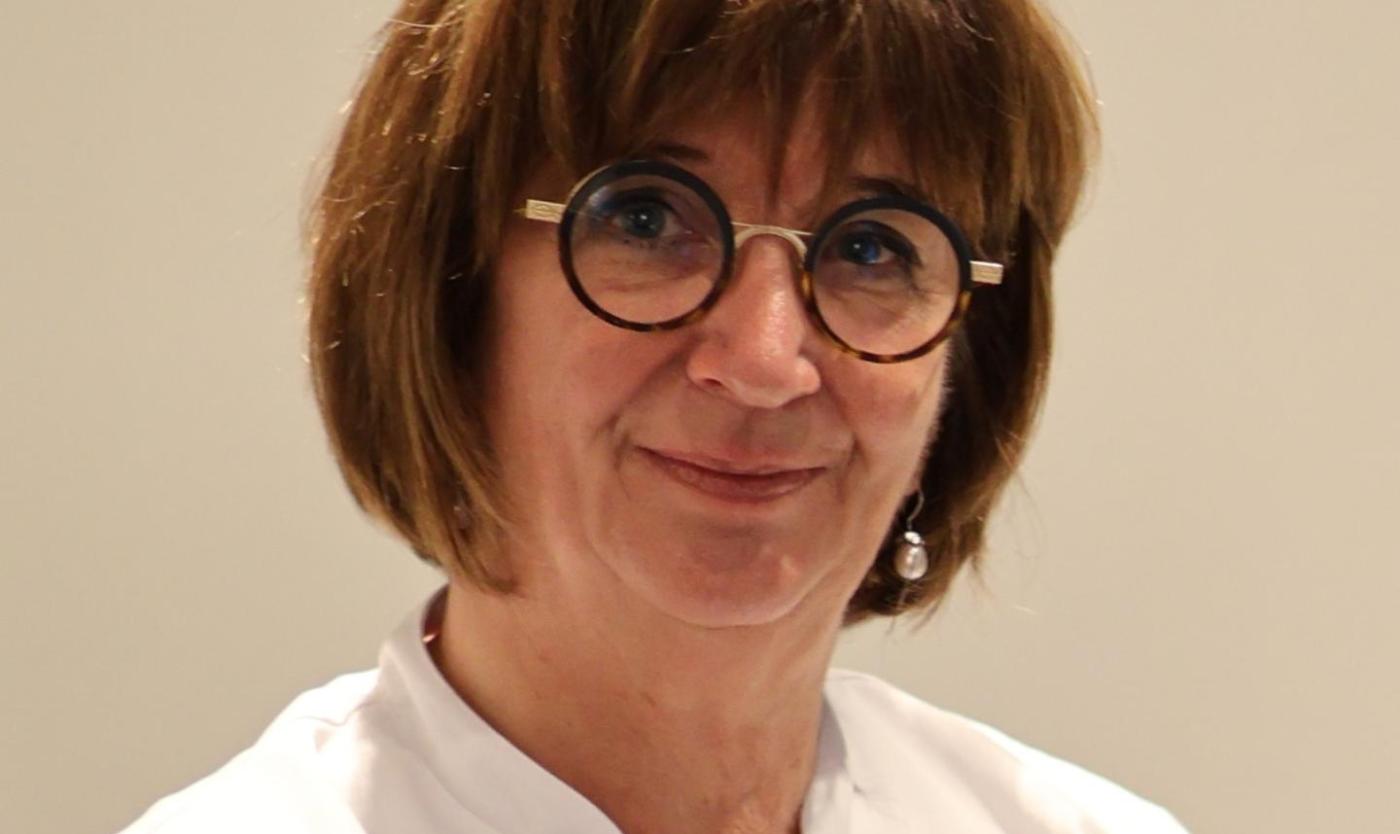
Dentist Beatrijs Deruyter graduated as a dentist from the VUB in 1980. She then obtained a master's degree in laser dentistry from the University of Vienna, an additional master's degree from the Academy for Laser Dentistry in the US and a Master of Science in Laser Dentistry from the University of Genoa. From 2013 to 2018, she was affiliated with the Periodontology Department at KU Leuven, where she simultaneously worked on a PhD in biomedical sciences on the subject of lasers in periodontology. Since the 2024-2025 academic year, she has also been affiliated with the UTC of the VUB, where she treats patients with the laser and also supervises students in the second Master's programme in Dentistry at Ghent University.